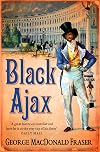
Black Ajax
by George MacDonald Fraser
On This Page
Description
Bringing historical fact spiritedly to life, Fraser tells the rollicking tale of how a Virginia slave, "the black Ajax, " fought his way to freedom and then to celebrity in England in the early 1800s.Tags
Recommendations











Member Reviews
"Aye, it was a different age, gone now – and good riddance, you may think. But if it was wild and reckless, it was alive, with spirits that England couldn't accommodate today." (pg. 50)
George MacDonald Fraser is unquestionably my favourite writer. Not only do the books he wrote cover all the things I look for in a great read – adventure, humour, pathos, well-drawn characters, meticulous research and wonderful prose – but they do so with panache and, more importantly, without fail. It was one thing providing all these qualities in the twelve Flashman books, as there Fraser had created one of the finest comedic characters in fiction and – no disrespect to his craftsmanship – one imagines he couldn't help but strike gold. But show more since finishing the Flashman Papers, I've also found these qualities to be evident in his other works, particularly Quartered Safe Out Here and the McAuslan stories. And now Black Ajax.
I sound like a broken record when reviewing any of Fraser's books, for this novel provides compelling characters who feel real, fine historical research that really places you in pre-Regency England and rolling prose that makes the dialects – often a difficult trick to pull off – sound as natural as breathing. There's humour too, with Harry Flashman's father crashing the party and tearing it up with bold, damn-your-eyes prosing that made me remember just how much I loved the narrative voice in those Flashman books. There is even a deviation into reminiscing about the Peninsular War – true Flashman-esque territory – and a bedroom dalliance that proves the worth of the old adage 'like father, like son'.
But these are all by the way: what matters here is the story, and what a story it is. It is a fictionalized (though meticulously researched, as ever) version of the story of Tom Molineaux, a black American slave who wins his freedom in a vicious fight-ring – think 'mandingo' fighting – and travels to England to challenge the legendary bareknuckle boxing champion of England, Tom Cribb. What follows is an intoxicating brew of pride and punishment, of racial politics and sporting excellence and sheer brutality. This is a classic tragedy, detailing the rise and fall of Molineaux. A natural fighter and a colourful character, he is corrupted by drink and women and alienates all those close to him. It is fascinating to experience, even if parts of it are horrifying.
The boxing, for example, is incredibly brutal. This was before the Queensberry rules, a time when two men entered the ring for an indefinite amount of rounds and hammered away at each other – without gloves – and with only thirty seconds respite between rounds. The match ended when one boxer admitted defeat. If neither did, the match continued until one was knocked out. Matches could last for over an hour; in one of Molineaux's fights, single rounds lasted about half an hour. With thirty seconds until the next round. It is phenomenally brutal.
But for all this violence, the racial intolerance and the aching tragedy of Tom's self-destructive ruin ("there were two fighters he never could beat. One was Tom Cribb, and t'other was Tom Molineaux," one character remarks on page 228), Fraser and Black Ajax are never pitiless. There's genuine heroism and resolve and dignity from some of the characters here. Even if you're not a boxing fan – I take only a negligible passing interest – you'll be enthralled and inspired by Tom's story: a man who fought his way to the top and who had the main hand in his own downfall. A slave who won his freedom and was the talk and toast of England in the run-up to his match with Cribb. As one character says on page 12, "No, sir, I can't say his was a sad story, however it ended, not with that day in it." Another incredible story. Fraser is immaculate. show less
George MacDonald Fraser is unquestionably my favourite writer. Not only do the books he wrote cover all the things I look for in a great read – adventure, humour, pathos, well-drawn characters, meticulous research and wonderful prose – but they do so with panache and, more importantly, without fail. It was one thing providing all these qualities in the twelve Flashman books, as there Fraser had created one of the finest comedic characters in fiction and – no disrespect to his craftsmanship – one imagines he couldn't help but strike gold. But show more since finishing the Flashman Papers, I've also found these qualities to be evident in his other works, particularly Quartered Safe Out Here and the McAuslan stories. And now Black Ajax.
I sound like a broken record when reviewing any of Fraser's books, for this novel provides compelling characters who feel real, fine historical research that really places you in pre-Regency England and rolling prose that makes the dialects – often a difficult trick to pull off – sound as natural as breathing. There's humour too, with Harry Flashman's father crashing the party and tearing it up with bold, damn-your-eyes prosing that made me remember just how much I loved the narrative voice in those Flashman books. There is even a deviation into reminiscing about the Peninsular War – true Flashman-esque territory – and a bedroom dalliance that proves the worth of the old adage 'like father, like son'.
But these are all by the way: what matters here is the story, and what a story it is. It is a fictionalized (though meticulously researched, as ever) version of the story of Tom Molineaux, a black American slave who wins his freedom in a vicious fight-ring – think 'mandingo' fighting – and travels to England to challenge the legendary bareknuckle boxing champion of England, Tom Cribb. What follows is an intoxicating brew of pride and punishment, of racial politics and sporting excellence and sheer brutality. This is a classic tragedy, detailing the rise and fall of Molineaux. A natural fighter and a colourful character, he is corrupted by drink and women and alienates all those close to him. It is fascinating to experience, even if parts of it are horrifying.
The boxing, for example, is incredibly brutal. This was before the Queensberry rules, a time when two men entered the ring for an indefinite amount of rounds and hammered away at each other – without gloves – and with only thirty seconds respite between rounds. The match ended when one boxer admitted defeat. If neither did, the match continued until one was knocked out. Matches could last for over an hour; in one of Molineaux's fights, single rounds lasted about half an hour. With thirty seconds until the next round. It is phenomenally brutal.
But for all this violence, the racial intolerance and the aching tragedy of Tom's self-destructive ruin ("there were two fighters he never could beat. One was Tom Cribb, and t'other was Tom Molineaux," one character remarks on page 228), Fraser and Black Ajax are never pitiless. There's genuine heroism and resolve and dignity from some of the characters here. Even if you're not a boxing fan – I take only a negligible passing interest – you'll be enthralled and inspired by Tom's story: a man who fought his way to the top and who had the main hand in his own downfall. A slave who won his freedom and was the talk and toast of England in the run-up to his match with Cribb. As one character says on page 12, "No, sir, I can't say his was a sad story, however it ended, not with that day in it." Another incredible story. Fraser is immaculate. show less
If you just finished the Flashman papers and are going through GMF withdrawal, don't fret, you will like this. Flashman's father is a great side character and while it took me a while to get used to the 1810s language it is another well written classic historical novel by Fraser.
After having read the twelve Flashman novels and enjoying them immensely, I order this book, penned by the same author. Written much in the style of the Flashman works, it takes a little getting used to, given the author’s phonetic spelling of heavy British accents.
The story revolves around a former slave named Tom Mollineaux, who developed boxing skills in the process of being emancipated. He goes to England to seek the heavyweight championship, quite a feat for the time. The story is told through several different narrators, including Harry Flashman’s father. Harry, it turns out, was a chip off the old block.
The story is amusing, though not to the level of Flashman. As an aide, if you are offended to see the “n” word in show more print, you might avoid this one. It is written with historically accurate epithets and labels. show less
The story revolves around a former slave named Tom Mollineaux, who developed boxing skills in the process of being emancipated. He goes to England to seek the heavyweight championship, quite a feat for the time. The story is told through several different narrators, including Harry Flashman’s father. Harry, it turns out, was a chip off the old block.
The story is amusing, though not to the level of Flashman. As an aide, if you are offended to see the “n” word in show more print, you might avoid this one. It is written with historically accurate epithets and labels. show less
Interesting look a social history from this wonderful historian/author. Cleverly told account of black American bear-knuckles boxer Tom Moulineaux trying to become the English/World champion in the early 19th century. The story is told as seen through the eyes of a dozen witnesses who were there at the time. Harrowing at times.
Interesting reading by a good evoker of the Victorian period. The tale of Tom Moulineaux, one of the first black boxing champions. Not a happy book, but interesting.
Fine, but by far the weakest of GMF's novels that I've read.
Historical novel about boxer Tom Molineaux.
Members
- Recently Added By
Author Information

50+ Works 19,782 Members
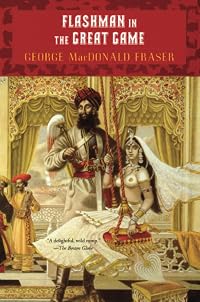
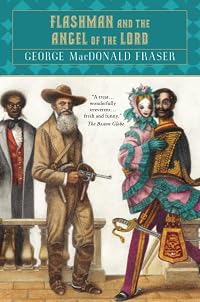
Author George MacDonald Fraser was born April 2, 1925 in Carlisle. He was refused entrance to the medical faculty of Glasgow University, so he joined the army in 1943. He served as an infantryman with the 17th Indian Division of the XIVth Army in Burma, a lance corporal and was commissioned in the Gordon Highlanders. After the war, he became a show more sports reporter with the Carlisle Journal; and during this time, he met and married Kathleen Hetherington, a reporter from another paper. He worked as a reporter and sub-editor on the Cumberland News and then moved to Glasgow, in 1953, where he worked at the Glasgow Herald as a features editor and deputy editor. Fraser's first novel was "Flashman" (1969), which was followed by nine sequels, so far, that deal with different venues of the 19th century ranging from Russia, Borneo and China to the Great Plains of the America West. Some of the other titles in the Flashman Papers are "Royal Flash" (1970), "Flashman in the Great Game" (1975), "Flashman and the Redskins" (1982), and "Flashman and the Angel of the Lord" (1994). Some of his non-fiction work includes "The Steel Bonnets" (1971), which is a factual study of the Anglo-Scottish border thieves in the seventeenth century, and "Quartered Safe Out Here" (1992). Fraser has also written a number of screenplays that include "The Three Musketeers" (1973), "Royal Flash" (1975), "Octopussy" (1983), and "Return of the Musketeers" (1989). He has also written a series of short stories about Private McAuslan whose titles include "The General Danced at Dawn" (1970), "McAuslan in the Rough" (1974), and "The Sheik and the Dustbin and other McAuslan Stories" (1988). He died of cancer on January 2, 2008. (Bowker Author Biography) show less
Common Knowledge
- Original title
- Black Ajax
- Original publication date
- 1997
- People/Characters
- Captain Buckley "Mad Buck" Flashman; Tom Molineaux; Tom Cribb; Thomas "Paddington" Jones; Lucien d'Estrees de la Guise; Marguerite Rossignol (show all 16); William Hazlitt; Bill Richmond; John Doe; Bob Logic, Esq.; Pierce Egan; Henry Downes Miles; William Crockford; George IV, King of the United Kingdom; Bob Gregson; Captain Barclay
- Important places
- Galway, County Galway, Ireland; Baton Rouge, Louisiana, USA; Havana, Cuba; Tonbridge School, Tonbridge, Kent, England, UK
- First words
- The black man is dying, but neither he nor any of the other men in the barn suspects it.
- Last words
- (Click to show. Warning: May contain spoilers.)An imposing monument in the form of a stone lion was erected over his grave in Woolwich Churchyard.
Classifications
Statistics
- Members
- 297
- Popularity
- 108,762
- Reviews
- 7
- Rating
- (3.46)
- Languages
- English
- Media
- Paper, Audiobook, Ebook
- ISBNs
- 10
- ASINs
- 6