Mr. American
by George MacDonald Fraser
On This Page
Description
Repackaged to tie-in with hardback publication of 'The Reavers' and to appeal to a new generation of George MacDonald Fraser fans, 'Mr American' is a swashbuckling romp of a novel. Mark Franklin came from the American West to Edwardian England with two long-barrelled .44s in his baggage and a fortune in silver in the bank. Where he had got it and what he was looking for no one could guess, although they wondered - at Scotland Yard, in City offices, in the glittering theatreland of the West show more End, in the highest circles of Society (even King Edward was puzzled) and in the humble pub at Castle Lancing. Tall dark and dangerous, soft spoken and alone, with London at his feet and a dark shadow in his past, he was a mystery to all of them, rustics and royalty, squires and suffragettes, the women who loved him and the men who feared and hated him. He came from a far frontier in another world, yet he was by no means a stranger... even old General Flashman, who knew men and mischief better than most, never guessed the whole truth about "Mr American". show lessTags
Recommendations
















Member Recommendations

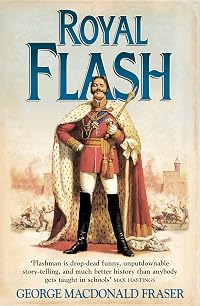
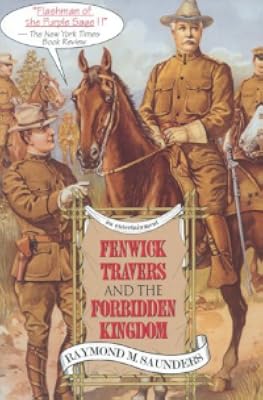
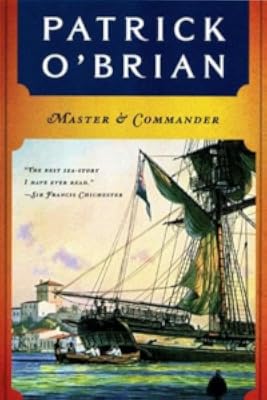
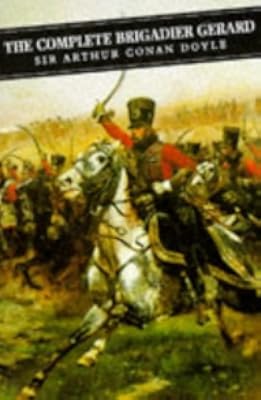
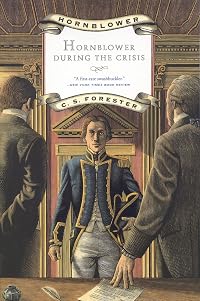
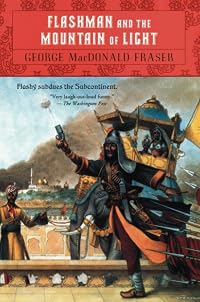
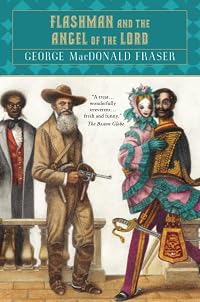
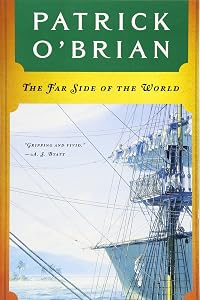
karatelpek Similar pace and tone.
Member Reviews
"And to those imagined people on the road away, so very long ago, who had travelled so far and so well, so that he might travel back, and in the way of things, set out again." (pg. 550)
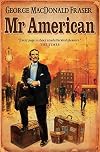
The cover of George MacDonald Fraser's novel Mr. American includes one line cherry-picked from a review in The Times, which states: 'Every page is sheer unadulterated pleasure.' Even though Fraser is my favourite writer – and to date I've read twelve Flashman novels, two memoirs, one film history, one complete collection of McAuslan stories and two more novels without encountering anything less than sheer unadulterated pleasure – I was still sceptical about this line. Despite knowing and loving Fraser's work as I did, I did not see how The Times' show more assertion could be true of every page for near-600 pages. But it is.
The writing is joyous, with Fraser's typical mastery of free-flowing prose that nevertheless contains lots of rich detail and unhurried diversions into interesting avenues that never cause drag to the pacing. The characters are as realized and lifelike as they always are, and whilst Mr. American is not a comic novel like many of his others Fraser finds plenty of easy humour. The plot is sweeping and yet meticulous, staging everything from Western gunfights to playing bridge with the King, and much more besides. Fraser even finds room for his most cherished literary creation, Harry Flashman, still the shameless rogue even at ninety years old. And it's not just a token cameo as I thought it might be: Flashy not only makes a number of appearances throughout but often stays for supper, treating us to his inimitable outspoken views and behaviour. As Fraser says, he bestrides this novel "like an elderly and debauched eagle, imbibing heroic quantities of champagne without visible effect, and occasionally making unnerving pronouncements." (pg. 195). For those of us who have devoured all the Flashman novels, further in-depth encounters with England's finest is like manna from heaven. First-rate indeed!
It's is not a book without its faults; it is longer than it needs to be, though Fraser's indulgences and divergences are always fascinating (with the possible exception of the extended game of bridge). Our protagonist Mark Franklin's encounters with upper-class British society and all the "affectation, and snobbery, and brittle emptiness, all the cruelty and shallowness and false values" that compose it (pg. 562) get you heated up, although they are no doubt designed to. But the plot is rather circular, which means stoking the reader's emotions becomes rather unnecessary when there is no payoff, tragic or otherwise. The ambiguous ending also seems unfair to readers who have invested in nearly 600 pages and have come to care about the characters.
That said, Fraser is a master of storytelling and though there is no overt conclusion or theme or closure for the reader to digest, Mr. American reminded me in many ways of the books of Charles Dickens, where the message is intangible and is revealed solely through the mood and tone of the exquisite storytelling. We really get a sense of time and place, of how the complacent moral bankruptcy of the Edwardian era collapsed into the reckoning of the First World War. Fraser appropriates that Dickensian knack of making setting and plot itself transport us into a new constructed world, where what the reader learns and understands depends entirely on how much they observe and invest. There's more to Mr. American than just basking in ars gratia artis, but if you want to bask decadently in prose there is scarcely any finer than that of George MacDonald Fraser. show less
The cover of George MacDonald Fraser's novel Mr. American includes one line cherry-picked from a review in The Times, which states: 'Every page is sheer unadulterated pleasure.' Even though Fraser is my favourite writer – and to date I've read twelve Flashman novels, two memoirs, one film history, one complete collection of McAuslan stories and two more novels without encountering anything less than sheer unadulterated pleasure – I was still sceptical about this line. Despite knowing and loving Fraser's work as I did, I did not see how The Times' show more assertion could be true of every page for near-600 pages. But it is.
The writing is joyous, with Fraser's typical mastery of free-flowing prose that nevertheless contains lots of rich detail and unhurried diversions into interesting avenues that never cause drag to the pacing. The characters are as realized and lifelike as they always are, and whilst Mr. American is not a comic novel like many of his others Fraser finds plenty of easy humour. The plot is sweeping and yet meticulous, staging everything from Western gunfights to playing bridge with the King, and much more besides. Fraser even finds room for his most cherished literary creation, Harry Flashman, still the shameless rogue even at ninety years old. And it's not just a token cameo as I thought it might be: Flashy not only makes a number of appearances throughout but often stays for supper, treating us to his inimitable outspoken views and behaviour. As Fraser says, he bestrides this novel "like an elderly and debauched eagle, imbibing heroic quantities of champagne without visible effect, and occasionally making unnerving pronouncements." (pg. 195). For those of us who have devoured all the Flashman novels, further in-depth encounters with England's finest is like manna from heaven. First-rate indeed!
It's is not a book without its faults; it is longer than it needs to be, though Fraser's indulgences and divergences are always fascinating (with the possible exception of the extended game of bridge). Our protagonist Mark Franklin's encounters with upper-class British society and all the "affectation, and snobbery, and brittle emptiness, all the cruelty and shallowness and false values" that compose it (pg. 562) get you heated up, although they are no doubt designed to. But the plot is rather circular, which means stoking the reader's emotions becomes rather unnecessary when there is no payoff, tragic or otherwise. The ambiguous ending also seems unfair to readers who have invested in nearly 600 pages and have come to care about the characters.
That said, Fraser is a master of storytelling and though there is no overt conclusion or theme or closure for the reader to digest, Mr. American reminded me in many ways of the books of Charles Dickens, where the message is intangible and is revealed solely through the mood and tone of the exquisite storytelling. We really get a sense of time and place, of how the complacent moral bankruptcy of the Edwardian era collapsed into the reckoning of the First World War. Fraser appropriates that Dickensian knack of making setting and plot itself transport us into a new constructed world, where what the reader learns and understands depends entirely on how much they observe and invest. There's more to Mr. American than just basking in ars gratia artis, but if you want to bask decadently in prose there is scarcely any finer than that of George MacDonald Fraser. show less
I so thoroughly enjoyed the first half of this book that I couldn't put it down. From the halfway point though, I found the plot slower and unsatisfying in light of this novel's early promise. Frazer does develop some fantastic opportunities for conflict and crisis around the central character, Mark Franklin, any one of which might have provided tension and excitement enough to compel a reader throughout the story. However he also created, in Mark Franklin, a character so sensible and self-contained as to ensure that every crisis is tackled head-on with quick, calm efficiency. In short, the key events fail to grip as they might have done. That said, Mr American is still well worth reading for Frazer's impecable depiction of Edwardian show more England and its people, and a cameo appearance by an aged Flashman (in his nineties) is a real treat. show less
After having read the twelve Flashman novels and enjoying them immensely, I order this book along with Black Ajax, penned by the same author.
The story follows Mark Franklin, an American prospector who hit it rich in the Nevada silver rush and has relocated to his ancestral home in England. Though Franklin is by no means an ignorant hillbilly, he is unfamiliar with upper class British ways, though he adopts far more gracefully than would most in his circumstances.
Of particular enjoyment is the periodic appearance of Sir Harry Flashman, now over 90 years old, but none the worse for wear. Flashman plays a relatively minor role in the story, but certainly casts a long shadow. There are several undercurrents at play during the course of the show more book, which I found intriguing and which did not always resolve as might be expected.
While this does not rise to the level of some of the better Flashman installments, it is still an enjoyable read. show less
The story follows Mark Franklin, an American prospector who hit it rich in the Nevada silver rush and has relocated to his ancestral home in England. Though Franklin is by no means an ignorant hillbilly, he is unfamiliar with upper class British ways, though he adopts far more gracefully than would most in his circumstances.
Of particular enjoyment is the periodic appearance of Sir Harry Flashman, now over 90 years old, but none the worse for wear. Flashman plays a relatively minor role in the story, but certainly casts a long shadow. There are several undercurrents at play during the course of the show more book, which I found intriguing and which did not always resolve as might be expected.
While this does not rise to the level of some of the better Flashman installments, it is still an enjoyable read. show less
Worth reading if you are Flashman fan, if only for the fun appearances by 80-90 year-old Sir Harry. It's well written and the first half is really engaging, but as noted by many others here, the second half is a bit of letdown. Reads more like a William Boyd novel than typical Fraser one.
I've read this novel three times and love it more every time. The way it begins and ends, with Mr American's life and adventures in between, is so well done. MacDonald's wit, teasing humour, and sheer style of writing is so very, very good.
A mysterious and wealthy American arrives in England and buys a house in the village his ancestors emigrated from. He accidently becomes involved in high society by meeting the king and amusing him. Marriage to daughter of baronet follows. His past catches up with him and, disillusioned by his wife's dishonesty he plans to return to US shortly after WW I breaks out. But does he? Cameos by General Flashman. I read this years ago but had forgotten the suffagist sub-plot and the arming of Irish Unionists.
Mr. Fraser doesn't shine in this story about love betrayed. But there is a pretty good section relating to this truth, that your past will catch up with you, for good or ill. We do discover what did, happen to Flashy, and Fraser gets to use his research into the Hole-in-the Wall gang.
This book did improve on the reread.
This book did improve on the reread.
Members
- Recently Added By
Author Information

50+ Works 19,770 Members
Author George MacDonald Fraser was born April 2, 1925 in Carlisle. He was refused entrance to the medical faculty of Glasgow University, so he joined the army in 1943. He served as an infantryman with the 17th Indian Division of the XIVth Army in Burma, a lance corporal and was commissioned in the Gordon Highlanders. After the war, he became a show more sports reporter with the Carlisle Journal; and during this time, he met and married Kathleen Hetherington, a reporter from another paper. He worked as a reporter and sub-editor on the Cumberland News and then moved to Glasgow, in 1953, where he worked at the Glasgow Herald as a features editor and deputy editor. Fraser's first novel was "Flashman" (1969), which was followed by nine sequels, so far, that deal with different venues of the 19th century ranging from Russia, Borneo and China to the Great Plains of the America West. Some of the other titles in the Flashman Papers are "Royal Flash" (1970), "Flashman in the Great Game" (1975), "Flashman and the Redskins" (1982), and "Flashman and the Angel of the Lord" (1994). Some of his non-fiction work includes "The Steel Bonnets" (1971), which is a factual study of the Anglo-Scottish border thieves in the seventeenth century, and "Quartered Safe Out Here" (1992). Fraser has also written a number of screenplays that include "The Three Musketeers" (1973), "Royal Flash" (1975), "Octopussy" (1983), and "Return of the Musketeers" (1989). He has also written a series of short stories about Private McAuslan whose titles include "The General Danced at Dawn" (1970), "McAuslan in the Rough" (1974), and "The Sheik and the Dustbin and other McAuslan Stories" (1988). He died of cancer on January 2, 2008. (Bowker Author Biography) show less
Awards and Honors
Notable Lists
Series
Belongs to Publisher Series
Harvill (109)
Common Knowledge
- Original publication date
- 1980
Classifications
Statistics
- Members
- 306
- Popularity
- 105,143
- Reviews
- 10
- Rating
- (3.69)
- Languages
- English
- Media
- Paper, Audiobook, Ebook
- ISBNs
- 11
- ASINs
- 1