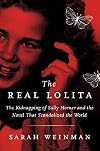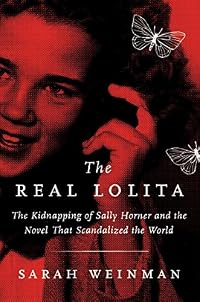
The Real Lolita: The Kidnapping of Sally Horner and the Novel That Scandalized the World
by Sarah Weinman
On This Page
Description
Vladimir Nabokov's Lolita is one of the most beloved and notorious novels of all time. And yet, very few of its readers know that the subject of the novel was inspired by a real-life case: the 1948 abduction of eleven-year-old Sally Horner. Weaving together suspenseful crime narrative, cultural and social history, and literary investigation, The Real Lolita tells Sally Horner's full story for the very first time. Drawing upon extensive investigations, legal documents, public records, and show more interviews with remaining relatives, Sarah Weinman uncovers how much Nabokov knew of the Sally Horner case and the efforts he took to disguise that knowledge during the process of writing and publishing Lolita. Sally Horner's story echoes the stories of countless girls and women who never had the chance to speak for themselves. By diving deeper in the publication history of Lolita and restoring Sally to her rightful place in the lore of the novel's creation, The Real Lolita casts a new light on the dark inspiration for a modern classic. show lessTags
Recommendations












Member Reviews
I read Lolita a long time ago, and now I feel compelled to revisit it after reading The Real Lolita. I would like to read it again at another stage in my life and after the cultural changes that have occurred in the last couple of decades. I would also like to see how the real-life events of Sally Horner may have impressed upon Nabokov to create his story.
Sally Horner was a very real girl living a very normal life in Camden, New Jersey when she fell victim to Frank La Salle. He caught her stealing and told her she was in trouble unless she did what he said. He convinced her that he was from law enforcement, then convinced her mother that he was Sally’s school friend’s father, and invited Sally to a family vacation in Atlantic City. show more Sally’s mother, Ella, did not see Sally again for almost two years.
Nabokov started working on Lolita well before Sally was abducted. It was a stalled project that he could not quite get off the ground, even threatening to burn his work. He worked on the novel during summer breaks from teaching while traveling across the country with his wife. Not only did he write about Sally on one of his notecards for the novel, he also mentions Sally in the novel. The author speculates that Sally’s story is partly how Nabokov was able to complete the story of Lolita; that her story inspired his.
The author lays out her thesis beautifully, informed by well-researched details. She used primary sources and interviews with those still living to help round out the narrative. She also took the reader on parallel journeys through the use of road trips.
Lolita became something that Nabokov may not have predicted. The novel was a success but the damage to Dolores is overlooked. The focus of the public became the same prurient focus that Humbert had rather than the struggle for survival of a little girl. In many ways, Dolores and Sally shared more in common than their abductions and sexual abuse. They were misunderstood, their humanity and true selves neglected, other people creating their stories for them. show less
Sally Horner was a very real girl living a very normal life in Camden, New Jersey when she fell victim to Frank La Salle. He caught her stealing and told her she was in trouble unless she did what he said. He convinced her that he was from law enforcement, then convinced her mother that he was Sally’s school friend’s father, and invited Sally to a family vacation in Atlantic City. show more Sally’s mother, Ella, did not see Sally again for almost two years.
Nabokov started working on Lolita well before Sally was abducted. It was a stalled project that he could not quite get off the ground, even threatening to burn his work. He worked on the novel during summer breaks from teaching while traveling across the country with his wife. Not only did he write about Sally on one of his notecards for the novel, he also mentions Sally in the novel. The author speculates that Sally’s story is partly how Nabokov was able to complete the story of Lolita; that her story inspired his.
The author lays out her thesis beautifully, informed by well-researched details. She used primary sources and interviews with those still living to help round out the narrative. She also took the reader on parallel journeys through the use of road trips.
Lolita became something that Nabokov may not have predicted. The novel was a success but the damage to Dolores is overlooked. The focus of the public became the same prurient focus that Humbert had rather than the struggle for survival of a little girl. In many ways, Dolores and Sally shared more in common than their abductions and sexual abuse. They were misunderstood, their humanity and true selves neglected, other people creating their stories for them. show less
As per usual with most must reads, I have no plans to ever read Nabokov, and now this book confirms my issues with Lolita. It’s horrifying what this little girl went through and that her story is not remembered, and I mean both Sally Horner and the little girl (for she was a child) in Lolita. I hope that continued time will put Sally’s short life story out there more; and I hope people realize that no matter how beautiful the writing they’re drooling over is, they need to get over it and understand that there’s a real life story behind the words. Ugh I’m angry.
Part true crime, part biography, this book examines the real-life abduction that inspired Nabokov's masterpiece, Lolita. Although the story had lived in Nabokov's mind for many years, there is no doubt that the tragic life and death of Sally Horner contributed much to the finer details of the novel.
The author's main goal with this book is to untangle the novel and all its many other media impacts from the experience of the real-life girl whose abduction scandalized the country. The author delves deep into the records we have about her and does her level best to give her ownership of her own story. She was not just an exciting news item but a person and one with a tragically shortened existence.
She also examines Nabokov's life and how he show more wrote the novel and what came after. This is a fascinating revelation and a very complex read. Who owns a story? Who has the right to profit from your life? These questions are delved into and examined as well. show less
The author's main goal with this book is to untangle the novel and all its many other media impacts from the experience of the real-life girl whose abduction scandalized the country. The author delves deep into the records we have about her and does her level best to give her ownership of her own story. She was not just an exciting news item but a person and one with a tragically shortened existence.
She also examines Nabokov's life and how he show more wrote the novel and what came after. This is a fascinating revelation and a very complex read. Who owns a story? Who has the right to profit from your life? These questions are delved into and examined as well. show less
Sarah Weinman's The Real Lolita is so entertainingly written, it is easy to overlook the fact that there is only very limited information is available about the title character.
In the late 1940s drifter Frank LaSalle convinced eleven year old Sally Horner of Camden, NJ, that he was an FBI agent and that she would be in major trouble if she didn't accompany him on his cross-country travels. The young girl was sexually abused by the older man until she "aged out" of his depraved personal tastes. Unfortunately, she did not live very long after her rescue, so she never had a chance to tell her own story as an adult. The author gamely tries to fill the resultant gap in facts related to the time Sally spent with LaSalle with conjecture, show more tangential information about other crimes, and a discussion of Vladimir Nabokov's novel Lolita, which may have drawn upon Sally's story in its similar plot (even though Nabokov refused to admit it). But there is no disguising that there are a giant holes in the middle of the Weinman's narrative. Despite its limitations, I enjoyed this attempt to recover the life of a lost girl. Recommended. show less
In the late 1940s drifter Frank LaSalle convinced eleven year old Sally Horner of Camden, NJ, that he was an FBI agent and that she would be in major trouble if she didn't accompany him on his cross-country travels. The young girl was sexually abused by the older man until she "aged out" of his depraved personal tastes. Unfortunately, she did not live very long after her rescue, so she never had a chance to tell her own story as an adult. The author gamely tries to fill the resultant gap in facts related to the time Sally spent with LaSalle with conjecture, show more tangential information about other crimes, and a discussion of Vladimir Nabokov's novel Lolita, which may have drawn upon Sally's story in its similar plot (even though Nabokov refused to admit it). But there is no disguising that there are a giant holes in the middle of the Weinman's narrative. Despite its limitations, I enjoyed this attempt to recover the life of a lost girl. Recommended. show less
I have never read Lolita, but if I ever do, I can say with certainty that reading this book will have enhanced the experience. Everything I learned in this book is important, from the actual intent of the original book and the actual story of Sally Horner and what she suffered. So much is lost when you get swept up in what people assume is meant on something they've never read. This is a stark reminder of what is present- as well as what is not.
Technically speaking, this book is very well paced, easy to follow, and well written. Its respectful of the pain involved and doesn't go into unnecessary detail about any of the harm done. I recommend it to anyone who has the stomach for knowing more about the subject matters.
Technically speaking, this book is very well paced, easy to follow, and well written. Its respectful of the pain involved and doesn't go into unnecessary detail about any of the harm done. I recommend it to anyone who has the stomach for knowing more about the subject matters.
I thought this book would be more about the Sally Horner kidnapping and less on the author of Lolita. This book is basically a love letter to the author while acknowledging that he used the horrors Horner went through without publicly admitting he had done so. When the case is compared to Sally Horner's kidnapping it is obvious that the author of Lolita blatantly used her abuse to his financial advantage.
This was a very interesting read. It is partly a true crime story, describing the kidnapping and repeated rape of a young girl, Sally Horner. It is partly a literary study, showing how Sally Horner's story is paralleled in Nabokov's famous novel, Lolita. Both parts are well researched and compelling and gave me a deeper insight into Lolita as a novel. It is important, though often painful, to remember that there is a lot of truth behind some of the tragic stories we read about.
The book is well written, but I was frustrated, at times, by what seemed like filler. The author describes other crimes that happened while Sally remained missing, but these had no real bearing on the premise of the book.
The book is well written, but I was frustrated, at times, by what seemed like filler. The author describes other crimes that happened while Sally remained missing, but these had no real bearing on the premise of the book.
Members
- Recently Added By
Published Reviews
ThingScore 63
Though Nabokov himself steadfastly denied that his magnum opus — some 20 years in the making — had roots in the foul rag-and-bone shop of true crime, Weinman assembles a substantial array of evidence that points to a horrific real-life story at the center of this novel, a life story that, she says, Nabokov “strip-mined to produce the bones of Lolita.”...
Weinman has evocatively show more reconstructed Sally’s nightmare, as well as the sexual mores of mid-20th-century America. When Sally’s mother was told her daughter had been found alive in a California trailer park, she reacted by saying, “Whatever she has done, I can forgive her.” Upon her return to junior high in Camden, Sally was ostracized; the boys “looked at her as a total whore,” a friend told Weinman. show less
Weinman has evocatively show more reconstructed Sally’s nightmare, as well as the sexual mores of mid-20th-century America. When Sally’s mother was told her daughter had been found alive in a California trailer park, she reacted by saying, “Whatever she has done, I can forgive her.” Upon her return to junior high in Camden, Sally was ostracized; the boys “looked at her as a total whore,” a friend told Weinman. show less
added by SnootyBaronet
“The Real Lolita” is Sarah Weinman’s attempt to pull back the veil on the kidnapping that may have helped inspire Nabokov’s novel. The sections detailing Sally’s abduction read as standard-issue, ripped-from-the-headlines Dead Girl fare. They’re lurid. Heady. The pre-teen victim possesses a “fantastic power . . . the capacity to haunt.” Weinman has written widely on crime show more fiction; in her own prose, cheesed-up cliffhangers abound: “The joke became truth before the summer of 1955 was over”; “the stuff of nightmares that would rip any mother apart.”... But this book presents no evidence that Nabokov exploited Sally Horner to breathe life into his imaginings. What it insinuates, powerfully, is that Weinman has exploited both Sally and Nabokov to justify her prurient interest in yet another sad, dead girl. show less
added by SnootyBaronet
Lists

Books Read in 2019
4,052 works; 108 members
Author Information

11+ Works 1,618 Members
Sarah Weinman is the author of The Real Lolita: A Lost Girl, an Unthinkable Crime, and a Scandalous Masterpiece. She writes the crime column for the New York Times Book Review and lives in New York City.
Awards and Honors
Awards
Distinctions
Notable Lists
Common Knowledge
- Original publication date
- 2018
- People/Characters
- Sally Horner; Lolita; Vladimir Nabokov
- Epigraph
- You have to be an artist and a madman, a creature of infinite melancholy, with a bubble of hot poison in your loins and a super-voluptuous flame permanently aglow in your subtle spine (oh, how you have to cringe and hide!), i... (show all)n order to discern at once, by ineffable signs--the slightly feline outline of a cheekbone, the slenderness of a downy limb, and other indices which despair and shame and tears of tenderness forbid me to tabulate--the little deadly demon among the wholesome children; she stands unrecognized by them and unconscious herself of her fantastic power.
--Vladimir Nabokov, Lolita
I want to go home as soon as I can.
--Sally Horner, March 21, 1950 - Dedication
- For my mother
- First words
- A couple of years before her life changed course forever, Sally Horner posed for a photograph.
- Last words
- (Click to show. Warning: May contain spoilers.)A girl immortalized, and forever trapped, in the pages of a classic novel of satire and sadness, like a butterfly with wings damaged before ever having the chance to fly.
- Blurbers
- Grann, David; Abbott, Megan; King, Gilbert; Lippman, Laura; Kolker, Robert
- Canonical DDC/MDS
- 364.154092
Classifications
- Genres
- Nonfiction, Literature Studies and Criticism, General Nonfiction, History, Biography & Memoir
- DDC/MDS
- 364.154092 — Society, Government, and Culture Social problems and social services Crime Criminal offenses Offenses against the person Kidnapping Standard subdivisions History, geographic treatment, biography Biography
- LCC
- HV6603 .H67 .W45 — Social sciences Social pathology. Social and public welfare. Criminology Social pathology. Social and public welfare. Criminology Crimes and offenses
- BISAC
Statistics
- Members
- 535
- Popularity
- 55,504
- Reviews
- 31
- Rating
- (3.57)
- Languages
- English
- Media
- Paper, Audiobook, Ebook
- ISBNs
- 22
- ASINs
- 4