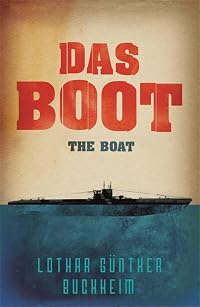
The Boat
by Lothar-Günther Buchheim
On This Page
Description
Filled with almost unbearable tension and excitement, DAS BOOT is one of the best stories ever written about war, a supreme novel of the Second World War and an acclaimed film and TV drama. It is autumn 1941 and a German U-boat commander and his crew set out on yet another hazardous patrol in the Battle of the Atlantic. Over the coming weeks they must brave the stormy waters of the Atlantic in their mission to seek out and destroy British supply ships. But the tide is beginning to turn show more against the Germans in the war for the North Atlantic. Their targets now travel in convoys, fiercely guarded by Royal Navy destroyers, and when contact is finally made the hunters rapidly become the hunted. As the U-boat is forced to hide beneath the surface of the sea a cat-and-mouse game begins, where the increasing claustrophobia of the submarine becomes an enemy just as frightening as the depth charges that explode around it. Of the 40,000 men who served on German submarines, 30,000 never returned. Written by a survivor of the U-boat fleet, DAS BOOT is a psychological drama merciless in its intensity, and a classic novel of the Second World War. show lessTags
Recommendations




























Member Recommendations


Member Reviews
It is a long book, with long stretches where nothing is happening, interspersed with short sections of terror and action. This is by design. The book makes you feel the boredom of weeks and weeks out at sea when nothing is happening, but also the visceral horror of bring trapped in a metal tube at the bottom of the ocean.
This style of writing is a bit crude, but effective. A better author might have evoked the concepts of boredom and terror without actually being boring. But it works. It is only boring in places that are supposed to be boring, and vividly communicates the emotions of life in a U-boat.
In the end, I can hardly imagine a worse fate than having to live and work in a U-boat in WW2. And a book that manages to evoke this much show more dread, is a good one to me. show less
This style of writing is a bit crude, but effective. A better author might have evoked the concepts of boredom and terror without actually being boring. But it works. It is only boring in places that are supposed to be boring, and vividly communicates the emotions of life in a U-boat.
In the end, I can hardly imagine a worse fate than having to live and work in a U-boat in WW2. And a book that manages to evoke this much show more dread, is a good one to me. show less
Having seen some of the TV adaptation, I'd always intended to read this but it was only when my wife gave me a pre-owned copy for Christmas that I got round to it.
The book provides an entirely convincing description of life on a u-boat, complete with the authentic contrast between the time spent bored witless on patrol and the nerve-twisting tension of combat. The last quarter of the book caused me considerable difficulty because I couldn't put it down and completely neglected some important things.
The other interesting aspect of the book is its ability to draw one into the minds of people who - in the end - were fighting for Nazi Germany. Most people probably understand in theory how it must have felt to be fighting on the German side show more in WWII were able to do so, but this gives a very clear idea of how it must have felt. show less
The book provides an entirely convincing description of life on a u-boat, complete with the authentic contrast between the time spent bored witless on patrol and the nerve-twisting tension of combat. The last quarter of the book caused me considerable difficulty because I couldn't put it down and completely neglected some important things.
The other interesting aspect of the book is its ability to draw one into the minds of people who - in the end - were fighting for Nazi Germany. Most people probably understand in theory how it must have felt to be fighting on the German side show more in WWII were able to do so, but this gives a very clear idea of how it must have felt. show less
Probably the most existential and realistic book of submarine warfare from the point of view of a German crew that I have read. It reveals an experience most would rather not have had to live through.
Submarines need buoyancy to function. Salt water makes that extremely difficult because the specific gravity of salt water varies with depth, temperature, the amount of plankton, salinity, even the time of year. (Apparently fresh water is much easier.) Now let’s assume that the specific gravity changes by 1/1000, a small enough amount. If the weight of the sub is 800 tons, the weight must change by 1/1000 or 1600 lbs., not an insignificant amount. The weight has to be increased or decreased as the case may be.
Or let’s say the cook moves show more a 100 lb. sack of potatoes from the stern forward. That amount of weight has to be redistributed by pumping an equivalent amount of water back to the stern in the trim tanks. You will never think of submarines in quite the same way after you have read the description of their sub in the midst of a storm having to run on the surface for speed (if you could call it that) and to charge the batteries, the boat plunging and heaving through the waves. Can submarines capsize?
This kind of fascinating information adds such verisimilitude to one of the submarine classics to come out of WW II. The author served as a naval correspondent on U-Boots during the war and experienced much of what he then wrote about. I have seen the movie (in German) and listened to the audiobook in addition to reading the book (in English). Not recommended in any form if you have a heart condition.
“All doubts are silenced by the concept of duty.” Think about that. show less
Submarines need buoyancy to function. Salt water makes that extremely difficult because the specific gravity of salt water varies with depth, temperature, the amount of plankton, salinity, even the time of year. (Apparently fresh water is much easier.) Now let’s assume that the specific gravity changes by 1/1000, a small enough amount. If the weight of the sub is 800 tons, the weight must change by 1/1000 or 1600 lbs., not an insignificant amount. The weight has to be increased or decreased as the case may be.
Or let’s say the cook moves show more a 100 lb. sack of potatoes from the stern forward. That amount of weight has to be redistributed by pumping an equivalent amount of water back to the stern in the trim tanks. You will never think of submarines in quite the same way after you have read the description of their sub in the midst of a storm having to run on the surface for speed (if you could call it that) and to charge the batteries, the boat plunging and heaving through the waves. Can submarines capsize?
This kind of fascinating information adds such verisimilitude to one of the submarine classics to come out of WW II. The author served as a naval correspondent on U-Boots during the war and experienced much of what he then wrote about. I have seen the movie (in German) and listened to the audiobook in addition to reading the book (in English). Not recommended in any form if you have a heart condition.
“All doubts are silenced by the concept of duty.” Think about that. show less
‘U-boat’ (also published as ‘Das Boot’), the fictionalised account of a WW2 German u-boot war patrol is the best account, bar none, of life on a German U-boot.
In reality Buchheim had shipped on U-96 (Lieutenant-Commander Heinrich Lehmann-Willenbrock) as a Leutnant photographer and writer in the propaganda unit of the German navy, for a single Atlantic patrol in 1941. Experiences on that patrol gave him the experience and factual background to write ‘U-boat’, eventually published in 1973. The book was used as the basis for the 1981 blockbuster film and TV series ‘Das Boot’ which was nominated for six Oscars.
The book is raw, gritty and earthy. It brilliantly pictures the boredom, fear, terror and awful moral dilemmas of show more U-boot patrols. Anyone who has served in the military of any nation will recognise the mix of characters that crew the boat. The tension is gripping and the mental images painted by Buchheim endure long after you have finished the book. Excellent. show less
In reality Buchheim had shipped on U-96 (Lieutenant-Commander Heinrich Lehmann-Willenbrock) as a Leutnant photographer and writer in the propaganda unit of the German navy, for a single Atlantic patrol in 1941. Experiences on that patrol gave him the experience and factual background to write ‘U-boat’, eventually published in 1973. The book was used as the basis for the 1981 blockbuster film and TV series ‘Das Boot’ which was nominated for six Oscars.
The book is raw, gritty and earthy. It brilliantly pictures the boredom, fear, terror and awful moral dilemmas of show more U-boot patrols. Anyone who has served in the military of any nation will recognise the mix of characters that crew the boat. The tension is gripping and the mental images painted by Buchheim endure long after you have finished the book. Excellent. show less
Das Boot (German, 1973) portrays a German U-Boat during the second half of 1941 at the height of the campaign; by 1943 U-Boats would cease to be a serious threat to Allied shipping. The crew is shown in more humanistic rather than propagandist terms, the German Captain is ambivalent about the Nazi's and Hitler, the only thing the crew thinks about repeatedly are whores and sex. Bad smells, soiled clothing, wild facial hair, mold and claustrophobia are central actors. The juxtaposition of old whores and ships being blown up is effective, the banal vulgar details make the fighting scenes all the more real, and frightening. The ending is unfortunately melodramatic, but it's satisfying in a 19th century literary way. Buchheim wanted an show more anti-war novel that didn't glorify or mystify the German military, and from that perspective the ending makes sense, in the same way All Quite on the Western Front ends.
Since Buchheim actually served on a U-Boat during WWII, the novels verisimilitude is striking, many consider it to be the most authentic submarine novel ever written. This was re-enforced by the 1981 film version, which showed the technology of a U-Boat with great accuracy, although Buchheim criticized the Hollywood plot and hysterical acting as being overdone and cliche. He saw the film as "another re-glorification and re-mystification" of German heroism and nationalism. If you've seen the film, read the novel for a more sober and realistic look.
--Review by Stephen Balbach, via CoolReading (c) 2010 cc-by-nd show less
Since Buchheim actually served on a U-Boat during WWII, the novels verisimilitude is striking, many consider it to be the most authentic submarine novel ever written. This was re-enforced by the 1981 film version, which showed the technology of a U-Boat with great accuracy, although Buchheim criticized the Hollywood plot and hysterical acting as being overdone and cliche. He saw the film as "another re-glorification and re-mystification" of German heroism and nationalism. If you've seen the film, read the novel for a more sober and realistic look.
--Review by Stephen Balbach, via CoolReading (c) 2010 cc-by-nd show less
While this is a great story, I think the movie is better. Often, a big advantage of books over the movie is that the narration lets you inside the characters' minds. The narrator in this book, though, is thoroughly unconvincing as a character. Still, the narration is very cinematic, and you do get a lot more facts about U-boats than could be conveyed in the movie.
> The designers of our boat have dispensed with the storage rooms that on surface vessels are normally many and capacious—just as they have dispensed with washrooms. They have simply built their machines into this war tube and have persuaded themselves that, given the most sophisticated deployment of the jungle of pipes and huge propulsion engines, there would necessarily be show more enough nooks and crannies left over for the crew.
> If the Old Man decides to fire, the Chief must flood at once to make up for the weight of the torpedo. Otherwise the boat will rise. A torpedo weighs three thousand pounds—so an equivalent weight of water has to be taken on for each one launched.
> The small depth charges dropped by airplanes weigh about 150 pounds, the destroyer bombs about 500 pounds. At a depth of 350 feet, the lethal radius extends about 275 to 350 feet.
> The most dangerous bombs for the boat are those that explode diagonally under the keel, because the underside has the largest number of flanges and outboard plugs. The deeper you go, the smaller the lethal radius: the water pressure, which is itself a threat at such depths because of the overloading on the seams, also limits the effective radius of the bombs—at 130, it’s perhaps 160 feet.
> The Chief is bending forward toward the hydroplane operators. His face is thrown into unnatural relief against the dark background, like that of an actor lit only by the footlights, every bone emphasized by dark lines or shadow. His hand looks waxen. There’s a black streak across his right cheek. He’s narrowed his eyes as if dazzled by the light.
> The excruciating tension exerted on the steel skin is torture to me: I feel as if my own skin were being stretched. Another crack resounds, as loud as a rifle shot, and my scalp twitches. Under this insane pressure our hull is as fragile as an eggshell.
> They have to be running at full speed before they fire. If those bastards could use their Asdic to sneak up right over the boat before dropping their cans, this cat and mouse game would have been over long ago. As it is, they have to attack at high speed so as not to blow themselves out of the water when their bombs go off.
> I concentrate on imagining how one could reproduce all of this, this entire scene, in papier mâché for the stage. Everything very exact. Scale one to one. It would be easy: just remove the port wall—that’s where the audience would sit. No elevated stage. Everything face to face. Direct view of the hydroplane station. Shift the sky periscope up front to give the whole thing perspective. I fix in my mind the positions and attitudes of the actors: the Old Man leaning against the periscope shaft—solid, heavy-set, in his ragged sweater, his furlined vest, his salt-flecked boots with their thick cork soles, the stubborn tangle of hair escaping from under his old battered cap with its tarnished trim. Color of his beard: sauerkraut, slightly rotten sauerkraut.
> I’m overwhelmed with horror at what we have done with our torpedoes. Delayed reaction. One stab at the firing lever! I close my eyes to blot out the haunting visions, but I continue to see the sea of flames spreading out over the water and men swimming for their lives.
> At great depths the pressure of the water reduces the actual volume of the boat. Hence the boat gains excess weight compared to the water it displaces. So the more we are compressed, the heavier we get. show less
> The designers of our boat have dispensed with the storage rooms that on surface vessels are normally many and capacious—just as they have dispensed with washrooms. They have simply built their machines into this war tube and have persuaded themselves that, given the most sophisticated deployment of the jungle of pipes and huge propulsion engines, there would necessarily be show more enough nooks and crannies left over for the crew.
> If the Old Man decides to fire, the Chief must flood at once to make up for the weight of the torpedo. Otherwise the boat will rise. A torpedo weighs three thousand pounds—so an equivalent weight of water has to be taken on for each one launched.
> The small depth charges dropped by airplanes weigh about 150 pounds, the destroyer bombs about 500 pounds. At a depth of 350 feet, the lethal radius extends about 275 to 350 feet.
> The most dangerous bombs for the boat are those that explode diagonally under the keel, because the underside has the largest number of flanges and outboard plugs. The deeper you go, the smaller the lethal radius: the water pressure, which is itself a threat at such depths because of the overloading on the seams, also limits the effective radius of the bombs—at 130, it’s perhaps 160 feet.
> The Chief is bending forward toward the hydroplane operators. His face is thrown into unnatural relief against the dark background, like that of an actor lit only by the footlights, every bone emphasized by dark lines or shadow. His hand looks waxen. There’s a black streak across his right cheek. He’s narrowed his eyes as if dazzled by the light.
> The excruciating tension exerted on the steel skin is torture to me: I feel as if my own skin were being stretched. Another crack resounds, as loud as a rifle shot, and my scalp twitches. Under this insane pressure our hull is as fragile as an eggshell.
> They have to be running at full speed before they fire. If those bastards could use their Asdic to sneak up right over the boat before dropping their cans, this cat and mouse game would have been over long ago. As it is, they have to attack at high speed so as not to blow themselves out of the water when their bombs go off.
> I concentrate on imagining how one could reproduce all of this, this entire scene, in papier mâché for the stage. Everything very exact. Scale one to one. It would be easy: just remove the port wall—that’s where the audience would sit. No elevated stage. Everything face to face. Direct view of the hydroplane station. Shift the sky periscope up front to give the whole thing perspective. I fix in my mind the positions and attitudes of the actors: the Old Man leaning against the periscope shaft—solid, heavy-set, in his ragged sweater, his furlined vest, his salt-flecked boots with their thick cork soles, the stubborn tangle of hair escaping from under his old battered cap with its tarnished trim. Color of his beard: sauerkraut, slightly rotten sauerkraut.
> I’m overwhelmed with horror at what we have done with our torpedoes. Delayed reaction. One stab at the firing lever! I close my eyes to blot out the haunting visions, but I continue to see the sea of flames spreading out over the water and men swimming for their lives.
> At great depths the pressure of the water reduces the actual volume of the boat. Hence the boat gains excess weight compared to the water it displaces. So the more we are compressed, the heavier we get. show less
Vivid and occasionally over the top but likely a good reflection of life in a UBoat.
Members
- Recently Added By
Lists

Read the book and saw the movie
1,170 works; 195 members

water on the brain: maritime fiction
74 works; 18 members

Best Sea Stories
33 works; 5 members

Books about World War II
241 works; 22 members

SWORDS GUNS BATTLES
30 works; 3 members
Author Information

Writer and art collector Lothar-Günther Buchheim studied at the Academies of Art in Dresden and Munich before becoming a reporter in the German navy during World War II. He was stationed aboard the U-96 in 1941 and took part in submarine operations in the Atlantic Ocean and Straits of Gibraltar. He photographed and wrote about his experience for show more propaganda purposes, but in 1973 he wrote the novel Das Boot or The Boat, which carried an underlying anti-war message. This novel was made into a German film in 1981. He also wrote U-Boat War, which is a non-fiction work that includes more than 5,000 of his photos from the U-96. He was an art collector that founded a museum to house his collection. He died from heart failure at the age of 89 on February 22, 2007. (Bowker Author Biography) show less
Some Editions
Awards and Honors
Distinctions
Notable Lists
Series
Belongs to Publisher Series
Work Relationships
Has the adaptation
Common Knowledge
- Canonical title
- The Boat
- Original title
- Das Boot
- Original publication date
- 1973; 1975-05 (English: Lindley) (English: Lindley)
- Important places
- Atlantic Ocean; North Atlantic Ocean
- Important events
- World War II (1939 | 1945); Battle of the Atlantic (1939 | 1945)
- Related movies
- Das Boot (1981 | IMDb)
- Epigraph*
- De geschiedenis van een onderzeeboot en zijn bemanning.
- First words*
- Von der Offiziersunterkunft im Hotel "Majestic" zur "Bar Royal" führt die Straße dicht am Strand entlang, eine einzige langgestreckte Kurve von fünf Kilometern Länge.
- Last words*
- (Click to show. Warning: May contain spoilers.)Aber es ist Blut, das ihm über die Lippen stürzt.
- Original language*
- saksa
- Disambiguation notice
- This is an abridged version of the novel. Please do NOT combing with the original work.
*Some information comes from Common Knowledge in other languages. Click "Edit" for more information.
Classifications
- Genres
- Fiction and Literature, General Fiction, Historical Fiction
- DDC/MDS
- 833.914 — Literature & rhetoric German & related literatures German fiction 1900- 1900-1990 1945-1990
- LCC
- PT2662 .U3134 .B613 — Language and Literature German, Dutch and Scandinavian literatures German literature Individual authors or works 1961-2000
- BISAC
Statistics
- Members
- 1,227
- Popularity
- 20,178
- Reviews
- 24
- Rating
- (4.18)
- Languages
- 15 — Czech, Danish, Dutch, English, Estonian, Finnish, French, German, Italian, Norwegian (Bokmål), Polish, Portuguese, Russian, Spanish, Swedish
- Media
- Paper, Audiobook, Ebook
- ISBNs
- 59
- ASINs
- 36