
The Cruel Sea
by Nicholas Monsarrat
On This Page
Description
The highly acclaimed 'Cruel Sea' is one of the all-time great naval and war thrillers. The film was a smash hit when released and both it and the book continue to enjoy undiminished popularity. It covers not just the details of the battle of the Atlantic, but deals with the people who fought it - their domestic triumphs, tragedies, worries and ambitions. Nicholas Monsarrat wrote: 'This is the story - the long and true story - of one ocean, two ships, and about a hundred and fifty men. It is show more a long story because it deals with a long and brutal battle, the worst of any war. It has two ships because one was sunk, and had to be replaced. It has a hundred and fifty men because that is a manageable number of people to tell a story about. Above all, it is a true story because that is the only kind worth telling. First, the ocean, the steep Atlantic stream. The map will tell you what that looks like: three-cornered, three thousand miles across and a thousand fathoms deep, bounded by the European coastline and half of Africa, and the vast American continent on the other side: open at the top, like a champagne glass, and at the bottom, like a municipal rubbish dumper. What the map will not tell you is the strength and fury of that ocean, its moods, its violence, its gentle balm, its treachery: what men can do with it, and what it can do with men. But this story will tell you all that. Then the ship, the first of the two, the doomed one. At the moment she seems far from doomed: she is new, untried, lying in a river that lacks the tang of salt water, waiting for the men to man her. She is a corvette, a new type of escort ship, an experiment designed to meet a desperate situation still over the horizon. She is brand new; the time is November 1939; her name is HMS Compass Rose. Lastly, the men, the hundred and fifty men. They come on the stage in twos and threes: some are early, some are late, some, like this pretty ship, are doomed. When they are all assembled, they are a company of sailors. They have women, at least a hundred and fifty women, loving them, or tied to them, or glad to see the last of them as they go to war. But the men are the stars of this story. The only heroines are the ships: and the only villain the cruel sea itself. '. show lessTags
Recommendations














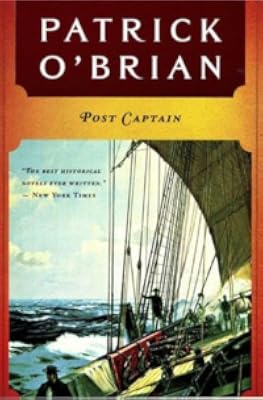


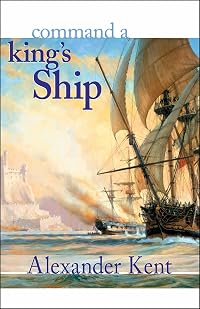



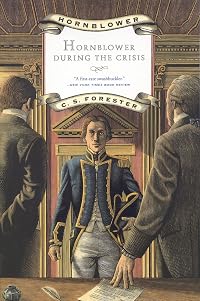


Member Recommendations


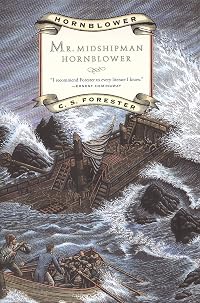
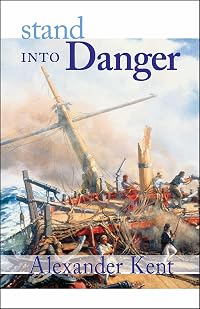
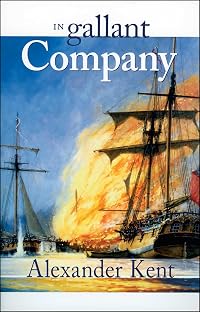
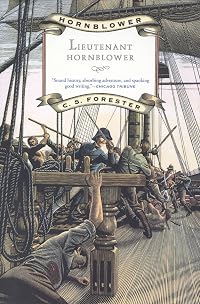
Thruston Also set on board RN ships fighting the Battle of the Atlantic in WW2


chrisharpe Set on a WWII bomber base, Pastoral examines similar themes to The Cruel Sea, giving authentic insight into the daily experience of Wellington crews.
Member Reviews
No author writing today, fiction or non-fiction, about the Battle of the Atlantic could match the authenticity of one who served and wrote this novel less than five years after the end of World War II. It is very raw and very real. Nicholas Monsarrat presented this as fiction, but it is easy to read him into the character of Lockhart, to view this as an amalgamation of his own recollections and the stories he heard from others.
Fiction may have provided him outlet to share and expose what perhaps he could not more openly address in any other way: the creeping fear of death, the horrors witnessed, post-traumatic stress, anxiety about women left at home, the outrage with soft-living types who didn't appreciate their sacrifice, and the show more impossibility of conveying these feelings to their loved ones while on leave, knowing they must soon face the strain again and fearing any loosening of their mettle.
I thought I'd heard all the horrors of war, but this was a whole new set to me. I thought submarines had it much worse, with their cramped and claustrophobic conditions, but it was really no better for those on the surface who felt their wretched vulnerability every moment at sea. Here are described months and months of convoy losses, hundreds of lives, with not a single submarine sinking to stand in the balance. Convoys that left port in strength, and arrived at their destination only a third their original size.
I'm only listing some dry facts. Read the novel and all of this comes to life, placing you there with the sailors, experiencing what they experienced, witnessing the personal costs. Even as fiction this serves as a fine testament, helping us never to forget what this generation sacrificed to do what they did. show less
Fiction may have provided him outlet to share and expose what perhaps he could not more openly address in any other way: the creeping fear of death, the horrors witnessed, post-traumatic stress, anxiety about women left at home, the outrage with soft-living types who didn't appreciate their sacrifice, and the show more impossibility of conveying these feelings to their loved ones while on leave, knowing they must soon face the strain again and fearing any loosening of their mettle.
I thought I'd heard all the horrors of war, but this was a whole new set to me. I thought submarines had it much worse, with their cramped and claustrophobic conditions, but it was really no better for those on the surface who felt their wretched vulnerability every moment at sea. Here are described months and months of convoy losses, hundreds of lives, with not a single submarine sinking to stand in the balance. Convoys that left port in strength, and arrived at their destination only a third their original size.
I'm only listing some dry facts. Read the novel and all of this comes to life, placing you there with the sailors, experiencing what they experienced, witnessing the personal costs. Even as fiction this serves as a fine testament, helping us never to forget what this generation sacrificed to do what they did. show less
I haven't read much fiction about WWII but I was motivated to read this because waaaaaay back in my late teens I read The Master Mariner, by the same author, a kind of Wandering Jew story covering the history of shipping from I can't remember how far back up to the age of oil super-tankers. It was good but frustrating in that Monsarrat died before completing it and most of the 20th Century exists only as a brief outline. This book being much more famous, I picked it up when I saw it reprinted and have finally got round to tackling it.
For those who have seen or heard about a particular incident in the film adaptation, I say now that no seagulls fly backwards over the cruel sea in the book...
Monsarrat notes before the action begins that show more this is a "long" book. Given that it is fewer than 500p it hardly seems so, but it is three times the length of a more typical novel of its day...and there is no bloating or padding here. It's a compelling tale from the outset and all the way through to the end, which covers the entire period of the war as the Royal Navy attempts to keep the vital supply lines of Merchant Navy traffic protected from the depredations of the German U-boats.
Initially we are introduced to a group of characters who will form the senior officers of a newly built corvette; a ship designed for submarine hunting. The captain is portrayed as a competent and experienced career naval officer. It is interesting how similar the notions of what this competence consists of and how it is displayed are to those given by O'Brian describing Jack Aubrey, a naval captain from the Napoleonic era. It would seem that the technology has changed but the fundamentals of the Royal Navy and the demands of running a ship of war haven't changed, if you can rely on O'Brian's historical portrayal.
The history of WWII in general outline drawn here should seem familiar; losing until the U.S.A drop neutrality, then clawing back on to even terms and after D-Day slowly struggling to victory; it's not really interesting in this regard. What is more interesting is the views espoused by the officers about the war and the contrasting attitudes given to civilian characters.
Ireland comes in for a lambasting; the country is potrayed as contemptible for remaining neutral and benefiting from the vital food and other supplies from North America, guarded by the Royal Navy, whilst at the same time allowing the Nazis to run an espionage base on their territory.
Civilians are largely viewed as soft and lacking dedication, unless they are part of the Merchant Navy. The men of the Royal Navy are mostly a stoically heroic bunch, but not in a propagandist, unrealistic way.
Various views, some cynical, about the motives of the war are espoused. One character suggests that the war is simply about who will dominate Europe; this was of course true: would it be the people who, despite such mass-murders as the bombings of Dresden, Hiroshima and Nagasaki, never had genocide in mind, or would it be the perpetrators of the Holocaust? show less
For those who have seen or heard about a particular incident in the film adaptation, I say now that no seagulls fly backwards over the cruel sea in the book...
Monsarrat notes before the action begins that show more this is a "long" book. Given that it is fewer than 500p it hardly seems so, but it is three times the length of a more typical novel of its day...and there is no bloating or padding here. It's a compelling tale from the outset and all the way through to the end, which covers the entire period of the war as the Royal Navy attempts to keep the vital supply lines of Merchant Navy traffic protected from the depredations of the German U-boats.
Initially we are introduced to a group of characters who will form the senior officers of a newly built corvette; a ship designed for submarine hunting. The captain is portrayed as a competent and experienced career naval officer. It is interesting how similar the notions of what this competence consists of and how it is displayed are to those given by O'Brian describing Jack Aubrey, a naval captain from the Napoleonic era. It would seem that the technology has changed but the fundamentals of the Royal Navy and the demands of running a ship of war haven't changed, if you can rely on O'Brian's historical portrayal.
The history of WWII in general outline drawn here should seem familiar; losing until the U.S.A drop neutrality, then clawing back on to even terms and after D-Day slowly struggling to victory; it's not really interesting in this regard. What is more interesting is the views espoused by the officers about the war and the contrasting attitudes given to civilian characters.
Ireland comes in for a lambasting; the country is potrayed as contemptible for remaining neutral and benefiting from the vital food and other supplies from North America, guarded by the Royal Navy, whilst at the same time allowing the Nazis to run an espionage base on their territory.
Civilians are largely viewed as soft and lacking dedication, unless they are part of the Merchant Navy. The men of the Royal Navy are mostly a stoically heroic bunch, but not in a propagandist, unrealistic way.
Various views, some cynical, about the motives of the war are espoused. One character suggests that the war is simply about who will dominate Europe; this was of course true: would it be the people who, despite such mass-murders as the bombings of Dresden, Hiroshima and Nagasaki, never had genocide in mind, or would it be the perpetrators of the Holocaust? show less
Published in 1951 a mere six years after the end of the second world war, this is a novel of historical fiction that tells the story and role of the smaller boats that formed the protective screen around the convoys that made regular crossings of the Atlantic ocean during the second world war. The strength of the novel lays in its depiction of the work and conditions aboard Corvettes and then Frigates who were in almost constant danger from german submarine (U boat) attacks and from the horrendous nautical conditions during the winter months. Monsarrat focuses on his leading character Keith Lockhart who held various posts on both types of boat under the command of a professional navy officer Ericson with whom he forged a good working show more relationship.
The novel follows Lockhart's journey through the war years from his initial posting as an officer recruited from a career in journalism at the start of the war until his position as first lieutenant in a new frigate at the end of hostilities. Monsarrat own career during the war followed a similar path and while the novel is not an autobiography, Monsarrat uses his experience to paint a picture of life on the high seas during wartime. He tells a story full of danger and adversity spiced with memorable seascapes and impossible working conditions. Lockhart's first boat the Compass Rose was one of the early corvettes which first took to the sea equipped with a small gun and depth charges, but without any radar and proved to be a soft target for the German U Boats. The corvette struggled in rough seas and its crew of ninety endured very cramped conditions, with more injuries caused by weather conditions than from hostile forces, but in danger on every trip of being sunk with perhaps the loss of all on board. Monsarrat's skills as a writer create a realistic picture of the struggle against superior forces and the toughness of the men to survive the attacks and the hard learned skills of officers who have to make life or death decisions. He creates plenty of tension and excitement.
While the novel also attempts to show relationships between the officers and sometimes between them and the ordinary ratings this is not its strongest point. It is good on a fairly superficial level and shows the teamwork needed to survive the awful conditions, but there is little in depth of characterisation and sometimes it feels a little corny. Where women do feature it is as lovers and wives of the men and one particular episode could qualify as a contender for the best "bad sex" episode of the year, remembering that the year is 1951. It could be said that Monsarrat never gets far beneath the oil skins. Where the novel ca appear even more unstuck when read today is when it strays into an insidious patriotism. I fully understand that people signing up for the war effort were brave and patriotic, but one gets the feeling when talking about other nations that Monsarrat is merely mouthing the xenophobia that was in existence at the time.
Reading the novel gives a seemingly authentic account of the struggle to keep the convoy system in operation across the Atlantic during the war and as such provides an historical retelling as seen through the eyes of one of its participants. Conditions on board the small boats were both difficult and horrifying and Monsarrat does not spare his readers some of the more gruesome details. This was a wartime situation and Monsarrat's descriptions would be vivid enough to put the book into the anti-war camp for many readers. A cruel sea, a cruel war and an intolerable strain on the men who had to survive the conditions. Its not great literature: its all a bit too episodic for that, but it places the reader inside those small ships amongst the stink of oil and seawater to create an exciting account and a 4 star read. show less
The novel follows Lockhart's journey through the war years from his initial posting as an officer recruited from a career in journalism at the start of the war until his position as first lieutenant in a new frigate at the end of hostilities. Monsarrat own career during the war followed a similar path and while the novel is not an autobiography, Monsarrat uses his experience to paint a picture of life on the high seas during wartime. He tells a story full of danger and adversity spiced with memorable seascapes and impossible working conditions. Lockhart's first boat the Compass Rose was one of the early corvettes which first took to the sea equipped with a small gun and depth charges, but without any radar and proved to be a soft target for the German U Boats. The corvette struggled in rough seas and its crew of ninety endured very cramped conditions, with more injuries caused by weather conditions than from hostile forces, but in danger on every trip of being sunk with perhaps the loss of all on board. Monsarrat's skills as a writer create a realistic picture of the struggle against superior forces and the toughness of the men to survive the attacks and the hard learned skills of officers who have to make life or death decisions. He creates plenty of tension and excitement.
While the novel also attempts to show relationships between the officers and sometimes between them and the ordinary ratings this is not its strongest point. It is good on a fairly superficial level and shows the teamwork needed to survive the awful conditions, but there is little in depth of characterisation and sometimes it feels a little corny. Where women do feature it is as lovers and wives of the men and one particular episode could qualify as a contender for the best "bad sex" episode of the year, remembering that the year is 1951. It could be said that Monsarrat never gets far beneath the oil skins. Where the novel ca appear even more unstuck when read today is when it strays into an insidious patriotism. I fully understand that people signing up for the war effort were brave and patriotic, but one gets the feeling when talking about other nations that Monsarrat is merely mouthing the xenophobia that was in existence at the time.
Reading the novel gives a seemingly authentic account of the struggle to keep the convoy system in operation across the Atlantic during the war and as such provides an historical retelling as seen through the eyes of one of its participants. Conditions on board the small boats were both difficult and horrifying and Monsarrat does not spare his readers some of the more gruesome details. This was a wartime situation and Monsarrat's descriptions would be vivid enough to put the book into the anti-war camp for many readers. A cruel sea, a cruel war and an intolerable strain on the men who had to survive the conditions. Its not great literature: its all a bit too episodic for that, but it places the reader inside those small ships amongst the stink of oil and seawater to create an exciting account and a 4 star read. show less
Published in 1951, this book is a classic fiction of maritime warfare in the Battle of the Atlantic during WWII, focused on a corvette ship assigned to protect convoys from German U-Boats. At the story opens, the newly built HMS Compass Rose is just being readied for launch and the crew is in training. The only experienced crew member is Lieutenant-Commander George Ericson, who had previously served in the Merchant Navy. His officers are new to the Royal Navy, as so many were at the start of the war, having previously held civilian jobs. It is told linearly, covering 1939 to 1945, with one chapter dedicated to each year, and is based on the author’s own (and, at that time, recent) experiences.
The book focuses on the relationship show more between the commander and officers, particularly his lieutenant, Lockhart. As a newbie, Lockhart is thrown into the maelstrom and must learn quickly how to function effectively. The commander serves as a friend and role model. I particularly appreciated one scene where fatigue was overtaking the crew after days of intense watches, maintaining constant vigilance in the face of exhaustion, and contending with the threat of torpedoes that could come with little warning. We follow the ship’s crew in encountering the enemy, weathering storms, and conducting the routine daily work at sea.
The story portrays the importance of making quick decisions, which lead to life-or-death consequences. We are privy to the characters’ doubts, fears, and feelings regarding those decisions. The women are not forgotten. We follow various crew members ashore during leave and view their interactions with spouses, family, and friends. One of the scenes toward the end poignantly and delicately describes love during wartime. Just beautifully done.
The characters are empathetically represented. Battle segments are vividly described. The crew rescues of other seamen after their ships sink and takes prisoners when the need arises. It is elegantly written, not sparing the brutalities of war, but not overly focused on them, either. I felt entirely immersed in this book. I felt like I was aboard ship during their voyages. It is among the best books I’ve read on the Battle of the Atlantic in WWII. Highly recommended. show less
The book focuses on the relationship show more between the commander and officers, particularly his lieutenant, Lockhart. As a newbie, Lockhart is thrown into the maelstrom and must learn quickly how to function effectively. The commander serves as a friend and role model. I particularly appreciated one scene where fatigue was overtaking the crew after days of intense watches, maintaining constant vigilance in the face of exhaustion, and contending with the threat of torpedoes that could come with little warning. We follow the ship’s crew in encountering the enemy, weathering storms, and conducting the routine daily work at sea.
The story portrays the importance of making quick decisions, which lead to life-or-death consequences. We are privy to the characters’ doubts, fears, and feelings regarding those decisions. The women are not forgotten. We follow various crew members ashore during leave and view their interactions with spouses, family, and friends. One of the scenes toward the end poignantly and delicately describes love during wartime. Just beautifully done.
The characters are empathetically represented. Battle segments are vividly described. The crew rescues of other seamen after their ships sink and takes prisoners when the need arises. It is elegantly written, not sparing the brutalities of war, but not overly focused on them, either. I felt entirely immersed in this book. I felt like I was aboard ship during their voyages. It is among the best books I’ve read on the Battle of the Atlantic in WWII. Highly recommended. show less
I would not have even come close to finishing this book except that I have always had a soft spot for the movie - so I hung in there for the full 444 pages. The Cruel Sea is essentially an information dump about the Battle of the Atlantic, posing awkwardly as fiction. It has no plot per se and no true protagonist. It suffers from a hangover of post-war British jingoism and is chock full of stereotypes of non-Brits and of women. If you are looking for a novel that provides details about the WWII struggle between Allied convoy escorts and U-boats, this may be your book, but only if you don't care much about plot, character, dialogue, action, or good writing.
Very exhilarating read with no particular main character. Changing perspective mostly with Captain Ericson and first lieutenant Lockehart (a brilliant young man). But overall is a story of this inexperienced (except for Ericson) group of people from any age range who end up going to work in a corvette "Compass Rose" trying to sink U-Boats and rescue whoever is in need in their convoy. The different characters and their lifes in the sea and on land are well balanced. There's always dramatic scenes on land that are really well excecuted and weighted deftly against the action and drama at sea. It is brutal and violent and you really feel the helplessness in the people suffering the war and the relentless weather, especially the ones with a show more back story. It is amazingly well executed. Monsarrat as an English man had his grievances about the war and other nations, so he's gonna say what he's gonna say. It is always interesting , though, because he does it through the characters who you think would have those opinios so it isn't gratuitous. The only problem is the romance. Monsarrat cannot do it, at least in this book, maybe he figured it out in another. It is really cheesy and jarring because it completely changes the cadence and bravado of the story, also he fails at writing women acting naturally, it isn't bad but it could be better. But it is an excellent and entertaining book, filled with memorable moments.
They must accept A, they must guard against B - and A and B were the same old characters, the weather and the enemy, waiting in the wings for yet another scene from the longest play in the world. show less
They must accept A, they must guard against B - and A and B were the same old characters, the weather and the enemy, waiting in the wings for yet another scene from the longest play in the world. show less
Simon Vance does a marvelous job narrating this audiobook & that helped me to assign this rating. WW2 books are not generally the type of book I like to read but this story about the battle of the Atlantic was excellent. It not only shows the reader about the tension-filled convoy duty being stalked by U-boats but the effects of the weather and the dull jobs when docked and the various personal problems that arise when a man is gone for long periods of time (even in couples who are used to such separation).
Members
- Recently Added By
Published Reviews
One of the best novels that have yet been written about sailors at war.
added by bgibbard
Lists

The Guardian's 1000 Novels Everyone Must Read
1,005 works; 548 members

Recommend the 20 best books you've read in the last five years
2,168 works; 606 members

Read the book and saw the movie
1,170 works; 195 members

water on the brain: maritime fiction
74 works; 18 members

Top Five Books of 2022
736 works; 272 members

Publisher's Weekly Bestsellers - Part II - 1940 - 1979
355 works; 5 members

Mensa for Kids Excellence in Reading Award Program (Grades 9-12)
116 works; 5 members
Mensa for Kids Excellence in Reading Award Program (Grades 9-12)
116 works; 3 members

Great Films Based on Books
319 works; 140 members

THE WAR ROOM
813 works; 24 members

Books We Love to Reread
688 works; 296 members
Books We Couldn't Put Down
443 works; 197 members
Author Information

60+ Works 3,284 Members
Nicholas Monsarrat was born in Liverpool and educated at Cambridge University, where he studied law. His career as a solicitor encountered a swift end when he decided to leave Liverpool for London, with a half-finished manuscript under his arm and F40 in his pocket. With the publication of his classic, The Cruel Sea, he became one of the most show more successful novelists of the twentieth century, whose rich and varied collection bears the hallmark of a truly gifted writer show less
Awards and Honors
Awards
Distinctions
Notable Lists
Series
Belongs to Publisher Series
Work Relationships
Is contained in
Is retold in
Has the adaptation
Is abridged in
Has as a student's study guide
Common Knowledge
- Canonical title
- The Cruel Sea
- Original publication date
- 1951-08
- People/Characters
- George Ericson; James Bennett; Lockhart; Ferraby; Morell
- Important places
- Atlantic Ocean; North Atlantic Ocean
- Important events
- World War II (1939 | 1945); Battle of the Atlantic (1939 | 1945)
- Related movies
- The Cruel Sea (1953 | IMDb)
- Dedication
- To Philippa Crosby
- First words
- This is the story - the long and true story - of one ocean, two ships, and about a hundred and fifty men.
- Last words
- (Click to show. Warning: May contain spoilers.)"I must say I'm damned tired."
- Original language
- English
- Canonical DDC/MDS
- 823.912
Classifications
Statistics
- Members
- 1,402
- Popularity
- 16,894
- Reviews
- 35
- Rating
- (4.22)
- Languages
- 13 — Czech, Danish, Dutch, English, Finnish, French, German, Italian, Norwegian (Bokmål), Norwegian, Polish, Spanish, Swedish
- Media
- Paper, Audiobook, Ebook
- ISBNs
- 51
- ASINs
- 66