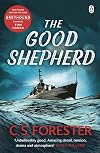
The Good Shepherd
by C. S. Forester
On This Page
Description
"The mission of Commander George Krause of the United States Navy is to protect a convoy of thirty-seven merchant ships making their way across the icy North Atlantic from America to England. There, they will deliver desperately needed supplies, but only if they can make it through the wolfpack of German submarines that awaits and outnumbers them in the perilous seas. For forty eight hours, Krause will play a desperate cat and mouse game against the submarines, combating exhaustion, hunger, show more and thirst to protect fifty million dollars' worth of cargo and the lives of three thousand men. Acclaimed as one of the best novels of the year upon publication in 1955, The Good Shepherd is a riveting classic of WWII and naval warfare from one of the 20th century's masters of sea stories." -- show lessTags
Recommendations




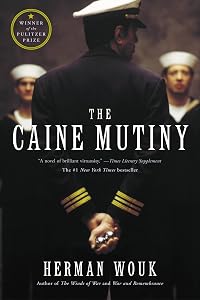


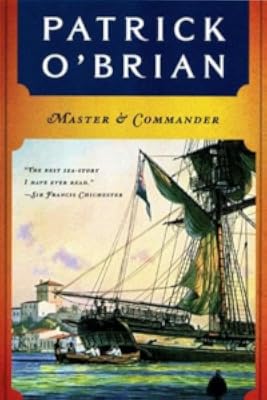

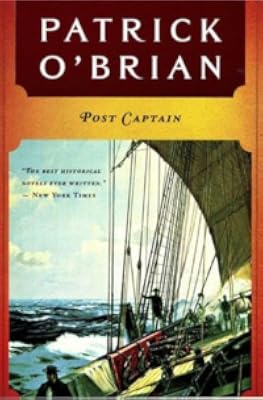

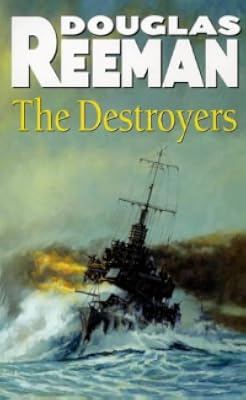

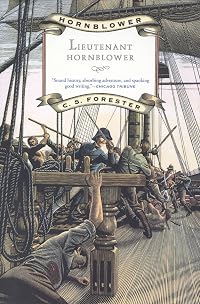
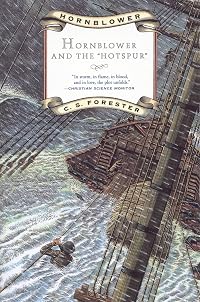

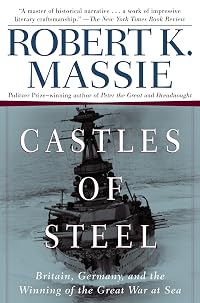

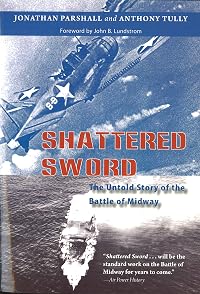
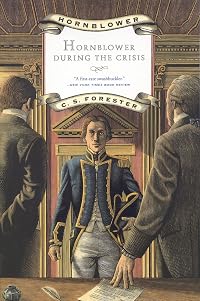
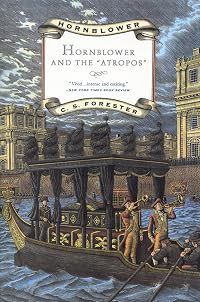
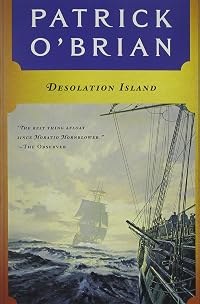
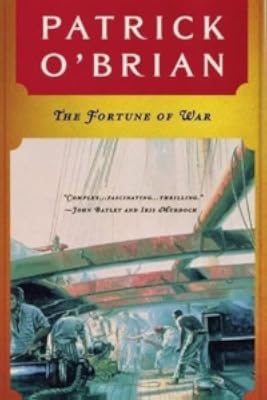


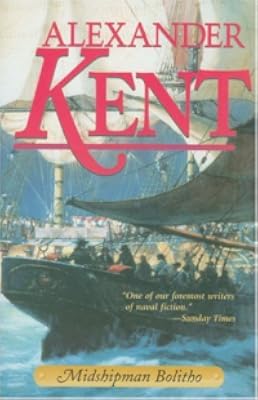
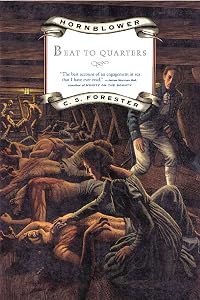
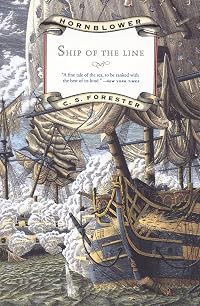
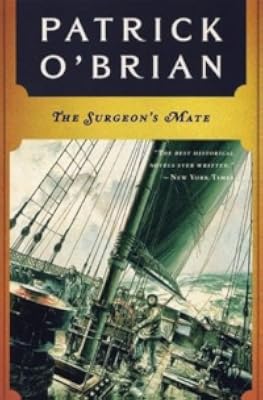
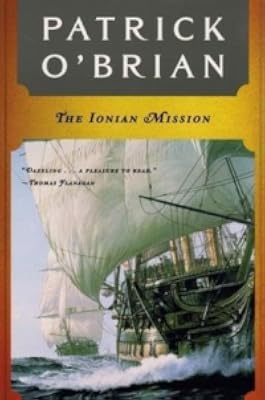


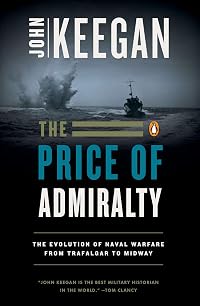




Member Recommendations

themulhern Allied ships in the North Atlantic + U-boats...
Member Reviews
“Not only quickness of thought was necessary for the execution, but resolution, determination. It was necessary to make up one’s mind and carry the plan through, to balance risk against gain and to be neither deterred by the one nor dazzled by the other.” – C.S. Forester, The Good Shepherd
This WWII-era historical fiction opens with a description of the vast reaches of the Atlantic Ocean. It then zooms a bit closer to find a thirty-seven-merchant-ship convoy, accompanied by an escort of four Allied military vessels, on the way from the United States to England, bringing much-needed fuel and supplies. It ultimately zeroes in on the protagonist, Commander George Krause, U.S. Navy, the ranking officer in charge of the convoy. The show more two destroyers and two corvettes protect the merchant ships by hunting down U-boats using the primitive SONAR equipment of the time. Krause’s leadership qualities have not yet been exercised in combat but will be severely tested during this mission.
The book is written in third person from the perspective of Commander Krause, and the reader is privy to the commander’s thoughts and feelings, as he quickly evaluates options and makes decisions, which entail life-or-death consequences. We find out Krause is a disciplined, deeply religious man, who is subject to self-doubt. We hear his internal dialogue about his personal life, including difficulties with his wife, and the loving support of his now-deceased parents. In addition to making decisions, he needs to keep track of an enormous amount of detail, such as making mathematical calculations to figure out location of moving ships, evaluating how the crew members perform their duties, and diplomatically wording commands to other ships’ captains from a variety of Allied countries. Forester’s writing is sophisticated, and he has captured Krause’s character beautifully. He also vividly describes the battle segments, allowing the reader to picture the flash of the firing guns and hear the explosions over the water.
I found this book entirely absorbing and felt like I was with the commander on the ship’s bridge. It is one of the best books I’ve read on the Battle of the Atlantic in WWII, documenting the pressures and challenges, the need to control emotion while feeling the weight of decisions, dealing with the elements, maintaining constant vigilance in the face of exhaustion, and ignoring the threat of death from enemy fire that could come with little warning. There’s a good bit of nautical jargon and military protocol, with orders reiterated and acknowledged, which can get a little repetitive, but Forester’s overall story arc, the journey, the tension, and the enormous responsibility are exceptionally exemplified. Recommended to those interested in WWII, maritime accounts, military campaigns, or in-depth character studies.
I look forward to seeing Greyhound, the movie based on this book, starring Tom Hanks. It was scheduled for release in 2019 but has apparently been delayed until 2020. show less
This WWII-era historical fiction opens with a description of the vast reaches of the Atlantic Ocean. It then zooms a bit closer to find a thirty-seven-merchant-ship convoy, accompanied by an escort of four Allied military vessels, on the way from the United States to England, bringing much-needed fuel and supplies. It ultimately zeroes in on the protagonist, Commander George Krause, U.S. Navy, the ranking officer in charge of the convoy. The show more two destroyers and two corvettes protect the merchant ships by hunting down U-boats using the primitive SONAR equipment of the time. Krause’s leadership qualities have not yet been exercised in combat but will be severely tested during this mission.
The book is written in third person from the perspective of Commander Krause, and the reader is privy to the commander’s thoughts and feelings, as he quickly evaluates options and makes decisions, which entail life-or-death consequences. We find out Krause is a disciplined, deeply religious man, who is subject to self-doubt. We hear his internal dialogue about his personal life, including difficulties with his wife, and the loving support of his now-deceased parents. In addition to making decisions, he needs to keep track of an enormous amount of detail, such as making mathematical calculations to figure out location of moving ships, evaluating how the crew members perform their duties, and diplomatically wording commands to other ships’ captains from a variety of Allied countries. Forester’s writing is sophisticated, and he has captured Krause’s character beautifully. He also vividly describes the battle segments, allowing the reader to picture the flash of the firing guns and hear the explosions over the water.
I found this book entirely absorbing and felt like I was with the commander on the ship’s bridge. It is one of the best books I’ve read on the Battle of the Atlantic in WWII, documenting the pressures and challenges, the need to control emotion while feeling the weight of decisions, dealing with the elements, maintaining constant vigilance in the face of exhaustion, and ignoring the threat of death from enemy fire that could come with little warning. There’s a good bit of nautical jargon and military protocol, with orders reiterated and acknowledged, which can get a little repetitive, but Forester’s overall story arc, the journey, the tension, and the enormous responsibility are exceptionally exemplified. Recommended to those interested in WWII, maritime accounts, military campaigns, or in-depth character studies.
I look forward to seeing Greyhound, the movie based on this book, starring Tom Hanks. It was scheduled for release in 2019 but has apparently been delayed until 2020. show less
The Good Shepherd is an incredibly taut novella about an anti-submarine action in the North Atlantic during World War 2. Lieutenant Commander Krause is in command of a small flotilla, guarding 37 small merchantmen against a Nazi U-boat wolfpack. Over the course of 48 hours, he must defend his command against slash attacks from a deceptive and elusive foe. The book is tightly focused on Krause, on the responsibility of command and the need to make instant decisions with poor information in the strange game of cat-and-mouse. One of Forester's best books, this is well worth a read.
I loved this book - cover to cover!
The Good Shepherd was written many decades ago and the author - C.S. Forester - has since passed. The style of writing is mid-20th century and in the early pages there is much description and setting-of-scene. This is essential to the story, but may put some readers off at first. If so, I encourage you to keep reading.
The plot takes place over just a few days and chronicles the voyage of 37 merchant ships and the five navy ships protecting them across the Atlantic in WWII. A pack of German U-boats - a wolf pack - is laying in wait to sink as many victims as they can. There is strong imagery here with the merchant ships being the hapless sheep, the Germans as the preying wolves, and the five allied navy show more ships as shepherds protecting the flock.
The book focusses on operations of the lead ship - the USS Keeling, and her captain - Commander Krause. We join the action as the convoy is already well into the Atlantic and it's not long before the presence of the U-boats is felt. The next 48 hours is an intense game of sheep, wolf, and shepherd as the U-boats attempt to pick off victims, but are often detected and confronted by the navy destroyers and corvettes patrolling ahead and to the flanks of the convoy. But as the convoy becomes disorganised and the navy ships become stretched, the German's begin to claim victims.
Krause - on his first operational command at war - is put to the ultimate test. The story chronicles his strengths, weaknesses, fears, and dark memories from his civilian life. We hear his mind as it races with a thousand options, we hear his rapid-fire commands, and we see the outcome of his naval tactics. The story is as much an examination of naval strategy as it is the human condition.
An interesting side-theme is Krause's reverent dedication to Christianity, prayer, and his thoughts are often peppered with Bible verses he recalls - even in the middle of battle. This takes a little getting used to in the book's prose.
But the greatest feature of this book is the relentless depiction of hard-fought battles at sea between two formidable enemies, including the use of fascinating new technologies (radar, sonar etc.). The naval strategy at play is really quite something, and easily the best I have ever read. The action is relentless and this strongly conveys the relentless torture these sailors went through as they crossed the Atlantic.
By the end, I was nearly as exhausted as Krause, I think, and almost as satisfied.
This is a tremendous book if you're into anything navy, or the sea, and gets a strong recommendation from me. show less
The Good Shepherd was written many decades ago and the author - C.S. Forester - has since passed. The style of writing is mid-20th century and in the early pages there is much description and setting-of-scene. This is essential to the story, but may put some readers off at first. If so, I encourage you to keep reading.
The plot takes place over just a few days and chronicles the voyage of 37 merchant ships and the five navy ships protecting them across the Atlantic in WWII. A pack of German U-boats - a wolf pack - is laying in wait to sink as many victims as they can. There is strong imagery here with the merchant ships being the hapless sheep, the Germans as the preying wolves, and the five allied navy show more ships as shepherds protecting the flock.
The book focusses on operations of the lead ship - the USS Keeling, and her captain - Commander Krause. We join the action as the convoy is already well into the Atlantic and it's not long before the presence of the U-boats is felt. The next 48 hours is an intense game of sheep, wolf, and shepherd as the U-boats attempt to pick off victims, but are often detected and confronted by the navy destroyers and corvettes patrolling ahead and to the flanks of the convoy. But as the convoy becomes disorganised and the navy ships become stretched, the German's begin to claim victims.
Krause - on his first operational command at war - is put to the ultimate test. The story chronicles his strengths, weaknesses, fears, and dark memories from his civilian life. We hear his mind as it races with a thousand options, we hear his rapid-fire commands, and we see the outcome of his naval tactics. The story is as much an examination of naval strategy as it is the human condition.
An interesting side-theme is Krause's reverent dedication to Christianity, prayer, and his thoughts are often peppered with Bible verses he recalls - even in the middle of battle. This takes a little getting used to in the book's prose.
But the greatest feature of this book is the relentless depiction of hard-fought battles at sea between two formidable enemies, including the use of fascinating new technologies (radar, sonar etc.). The naval strategy at play is really quite something, and easily the best I have ever read. The action is relentless and this strongly conveys the relentless torture these sailors went through as they crossed the Atlantic.
By the end, I was nearly as exhausted as Krause, I think, and almost as satisfied.
This is a tremendous book if you're into anything navy, or the sea, and gets a strong recommendation from me. show less
Forester, C. S. The Good Shepherd. 1955. Penguin, 2018.
Like many recent readers, I was inspired to read C. S. Forester’s The Good Shepherd after seeing Greyhound (2019), starring Tom Hanks. Hanks also wrote the script, which does a creditable job of adapting the novel to film. The film has the tense action and one-character focus of the novel. We follow Hanks’s Captain Krause as he duels with Nazi U-boats that are attacking his destroyer and the convoy of merchant ships and destroyer escorts he protects. Hanks’s performance is tight-lipped, and the dialogue curt with no long speeches. Hanks does an excellent job of conveying the stoicism and stamina of Forester’s hero. The script also suggests, but does not develop, the uneasy show more melding of Krause’s religious belief and sense of duty. But the film does, almost inevitably, miss some major elements of the novel. The novel provides a much clearer description of the strategy and tactics of the battle. The film, with one or two exceptions, gives the viewer a fly-on the wall point of view. We look over Krause’s shoulder as he commands his ship. The novel, on the other hand, has a limited third-person point of view that lets us follow Krause’s rapid, complex decision-making. For instance, in the movie, we see him stare silently at a sailor who is slow to obey an order. In the novel, we know that Krause is analyzing the sailor’s emotions and considering how he will phrase a criticism in the sailor’s next performance report. The novel shows us how almost every situation reminds Krause of a Bible verse, which he never enunciates. Nothing in the film communicates Krause’s belief that his twenty-year military career has been a failure or his resigned sense of guilt at his failure to protect all the ships in his care. He is a man, Forester tells us, who can only be called genuinely happy when he is totally unconscious. Four stars for both the movie and the book. I saw the film first, but I would recommend starting with the novel. show less
Like many recent readers, I was inspired to read C. S. Forester’s The Good Shepherd after seeing Greyhound (2019), starring Tom Hanks. Hanks also wrote the script, which does a creditable job of adapting the novel to film. The film has the tense action and one-character focus of the novel. We follow Hanks’s Captain Krause as he duels with Nazi U-boats that are attacking his destroyer and the convoy of merchant ships and destroyer escorts he protects. Hanks’s performance is tight-lipped, and the dialogue curt with no long speeches. Hanks does an excellent job of conveying the stoicism and stamina of Forester’s hero. The script also suggests, but does not develop, the uneasy show more melding of Krause’s religious belief and sense of duty. But the film does, almost inevitably, miss some major elements of the novel. The novel provides a much clearer description of the strategy and tactics of the battle. The film, with one or two exceptions, gives the viewer a fly-on the wall point of view. We look over Krause’s shoulder as he commands his ship. The novel, on the other hand, has a limited third-person point of view that lets us follow Krause’s rapid, complex decision-making. For instance, in the movie, we see him stare silently at a sailor who is slow to obey an order. In the novel, we know that Krause is analyzing the sailor’s emotions and considering how he will phrase a criticism in the sailor’s next performance report. The novel shows us how almost every situation reminds Krause of a Bible verse, which he never enunciates. Nothing in the film communicates Krause’s belief that his twenty-year military career has been a failure or his resigned sense of guilt at his failure to protect all the ships in his care. He is a man, Forester tells us, who can only be called genuinely happy when he is totally unconscious. Four stars for both the movie and the book. I saw the film first, but I would recommend starting with the novel. show less
This novel has a simple structure: the first chapter is the prologue, the second is the story, the third is the epilogue. In the story, Krause, about whom the one unusual thing is that he is an Olympic fencer, must command his own ship and a convoy escort of three smaller ships during a vital day in his life, when the convoy is attacked by several U-boats. The escort is multi-national; Krause is a US officer, but the other ships are English, Canadian, and Polish respectively. His day last for more than 48 hours, as the action continues, until finally, in the epilogue, he collapses into sleep. The book is all action; the humor in it arises from his slow progress in getting dressed once interrupted by a summons and his regular failures to show more actually manage to consume the food that is brought to him as he is always interrupted by a new emergency. He always makes it to the head, but each time he returns to a new crisis. The action as the Keeling and the Viktor cooperate to hunt a U-Boat reminds me of a nature film I saw in which two orcas hunt a penguin. The penguin is nimbler, but the orcas are faster and two orcas proves one too many for the penguin, eventually. Thus also for the U-Boat.
Vivid, confusing and simple, the novel does not have the depth of characterization of the Hornblower novels. Also, it seems to me that Forester was inclined to make all his US protagonists devoutly Christian, "The Captain from Connectictut"s eponymous protagonist is devout, although surely not Lutheran. show less
Vivid, confusing and simple, the novel does not have the depth of characterization of the Hornblower novels. Also, it seems to me that Forester was inclined to make all his US protagonists devoutly Christian, "The Captain from Connectictut"s eponymous protagonist is devout, although surely not Lutheran. show less
This book is 48 hours in the life of a convoy in the North Atlantic during WW2. George Krause is the American commander of the Keeling, one of four destroyers assigned to protect a fragile group of vessels from the ravages of the U-boats. There’s action, inaction, tension, overwhelming fatigue, and suspense. The details of life on board ship are excellent, as you might expect from Forester. The only note that might ring sourly for modern readers is stereotyping in the portrayal of the mess boys.
Well done and feels accurate. It is repetitive reflecting the nature of what it depicts. The fatigue grows on you but in the right way and never flags interest. Most submarine books are about the subs, or the capital ships destroyed, interesting to see it from the perspective of sub-destroyers. It is POV first-person from the captain's eyes only. This is only my second Forester book it's not in the same class as Queen but still worthwhile.
Members
- Recently Added By
Lists

Best Sea Stories
33 works; 5 members
Author Information

182+ Works 34,718 Members
Born Cecil Louis Troughton Smith on August 27, 1899, in Cairo, Egypt, where his father was a government official, C. S. Forester grew up mainly in England. He was educated at Dulwich College, studying medicine briefly before decidint to become a writer. Forester moved to the United States before the start of World War II, and lived in Berkeley, show more California, until his death in 1966. Although Forester was a journalist, a novelist and a Hollywood scriptwriter, he is probably best known for his historical fiction, particularly the series of novels that feature Horatio Hornblower. The eleven-book series begins with Mr. Midshipmen Hornblower, in which the seventeen-year old Hornblower joins the British navy in 1793, just as the Napoleonic Wars are about to begin. Hornblower's continuing adventures, as well as his advancement to the highest ranks of the navy, are chronicled in further books, including Beat to Quarters, Flying Colours, Commodore Hornblower, Lord Hornblower, The Happy Return, and A Ship of the Line, for which Forester recived the James Tait Black Memorial Prize in 1939. Several of Forester's novels were made into films, most notably Payment Deferred (his first novel published in 1926), Eagle Squadron, The Commandos (the movie title was The Commandos Strike at Dawn), Captain Horatio Hornblower, Sink the Bismarck!, and The African Queen, starring Katharine Hepburn and Humphrey Bogart. Forester's nonfiction includes The Age of Fighting Sail: The Story of the Naval War of 1812, as well as biographies of Lord Nelson, Napoleon, Josephine, and King Louis XIV. He also wrote an autobiography, Long Before Forty. (Bowker Author Biography) show less
Some Editions
Awards and Honors
Distinctions
Series
Belongs to Publisher Series
Work Relationships
Is contained in
Has the adaptation
Is abridged in
Common Knowledge
- Canonical title
- The Good Shepherd
- Original title
- The Good Shepherd
- Alternate titles
- Greyhound
- Original publication date
- 1955
- People/Characters
- George Krause (Commander)
- Important places
- North Atlantic Ocean; USS Keeling; Atlantic Ocean
- Important events
- World War II (1939 | 1945); Battle of the Atlantic (1939 | 1945)
- Related movies
- Greyhound (2020 | IMDb)
- Dedication
- Thanks to Vice-Admiral Ralph W. Christie, USN Retired, onetime Commander of Submarines, Southwest Pacific, and to commander J. D. P. Hodapp, USN, onetime Commanding Officer, USS Hall.
C.S.F. - First words
- In that hour after dawn the horizon did not seem far away.
- Last words
- (Click to show. Warning: May contain spoilers.)He could be called happy now, lying spreadeagled and face downward on his bunk, utterly unconscious.
- Original language
- English
Classifications
Statistics
- Members
- 771
- Popularity
- 36,387
- Reviews
- 17
- Rating
- (4.01)
- Languages
- 15 — Chinese, traditional, Danish, English, Finnish, French, Greek, Hungarian, Italian, Norwegian (Bokmål), Polish, Portuguese (Brazil), Portuguese (Portugal), Russian, Spanish, Swedish
- Media
- Paper, Audiobook, Ebook
- ISBNs
- 42
- ASINs
- 34