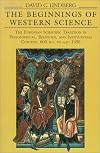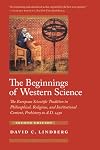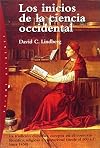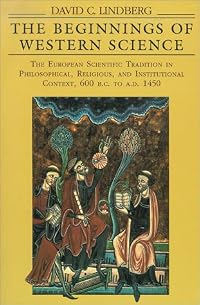
The Beginnings of Western Science
by David C. Lindberg
On This Page
Description
David C. Lindberg surveys the most important themes in the history of science, including developments is cosmology, astronomy, mechanics, optics, alchemy, natural history and medicine. In addition, he offers an account of the transmission of Greek science to medieval Islam and subsequently medieval Europe.Tags
Recommendations









Member Reviews
The Beginnings of Western Science: The European Scientific Tradition in Philosophical, Religious and Institutional Context, 600 BC to AD 1450. By David C Lindberg.
If you wish to understand how teachings from antiquity vitally affected the middle ages then you could do no better than reading Lindbergs book. He claims that no previous knowledge of the history is necessary to grasp his arguments and this may be so, but his book is no mere introduction. I found it invaluable for a clearer understanding of how the rediscovery of Aristotle's teachings in particular, shaped the thoughts of the medieval scholars.
Lindberg recognises that the term Western Science in the title is misleading as what he is intent on exploring is natural philosophy; show more that is ancient and medieval attempts to investigate nature. His book therefore covers philosophy and religion as well as rigorously examining how ancient and medieval people viewed and understood their world.
Lindberg aims to discuss the question of continuity between ancient and medieval science and so he must therefore demonstrate the achievements of the classical world. He starts further back than this with an overview of prehistoric, Babylonian and Egyptian science before launching into the teachings of Plato and Aristotle of ancient Greece. Philosophy, metaphysics, epistemology, motion, the workings of the cosmos are all examined in enough detail to enable Lindberg to draw out the essential differences between the teachings of Plato and his pupil Aristotle. He broadens out the picture with an overview of the Stoics and the Epicureans and their follows chapters on mathematics, astronomy, optics and weights, before a very good overview of Galen and the achievements of Hellenistic medicine.
The Roman invasion of the Greek world and the subsequent amalgamation of Greek learning is very well explained, Lindberg comments:
"Members of the Roman upper class had about the same level of interest in the fine points of Greek natural philosophy as the average American politician has in metaphysics and epistemology. At best their desire was as the Roman playwright Enius put it "To study philosophy but in moderation" The only surprise is that historians expected it to be otherwise"
The Romans popularised Greek ideas, but Greek teaching survived in satellite towns like Alexandria in Egypt. The teachings of Plato tended to get the upper hand and with the advent of Christianity his pagan world view was more easily adapted by the early Christians. Lindberg follows this with an excellent overview of Islamic science and its mingling with Greek learning and then explains how such learning survived through the dark ages until a new burst of scholarly activity started again in the Carolingian Empire.
Universities and other centres of learning became a feature of the twelfth century and Lindberg describes how classical texts were rediscovered, many of them having to be translated from the Arabic after surviving with commentary in the Islamic world. Aristotle became a huge influence and Lindberg skillfully tells how his teachings were adapted for use in the Christian world. This was because at the end of the day it was recognised by Christian scholars that this pagan knowledge was just too valuable to be ignored. Late medieval learning is then described especially in relation to how Aristotle's teachings were re-examined and expanded where necessary and there are further chapters on optics, cosmology, medicine, astronomy, astrology and alchemy.
Finally Lindberg steps back to consider the legacy of medieval learning and expounds on the two polar views, which can be summed up as the continuity debate. Was there a gradual increase in knowledge from the middle ages up to the time of the scientific breakthroughs in the 17th and 18th centuries or was their a discontinuity and a need for a re-evaluation of learning before the leaps forward could take place? Lindberg says he is in the discontinuity camp and sets out his reasons.
Throughout the book Lindberg emphasises that we should not look on the achievements of the classical and medieval worlds from a modern standpoint, We may think they got a lot wrong, but it worked for them and only by looking at the world through their eyes will we be able to understand and evaluate their achievements.
The book is well annotated and there is an extensive bibliography. It is a bit text bookish, but Lindberg writes engagingly and it filled in some gaps in my knowledge show less
If you wish to understand how teachings from antiquity vitally affected the middle ages then you could do no better than reading Lindbergs book. He claims that no previous knowledge of the history is necessary to grasp his arguments and this may be so, but his book is no mere introduction. I found it invaluable for a clearer understanding of how the rediscovery of Aristotle's teachings in particular, shaped the thoughts of the medieval scholars.
Lindberg recognises that the term Western Science in the title is misleading as what he is intent on exploring is natural philosophy; show more that is ancient and medieval attempts to investigate nature. His book therefore covers philosophy and religion as well as rigorously examining how ancient and medieval people viewed and understood their world.
Lindberg aims to discuss the question of continuity between ancient and medieval science and so he must therefore demonstrate the achievements of the classical world. He starts further back than this with an overview of prehistoric, Babylonian and Egyptian science before launching into the teachings of Plato and Aristotle of ancient Greece. Philosophy, metaphysics, epistemology, motion, the workings of the cosmos are all examined in enough detail to enable Lindberg to draw out the essential differences between the teachings of Plato and his pupil Aristotle. He broadens out the picture with an overview of the Stoics and the Epicureans and their follows chapters on mathematics, astronomy, optics and weights, before a very good overview of Galen and the achievements of Hellenistic medicine.
The Roman invasion of the Greek world and the subsequent amalgamation of Greek learning is very well explained, Lindberg comments:
"Members of the Roman upper class had about the same level of interest in the fine points of Greek natural philosophy as the average American politician has in metaphysics and epistemology. At best their desire was as the Roman playwright Enius put it "To study philosophy but in moderation" The only surprise is that historians expected it to be otherwise"
The Romans popularised Greek ideas, but Greek teaching survived in satellite towns like Alexandria in Egypt. The teachings of Plato tended to get the upper hand and with the advent of Christianity his pagan world view was more easily adapted by the early Christians. Lindberg follows this with an excellent overview of Islamic science and its mingling with Greek learning and then explains how such learning survived through the dark ages until a new burst of scholarly activity started again in the Carolingian Empire.
Universities and other centres of learning became a feature of the twelfth century and Lindberg describes how classical texts were rediscovered, many of them having to be translated from the Arabic after surviving with commentary in the Islamic world. Aristotle became a huge influence and Lindberg skillfully tells how his teachings were adapted for use in the Christian world. This was because at the end of the day it was recognised by Christian scholars that this pagan knowledge was just too valuable to be ignored. Late medieval learning is then described especially in relation to how Aristotle's teachings were re-examined and expanded where necessary and there are further chapters on optics, cosmology, medicine, astronomy, astrology and alchemy.
Finally Lindberg steps back to consider the legacy of medieval learning and expounds on the two polar views, which can be summed up as the continuity debate. Was there a gradual increase in knowledge from the middle ages up to the time of the scientific breakthroughs in the 17th and 18th centuries or was their a discontinuity and a need for a re-evaluation of learning before the leaps forward could take place? Lindberg says he is in the discontinuity camp and sets out his reasons.
Throughout the book Lindberg emphasises that we should not look on the achievements of the classical and medieval worlds from a modern standpoint, We may think they got a lot wrong, but it worked for them and only by looking at the world through their eyes will we be able to understand and evaluate their achievements.
The book is well annotated and there is an extensive bibliography. It is a bit text bookish, but Lindberg writes engagingly and it filled in some gaps in my knowledge show less
In 1970 I studied the history of science under the tutelage of Professor David C. Lindberg. Some years later he published this text which was considered the first successful attempt to present a unified account of both ancient and medieval science in a single volume. It successfully captures the advance of science over that period with detailed accounts of the origin and growth of significant aspects of scientific thought.
This was one of the more readable and enjoyable textbooks I've ever been assigned. I had the opportunity to sell it, but decided I'd keep it for future reference. Nice broad scope.
Excellent book, digging deeper and more balanced than other histories of science, includes the religious and philosophical influences.
This is a text book and thus is somewhat standardized and impersonal but it is very enjoyable.
Textbook for Historical Dimensions of Liberal Studies - 302A
Members
- Recently Added By
Lists

Vote: Science, Religion, and History Group Reads
30 works; 17 members

r/AskHistorians' Recommended Books
1,068 works; 17 members

readingList
38 works; 1 member

In Our Time books
4,934 works; 2 members
Author Information
12+ Works 1,354 Members
David C. Lindberg is the Hilldale Professor Emeritus of the History of Science at the University of Wisconsin-Madison
Awards and Honors
Common Knowledge
- Canonical title
- The Beginnings of Western Science
- Original title
- The beginnings of Western science : the European scientific tradition in philosophical, religious, and institutional context, 600 B.C. to A.D. 1450
- Alternate titles
- The Beginnings of Western Science: The European Scientific Tradition in Philosophical, Religious, and Institutional Context, 600 B.C. to A.D. 1450
- Original publication date
- 1992
Classifications
Statistics
- Members
- 735
- Popularity
- 38,274
- Reviews
- 9
- Rating
- (3.92)
- Languages
- 5 — Dutch, English, German, Greek, Spanish
- Media
- Paper, Ebook
- ISBNs
- 8
- ASINs
- 4