A Di-komplexus
by Dai Sijie
On This Page
Description
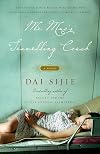
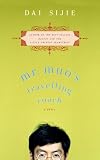
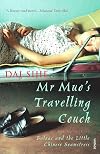
After years of studying Freud in Paris, Mr. Muo returns home to bring the benefits of psychoanalysis to twenty-first-century China and to somehow free his college sweetheart, now a political prisoner, a quest that leads him to the sadistic local magistrate.Tags
Recommendations

































Member Reviews
Sijie's first novel, Balzac and the Little Chinese Seamstress, is about finding hidden beauty in the midst of oppression. Mr. Muo's Traveling Couch, set in commercial boom of modern-day Chengdu, is about the moral depravity lurking on the other side of freedom. When Muo's college sweetheart is imprisoned for political reasons, he returns from Paris to secure her freedom. When the judge demands a night with an adolescent virgin, Muo is initially optimistic that he can find one...but the China of 2006 is not the China Muo left behind, as he discoveres when woman after woman tells him of selling her love for a job or a ticket away from her village. Sijie is a master of show-don't-tell storytelling and the book never loses its comic tone show more even as desperation leaves Muo as corrupt as the judge he seeks to bribe. This hidden depravity is what I think Sijie wants us to see about China -- that beneath the veneer of economic freedom, the old order of things remains untouched; without the freedom to fight back, every day people become complicit in its evil. show less
What a romp! Travel along with Mr. Muo, China's only registered psychoanalyst as he seeks a virgin in China to offer as a bribe to a crooked judge, in order to free his friends, "The Embalmer" and "Volcano of the Old Moon" from wrongful imprisonment. Along the way, you will roar with laughter at the dry wit of the author as he offers such tidbits as popular children's songs from the Revolutionary Re-Education period which laud the joy of Communism. Also, enjoy the dream analysis offered by our Mr. Muo as he takes his office on the road. Step into the inner dream and fantasy world of Mr. Muo, whose training in France has enhanced his openness to his own stream of consciousness........Marvelous!
Dai Sijie's style is unmatched. His writing is quirky, descriptive and funny. He possesses the gift of painting a picture with his words without ever being heavy-handed. I discovered his marvelous writing with Balzac and the Little Chinese Seamstress, and I've re-discovered it with Mr. Muo's Travelling Couch.
Mr. Muo is an interesting character. I've never come across a character quite like him, and I don't think I ever will again. He is the perfect blend of East and West, and he knows it. Muo is perfectly imperfect, likable while still managing to be revolting and disconcerting at times.
With every chapter, the story took a new turn. This book contained so many surprises and unexpected events that I could never predict what was going to show more happen next. Despite the multiple plot twists, this is not a thriller or mystery novel, but rather a sequence of peculiar happenings in the life of a peculiar man. The narrative moves along quickly and will easily pull you in.
The basis of the novel is that Muo, China's first psychoanalyst, is trying to free the woman he loves from prison. The story is so much more, though. Muo is a student of Freud, and it's apparent in his view of the world and the chronicle of his life. I would consider this to be quite the Freudian tale!
My rating of this book is a 3-3.5/5. I enjoyed it thoroughly, but it's a little light for my tastes. This may have been a better book to read in the summer or between more serious, thought-provoking works. Still, I highly recommend it to anyone looking for a light, humorous and odd little tale. show less
Mr. Muo is an interesting character. I've never come across a character quite like him, and I don't think I ever will again. He is the perfect blend of East and West, and he knows it. Muo is perfectly imperfect, likable while still managing to be revolting and disconcerting at times.
With every chapter, the story took a new turn. This book contained so many surprises and unexpected events that I could never predict what was going to show more happen next. Despite the multiple plot twists, this is not a thriller or mystery novel, but rather a sequence of peculiar happenings in the life of a peculiar man. The narrative moves along quickly and will easily pull you in.
The basis of the novel is that Muo, China's first psychoanalyst, is trying to free the woman he loves from prison. The story is so much more, though. Muo is a student of Freud, and it's apparent in his view of the world and the chronicle of his life. I would consider this to be quite the Freudian tale!
My rating of this book is a 3-3.5/5. I enjoyed it thoroughly, but it's a little light for my tastes. This may have been a better book to read in the summer or between more serious, thought-provoking works. Still, I highly recommend it to anyone looking for a light, humorous and odd little tale. show less
The novel is a modern fairy tale under the disguise of a political allegory, the elements of which still bears the shadows if the Cultural Revolution. Mr. Muo's Travelling Couch represents a conscience - a poignant pang of conscience for social injustice. After years of studying Freud in Paris, a 40-year-old man returns to China to liberate his college sweetheart, who had taken pictures of people being tortured by police and syndicated them to foreign media, under the pretext of interpreting dreams. A corrupted judge mandated virginity of a girl in exchange for clemency from the Communist on her case. So the obsession of a greedy magistrate ensued the psychoanalyst's journey to find a virgin. The quest took him to a rural panda habitat, show more brought him to close encounter with the marauding hill tribe, and costed him his own virginity!
What strikes me the most about the novel is not Mr. Muo's unswerving solicitude to rescue his love from the menacing cuffs. Nor are the depiction of life and the injustice to which people are subjected during Cultural Revolution more hairsplitting than what is already known. Almost every piece of late-20th century Chinese fiction lives in the shadow of this dark period that pervades the life of Chinese people. The heart of the novel is a man's self-transformation without his knowing it. As a sense of futility hovers over every step of Muo's scheme, his tight grip on his idealism imperceptibly loosened. A reflection on his return to China that has seemed to be rueful at the first thought opened up new perspective to his life. His once unshakable faith in psychoanalytic insight began to crumble as he smugly relished the prospect of a new love. Filled with snatches of somnambulistic musings and exuberant imagination, Mr. Muo's Travelling Couch beholds the power of suggestion that enlarges one's imagination. The surface of the writing is more than a reflection of the concealed depths.
http://mattviews.blogspot.com/2006/01/10-mr-muos-travelling-couch-dai-sijie.html... show less
What strikes me the most about the novel is not Mr. Muo's unswerving solicitude to rescue his love from the menacing cuffs. Nor are the depiction of life and the injustice to which people are subjected during Cultural Revolution more hairsplitting than what is already known. Almost every piece of late-20th century Chinese fiction lives in the shadow of this dark period that pervades the life of Chinese people. The heart of the novel is a man's self-transformation without his knowing it. As a sense of futility hovers over every step of Muo's scheme, his tight grip on his idealism imperceptibly loosened. A reflection on his return to China that has seemed to be rueful at the first thought opened up new perspective to his life. His once unshakable faith in psychoanalytic insight began to crumble as he smugly relished the prospect of a new love. Filled with snatches of somnambulistic musings and exuberant imagination, Mr. Muo's Travelling Couch beholds the power of suggestion that enlarges one's imagination. The surface of the writing is more than a reflection of the concealed depths.
http://mattviews.blogspot.com/2006/01/10-mr-muos-travelling-couch-dai-sijie.html... show less
A bitter-sweet, funny, sensitively written story of a Chinese psychoanalyst's return from Paris back to his homeland. His incredible, unusual, if prosaic, adventures made me smile and feel for him. His devotion to Freud's teachings and his desire to analyze dreams of everyone he meets, as a tool to find a way to his long lost and imprisoned love interest, is touching. I bought this book after seeing that it was written by the author of "Balzac and the Little Chinese Seamstress" - I had seen a movie based on that book and rather enjoyed it. I was not disappointed by this book either. Translation from French by Ina Rilke seems quite masterful. A beautiful piece of writing altogether.
Bizarre story, quirky characters - not at all sure it was a comedy, maybe black. People and places vividly describe - could be a good movie?
I hated this; so much so that I stopped listening halfway through.
What especially irritated me was that, after having Muo repeatedly states that psychoanalysis is not fortune-telling, pretty much every dream that he ever analyzes is nothing but fortune-telling; certainly his interpretations sound more like something out of Joseph (of the technicolor dreamcoat) than Freud. I persisted till halfway in the hope that I would learning something about the feel of modern China, but given that Sijie either does not understand psychoanalysis, or is willing to pervert his understanding for the sake of the story, I'm not much prepared to trust his interpretation of China.
What especially irritated me was that, after having Muo repeatedly states that psychoanalysis is not fortune-telling, pretty much every dream that he ever analyzes is nothing but fortune-telling; certainly his interpretations sound more like something out of Joseph (of the technicolor dreamcoat) than Freud. I persisted till halfway in the hope that I would learning something about the feel of modern China, but given that Sijie either does not understand psychoanalysis, or is willing to pervert his understanding for the sake of the story, I'm not much prepared to trust his interpretation of China.
Members
- Recently Added By
Lists

Llibres que he llegit el 2020
50 works; 1 member
Author Information

15 Works 8,646 Members
Dai Sijie is a Chinese-born filmmaker and novelist who has lived and worked in France since 1984
Some Editions
Awards and Honors
Awards
Series
Belongs to Publisher Series
Serie Piper (4520)
Gallimard, Folio (4231)
Work Relationships
Common Knowledge
- Canonical title
- A Di-komplexus
- Original title
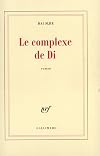
- Le complexe de Di
- Original publication date
- 2003
- First words*
- Eine mit pinkfarbenem Plastik ummantelte Stahlkette spiegelt sich wie eine glänzende Schlange in der Scheibe eines Abteilfensters, hinter dem die aufblitzenden Lichtsignale zu smaragdblauen und rubinroten Punkten schrumpfen,... (show all) bis sie vom Dunst einer warmen Julinacht verschluckt werden.
- Last words*
- (Click to show. Warning: May contain spoilers.)Er will sie verlegen hineinbitten, ihr einen Tee anbieten, doch seine Zunge kommt ihm zuvor, und er hört sich sagen: "Bist du noch Jungfrau?"
- Original language*
- Français
*Some information comes from Common Knowledge in other languages. Click "Edit" for more information.
Classifications
Statistics
- Members
- 694
- Popularity
- 41,349
- Reviews
- 23
- Rating
- (2.94)
- Languages
- 13 — Catalan, Chinese, Danish, Dutch, English, French, German, Hungarian, Italian, Norwegian (Bokmål), Croatian, Spanish, Turkish
- Media
- Paper, Audiobook, Ebook
- ISBNs
- 30
- ASINs
- 4