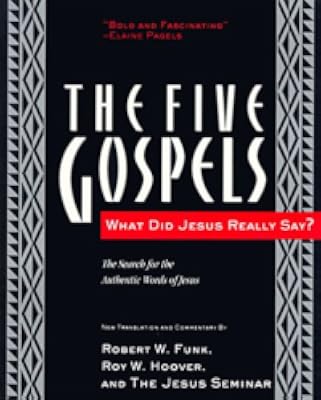
The Five Gospels: The Search for the Authentic Words of Jesus
by Robert W. Funk, Roy W. Hoover
Jesus Seminar Series
On This Page
Description
An assessment of authenticity of the more than 1,500 sayings attributed to Jesus, including those from the Gospel of Thomas.Tags
Recommendations



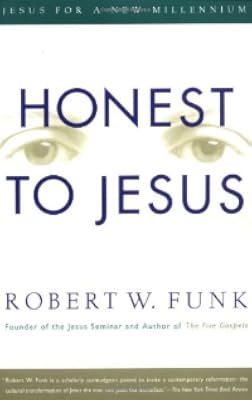
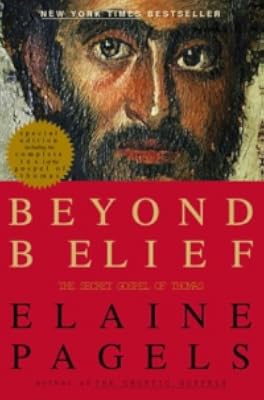
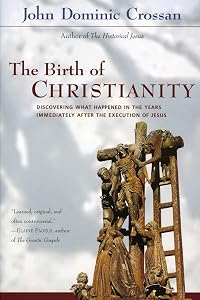
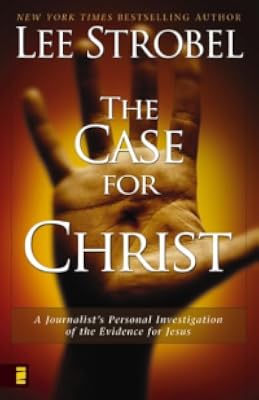






Member Reviews
An interesting study of the historical reliability of scripture. The often quoted, "only 18% of what it says Jesus said was actually said by the man himself," often provokes a visceral negative reaction in some readers. Many people fixate upon the figure of Jesus (and equate that historical person to Christ, the theological figure) that they forget that the earliest Gospel (Mark's) was completed around the 60's CE, this was before the fall of Jerusalem in 70 CE. This afforded Christians plenty of time to develop their thought after the death of their prophet and include those insights in their writings--just as would be the case with the other Gospels. To say, "Jesus didn't really say that," does not mean the statement is without value, show more nor that it was not said by a student of Jesus who, one might argue, was a co-founder of the Christian faith. Remember that Jesus lived and died as a Jew, it was his followers who formed a cult around his teachings. If you have a high Christology and insist that the incarnation is utterly required for the Christian life, this might be a problem. With somewhat more historical perspective, however, it does not detract at all from the importance of the Gospels, nor from Jesus' teachings, it simply provides additional depth to our understanding of the development of the faith and much-needed contextualization for the Gospels.
Much is made of the voting procedures applied by the Seminar. However, people forget that a very similar method was used to compose the Nicene Creed, as well as actually form the Bible canon itself. That is, a vote was held and it was assumed that God's guidance would penetrate that voting procedure.
This is a must for anyone interested in serious Bible study. I might even go so far as to suggest it be required reading for all Christians. However, many Christians view their faith as such a fragile thing that books such as this one are considered dangerous to consider, lest one's faith be broken by too much thought and questions. show less
Much is made of the voting procedures applied by the Seminar. However, people forget that a very similar method was used to compose the Nicene Creed, as well as actually form the Bible canon itself. That is, a vote was held and it was assumed that God's guidance would penetrate that voting procedure.
This is a must for anyone interested in serious Bible study. I might even go so far as to suggest it be required reading for all Christians. However, many Christians view their faith as such a fragile thing that books such as this one are considered dangerous to consider, lest one's faith be broken by too much thought and questions. show less
The premise is flawed: representatives of the major Christian denominations vote on *unique* sayings that are both unprecedented and likely to be truly the words of Jesus. The "unprecedented"/unique suggests that if a parable, etc., could be documented as being before Jesus therefore it could not be authentic Jesus, hence the high score for the Gospel of Thomas, which is portrayed as the nearest we have to the legendary "Q" document. Clearly it makes sense that Jesus would use preexisting anecdotes to make his point. The more interesting premise is that interpolations of clearly Gnostic or other post-Jesus thoughts should be viewed with some skepticism, hence the low score for the Gospel of John. Overall it is an interesting tool, but show more one that surely must be used in conjunction with many other sources. show less
I haven't read every word of this, but used it in Bible study. It can be controversial but is a useful springboard for discussion. It comes from the Jesus Seminar and has the words of the Gospels (including the Gospel of Thomas) in different colors according to the Seminar's consensus on how authentically the words of Jesus are reported.
For nearly 100 years Biblical scholars have developed ways of telling when when a passage has been revised or edited, when two passages have been combined together, when a passage has been added to, when manuscript copyists (who wrote by hand) have skipped over words or added in a correction or comment as if they were the words of the original author, and methods of telling which parts of a book are older and younger.
Unfortunately, it is the nature of scholars to disagree: each scholar must make a name for himself by promoting his own ideas. This obscures the historical consensus built by years of work.
This work was a valuable experiment in getting scholars to agree. It was a shock to many readers because it was deliberately not show more shrouded by jargon or presented only in a seminar for fellow specialists. (Scholars have realized that their conclusions upset people and many now hesitate to write in a way or forum where they might be overheard and understood.)
This book explains what New Testament scholars think is historical in the New Testament gospels (and Thomas, which is the only surviving non-canonical relative of the sayings lists and isolated miracle stories used as sources by the four gospel writers), to what degree, and why. After a century of meticulous work, very few scholars think the gospels were eyewitness accounts (for why read [[Throckmorton]]'s [Gospel Parallels]) or that ancient historians (and the gospel writers were biographers and theologians, not historians) wrote history without any addition of legend, hearsay, or ways of telling the story that made for a better tale than the original. (These were oral cultures where only epic poems, memorable prose stories, witty quips, and unusually wise teachings survived.)
It is a deliberate attempt to explain and to be clear about what Biblical scholars do and how they think. It was an attempt to summarize what 100 years of work has learned. The textual archaeology at the basis of these conclusions is the foundation of any training in Biblical scholarship and history: those who object wholesale have either missed 40 years of German scholarship or are afraid of making someone mad.
This book is a bit of a time capsule: since its publication there have been new archaeological and textual discoveries, further research, new academic trends, and the inevitable development of conclusions that come from further study and consideration. This book is helpful because it is intended for ordinary readers and it is unusually honest -- and the reaction to it seems to have frightened many scholars into other kinds of work or back into jargon. (Part of that is our fault for not being more public about our work as decades passed.)
Notice there is no equivalent for the Hebrew Bible/Old Testament.
It may be a long time before a body of scholars tries being this honest, again, and for that reason alone this book is worth reading.
Note: the scholars who participated in this project are listed in the back of the book (they do not represent one place or one point of view) and the best way to judge the method of voting is to read the description, here, rather than take secondary accounts at their word.
Second Note: this book was followed by a companion work the [Acts of Jesus]. Scholars affiliated with this effort have published a readable collection of all the gospels that survived antiquity, [The Complete Gospels] and a translation which follows how the letters of Paul read to a historian's eye, [The Authentic Letters of Paul]. (Again, the idea that Paul did not write some of the Biblical letters under his name will startle many, but is old news to New Testament scholars.)
-Kushana show less
Unfortunately, it is the nature of scholars to disagree: each scholar must make a name for himself by promoting his own ideas. This obscures the historical consensus built by years of work.
This work was a valuable experiment in getting scholars to agree. It was a shock to many readers because it was deliberately not show more shrouded by jargon or presented only in a seminar for fellow specialists. (Scholars have realized that their conclusions upset people and many now hesitate to write in a way or forum where they might be overheard and understood.)
This book explains what New Testament scholars think is historical in the New Testament gospels (and Thomas, which is the only surviving non-canonical relative of the sayings lists and isolated miracle stories used as sources by the four gospel writers), to what degree, and why. After a century of meticulous work, very few scholars think the gospels were eyewitness accounts (for why read [[Throckmorton]]'s [Gospel Parallels]) or that ancient historians (and the gospel writers were biographers and theologians, not historians) wrote history without any addition of legend, hearsay, or ways of telling the story that made for a better tale than the original. (These were oral cultures where only epic poems, memorable prose stories, witty quips, and unusually wise teachings survived.)
It is a deliberate attempt to explain and to be clear about what Biblical scholars do and how they think. It was an attempt to summarize what 100 years of work has learned. The textual archaeology at the basis of these conclusions is the foundation of any training in Biblical scholarship and history: those who object wholesale have either missed 40 years of German scholarship or are afraid of making someone mad.
This book is a bit of a time capsule: since its publication there have been new archaeological and textual discoveries, further research, new academic trends, and the inevitable development of conclusions that come from further study and consideration. This book is helpful because it is intended for ordinary readers and it is unusually honest -- and the reaction to it seems to have frightened many scholars into other kinds of work or back into jargon. (Part of that is our fault for not being more public about our work as decades passed.)
Notice there is no equivalent for the Hebrew Bible/Old Testament.
It may be a long time before a body of scholars tries being this honest, again, and for that reason alone this book is worth reading.
Note: the scholars who participated in this project are listed in the back of the book (they do not represent one place or one point of view) and the best way to judge the method of voting is to read the description, here, rather than take secondary accounts at their word.
Second Note: this book was followed by a companion work the [Acts of Jesus]. Scholars affiliated with this effort have published a readable collection of all the gospels that survived antiquity, [The Complete Gospels] and a translation which follows how the letters of Paul read to a historian's eye, [The Authentic Letters of Paul]. (Again, the idea that Paul did not write some of the Biblical letters under his name will startle many, but is old news to New Testament scholars.)
-Kushana show less
A bunch of Berkeley professors etc. trying to find God intellectually - a not very useful approach. Interesting mostly because it includes the gospel of Thomas quotations which were accepted by several of the early Bishops as scripture. I scanned the book over and put it back on the shelf.
For the time of its writing, offers a superb brief overview of the historical research on gospel texts.
Fascinating. I love this stuff.(32)
Members
- Recently Added By
Lists

Mike's Theology Books
74 works; 2 members

r/AskHistorians' Recommended Books
1,068 works; 19 members
Author Information

55+ Works 3,252 Members
Robert W. Funk was Professor of Religious Studies at the University of Montana
3+ Works 983 Members
All Editions
Series

Common Knowledge
- Canonical title
- The Five Gospels: The Search for the Authentic Words of Jesus
- People/Characters
- Jesus Christ
- Blurbers
- Pagels, Elaine; Spong, John Shelby; Crossan, John Dominic; Shanks, Hershel
Classifications
Statistics
- Members
- 928
- Popularity
- 28,771
- Reviews
- 8
- Rating
- (3.94)
- Languages
- English
- Media
- Paper
- ISBNs
- 4
- UPCs
- 1
- ASINs
- 7