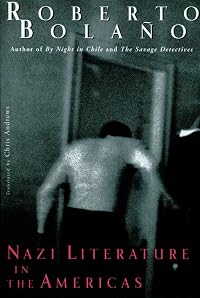
Nazi Literature in the Americas
by Roberto Bolaño
On This Page
Description
A tour de force of black humor, composed of short biographies of imaginary pan-American authors, providing sketch character portraits that are often pathetically funny, sometimes surprisingly moving, and on occasion, authentically chilling.Tags
Recommendations


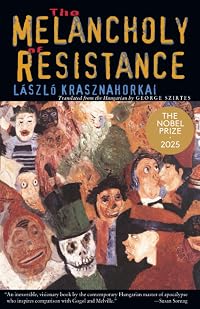
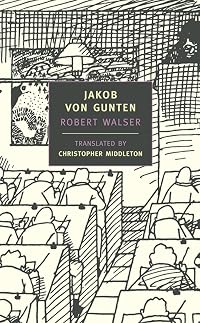
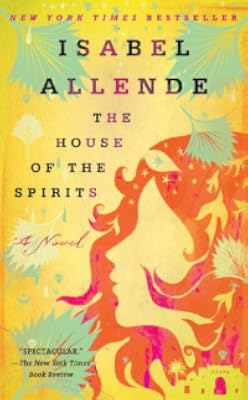
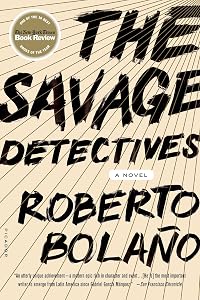


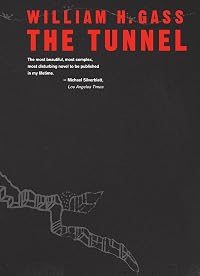
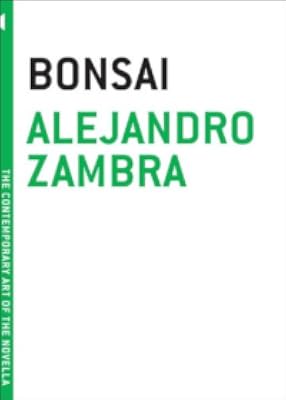
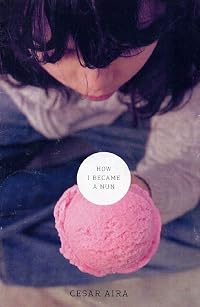
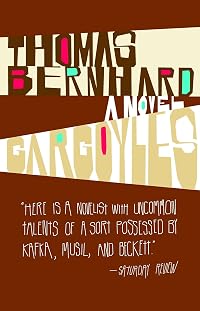

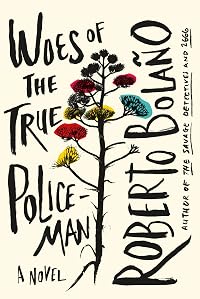
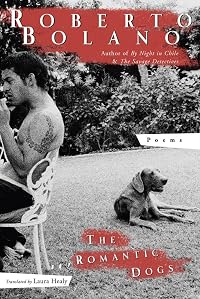

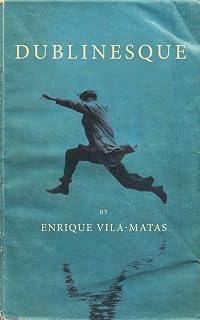
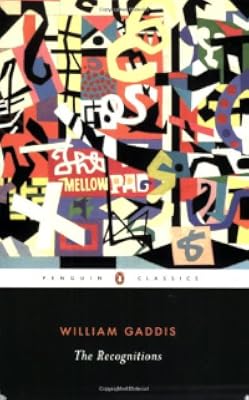

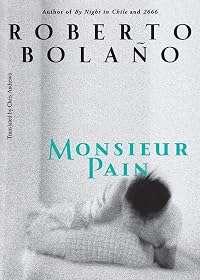
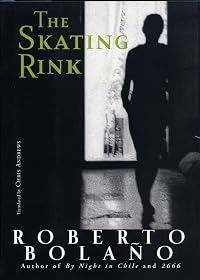
Member Recommendations
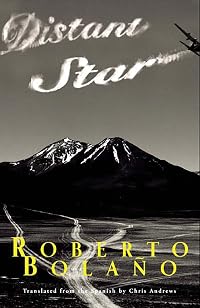
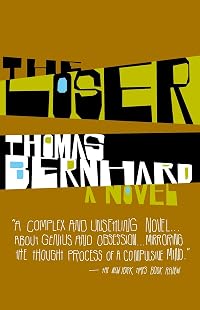
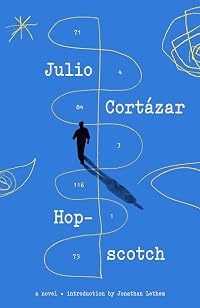
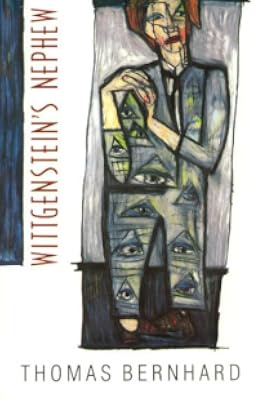
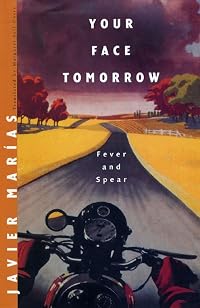
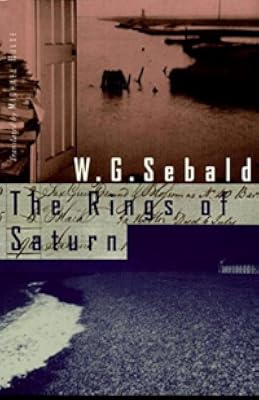
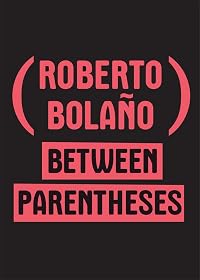
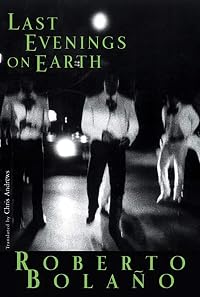
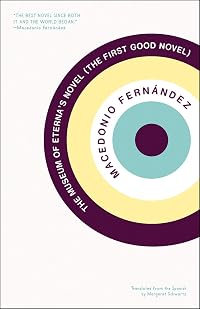
GlebtheDancer Also an imaginary encyclopedia of disreputable characters, presented as factual.
Member Reviews
I would think the rewards of reading Nazi Literature increase exponentially the more Bolaño one has tackled beforehand. That said, this is a penetrating, outraged, at many points hilarious evisceration of South American fascism, written from a fascinating intersection of not only anger but also a deep love of literature. Perhaps best thought of more as a short story collection that taken together forms a philosophical, emotive tapestry. The neutral voice the entries are written in amps up the unease and humor present in each biography. The final story here was later expanded into the terrific Distant Star.
This book is deceptively short. It is a series of biographies, some of them as short as one or two pages, of poets and authors who have adopted either antisemitic or right wing ideologies. The depths of the character's lives and the extent of the underground fascist literary scene implied by these chunks of text would require a sprawling epic to accurately convey if this were a standard novel. But this format allows Bolaño to compress a large amount of content into little pieces.
I've always been a big fan of fake nonfiction, so this would have gotten a good review from me even if it were a series of invented biographies of pastry chefs or fly fishermen. But instead this book is populated by monsters. These subjects all share shades of show more thoroughly unpleasant, chillingly psychotic, or pitiably deluded.
I'm a lefty and Bolaño is a lefty so it would be a cheap interaction for him to write and me to read something that just makes fun of the other side. But after a while it becomes clear that this isn't a book about ideology or Nazism at all. This book is about alienation. Most of the subjects are pushed further and further down the deep end by the opprobrium of the literary establishment and their peers. They end their lives wasting away of disease or drink somewhere, alone and forgotten. It is clear that these characters could easily be Bolaño or one of his real-life friends. show less
I've always been a big fan of fake nonfiction, so this would have gotten a good review from me even if it were a series of invented biographies of pastry chefs or fly fishermen. But instead this book is populated by monsters. These subjects all share shades of show more thoroughly unpleasant, chillingly psychotic, or pitiably deluded.
I'm a lefty and Bolaño is a lefty so it would be a cheap interaction for him to write and me to read something that just makes fun of the other side. But after a while it becomes clear that this isn't a book about ideology or Nazism at all. This book is about alienation. Most of the subjects are pushed further and further down the deep end by the opprobrium of the literary establishment and their peers. They end their lives wasting away of disease or drink somewhere, alone and forgotten. It is clear that these characters could easily be Bolaño or one of his real-life friends. show less
Nazi Literature in the America's is a fascinating pseudo-dictionary covering over a half century of fictional Latin American fascist writers. While the title suggests the book focuses on Nazis, the authors and poets discussed are more general fascists and madmen (or madwomen as the case sometimes is) that strict Nazi's. The book itself is a fascinating look into the world of Roberto Bolano, and is self-referencing and at times very funny. While the articles themselves vary, most are only a few pages long. All in all, Nazi Literature is a strange and interesting book on (fictional) extremist literature and Bolano's sly portrayal of what literature as a whole might mean.
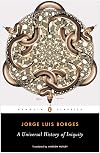
Every single review I've read of this book mentions Borges. There are no exceptions, because to not mention him would be unthinkable - this collection of capsule biographies of imaginary fascist/right-wing authors would never have been written without the existence of Borges' prior work like A Universal History of Infamy, which itself was based on similar prior experiments. However, I think Bolaño sort of missed the point on why Borges used the format of fictional book reviews. Borges did it out of laziness, by his own admission (also economy - why write a whole book when you can just give people the gist in a few pages?), but the device also allowed him to keep the very interesting and subtle philosophical questions he was exploring show more (e.g. the notions of authorship and authenticity in Pierre Menard) grounded in some sort of reality.
Philosophy puts people to sleep fairly easily, but if it's clothed in a narrative or something closer to what people expect in a work of fiction, it's both more interesting and more relevant. Bolaño's book, which is the only one of his I've read, for some reason leaves out the philosophy entirely and so I confess I really don't get the point of it - why am I reading yet another two-page summary of the life of a no-name poet whose fascism is only mentioned briefly, and whose life is connected to any of the others only vaguely, if at all? What broader picture is supposed to emerge from these lives and the ties between them? That some of these lives extend into the near future is surely supposed to mean something, but what?
Some of the longer ones are fairly involved and hint at what could have been interesting stories on their own (such as the two Schiaffino brothers). Unfortunately, except for the final biography, which is written in a narrative style that feels like a compressed version of a potentially interesting full-length crime novel (it actually was later turned into his novel Distant Star), it just comes off as writing for its own sake; there's pretty much nothing beyond the concept to make the book worth reading. None of the authors have much to say, and except for occasional brief lists of themes or ideas or imagery, there's very little description of what they wrote. The fascism or Nazism of the writers is completely incidental and doesn't add up to anything, which is odd considering Bolaño's own history as a prisoner of Pinochet. You could write something like "this is a series of meditations on fascism" if you wanted to trick people into thinking there was something more going on here, but there really isn't. The main item on display is Bolaño's writing style, which is dry, detached, and subtly ironic, but still fairly clinical and so even a warmth that could have breathed some life into these characters is absent.
I will say that Bolaño is exceptionally well-read, to judge by the lists of authors the various protagonists either read, meet, or are compared to, so it's certainly possible to be impressed by the detail he crams into each life. I wouldn't say any of them exactly leap of the page, but they are all pretty good imitations of what could have been real people, and if you're the kind of person who enjoys reading obituaries you will appreciate his skill in making each creation feel unique. Borges once wrote "There is a kind of lazy pleasure in useless and out-of-the-way erudition." There's tons of that useless erudition here, but I don't see the pleasure. show less
Philosophy puts people to sleep fairly easily, but if it's clothed in a narrative or something closer to what people expect in a work of fiction, it's both more interesting and more relevant. Bolaño's book, which is the only one of his I've read, for some reason leaves out the philosophy entirely and so I confess I really don't get the point of it - why am I reading yet another two-page summary of the life of a no-name poet whose fascism is only mentioned briefly, and whose life is connected to any of the others only vaguely, if at all? What broader picture is supposed to emerge from these lives and the ties between them? That some of these lives extend into the near future is surely supposed to mean something, but what?
Some of the longer ones are fairly involved and hint at what could have been interesting stories on their own (such as the two Schiaffino brothers). Unfortunately, except for the final biography, which is written in a narrative style that feels like a compressed version of a potentially interesting full-length crime novel (it actually was later turned into his novel Distant Star), it just comes off as writing for its own sake; there's pretty much nothing beyond the concept to make the book worth reading. None of the authors have much to say, and except for occasional brief lists of themes or ideas or imagery, there's very little description of what they wrote. The fascism or Nazism of the writers is completely incidental and doesn't add up to anything, which is odd considering Bolaño's own history as a prisoner of Pinochet. You could write something like "this is a series of meditations on fascism" if you wanted to trick people into thinking there was something more going on here, but there really isn't. The main item on display is Bolaño's writing style, which is dry, detached, and subtly ironic, but still fairly clinical and so even a warmth that could have breathed some life into these characters is absent.
I will say that Bolaño is exceptionally well-read, to judge by the lists of authors the various protagonists either read, meet, or are compared to, so it's certainly possible to be impressed by the detail he crams into each life. I wouldn't say any of them exactly leap of the page, but they are all pretty good imitations of what could have been real people, and if you're the kind of person who enjoys reading obituaries you will appreciate his skill in making each creation feel unique. Borges once wrote "There is a kind of lazy pleasure in useless and out-of-the-way erudition." There's tons of that useless erudition here, but I don't see the pleasure. show less
Roberto Bolano's Nazi Literature in the Americas is an encyclopedic look at a fictional literary movement. Novelists, poets, short story writers, magazine editors and publishers are all given detailed entries covering their lives and work. Minor figures and publications are listed in the appendices at the back. All down to the least significant fictional fascist author is included, lovingly, even reverently described.
Is Mr. Bolano playing a dangerous game with his readers? For the most part, the people included seem harmless. Their work is literature; the book about them non-political. Most of the biographical entries don't appear fascist at all, let alone Nazi. There is no talk of Anti-Semitism, or racial superiority, or eugenics. The show more final solution is not mentioned nor is there any discussion of World War II. The writers described in Mr. Bolano's book are concerned not with politics but with poetics. If the cover didn't say Nazi, you'd never guess.
Mr. Bolano's characters are a self-important, delusional bunch. Relegated to obscurity by history, they still consider themselves a vital literary movement. Mr. Bolano's "narrator" does nothing to subvert this notion. His tone recognizes the importance of the writers and publications described. He could easily be a university professor documenting a lifetime's worth of research. But while the writers included in Nazi Literature in the Americas interact with some of the canonical authors of their day--Borges, Ginsberg to name a few--they do not make an impact on either them or the literary world of their time. In the end, to this reader's relief, Mr. Bolano's Nazis are a pathetic bunch.
But just how hard is Mr. Bolano pulling our leg? Had history taken a different course, would a Nazi poetics have emerged? Would the authors described in Nazi Literature in the Americas be the ones occupying center stage while Borges and Ginsberg struggled in obscurity? These are not easy questions for those of us who value literature. We hope there is something about literature that places it above politics. We don't like to think about how literature is also determined by politics. They say the winners write the history books, but don't they also write the poetry?
Reading Nazi Literature in the Americas is much like reading an encyclopedia. That is both a compliment and a complaint. Mr. Bolano maintains the objective voice commonly found in good encyclopedias throughout most of his novel. This objectivity serves to present his fictional characters in a non-judgemental manner that underscores how feeble their efforts are while it makes the reader uneasy by invoking our sympathy. We chuckle at their absurdity, feel guilty about it, then feel guilty for feeling guilty.
But reading an encyclopedia, even a very well written one, becomes a tedious experience at some point. Encyclopedias are not meant to be read cover to cover. Novels are. Mr. Bolano's narrator himself falls victim to the same tedium his readers begin to experience. Towards the end of Nazi Literature in the Americas he loses his objective, encyclopedia writer voice, and becomes a story teller. The last few entries in the book are really short stories, not biographical essays. Perhaps that makes Mr. Bolano's experiment a failure, since he couldn't keep it up all the way to the finish. Perhaps it simply recognizes the needs of his reader and the needs of his narrator who just can't help himself anymore. He's a fan, he wants to tell the story with all its inherent drama. Objectivity be damned. show less
Is Mr. Bolano playing a dangerous game with his readers? For the most part, the people included seem harmless. Their work is literature; the book about them non-political. Most of the biographical entries don't appear fascist at all, let alone Nazi. There is no talk of Anti-Semitism, or racial superiority, or eugenics. The show more final solution is not mentioned nor is there any discussion of World War II. The writers described in Mr. Bolano's book are concerned not with politics but with poetics. If the cover didn't say Nazi, you'd never guess.
Mr. Bolano's characters are a self-important, delusional bunch. Relegated to obscurity by history, they still consider themselves a vital literary movement. Mr. Bolano's "narrator" does nothing to subvert this notion. His tone recognizes the importance of the writers and publications described. He could easily be a university professor documenting a lifetime's worth of research. But while the writers included in Nazi Literature in the Americas interact with some of the canonical authors of their day--Borges, Ginsberg to name a few--they do not make an impact on either them or the literary world of their time. In the end, to this reader's relief, Mr. Bolano's Nazis are a pathetic bunch.
But just how hard is Mr. Bolano pulling our leg? Had history taken a different course, would a Nazi poetics have emerged? Would the authors described in Nazi Literature in the Americas be the ones occupying center stage while Borges and Ginsberg struggled in obscurity? These are not easy questions for those of us who value literature. We hope there is something about literature that places it above politics. We don't like to think about how literature is also determined by politics. They say the winners write the history books, but don't they also write the poetry?
Reading Nazi Literature in the Americas is much like reading an encyclopedia. That is both a compliment and a complaint. Mr. Bolano maintains the objective voice commonly found in good encyclopedias throughout most of his novel. This objectivity serves to present his fictional characters in a non-judgemental manner that underscores how feeble their efforts are while it makes the reader uneasy by invoking our sympathy. We chuckle at their absurdity, feel guilty about it, then feel guilty for feeling guilty.
But reading an encyclopedia, even a very well written one, becomes a tedious experience at some point. Encyclopedias are not meant to be read cover to cover. Novels are. Mr. Bolano's narrator himself falls victim to the same tedium his readers begin to experience. Towards the end of Nazi Literature in the Americas he loses his objective, encyclopedia writer voice, and becomes a story teller. The last few entries in the book are really short stories, not biographical essays. Perhaps that makes Mr. Bolano's experiment a failure, since he couldn't keep it up all the way to the finish. Perhaps it simply recognizes the needs of his reader and the needs of his narrator who just can't help himself anymore. He's a fan, he wants to tell the story with all its inherent drama. Objectivity be damned. show less
A brilliant book, a compendium of made-up writer biographies, each of whom ended up falling for the seductions of the right wing.
I feel that I should offer a warning to anyone attempting to read this book in public, for example on the train to work, at work or at the hospital whilst waiting for an X-ray - Hide The Cover. Because if you don't, be prepared for the impolite stares, for the pointed questions & for the blank look when you attempt to answer their questions.
This book is written in the form of a catalogue of writers, or to be more accurate right wing writers and supporters of the Nazi ideology, yet all the authors profiled here are entirely the work of Roberto Bolano's literary imagination & it comes across as a homage to one of his favourite writers, Jorge Luis Borges.
"Nazi Literature in the America's", is one clever S.O.B, with a sense of irony and a show more humour so dry it makes the Gobi desert seem like a waterfall. This encyclopaedia highlights the writer's lives and like most of Bolano's characters they seem to fail miserably, in fact, apart from a few who meet a violent end, the majority are merely self deluded individuals living lives full of frustration - literary or otherwise. In fact, Bolano takes great delight in informing us of every detail of the lives of these literary midgets, not sparing us from any crime or foul deed, and yet it's done in such a cultured manor, with such a professorial detachment, that you realise, regardless of the writers political leaning, at the end of the day they all (or almost all) are pointless. Whatever teeth they may have possessed, have long been pulled. Through out this anthology, we learn of the lives of this collection of writers from across America, of their persistence & determination to create a body of work regardless of the fact that for the most part, it goes unread, unreviewed & by most of the world about them, unnoticed.
http://parrishlantern.blogspot.co.uk/2010/10/roberto-bolano.html show less
This book is written in the form of a catalogue of writers, or to be more accurate right wing writers and supporters of the Nazi ideology, yet all the authors profiled here are entirely the work of Roberto Bolano's literary imagination & it comes across as a homage to one of his favourite writers, Jorge Luis Borges.
"Nazi Literature in the America's", is one clever S.O.B, with a sense of irony and a show more humour so dry it makes the Gobi desert seem like a waterfall. This encyclopaedia highlights the writer's lives and like most of Bolano's characters they seem to fail miserably, in fact, apart from a few who meet a violent end, the majority are merely self deluded individuals living lives full of frustration - literary or otherwise. In fact, Bolano takes great delight in informing us of every detail of the lives of these literary midgets, not sparing us from any crime or foul deed, and yet it's done in such a cultured manor, with such a professorial detachment, that you realise, regardless of the writers political leaning, at the end of the day they all (or almost all) are pointless. Whatever teeth they may have possessed, have long been pulled. Through out this anthology, we learn of the lives of this collection of writers from across America, of their persistence & determination to create a body of work regardless of the fact that for the most part, it goes unread, unreviewed & by most of the world about them, unnoticed.
http://parrishlantern.blogspot.co.uk/2010/10/roberto-bolano.html show less
Members
- Recently Added By
Published Reviews
ThingScore 100
Nazi Literature in the Americas is a real curiosity; it has a surface simplicity, but few readers will be able to pin down a general unease about the book's purpose and meaning...Bolaño's impressive novel triumphs by displaying a power of imagination and a quiddity we are not inclined to allow any of his imaginary writers.
added by fannyprice
Lists

Fakes, Forgeries, and Fictitious Authors
112 works; 4 members
Author Information

94+ Works 27,993 Members
Some Editions
Awards and Honors
Awards
Distinctions
Series
Belongs to Publisher Series
Common Knowledge
- Canonical title*
- アメリカ大陸のナチ文学
- Original title
- La Literatura nazi en América
- Original publication date
- 1996 (original Spanish) (original Spanish); 2008 (English: Andrews) (English: Andrews)
- Dedication
- For Carolina López
- Original language
- Spanish
*Some information comes from Common Knowledge in other languages. Click "Edit" for more information.
Classifications
- Genres
- General Fiction, Fiction and Literature
- DDC/MDS
- 863.64 — Literature & rhetoric Spanish Literature Spanish fiction 20th Century 1945-2000
- LCC
- PQ8098.12 .O38 .H5713 — Language and Literature French, Italian, Spanish and Portuguese literatures Spanish literature Provincial, local, colonial, etc. Spanish America
- BISAC
Statistics
- Members
- 1,269
- Popularity
- 19,245
- Reviews
- 29
- Rating
- (3.86)
- Languages
- 12 — Czech, Dutch, English, French, German, Italian, Japanese, Polish, Slovenian, Spanish, Swedish, Portuguese (Portugal)
- Media
- Paper, Audiobook, Ebook
- ISBNs
- 42
- UPCs
- 3
- ASINs
- 8