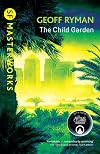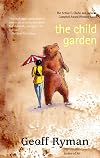
The Child Garden
by Geoff Ryman
On This Page
Description
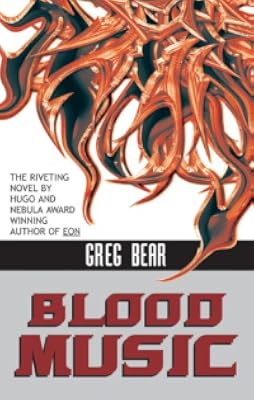
Winner of the Arthur C. Clarke and John W. Campbell Memorial Awards. "An exuberant celebration of excess set in a resource-poor but defiantly energetic twenty-first century."--The New York Times "A richly absorbing tale--with a marvelous premise expertly carried out."--Kirkus Reviews "Excellent. . . . Dark and witty and full of love, closely observed, and sprinkled with astonishing ideas. Science fiction of a very high order."--Greg Bear "One of the most imaginative accounts of futuristic show more bioengineering since Greg Bear's Blood Music."--Locus In a future London, humans photosynthesize, organics have replaced electronics, viruses educate people, and very few live past forty. But Milena is resistant to the viruses. She's alone until she meets Rolfa, a huge, hirsute Genetically Engineered Polar Woman, and Milena realizes she might, just might, be able to find a place for herself after all. Geoff Ryman is the author of the novels The King's Last Song, Air (a Clarke and Tiptree Award winner), and The Unconquered Country (a World Fantasy Award winner), and the collection Paradise Tales. Canadian by birth, he has lived in Cambodia and Brazil and now teaches creative writing at the University of Manchester in England. show lessTags
Recommendations







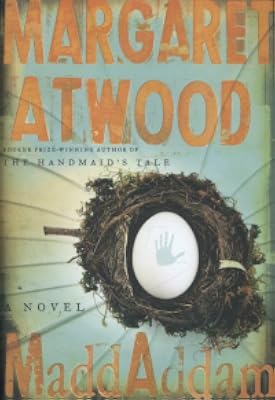
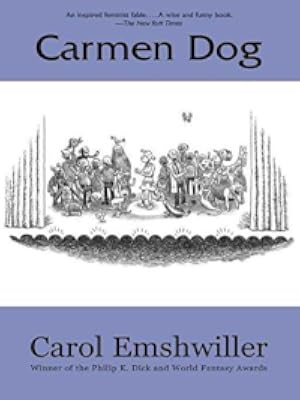
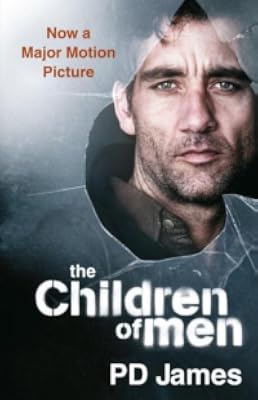
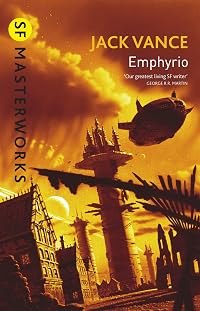







Member Reviews
This is an SF novel set in a future in which people are infected by viruses that, among many other odd and interesting things, program their brains with all the cultural and factual information they're ever supposed to need. Which is perhaps useful, because it's also a future in which the human lifespan has been halved, thanks to a cure for cancer gone wrong and gone viral, and there's no time for that pesky little thing called childhood anymore. The story focuses on Milena, a young woman who is apparently immune to at least some of the viruses. She starts out as an actress, unhappily putting on virus-directed plays meant to exactly mimic the great performances of the past, then becomes a director herself, staging a massive holographic show more opera version of Dante's Divine Comedy, and finally ends up becoming... Well, I'm not sure I could tell you, even if I were willing to spoil the ending.
I have such complicated feelings about this book. When I try to articulate my thoughts on it, they're almost all positive. The prose is good, sometimes very good indeed. The main character is satisfyingly complex. It's full of all kinds of interesting and imaginative ideas and images, and there's a lot of subtle thematic stuff about creativity, and identity, and love, and freedom. It does get a little more mystical in the end than I'm generally comfortable with, but even that is interestingly done.
And yet, even though I appreciated almost everything the novel was doing, I still found myself constantly flipping ahead, counting the pages until the current chapter was finished and I could put it back down for a while. It wasn't that I didn't like it, just that it I felt a disconnected from it somehow. I think that has a lot to do with the writing style, which is often rather dreamlike, and tends to slide around through time in strange ways.
For me, this one is almost impossible to rate, but I think I'll let the half of my brain that was impressed with it overrule the half that was impatient with it, and call it 4/5. show less
I have such complicated feelings about this book. When I try to articulate my thoughts on it, they're almost all positive. The prose is good, sometimes very good indeed. The main character is satisfyingly complex. It's full of all kinds of interesting and imaginative ideas and images, and there's a lot of subtle thematic stuff about creativity, and identity, and love, and freedom. It does get a little more mystical in the end than I'm generally comfortable with, but even that is interestingly done.
And yet, even though I appreciated almost everything the novel was doing, I still found myself constantly flipping ahead, counting the pages until the current chapter was finished and I could put it back down for a while. It wasn't that I didn't like it, just that it I felt a disconnected from it somehow. I think that has a lot to do with the writing style, which is often rather dreamlike, and tends to slide around through time in strange ways.
For me, this one is almost impossible to rate, but I think I'll let the half of my brain that was impressed with it overrule the half that was impatient with it, and call it 4/5. show less
This book demands much of the reader. It has taken me the better part of this year to complete it with many gaps, filled with not-reading. There is a massive imagination at work in here, exploring creation, all the realities we live in, proposing one outcome, ultimately undone. But it asked more of me, than I had to give.
Beyond incredible. In the world of the future, humanity has sacrificed growth and old age to the alter of knowledge. While telling a most unconventional love story Ryman finds time to play with the ideas of evolution, love, identity, madness, and whether knowledge is the acquisition of facts or something else. His main character is a woman I would love to know myself. This is a must read, regardless of whether you like sf or not.
There's certainly a lot to marvel at in this book - viruses that give humans knowlege, telepaths that can weave tapestries of human emotion, living spaceships that can grow any object you can conceive of out of their walls, a London covered in coral and reeds, angels that a free to roam the universe on waves of pure energy... the list could go on and on, as this book is rich with vivid and peculiar details. This can be it's greatest strength, but also a bit of a failing. The author has the habit of introducing a baffling concept and making it a large part of the story, and then only explaining it much later (I think Iain M. Banks learnt that trick from him). So, for example, the main character has no memory of her childhood - something show more the reader just has accept as part of the internal logic of the story until it is explained quite a long way into the book. There are so many of these "internal logic" elements that reading it can be a confusing experience, especially as some of them are never explained. For example, men can get pregnant and give birth. It is extremely dangerous for both father and baby and it seems that women can still give birth in the usual way, so the reasoning behind this story element feels like it needs explaining, but it never is.
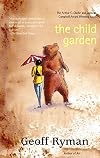
At heart the story is a very unconvential love story- between a young woman and a female polar bear (who's bascially a human in a polar bear shaped body, although this is again one of the things that isn't really explained very well). The strand of the story that deals with their relationship and all the reprecussions that it has in the life of the central character is one of the strongest elements of the book, as the author writes very convincingly and movingly about human emotions. Likewise, the parts of the story where the character's childhood are revealed capture very well that intense nostalgia for people and places we will never see again. There are also several allusions to Dante's Divine Comedy that underline the fact that we the reader are in the realms of Proper Literature here, not just a piece of genre sci-fi, and the book is certainly a very enriching experience. Part of me wants to love this book, with all it's fantastical details and it's moving and true-feeling accounts of human life in such an alien world, but ultimately it's a book that I admire more than love. There's just too many strange aspects of life that aren't fully explained, or are only explained after I have puzzled over them so long that it has hindered my understanding of what's going on. I can imagine some people absolutely falling head over heels for it though, so if anything in this review sounds like your cup of tea, I would definately invite you to take a trip to The Child Garden. show less
At heart the story is a very unconvential love story- between a young woman and a female polar bear (who's bascially a human in a polar bear shaped body, although this is again one of the things that isn't really explained very well). The strand of the story that deals with their relationship and all the reprecussions that it has in the life of the central character is one of the strongest elements of the book, as the author writes very convincingly and movingly about human emotions. Likewise, the parts of the story where the character's childhood are revealed capture very well that intense nostalgia for people and places we will never see again. There are also several allusions to Dante's Divine Comedy that underline the fact that we the reader are in the realms of Proper Literature here, not just a piece of genre sci-fi, and the book is certainly a very enriching experience. Part of me wants to love this book, with all it's fantastical details and it's moving and true-feeling accounts of human life in such an alien world, but ultimately it's a book that I admire more than love. There's just too many strange aspects of life that aren't fully explained, or are only explained after I have puzzled over them so long that it has hindered my understanding of what's going on. I can imagine some people absolutely falling head over heels for it though, so if anything in this review sounds like your cup of tea, I would definately invite you to take a trip to The Child Garden. show less
The Child Garden is set in a post climate change London where temperatures have risen to tropical levels. A global mind called The Consensus now runs the world as a “late period socialist” paradise. Children’s’ minds are Read at age 10 so that they can join The Consensus.
Cancer has been eradicated. However, the discovery that cancer served a useful purpose in regenerating human bodies is an unfortunate side effect. Without cancer cells, the human lifespan has shrunk to about 35 years.
Viruses make “people cheerful and helpful and honest.” Viruses also plant knowledge in people’s brains from birth. Viruses control sexual orientation, and homosexuality is reduced to “Bad Grammar.” Peoples’ skins are purple; they can show more photosynthesize their own food. This is an essential method for feeding the 23 million people inhabiting London.
The book follows the life of Milena, a woman who was resistant to the viruses as a child, and has never been Read. Milena falls in love with a genetically engineered woman called Rolfa. Rolfa is a musical genius and a misfit even among her own people.
While I found The Child Garden a bit long, I thought it more than worth the effort. The premise that something that we call bad (cancer) can actually serve a useful purpose hooked me from the start. The alternative world that Ryman creates, with photosynthesizing humans and an educational system made redundant by viruses, is fascinating. show less
Cancer has been eradicated. However, the discovery that cancer served a useful purpose in regenerating human bodies is an unfortunate side effect. Without cancer cells, the human lifespan has shrunk to about 35 years.
Viruses make “people cheerful and helpful and honest.” Viruses also plant knowledge in people’s brains from birth. Viruses control sexual orientation, and homosexuality is reduced to “Bad Grammar.” Peoples’ skins are purple; they can show more photosynthesize their own food. This is an essential method for feeding the 23 million people inhabiting London.
The book follows the life of Milena, a woman who was resistant to the viruses as a child, and has never been Read. Milena falls in love with a genetically engineered woman called Rolfa. Rolfa is a musical genius and a misfit even among her own people.
While I found The Child Garden a bit long, I thought it more than worth the effort. The premise that something that we call bad (cancer) can actually serve a useful purpose hooked me from the start. The alternative world that Ryman creates, with photosynthesizing humans and an educational system made redundant by viruses, is fascinating. show less
Great concepts. Interesting characters, though there are too many that you don't get to know. The world is also interesting and gives you a lot to think about. My main criticism is that it goes on for too long. Also the jumping around with the time sequence didn't add much.
What really stands out in my mind is the imaginative use of biology and photosynthesis with the people. The mind and memory aspects were also fascinating for both a story vehicle and character development. I thought it was a fun read, but more importantly, it was very full of great ideas and should be read for this, if not anything else. :)
Members
- Recently Added By
Lists

Best Science Fiction Novels
816 works; 430 members

Science fiction novels with a female protagonist
105 works; 30 members

Best Spec Fic Featuring Lesbians
27 works; 5 members

S.F. Masterworks (Complete)
229 works; 15 members

Speculative Fiction: Slipstream Literature
166 works; 16 members

Dystopian and Apocalyptic Literature
350 works; 74 members

Exploration of alternative economical systems
40 works; 3 members
Arthur C. Clarke Award Winners and Shortlisted Books
219 works; 14 members

Literature About Women and Girls
394 works; 39 members

SF Masterworks
193 works; 8 members

Viral Outbreaks and Pandemics
82 works; 8 members

Books I Read Before The Invention Of The Internet.
144 works; 1 member
Author Information

48+ Works 4,690 Members
Some Editions
Awards and Honors
Awards
Notable Lists
Series
Belongs to Publisher Series
SF Masterworks (61)
Work Relationships
Is an expanded version of
Has as a commentary on the text
Common Knowledge
- Canonical title
- The Child Garden
- Original title
- The Child Garden
- Alternate titles
- The Child Garden or A Low Comedy
- Original publication date
- 1989
- People/Characters
- Milena; Rolfa
- Important places
- London, England, UK
- Epigraph
- That the future is a faded song, a Royal Rose or a lavender spray
Of wistful regret for those who are not yet here to regret ...
(TS Eliot, Four Quartets) - Dedication
- dedicated to Jon Hosking, Johanna Firbank
and to my parents - First words
- Milena boiled things.
- Last words
- (Click to show. Warning: May contain spoilers.)Always.
- Original language
- English
Classifications
Statistics
- Members
- 787
- Popularity
- 35,388
- Reviews
- 17
- Rating
- (3.67)
- Languages
- English, German, Portuguese, Spanish
- Media
- Paper, Ebook
- ISBNs
- 12
- ASINs
- 7