
Dave McKean
Author of Arkham Asylum
About the Author
Dave McKean was born on December 29, 1963 in Maidenhead, England. He is an illustrator, photographer, comic book artist, filmmaker and musician. McKean is best known for his regular collaboration with Neil Gaiman. MirrorMask, McKean's first feature film as director and visual designer, premiered at show more the Sundance Film Festival in January 2005. The screenplay was written by Neil Gaiman. (Bowker Author Biography) show less
Image credit: Photo taken by Kris A. Celario, can be viewed on Flikr
Series
Works by Dave McKean
The Homecoming (Wonderfully Illustrated Short Pieces) (2006) — Book & cover designer; Illustrator — 308 copies, 8 reviews
Dream States: The Collected Dreaming, Sandman Presents and Overture Covers 1997-2014 (2014) 45 copies, 1 review
The Dark Crystal / Labyrinth (1986) / Mirrormask (Triple Feature Video) (2015) — Director — 29 copies
Sandman: capas na areia (vol.2) 4 copies
Cages: volume terzo 3 copies
Signal to Noise Radio Adaptation (Signal To Noise) — Original author — 3 copies
Cages: volume secondo 3 copies
Cages: volume quarto 2 copies
Cenas Marcantes 2 copies
Cages: volume quinto 2 copies
The 1997 Vertigo Calendar 2 copies
The World of Buckethead 1 copy
Wordsworth 1 copy
The Coast Road 1 copy
Klatki 1 copy
Sandman - Capas na Areia 1 copy
Postcard from Prague 1 copy
Orquídea Negra 1 copy
Postcard From Venice 1 copy
O Selvagem 1 copy
pholk 1 copy
Caustic 1 copy
The Gospel of Us [DVD] 1 copy
The Outlaw Varjak Paw 1 copy
Associated Works
American Gods: Author's Preferred Text (2001) — Illustrator, some editions — 9,497 copies, 196 reviews
Neverwhere: The Author's Preferred Text (1996) — Illustrator, some editions — 5,339 copies, 102 reviews
The Magic of Reality: How We Know What's Really True (2011) — Illustrator, some editions — 2,263 copies, 48 reviews
Someone Comes to Town, Someone Leaves Town (2005) — Cover artist, some editions — 1,302 copies, 59 reviews
John Constantine, Hellblazer: Original Sins (1992) — Cover artist, some editions — 1,004 copies, 15 reviews
John Constantine, Hellblazer Vol. 02: The Devil You Know (2007) — Illustrator — 507 copies, 8 reviews
Sandman: Preludes & Nocturnes; The Doll's House; Dream Country [slipcase edition] (1988) — Cover artist — 277 copies
9-11: The World's Finest Comic Book Writers & Artists Tell Stories to Remember (2002) — Illustrator — 256 copies, 1 review
The Dreaming: Beyond the Shores of Night (1990) — Cover artist, some editions — 247 copies, 3 reviews
Mad Hatters and March Hares: All-New Stories from the World of Lewis Carroll's Alice in Wonderland (2017) — Cover artist, some editions — 145 copies, 11 reviews
Neil Gaiman's Neverwhere [1996 TV series] (1996) — Cover artist, some editions — 127 copies, 1 review
Bad Doings & Big Ideas: A Bill Willingham Deluxe Edition (2011) — Illustrator — 48 copies, 3 reviews
The Sandman #18 (Dream Country: A Dream of a Thousand Cats) (1990) — Cover artist — 26 copies, 1 review
The Sandman #19 (Dream Country: A Midsummer Night's Dream) (1990) — Cover artist — 22 copies, 1 review
The Sandman #13 (The Doll's House 4: Men of Good Fortune) (1990) — Cover artist — 22 copies, 2 reviews
Sandman Presents: Everything You Always Wanted to Know About Dreams... But Were Afraid to Ask #1 (2001) — Cover artist — 20 copies, 2 reviews
The Sandman #37 (A Game of You 6: I Woke Up and One of Us Was Crying) (1992) — Cover artist — 15 copies
Tagged
Common Knowledge
- Birthdate
- 1963-12-29
- Gender
- male
- Occupations
- illustrator
comic book artist
graphic designer
filmmaker
musician - Awards and honors
- Squiddy Award (Favorite Artist, 1989)
- Nationality
- UK
- Birthplace
- Maidenhead, Berkshire, England, UK
- Places of residence
- Berkshire, England, UK
- Map Location
- England, UK
Members
Reviews
Artists’ reflections on war can illuminate events that might seem abstract to those of us living at some distance from the horrors of the battlefield. The best art carries a unique and profound power, shaping our understanding of the historical episodes that inspired it.
Jenny Waldman
Director, 14-18 NOW
Paul Nash was a British surrealist painter and landscape artist in the first half of the 20th c. He was also a soldier in WWI. He was stationed on the Ypres Salient in 1917 and, although show more while he was there, there were no major battles involving the area, he noted the devastation that remained from earlier offensives. He eventually had an accident that broke a rib and sent him back to London. Only a few days after this, the majority of his former unit was killed in an assault. While recovering from his injury, Nash produced several drawings of the war. Later, he would return to the front and continue to document it. The resultant pictures are some of the most iconic images of WWI.
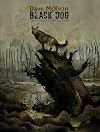
As part of the 14-18 NOW Centenary Project, comic book artist Dave McKean was commissioned to produce Black Dog: the Dreams of Paul Nash, a biography of the artist in graphic novel form. It is now being published by Dark Horse Books.
Although McKean follows the real events of Nash’s life, he reimagines them through his dreams and the beautifully stylistic art, often similar to Nash’s own work, captures this dream-like (and often nightmarish) state perfectly. The story begins in Nash’s childhood and his mother’s mental illness which first introduced him to the black dog in his dreams. He would encounter it again throughout much of his life but especially during the war years.
And, although McKean draws on Nash’s entire life, the story is mainly focused on the effects of the war. The graphics and the prose that accompanies them are both breathtaking and heart-rending. Through some of the most beautiful and powerful graphics I have ever encountered, McKean manages to convey the devastating and lasting effects of war and the deep scars it rips into people’s psyches. Interestingly, though, there is a real sense of hope that these can be, if not completely erased at least overcome – as the story progresses and Nash finds ways to deal with the trauma, the black dog’s face begins to take on more human qualities. show less
Jenny Waldman
Director, 14-18 NOW
Paul Nash was a British surrealist painter and landscape artist in the first half of the 20th c. He was also a soldier in WWI. He was stationed on the Ypres Salient in 1917 and, although show more while he was there, there were no major battles involving the area, he noted the devastation that remained from earlier offensives. He eventually had an accident that broke a rib and sent him back to London. Only a few days after this, the majority of his former unit was killed in an assault. While recovering from his injury, Nash produced several drawings of the war. Later, he would return to the front and continue to document it. The resultant pictures are some of the most iconic images of WWI.
As part of the 14-18 NOW Centenary Project, comic book artist Dave McKean was commissioned to produce Black Dog: the Dreams of Paul Nash, a biography of the artist in graphic novel form. It is now being published by Dark Horse Books.
Although McKean follows the real events of Nash’s life, he reimagines them through his dreams and the beautifully stylistic art, often similar to Nash’s own work, captures this dream-like (and often nightmarish) state perfectly. The story begins in Nash’s childhood and his mother’s mental illness which first introduced him to the black dog in his dreams. He would encounter it again throughout much of his life but especially during the war years.
And, although McKean draws on Nash’s entire life, the story is mainly focused on the effects of the war. The graphics and the prose that accompanies them are both breathtaking and heart-rending. Through some of the most beautiful and powerful graphics I have ever encountered, McKean manages to convey the devastating and lasting effects of war and the deep scars it rips into people’s psyches. Interestingly, though, there is a real sense of hope that these can be, if not completely erased at least overcome – as the story progresses and Nash finds ways to deal with the trauma, the black dog’s face begins to take on more human qualities. show less
I confess to not knowing who Paul Nash was. However, I know Dave McKean from his artwork on Sandman and various album covers and consider myself a fan. The book jacket informed me that Nash was surrealist painter that served in World War 1. As I'd recently seen 1917, I was intrigued.
Nash made notes of his dreams, which are included in the text, and are arranged in a mostly chronological fashion among the events that shaped his life. Even before experiencing the horrors of war, Nash grew up show more having to cope with his mother's mental illness. And boarding school with its sadistic and liberal application of physical discipline for failure only made matters worse. Of it, he wrote that it:
The book is heavy on observation, interpretation, and introspection. One passage that really resonated with me was this:
The artwork is fantastic. Comparing McKean's previous work to Nash's, I can see the influence. In this collection, McKean pays homage to Nash's work, but takes on a darker tone as befitting the subject matter. The sketches range from hyper-real to abstract to surrealistic. Most of the color palette is dominated by earth tones, both dark and bright, to convey scenes ranging from ominous dread to natural tranquility. McKean saves sharp color contrast—most notably his use of red—to draw the eye in to evoke heightened emotional response to danger, violence, and horror.
Recommended for McKean fans and introspective types. show less
Nash made notes of his dreams, which are included in the text, and are arranged in a mostly chronological fashion among the events that shaped his life. Even before experiencing the horrors of war, Nash grew up show more having to cope with his mother's mental illness. And boarding school with its sadistic and liberal application of physical discipline for failure only made matters worse. Of it, he wrote that it:
"...was ideal training for an infantryman's life in the trenches. It taught me nothing worth speaking of, it answered none of my questions, it required only a kind of desperate obedience, and a stoic acceptance of the constant threat of sudden and terrible violence."
The book is heavy on observation, interpretation, and introspection. One passage that really resonated with me was this:
Peel away the layers
Strip away the nerves and the synapses and senses
Cut away the skin and these paper-thin defenses
Underneath the son is the father
I'm defined by him
And in opposition to him.
I've tried to make judicious changes
Cut down the anger, add a little patience
I've tried to wash some colour through his pages
Swimming against his genes
His influence in my bloodstream.
The artwork is fantastic. Comparing McKean's previous work to Nash's, I can see the influence. In this collection, McKean pays homage to Nash's work, but takes on a darker tone as befitting the subject matter. The sketches range from hyper-real to abstract to surrealistic. Most of the color palette is dominated by earth tones, both dark and bright, to convey scenes ranging from ominous dread to natural tranquility. McKean saves sharp color contrast—most notably his use of red—to draw the eye in to evoke heightened emotional response to danger, violence, and horror.
Recommended for McKean fans and introspective types. show less
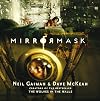
It's Gaiman and McKean, so it's a gorgeous object, and it reads well, but after a strong opening set around Helena's father's slapdash circus, halted in its tracks by the illness of Helena's mother, leaving them stuck in her Nan's apartment in Brighton, it takes off into a surreal quest through a sort of dreamworld that feels sketchy and rushed, with characters, ideas and settings that are woefully underdeveloped and a story that feels like a particularly shallow paint-by-numbers fairy-tale, show more and you tend to wish you were back in the apartment with the stranded circus, which was much more interesting. Thematically, the whole thing feels like an early draft of Coraline. Possibly it all works better in the film? show less
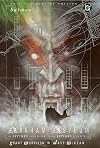
I’m generally not that into reading what most people consider the comic book canon (superheros, etc), but from time to time I pick one up because the author or illustrator is one whom I follow elsewhere and I’ll at least give a rarely read genre a try to not miss out on their work. Dave McKean was the obvious draw here, since I’ve been obsessed with his work since the Sandman covers, and boy am I glad I dipped into the Batman mythos to see his take on the caped crusader. Obviously show more writer Grant Morrison (whom I have seen elsewhere) gets a solid chunk of credit, since he’s written a Batman story that is dark, macabre, and perfectly suited for those of us who are into the darker side of the Gotham mythos. He tells a story where Batman must enter the halls of Arkham Asylum, in a ransom request by one of his biggest foes (the Joker), and rather than defeating his nemeses in the traditional manner he must face the darkness within himself. The story premise for the time (1989) would have been decidedly unexpected, but for those of us who cut our comic book teeth on the Vertigo lineup (almost exclusively) and Christopher Nolan’s trilogy of films it is far from surprising - though it is easy to see it as a solid precursor to the darker Batman franchise that we all know and love. What elevates the graphic novel (and novel it is, rather than a collection of singles) is McKean’s artwork. His style is like none other, and I can’t imagine that readers at the time were anything but absolutely astounded at his creativity, macabre layouts, and the overall visual depth that he lends the narrative. His take on classic Batman villains is unique, to say the least, and the sketch-like quality of the dual narrative lends a moody and surreal atmosphere that would have been absolutely wasted if DC had chosen a traditional line and colour-blocked artist to illuminate Morrison’s strange fever dream of discovery. This might be my favourite Batman story, if only because McKean elevates the visuals to a place that can’t be reached by others, even if, say, the story of Batman’s funeral (a Gaiman conceit) is technically a more nuanced tale. show less
Lists
Awards


You May Also Like


Associated Authors
Statistics
- Works
- 95
- Also by
- 217
- Members
- 13,787
- Popularity
- #1,678
- Rating
- 4.1
- Reviews
- 271
- ISBNs
- 275
- Languages
- 14
- Favorited
- 11