On This Page
Tags
Recommendations























Member Reviews
Oustanding interview. Two giants of the 20th century.
De Gaule : Pourquoi les Espagnols ne m’aimeraient-ils pas ? Ils aiment bien Don Quichotte !
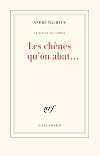
Un roman de Malraux que je ne connaissais même pas de nom, inspiré de sa dernière rencontre avec Charles de Gaulle, à Colombey-les-deux-églises quelques semaines avant sa mort. Je ne sais pas ce qui est réel et ce qui est fictif dans ce texte, mais il est plein de l’admiration de Malraux pour le Grand Charles, en même temps qu’il montre une grande érudition et une analyse politique de long terme intéressantes. C’est un joli texte, plein d’amour et de nostalgie. Principalement destiné aux admirateurs de Malraux ou de de Gaulle, voire des deux.
Nov 4, 2023French
Fascinant. La mise en perspective de l'action du Général dans l'Histoire est captivante. Et sa vision de l'avenir, qui est notre présent, est incroyablement lucide. De mémoire : "On dressera une grande croix de Lorraine sur la plus haute colline pour que tout le monde la voie. Et comme il n'y a personne, personne ne la verra. Elle incitera les lapins à la résistance."
Jun 26, 2009French
Bandeau "De Gaulle Malraux leur dernière rencontre"
Oct 12, 2025French
Ratings
Members
- Recently Added By
Author Information

Andre (Georges) Malraux, 1901- 1976 French novelist Andre Malraux was born in Paris to a wealthy family. His father was Fernand-Georges Malraux, a stockbroker, and his mother was Berthe (Lamy) Malraux. He attended the Lycee Condorcet and studied oriental languages at the Ecole des Langues Orientales. His parents separated when he was a child, and show more his mother brought him up. His father committed suicide in 1930. Malraux was also considered an adventurer, art historian, and statesman. He was the Minister for Cultural Affairs for eleven years from 1958-1969. He worked as an art editor at Gallimard publishers in Paris. He attended archaeological expeditions in Iran and Afghanistan. At the age of twenty-one, Malraux went to Cambodia with his wife, writer Clara Goldsmidt, where he was imprisoned for taking bas-reliefs from a Khmer temple. In 1925, he went to Saigon and joined the anti-colonial Young Annam League. In World War II, Malraux served in a French tank Unit. He was wounded and captured, but he managed to escape and join the Resistance where he met General Charles de Gaulle. He escaped a second capture in 1944 and received the Medaille de la Resistance, the Croix de Guerre and the British Distinguished Service Order for his service. Malraux's short novel "Le Temps De Mapris" (1935), tells the story of a Communist who's held prisoner in a Nazi concentration camp. In the Spanish Civil War, Malraux fought for the Republicans (1936-1939). He was wounded twice in the effort to stop Franco's advance on Madrid. His novel "L'Espoir" (1937) tells of Republican Spain in combat. This was also adapted for the screen in 1938 and the film was titled Sierrade Teruel. After "L'Espoir", Malraux divorced and had a liaison with Josette Clotis. She died in a railroad accident in 1945. At this time, Malraux broke from communism and began writing non-fiction. In 1948, Malrauxe married Marie-Madeline Lioux, a concert pianist and widow of his half-brother. In 1961, he lost his two sons in an accident. In 1958, when de Gaulle came to power, he was appointed first Minister of Information and then, a year later, Minister of State for Cultural Affairs. In 1967, Malraux's autobiography "Anti-Memoires" was published. In it, Malraux mixed fact with fiction and excerpts from his novels. Later volumes of his personal recollections involved Pablo Picasso, Leopold Sedar Senghor and de Gaulle. In "Felled Oaks" (1971), Malraux tells of his conversations with de Gaulle, his political idol. After leaving politics, Malraux retired to a suburb of Paris and continued to write until his death on November 23, 1976. (Bowker Author Biography) show less
Series

Belongs to Publisher Series
Common Knowledge
- Canonical title*
- Les chênes qu'on abat...
- Original title
- Les chênes qu'on abat...
- Alternate titles*
- Le miroir des limbes. Les chênes qu'on abat...
- Original publication date
- 1971
- People/Characters
- Charles de Gaulle
- Original language*
- Français
- Disambiguation notice
- English titles: Felled Oaks or The Fallen Oaks
*Some information comes from Common Knowledge in other languages. Click "Edit" for more information.
Classifications
- Genres
- Nonfiction, History, Biography & Memoir, General Nonfiction
- DDC/MDS
- 944.083 — History & geography History of Europe France and Monaco France Third republic 1870- Fifth Republic 1958-
- LCC
- DC373 .G3 .M27313 — History of Europe, Asia, Africa and Oceania France – Andorra – Monaco History of France Modern, 1515- 20th century
Statistics
- Members
- 88
- Popularity
- 364,609
- Reviews
- 4
- Rating
- (3.08)
- Languages
- Dutch, English, French
- Media
- Paper, Ebook
- ISBNs
- 8
- ASINs
- 3