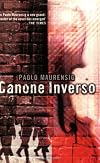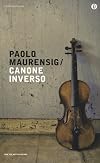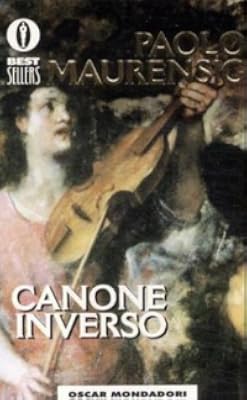
Canone inverso
by Paolo Maurensig
On This Page
Description
This novel, set in Austria in the 30s is about musical passions and jealousy. It begins with the purchase at an auction of a 300-year-old violin with an unusual carving at the top of the neck - a precise reproduction of a man's face. The new owner is plunged almost immediately into the instrument's strange history.Tags
Recommendations







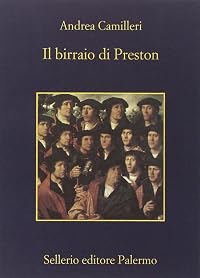
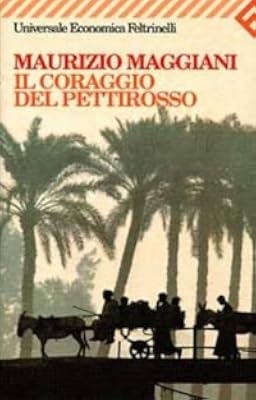
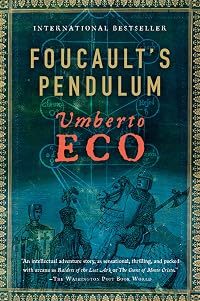
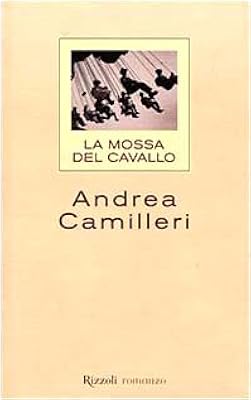






Member Recommendations
Member Reviews
". . . my mind had become accustomed to severity, to discipline, to the pursuit of perfection. I suddenly felt as if I were a stranger among all those noisy people who had nothing to do with music, talked about everything but, and were concerned with things I didn't understand."(p 91)
An antique violin is the heart of Paolo Maurensig's exploration of art and the artist. The question is: who is the greater artist? The one who owns his art or the one who is owned by it? Structured almost like The Rime of the Ancient Mariner the buyer of the violin is accosted by a stranger who relays the history of the instrument, the rivalry between budding artists Kuno and Jeno at a horrific music academy, and the playing out of their lives against the show more backdrop of the Nazi occupation of Europe. Deeply layered, full of symbols and themes, this is almost a perfect novella. In fact that is one of the themes of the book:
"Perfection, you see, is related to infinity, but infinity is not the only infinitely big. It is also the infinitely small. Perfection can suggest the idea of forward movement, but also the idea of coming to a halt. The search for perfection proceeds with a pace that becomes infinitely slower. It is a continuous progression that nevertheless gradually reduces itself as it approaches its goal."(p 37)
The main character, a Hungarian peasant boy named Jeno, is haunted both by his obsession to achieve perfection in playing the violin and his obsession for Sophie, a violinist and music teacher. While still a young boy he is sent to study at a serious music academy where he meets and becomes friends with another young boy, and Aristocratic Austrian boy named Kuno. He at first seems to be Jeno's doppelganger, but we soon find that he is filled with contrasts to Jeno that complement him. They are linked by the violin.
The beauty of the prose is like music and its structure mimics that of a work of music. Reminiscent of the short fiction of Sandor Marai or Isak Dinesen this novella is exceptionally poignant and affecting on many levels. Most importantly, it questions the reality of the very lives that we live - are they merely a dream? Reading books like this makes the question one that could lead to obsession. show less
An antique violin is the heart of Paolo Maurensig's exploration of art and the artist. The question is: who is the greater artist? The one who owns his art or the one who is owned by it? Structured almost like The Rime of the Ancient Mariner the buyer of the violin is accosted by a stranger who relays the history of the instrument, the rivalry between budding artists Kuno and Jeno at a horrific music academy, and the playing out of their lives against the show more backdrop of the Nazi occupation of Europe. Deeply layered, full of symbols and themes, this is almost a perfect novella. In fact that is one of the themes of the book:
"Perfection, you see, is related to infinity, but infinity is not the only infinitely big. It is also the infinitely small. Perfection can suggest the idea of forward movement, but also the idea of coming to a halt. The search for perfection proceeds with a pace that becomes infinitely slower. It is a continuous progression that nevertheless gradually reduces itself as it approaches its goal."(p 37)
The main character, a Hungarian peasant boy named Jeno, is haunted both by his obsession to achieve perfection in playing the violin and his obsession for Sophie, a violinist and music teacher. While still a young boy he is sent to study at a serious music academy where he meets and becomes friends with another young boy, and Aristocratic Austrian boy named Kuno. He at first seems to be Jeno's doppelganger, but we soon find that he is filled with contrasts to Jeno that complement him. They are linked by the violin.
The beauty of the prose is like music and its structure mimics that of a work of music. Reminiscent of the short fiction of Sandor Marai or Isak Dinesen this novella is exceptionally poignant and affecting on many levels. Most importantly, it questions the reality of the very lives that we live - are they merely a dream? Reading books like this makes the question one that could lead to obsession. show less
Riletto dopo molti anni, in poche ore (non c'è di che stupirsi, visto che sono reduce dalla complessa esperienza di Underworld di DeLillo), il giudizio è passato da 5 a 4 stelline (anche se forse il giudizio risente dell'immenso libro che lo ha preceduto).
Si tratta comunque di un libro gradevolissimo, un'esperienza ai confini della realtà con la musica come protagonista, accompagnata da quel profumo luciferino che da sempre le si accosta.
Si tratta comunque di un libro gradevolissimo, un'esperienza ai confini della realtà con la musica come protagonista, accompagnata da quel profumo luciferino che da sempre le si accosta.
Tutto il romanzo è interessante e scorrevole ma il finale da solo, proprio nelle ultimissime pagine, riesce a trasformare tutta la storia in un piccolo capolavoro narrativo.
It was interesting to see the use of a musical structure for text, but ultimately I found it a bit too mesmeric for the middle hundred or so pages.
3711. Canone Inverso, A Novel, by Paolo Maurensic (read 5 Mar 2003) This is a well-written fictional story about two violinists who are friends and become enemies. One is a bastard Hungarian, the other an aristocratic Austrian. The Nazis take over Austria at the culmination of the story, but the ending is well-explained. An attention-holding story.
This was a quick and easy read. I really enjoyed it. If you've ever seen the movie "The Red Violin" (and liked it) then you'll probably enjoy this book.
Not that they follow the same storyline, but there are similarities and the tone of both stories are very close.
Not that they follow the same storyline, but there are similarities and the tone of both stories are very close.
Uno dei pochi libri di cui si può dire che il film che ne è stato tratto è più bello: Ricky Tognazzi ha dato un'interpretazione profonda della vicenda, con degli spunti interessanti.
Regalato a un amico violinista.
Regalato a un amico violinista.
Members
- Recently Added By
Lists

Italian Literature
558 works; 43 members
Author Information

24 Works 1,658 Members
Some Editions
Common Knowledge
- Canonical title*
- Kreeftengang
- Original title
- Canone Inverso
- Alternate titles*
- Kreeftengang : roman
- Original publication date
- 1996
- People/Characters
- Jeno Varga; Sophie Hirschbaum; Kuno Blau
- Important places
- Nagyret, Hungary; Vienna, Austria; Innsbruck, Tyrol, Austria
- Important events
- World War II
- Dedication
- To Sonia
- First words
- As to the origins of bowed instruments, it is said that the wife of Shiva, the goddess Parvati, felt such great pity for the fate that awaited man at the end of his terrestrial adventure that she decided to give him something... (show all) that would protect him from demons and help him to find on earth, whenever he wished, the world of the gods.
- Quotations
- Music elevates the feeling and the very nature of man, but in order to reach such heights he must pass though a good deal of screeching, roaring and dissonance. Behind the refined music we hear performed with levity and perf... (show all)ection by an orchestra or a string quartet, there is the straining of nerves, the gushing of blood, the breaking of hearts.
As is true of many other professions, a violinist's job entails physical stresses that over time become unequivocally etched onto the person's physiognomy. A violinist who plays in an orchestra is marked by the instrument th... (show all)at has lorded over him for a lifetime. And with age, the traces of this servitude become increasingly evident: his eyes possess a kind of moodiness, and his gestures reveal his absolute dedication.
But the most absurd doubt that would seize me late at night, provoking hours and hours of insomnia, was caused by the observation that music existed only in the moment in which I produced it, and that it deserted me every tim... (show all)e I lifted my bow from the strings, without giving me any reassurance that it would return. I would have to get out of bed and go pluck the violin strings just to makes sure that they still vibrated, that the music was still there, present, even if a bit sleepy, and would fully awaken when I so desired. But then I would ask myself: once the music came back, would it be the same? - Last words
- (Click to show. Warning: May contain spoilers.)I followed this particular case with great interest, and if you would like to know more about it, I would suggest you read the next issue of the journal Die Neue Psychiatrie, in which, respecting anonymity, it is described in extensive detail.
- Original language*
- Italiaans
*Some information comes from Common Knowledge in other languages. Click "Edit" for more information.
Classifications
- Genres
- Fiction and Literature, General Fiction, Historical Fiction
- DDC/MDS
- 853.914 — Literature & rhetoric Italian, Romanian & related literatures Italian fiction 1900- 20th Century 1945-1999
- LCC
- PQ4873 .A8947 .C3613 — Language and Literature French, Italian, Spanish and Portuguese literatures Italian literature Individual authors, 1961-2000
- BISAC
Statistics
- Members
- 455
- Popularity
- 67,337
- Reviews
- 11
- Rating
- (3.58)
- Languages
- 8 — Danish, Dutch, English, French, German, Italian, Portuguese, Spanish
- Media
- Paper, Audiobook, Ebook
- ISBNs
- 19
- ASINs
- 2