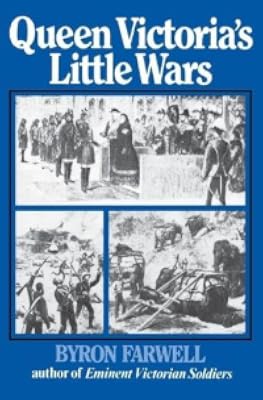
Queen Victoria's Little Wars
by Byron Farwell
On This Page
Description
This is the story of what Kipling called the "savage wars of peace." Throughout Queen Victoria's long reign there was not a single year in which somewhere in the world British soldiers were not fighting for her and her Empire. Byron Farwell's latest book records the fascinating story of these little-known wars, and of the men who fought them. Indexed.Tags
Recommendations

















Member Reviews
The long reign of queen Victoria (1837-1901) saw Great Britain involved in few major wars* but a great many minor ones. Farwell's business here is telling not quite the history of them, but a selection of histories from them. Little attention is paid to the political background of wars, and the fighting itself is described with wildly varying degrees of detail, with some battles and incidents zoomed in on for detailed observation, with others, often more important but in Farwell's judgment less interesting or illustrative, get dealt with in a sentence or two.
Farwell's greatest interest is in the psychology and character of the British officer class, and a great many mini-biographies are included, mostly of men who rose to high rank. show more While he characterizes them as a bloodthirsty lot and typically neither too bright nor well educated, he clearly felt a good deal of affinity for them.
Written in 1972, the book inevitably feels a bit like a historical artefact itself now, but it's a well-written popular history, and while a present-day author would be likely to take a different perspective on various issues, I don't think they'd disagree on many points of fact.
* Farwell at one point says that the Indian Mutiny was the only one, but to my mind the Crimean War should also count. show less
Farwell's greatest interest is in the psychology and character of the British officer class, and a great many mini-biographies are included, mostly of men who rose to high rank. show more While he characterizes them as a bloodthirsty lot and typically neither too bright nor well educated, he clearly felt a good deal of affinity for them.
Written in 1972, the book inevitably feels a bit like a historical artefact itself now, but it's a well-written popular history, and while a present-day author would be likely to take a different perspective on various issues, I don't think they'd disagree on many points of fact.
* Farwell at one point says that the Indian Mutiny was the only one, but to my mind the Crimean War should also count. show less
Apparently there were wars going on during every one of Queen Victoria's years on the throne from 1837 to 1901. Some were major ones that everyone has heard of - the Zulu, Ashanti, Sudanese and Boer wars in Africa, the Crimean War, the Indian Mutiny, various campaigns in Afghanistan, etc - but many smaller conflicts have faded into the mists of time and the author admits that the list in his appendix may not be complete.
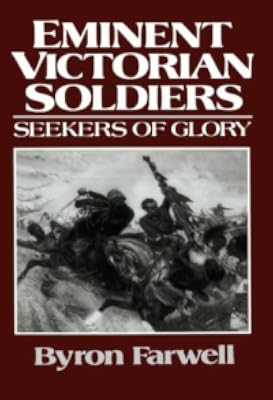
The book is a bit of a hodge-podge, but none the worse for that. Farwell does not attempt to be systematic, but focuses on items of interest. At times it seems he focuses a bit too much on individual officers, and one wonders whether this book is a spin-off from another of his works, Eminent Victorian Soldiers. But he show more manages to give a flavour of the British officer class, the regimental system, and life in the army.
One gets the impression that Farwell is intensely interested in all this, but he is no jingo and gently mocks the 19th century military establishment. show less
The book is a bit of a hodge-podge, but none the worse for that. Farwell does not attempt to be systematic, but focuses on items of interest. At times it seems he focuses a bit too much on individual officers, and one wonders whether this book is a spin-off from another of his works, Eminent Victorian Soldiers. But he show more manages to give a flavour of the British officer class, the regimental system, and life in the army.
One gets the impression that Farwell is intensely interested in all this, but he is no jingo and gently mocks the 19th century military establishment. show less
A quick, episodic survey of the "little wars" (or the "savage wars of peace," to use Kipling's pungent phrase) that popped up with depressing regularity throughout Victoria's 60+ year reign, Farwell's necessarily brief and episodic survey is replete with interesting details, with anecdotes ranging from the stirring to the horrific to the mordantly humorous. The book's episodic nature makes it a fine book for browsing but a somewhat more disjointed affair if read straight through, and one should probably be forgiven for coming away from Queen Victoria's Little Wars with the impression that the British Empire under Victoria scarcely had a grand strategy, save only that of keeping India at any cost and to exemplify the sentiment of Tom show more Brown's School Days, that fighting is the especial "business" of man. This is not a standard military history, and Farwell omits some "famous and fascinating battles and small campaigns" in favor or certain "interesting or little-known campaigns" which he selected "to illustrate aspects of military character or to help describe interesting personalities." In short, this is a book geared more towards the general reader looking for a general sense of Victorian Britain's attitude towards its empire and its military adventures rather than the military historian interested in strategy, tactics, or exhaustive studies of the intricacies of the British armed forces (both regular and "John Company") of the latter 19th century. show less
I thoroughly enjoyed this book as I did Mr. Farwell's "Eminent Victorian Soldiers". It is one of those rare books that actually can be hard to put down. Although Victorian era warfare is not my main area of interest, I will read a book on it from time to time to "cleanse" my reading "pallet". I found this book to be light, quick, entertaining and pleasantly distracting.
The serious student of the Queen Victoria's army would probably find this book entertaining as well but not required reading. It moves along at a fairly fast pace, covering nearly a century and tens of thousands of miles. The reader will not be deluged with any technical minutiae on weapons and specific tactics, but will instead be treated to many many good stories.
The show more author's description of the campaigns and battles lends a fairly good picture of the pertinent situations. Above all he has included my favorite aspect of the subject and that is the personalities involved. Exhaustively researched and expertly written, this is a very fun book to read for the military historian of any era. show less
The serious student of the Queen Victoria's army would probably find this book entertaining as well but not required reading. It moves along at a fairly fast pace, covering nearly a century and tens of thousands of miles. The reader will not be deluged with any technical minutiae on weapons and specific tactics, but will instead be treated to many many good stories.
The show more author's description of the campaigns and battles lends a fairly good picture of the pertinent situations. Above all he has included my favorite aspect of the subject and that is the personalities involved. Exhaustively researched and expertly written, this is a very fun book to read for the military historian of any era. show less
Entertaining and informative look at the frequent small wars of great Britain thru the 1800's. Covered 80 years and myriad locations in the least confusing manner.
Queen Victoria’s Little Wars
The author, Byron Farwell noted, that in the last quarter of the nineteenth century little wars came ever more frequently. There were plenty of military campaigns, plenty of revolts to quash and full scams wars, from the time of Queen Victoria’s ascension to the throne until her death, and until this book nobody had ever counted them.
When the author researched this book, he noted that was not a single year in Victoria’s long reign that the British Army in its various guises was not fighting for her and the empire. The one thing of note that Farwell makes is that except for the final Boer War all the military action was small when compared to the wars of the twentieth century and the beginning of the show more twenty-first century.
Victoria’s armies were, and still are, organised on a regimental basis, and in one of the appendices he explains the system for those unfamiliar with the regimental system of the British Army. What Farwell does note though the British Army may have been officered by the British, but they were not afraid to use mercenaries in the ranks.
To name all the wars that took place would end up looking like a very long list, but they are all covered in this book, so we see the theatres may change, but the idea of spreading British dominance did not. We are taken across the battles in Asia, India, Africa, the Middle East to dealing with any trouble that were on the edges of the empire in the far east, such as was Burma, some of which did not even garner any interest back home.
Something that does come through rather clearly is that the continual little wars that Britain had undertaken had by the end of Victoria’s reign, become an accepted way of life for the army. In the Sixty-four years Victoria was on the throne, the British Army fought, or undertook more than one hundred ‘little’ wars, starting with the Insurrection in Canara, India in 1837 to the Ashanti War in 1900-1901. With the wars, many can name such as the Crimea and Zulu wars to those people may have heard of such as the Opium Wars or the Boxer Rebellion to far more that you may not know.
Queen Victoria’s Little Wars was originally published in 1973, and has like those little wars become a forgotten book, and it is good to see this recent publication, bringing an excellent historical account back in to print, well done Pen and Sword. show less
The author, Byron Farwell noted, that in the last quarter of the nineteenth century little wars came ever more frequently. There were plenty of military campaigns, plenty of revolts to quash and full scams wars, from the time of Queen Victoria’s ascension to the throne until her death, and until this book nobody had ever counted them.
When the author researched this book, he noted that was not a single year in Victoria’s long reign that the British Army in its various guises was not fighting for her and the empire. The one thing of note that Farwell makes is that except for the final Boer War all the military action was small when compared to the wars of the twentieth century and the beginning of the show more twenty-first century.
Victoria’s armies were, and still are, organised on a regimental basis, and in one of the appendices he explains the system for those unfamiliar with the regimental system of the British Army. What Farwell does note though the British Army may have been officered by the British, but they were not afraid to use mercenaries in the ranks.
To name all the wars that took place would end up looking like a very long list, but they are all covered in this book, so we see the theatres may change, but the idea of spreading British dominance did not. We are taken across the battles in Asia, India, Africa, the Middle East to dealing with any trouble that were on the edges of the empire in the far east, such as was Burma, some of which did not even garner any interest back home.
Something that does come through rather clearly is that the continual little wars that Britain had undertaken had by the end of Victoria’s reign, become an accepted way of life for the army. In the Sixty-four years Victoria was on the throne, the British Army fought, or undertook more than one hundred ‘little’ wars, starting with the Insurrection in Canara, India in 1837 to the Ashanti War in 1900-1901. With the wars, many can name such as the Crimea and Zulu wars to those people may have heard of such as the Opium Wars or the Boxer Rebellion to far more that you may not know.
Queen Victoria’s Little Wars was originally published in 1973, and has like those little wars become a forgotten book, and it is good to see this recent publication, bringing an excellent historical account back in to print, well done Pen and Sword. show less
1251. Queen Victoria's Little Wars, by Byron Farwell (read 16 Nov. 1973) Light but interesting. It tells various interesting things re Britain's wars in Asia and Africa during Victoria's reign. Made me want to read The Washing of the Spears by Donald R. Morris--which I did Dec 20, 1975, and found excellent and reveled in, even copying the final stirring paragraph into my journal!
Members
- Recently Added By
Lists

Best Military History Books
123 works; 21 members

Best British Empire History Books
39 works; 8 members
Author Information

16+ Works 1,946 Members
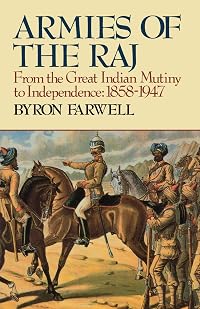
Byron Farwell's (1921-1999) other books, also published by Norton, include "Eminent Victorian Soldiers," "Armies of the Raj," & "Stonewall: A Biography of General Thomas J. Jackson." (Bowker Author Biography)
Common Knowledge
- Original publication date
- 1972
- People/Characters
- Victoria, Queen of the United Kingdom; Redvers Buller; Garnet Wolseley; Charles George Gordon
- Important places
- Afghanistan; Africa; Asia; Crimea; Europe; India (show all 8); South Africa; Sudan
- Important events
- Crimean War; Indian Mutiny; Indian Uprising of 1857; Zulu War; First Boer War; Second Boer War
- Dedication
- To Ruth my wife.
- First words
- There was not a single year in Queen Victoria's long reign in which somewhere in the world her soldiers were not fighting for her and for her empire.
- Last words
- (Click to show. Warning: May contain spoilers.)Thank Heaven they speak English, are governed by an English system of law, and profess the same regard that we have for what both understand by fair play in all national as well as in private business.
Classifications
- Genres
- History, Nonfiction, General Nonfiction
- DDC/MDS
- 909.81 — History & geography History World history 1800- 1800-1899, 19th century
- LCC
- DA68 .F37 — History of Europe, Asia, Africa and Oceania Great Britain History of Great Britain England History Political, military, naval, and Air Force history.
- BISAC
Statistics
- Members
- 344
- Popularity
- 91,843
- Reviews
- 8
- Rating
- (3.98)
- Languages
- English
- Media
- Paper, Ebook
- ISBNs
- 9
- ASINs
- 6