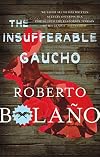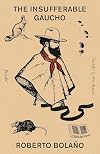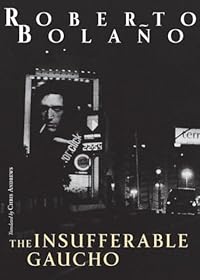
The Insufferable Gaucho
by Roberto Bolaño
On This Page
Description
Roberto Bolaño burst onto the scene with The Savage Detectives, and his posthumous masterpiece2666 confirmed his place as a giant of Latin American literature. The Insufferable Gaucho was the last book he prepared for publication before he died in 2003. Unpredictable and daring, highly controlled and yet somehow haywire, the five short stories included here are some of Bolaño's best. Whether they concern a stalwart rodent detective trying to investigate the mysterious deaths of his fellow show more rats, an elderly judge giving up his job in the city for an improbable return to the family farm in the pampas, or a confrontation between an elusive film-maker and the little-known Argentinian novelist whose work he's plagiarized for years they are as haunting as they are enthralling. In addition, The Insufferable Gaucho offers, for the first time in English, two essays by Roberto Bolaño: 'Literature + Illness = Illness' and 'The Myths of Cthulhu'. Provocative and often scathing, Bolaño's essays are alive with his trademark humour, violence and utter faith in the power of the written word. Roberto Bolaño is undoubtedly, as Susan Sontag said, "the real thing and the rarest". show lessTags
Recommendations



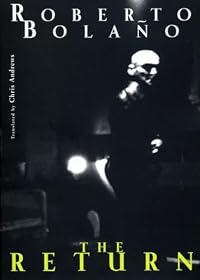


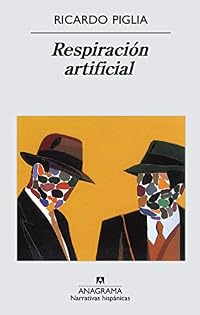
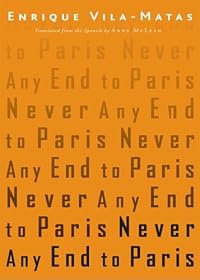
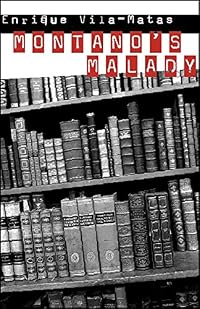






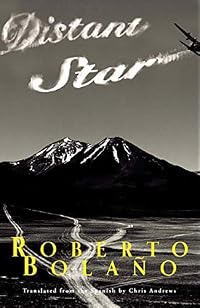



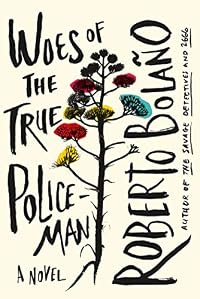
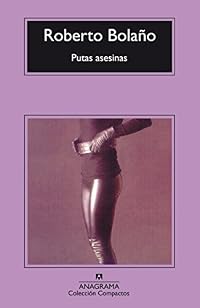
Member Recommendations
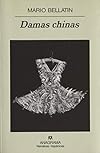
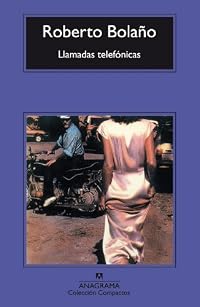
PaulBerauer This collection of short stories shares some of the surrealist elements that Chinese Checkers has.
Member Reviews
I was worried when I ordered this book that I was making the mistake of many completists - would this be a good Bolano, like Distant Star, or a barrel-scraping like Woes of the True Policeman?
Fortunately, this book offers some true, classic Bolano, and serves - in places - as an almost perfect introduction to his style. "The Insufferable Gaucho" is an excellent meditation on identity and madness; "Police Rat" is a police procedural set in the sewers; and "Alvaro Rousselot's Journey" is a Borgesian delight. There are missteps - subjectively speaking - such as "Jim" and "Two Catholic Tales", although the latter is worth rereading to figure out the overlap between the two pieces.
Bolano did not achieve acclaim for his essay writing, which show more besides does not always survive the translation away from Spanish. But "Literature + Illness = Illness" proved quite fascinating, especially with its focus on the interplay (and importance) of sex, books, and travel.
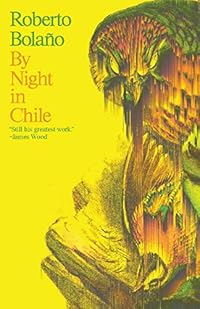
All in all, an excellent collection that deserves its place on the bookshelf next to 2666 and By Night in Chile. show less
Fortunately, this book offers some true, classic Bolano, and serves - in places - as an almost perfect introduction to his style. "The Insufferable Gaucho" is an excellent meditation on identity and madness; "Police Rat" is a police procedural set in the sewers; and "Alvaro Rousselot's Journey" is a Borgesian delight. There are missteps - subjectively speaking - such as "Jim" and "Two Catholic Tales", although the latter is worth rereading to figure out the overlap between the two pieces.
Bolano did not achieve acclaim for his essay writing, which show more besides does not always survive the translation away from Spanish. But "Literature + Illness = Illness" proved quite fascinating, especially with its focus on the interplay (and importance) of sex, books, and travel.
All in all, an excellent collection that deserves its place on the bookshelf next to 2666 and By Night in Chile. show less
In death, Chilean writer Roberto Bolaño has become the Tupac Shakur of the literary world. Since succumbing to liver failure in 2003, he has consistently released books every year (including the 900-page masterpiece, 2666). I realize that this incredible feat is due more to the slow process of translation than any powers Bolaño may have developed from beyond the grave, but I really wouldn’t put anything past him.
This year’s offering is The Insufferable Gaucho—a slim but powerful collection of short stories as well as a pair of essays in which he elliptically explores his own approaching mortality and place in the pantheon of Latin American literature.
Bolaño’s Police Rat revisits Franz Kafka’s hidden world of Josephine the show more Singer, or the Mouse Folk. Pepe the Cop, a nephew of Josephine’s who, like his famous aunt, has a sensitivity that raises him a cut above the common rat, is on the tail of a killer in their midst. Unfortunately for Pepe—and as we have learned through countless police stories—individuality isn’t necessarily a trait that is appreciated by superior officers.
As Josephine’s star wanes, Kafka’s narrator muses, “She is a small episode in the eternal history of our people, and the people will get over the loss of her.” One has to wonder if Bolaño was winking at us from his own position as a singing rat of some renown and one fully aware of his own demise. Perhaps it was a poke back at his own growing fame in the years right before he died when he chose the epigram for this book from the end of Kafka’s story: “So perhaps we shall not miss so very much at all.”
If Martin Scorsese ever decides to direct an animated movie for Pixar, I’d like to see Police Rat on the big screen. I could just imagine Robert De Niro doing the voiceover for Pepe: “Have you ever taken on a weasel? Are you ready to be torn apart by a weasel?” Maybe it’s time for the studio to leave behind Lady and the Trampist fare like Ratatouille, and get real. I digress.
In Literature + Illness = Illness, a many-faceted facing of the terminal disease that cut his life short at 50, Bolaño writes, “Books are finite, sexual encounters are finite, but the desire to read and fuck is infinite; it surpasses our own deaths, our fears, our hopes for peace.” It is a shout back from the ragged edge of things, and about as true as anything I’ve ever heard.
This is one rat that will miss Bolaño when publication finally catches up to his work’s inevitable conclusion. show less
This year’s offering is The Insufferable Gaucho—a slim but powerful collection of short stories as well as a pair of essays in which he elliptically explores his own approaching mortality and place in the pantheon of Latin American literature.
Bolaño’s Police Rat revisits Franz Kafka’s hidden world of Josephine the show more Singer, or the Mouse Folk. Pepe the Cop, a nephew of Josephine’s who, like his famous aunt, has a sensitivity that raises him a cut above the common rat, is on the tail of a killer in their midst. Unfortunately for Pepe—and as we have learned through countless police stories—individuality isn’t necessarily a trait that is appreciated by superior officers.
As Josephine’s star wanes, Kafka’s narrator muses, “She is a small episode in the eternal history of our people, and the people will get over the loss of her.” One has to wonder if Bolaño was winking at us from his own position as a singing rat of some renown and one fully aware of his own demise. Perhaps it was a poke back at his own growing fame in the years right before he died when he chose the epigram for this book from the end of Kafka’s story: “So perhaps we shall not miss so very much at all.”
If Martin Scorsese ever decides to direct an animated movie for Pixar, I’d like to see Police Rat on the big screen. I could just imagine Robert De Niro doing the voiceover for Pepe: “Have you ever taken on a weasel? Are you ready to be torn apart by a weasel?” Maybe it’s time for the studio to leave behind Lady and the Trampist fare like Ratatouille, and get real. I digress.
In Literature + Illness = Illness, a many-faceted facing of the terminal disease that cut his life short at 50, Bolaño writes, “Books are finite, sexual encounters are finite, but the desire to read and fuck is infinite; it surpasses our own deaths, our fears, our hopes for peace.” It is a shout back from the ragged edge of things, and about as true as anything I’ve ever heard.
This is one rat that will miss Bolaño when publication finally catches up to his work’s inevitable conclusion. show less
Some days I think Bolaño deserves all the hype and the accolades, and some days I'm just not feeling it. This collection delivers that mixed feeling - some brilliance, some above average work, and some head-scratchers - sometimes all within the same piece. And some days I just get tired of the unremittingly world-weary persona behind the words and wish for some unguarded passion or glimmer of transcendence. But that's just not who the man was.
brilliance in half-assedness. how does he do it? it's like he wrote these stories on the back of an envelope while riding a bus on his way to his publisher to have the very same story published. it works. his essays in the back are great too.
The short stories are good, but not incredible. I don't know the history of each story or whether this book was in fact edited together under the oversight of the author, but it feels like it could have been a posthumous collection of otherwise discarded stories, especially since it's finished with two essays.
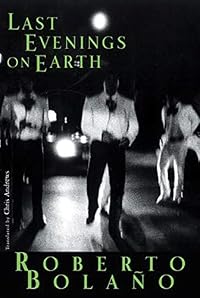
The story 'Police Rat' is my favorite of the stories, though I was a little thrown by the characterization (they are rats!). Nothing in the fiction part of the book really impressed me like the stories in Last Evenings on Earth.
I was surprised to find the two essays as my favorite pieces overall in the book. Bolaño's style in these is very enjoyable and he leaves much to think about concerning life and literature.
The story 'Police Rat' is my favorite of the stories, though I was a little thrown by the characterization (they are rats!). Nothing in the fiction part of the book really impressed me like the stories in Last Evenings on Earth.
I was surprised to find the two essays as my favorite pieces overall in the book. Bolaño's style in these is very enjoyable and he leaves much to think about concerning life and literature.
Esta coleccion contiene cinco cuentos y dos ensayos. Los cuentos son interesantes y diversos, sin embargo los ensayos carecen de una estructura clara y me han resultado un poco aburridos. El primer cuento es muy breve, una vineta en la que apenas pasa nada, es la mas floja de las narraciones, pero tiene un cierto interes. El segundo es el que da el titulo a la coleccion, en ella un abogado porteno maduro decide irse a vivir a la pampa despues de la crisis economica del pais y se convierte en un gaucho insufrible. La historia esta contada con sentido del humor. La tercera historia, sobre una rata detective que investiga las muertes de sus congeneres, es una curiosa reflexion sobre la naturaleza humana. El cuarto cuento relata el viaje de show more un escritor a Paris, donde busca a un director de cine que parece estar plagiando sus ideas. Segun el comentario de la contraportada del libro este relato tiene ecos de Bioy Casares, y me parece una buena comparacion. Tambien recuerda un poco a algunas tramas de Paul Auster. Finalmente, el ultimo esta dividido en dos partes, contadas por dos narradores, que parecen desconectadas, pero que resultan estar unidas. Este cuento es bastante Borgiano, aunque mas en la conclusion y en la estructura que en el uso del lenguaje. show less
A mixed bag of scraps from the increasingly legendary Bolano. In a few places we feel the magick that made him so incisive: “Two Catholic Tales,” “Literature Illness = Illness,” and the brutal “The Myths of Cthulhu.” We also see some of the ideas that got hammered into 2666: “Police Rat” and “Álvaro Rousselot's Journey.” The title story relies way too much on a Borges story I don't remember enough for to me comment.
Members
- Recently Added By
Author Information

94+ Works 27,860 Members
Some Editions
Awards and Honors
Distinctions
Series
Belongs to Publisher Series
New Directions Paperbook (1254)
Work Relationships
Is contained in
Common Knowledge
- Canonical title
- The Insufferable Gaucho
- Original title
- El gaucho insufrible
- Original publication date
- 2003; 2010 (English translation) (English translation)
- Epigraph
- So perhaps we shall not miss so very much after all.
Franz Kafka - Dedication
- For my children Lautaro and Alexandra and for my friend Ignacio Echevarria
- Blurbers
- Smith, Patti; Deb, Siddhartha; Estrada, Aura; Goldman, Francisco; Lethem, Jonathan
- Original language
- Spanish
Classifications
- Genres
- Fiction and Literature, General Fiction
- DDC/MDS
- 863.64 — Literature & rhetoric Spanish Literature Spanish fiction 20th Century 1945-2000
- LCC
- PQ8098.12 .O38 .G3813 — Language and Literature French, Italian, Spanish and Portuguese literatures Spanish literature Provincial, local, colonial, etc. Spanish America
- BISAC
Statistics
- Members
- 529
- Popularity
- 56,207
- Reviews
- 20
- Rating
- (3.78)
- Languages
- 7 — English, French, German, Italian, Portuguese, Spanish, Swedish
- Media
- Paper, Audiobook, Ebook
- ISBNs
- 23
- ASINs
- 9