On This Page
Description
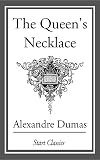
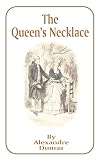
Fans of historical fiction will love The Queen's Necklace, Dumas' gripping retelling of the Affair of the Necklace, a suspicious incident of theft in the court of Louis XVI that some experts say set into motion a chain of events that resulted in the eventual downfall of the monarchy..
Tags
Recommendations


































Member Reviews
3.5 - 4 stars
Balsamo is back and, after a hiatus of 10 years and the adoption of a new identity (le Comte de Cagliostro), he is ready to begin anew his efforts at bringing down the throne of France. The action centres around Marie Antoinette (painted quite positively by Dumas) and the infamous affair of the diamond necklace. This tangled intrigue revolves around the fabulous necklace, worth 1.5 million francs according to Dumas, and the varied attempts by different intriguers to ensure that the queen was presented with it as a sign of love. The court, apparently already suffering under the dual weight of an embarrassing lack of funds and rumours of the queen's infidelity spread by her many enemies, can little withstand a blow in both show more quarters. From here Dumas weaves various threads and intrigues with his usual aplomb as his varied cast of characters are drawn inexoribly towards their ultimate ends.
Dumas seems to have had a things for cardinals, queens and romantic cavaliers...though in this volume they are handled very differently than in some of the other places we've seen them used. We again see our old friends the Taverneys (the wonderfully venal old Baron de Taverney, the angelic and somewhat stiff Andrée, and the heroically romantic Philippe) and a short introduction reintroduces the charmingly dissolute Duke de Richelieu (sadly underutilized in this book). Added to the cast are the impoverished and ambitious adventuress the Countess de la Motte Valois, the lovestruck and somewhat befuddled Cardinal de Rohan, and the also heroically romantic Count de Charny (soon to be rival of our old friend Philippe). The last, and perhaps most important character (at least to the intrigues Dumas developes) is Olivia (formerly Nicole when she was the servant of the Taverneys and lover of Gilbert) who bears a striking resemblance to the queen. Got that straight? Good.
It's great to see Dumas once again in full command of his intricate plot and never really losing any of the strings. The characters are well-drawn and the action fast-paced as always. While not anywhere near the perfection of [b:The Count of Monte Cristo|7126|The Count of Monte Cristo|Alexandre Dumas|http://photo.goodreads.com/books/1309203605s/7126.jpg|391568] or [b:The Three Musketeers|7190|The Three Musketeers|Alexandre Dumas|http://photo.goodreads.com/books/1320436982s/7190.jpg|1263212] this is an enjoyable read and I truly enjoyed being able to feel for characters on both sides of the plot. Marie Antoinette is quite positively painted (as is Louis XVI whose only great flaw seems to be a lack of backbone) and yet Dumas allows us to see glimpses of her weakness, pride and selfishness that will utlimately lead to her downfall. The Cardinal could have been painted as a pure villain, or complete dupe, but manages to be sympathetic and seen as a victim of circumstances beyond his control. The Countess de la Motte is probably the most one-note character and doesn't manage to approach the sublime heights of villainy and attraction of Milady, but she fulfills her role.
All in all a very fun read that sets things up for the inevitable fall to come. Recommended for fans of Dumas. show less
Balsamo is back and, after a hiatus of 10 years and the adoption of a new identity (le Comte de Cagliostro), he is ready to begin anew his efforts at bringing down the throne of France. The action centres around Marie Antoinette (painted quite positively by Dumas) and the infamous affair of the diamond necklace. This tangled intrigue revolves around the fabulous necklace, worth 1.5 million francs according to Dumas, and the varied attempts by different intriguers to ensure that the queen was presented with it as a sign of love. The court, apparently already suffering under the dual weight of an embarrassing lack of funds and rumours of the queen's infidelity spread by her many enemies, can little withstand a blow in both show more quarters. From here Dumas weaves various threads and intrigues with his usual aplomb as his varied cast of characters are drawn inexoribly towards their ultimate ends.
Dumas seems to have had a things for cardinals, queens and romantic cavaliers...though in this volume they are handled very differently than in some of the other places we've seen them used. We again see our old friends the Taverneys (the wonderfully venal old Baron de Taverney, the angelic and somewhat stiff Andrée, and the heroically romantic Philippe) and a short introduction reintroduces the charmingly dissolute Duke de Richelieu (sadly underutilized in this book). Added to the cast are the impoverished and ambitious adventuress the Countess de la Motte Valois, the lovestruck and somewhat befuddled Cardinal de Rohan, and the also heroically romantic Count de Charny (soon to be rival of our old friend Philippe). The last, and perhaps most important character (at least to the intrigues Dumas developes) is Olivia (formerly Nicole when she was the servant of the Taverneys and lover of Gilbert) who bears a striking resemblance to the queen. Got that straight? Good.
It's great to see Dumas once again in full command of his intricate plot and never really losing any of the strings. The characters are well-drawn and the action fast-paced as always. While not anywhere near the perfection of [b:The Count of Monte Cristo|7126|The Count of Monte Cristo|Alexandre Dumas|http://photo.goodreads.com/books/1309203605s/7126.jpg|391568] or [b:The Three Musketeers|7190|The Three Musketeers|Alexandre Dumas|http://photo.goodreads.com/books/1320436982s/7190.jpg|1263212] this is an enjoyable read and I truly enjoyed being able to feel for characters on both sides of the plot. Marie Antoinette is quite positively painted (as is Louis XVI whose only great flaw seems to be a lack of backbone) and yet Dumas allows us to see glimpses of her weakness, pride and selfishness that will utlimately lead to her downfall. The Cardinal could have been painted as a pure villain, or complete dupe, but manages to be sympathetic and seen as a victim of circumstances beyond his control. The Countess de la Motte is probably the most one-note character and doesn't manage to approach the sublime heights of villainy and attraction of Milady, but she fulfills her role.
All in all a very fun read that sets things up for the inevitable fall to come. Recommended for fans of Dumas. show less
Well, like everything by Dumas that I've read, this is a rollicking read, but I wish I had read it before I read the book of the same name by Antal Szerb. That's because Szerb tried to figure out what really happened, while Dumas lets his imagination run riot, and I kept thinking "that didn't really happen, no that's something he made up." For example, Szerb is convinced that Jeanne de Motte never met Marie Antoinette, yet in this novel she visits her frequently at Versailles; similarly, Szerb is convinced that the queen never owned or wore the necklace but in the Dumas version she owns it briefly. Szerb casts a veil over whether the queen had lovers, as her detractors insisted, but in this novel she at the very least falls in love show more easily. Similarly, Dumas seems to invent a subplot involving a fake Portuguese ambassador.
Nonetheless, this is a lively tale of plot and counterplot, intrigue, mysterious characters, love, and above all honor. I enjoyed it, but not as much as I could have.
There seems to be no modern translation of this novel. No translator is listed for my edition, a 1951 publication, and the language at times is old-fashioned and obscure. There are also a variety of print-on-demand editions. show less
Nonetheless, this is a lively tale of plot and counterplot, intrigue, mysterious characters, love, and above all honor. I enjoyed it, but not as much as I could have.
There seems to be no modern translation of this novel. No translator is listed for my edition, a 1951 publication, and the language at times is old-fashioned and obscure. There are also a variety of print-on-demand editions. show less
I found out after the fact that this is the second book in a series, so... yeah. I might look into reading Memoirs of a Physician and The Marie Antoinette Romances. The introduction is extremely engaging; unfortunately, it doesn’t have much to do with The Queen's Necklace. M. de Cagliostro was my favorite character - almost like the Count, but we’re not told much about his motivations.
The story has three plots intertwined - and when I say “plots” I do mean “plots”. One, enterprising young Jeanne maneuvers herself into the high life she believes she deserves; two, the mysterious Monsieur de Cagliostro takes interest in a doppelganger to the queen; and three, Beausire, the doppelganger’s seedy boyfriend, plans the elaborate show more theft of a necklace made for the queen.
The story was slow, and lacked a lot of the tension that made Monte Cristo such a good read. I’m not a huge fan of the whole doppelganger trope - and, even though the queen figures it out fairly early, she does nothing to avoid the typical doppelganger shenanigans. At least everything falls apart quickly and realistically (if not intelligently) instead of building an improbably web of assumptions and mistakes.
Not for fans of action and adventure. If the slow parts of The Count of Monte Cristo were too slow for you, avoid The Queen’s Necklace. show less
The story has three plots intertwined - and when I say “plots” I do mean “plots”. One, enterprising young Jeanne maneuvers herself into the high life she believes she deserves; two, the mysterious Monsieur de Cagliostro takes interest in a doppelganger to the queen; and three, Beausire, the doppelganger’s seedy boyfriend, plans the elaborate show more theft of a necklace made for the queen.
The story was slow, and lacked a lot of the tension that made Monte Cristo such a good read. I’m not a huge fan of the whole doppelganger trope - and, even though the queen figures it out fairly early, she does nothing to avoid the typical doppelganger shenanigans. At least everything falls apart quickly and realistically (if not intelligently) instead of building an improbably web of assumptions and mistakes.
Not for fans of action and adventure. If the slow parts of The Count of Monte Cristo were too slow for you, avoid The Queen’s Necklace. show less
A mediocre translation or was Dumas having a bad-book day? *Review for Wildside Press Edition*
Inquiring minds want to know, although I'm going to lean towards the former. The Queen's Necklace begins ten years after the close of Memoirs of a Physician, as France recovers from the grips of a deadly winter and Marie Antoinette takes pity on Jeanne de Valois who claims to be descended from the Valois side of the monarchy, albeit from the wrong side of the blanket. Jeanne soon takes up with Cardinal de Rohan who in an effort to ingratiate himself at court offers the stunning necklace originally intended as a gift for the infamous Madame du Barry to the Queen. Thus begins Dumas' take on the well known "Affair of the Diamond Necklace" which show more scandalized France and further degraded public opinion of the monarchy.
Dumas brings characters from the first two books into this story, as the mysterious Balsamo reappears under the new name of Count Cagliostro, Andrée resides at court in service to Marie and falls in love with the Count de Charny (who loves the Queen) and Philip (called Philippe in this book) returns from America and also finds himself madly in love with the Queen. Andrée's former servant Nicole (who bears a striking resemblance to the Queen) now goes by the name of Oliva and is drawn into Jeane's schemes as she masquerades as the Queen setting off further scandals, and eventually Marie and de Charny are caught in a compromising position which leads to a drastic ploy by Marie to save both herself and de Charny. Will this ploy fulfill the secret desire of our heroine Andrée, or does a twist of fate forever change her happiness to great sorrow? I'll never tell, but that was one heck of a plot twist!
Unfortunately, what should have been a ripping good read was ruined by a dreadful translation. I've read many works of Dumas and his storylines always move quickly with plentiful action and sparkling dialogue and displays the foibles and machinations of the French Monarchy to perfection. This book was stilted, slow paced with some of the most un-Dumas like dialogue I've ever come across. Worse yet, since most chapters were 3-4 pages long (this from an author who was paid by the word!!??) and from comparing the page count of this version (329) to that of another (432) I'm guessing quite a bit of the story was left out, and frankly I would have bailed on the book except for the fact that I intend to read the rest of the series and didn't want to lose the story. The first two in the series of six I've read were much older publications, published in the early 1900's by P.F. Collier and Son. If you are interested in reading the entire series I recommend you check your library and/or shop the online used sellers for one of those copies. Next up in the series, Taking the Bastile.
I do want to note that this review is for the Wildside Press edition and my comments about translation problems should not be reflected against other publishers of this book. I'm stating this as I notice that any reviews posted for one version of this book are showing up on others, and I suspect my review will show up on those editions as well. show less
Inquiring minds want to know, although I'm going to lean towards the former. The Queen's Necklace begins ten years after the close of Memoirs of a Physician, as France recovers from the grips of a deadly winter and Marie Antoinette takes pity on Jeanne de Valois who claims to be descended from the Valois side of the monarchy, albeit from the wrong side of the blanket. Jeanne soon takes up with Cardinal de Rohan who in an effort to ingratiate himself at court offers the stunning necklace originally intended as a gift for the infamous Madame du Barry to the Queen. Thus begins Dumas' take on the well known "Affair of the Diamond Necklace" which show more scandalized France and further degraded public opinion of the monarchy.
Dumas brings characters from the first two books into this story, as the mysterious Balsamo reappears under the new name of Count Cagliostro, Andrée resides at court in service to Marie and falls in love with the Count de Charny (who loves the Queen) and Philip (called Philippe in this book) returns from America and also finds himself madly in love with the Queen. Andrée's former servant Nicole (who bears a striking resemblance to the Queen) now goes by the name of Oliva and is drawn into Jeane's schemes as she masquerades as the Queen setting off further scandals, and eventually Marie and de Charny are caught in a compromising position which leads to a drastic ploy by Marie to save both herself and de Charny. Will this ploy fulfill the secret desire of our heroine Andrée, or does a twist of fate forever change her happiness to great sorrow? I'll never tell, but that was one heck of a plot twist!
Unfortunately, what should have been a ripping good read was ruined by a dreadful translation. I've read many works of Dumas and his storylines always move quickly with plentiful action and sparkling dialogue and displays the foibles and machinations of the French Monarchy to perfection. This book was stilted, slow paced with some of the most un-Dumas like dialogue I've ever come across. Worse yet, since most chapters were 3-4 pages long (this from an author who was paid by the word!!??) and from comparing the page count of this version (329) to that of another (432) I'm guessing quite a bit of the story was left out, and frankly I would have bailed on the book except for the fact that I intend to read the rest of the series and didn't want to lose the story. The first two in the series of six I've read were much older publications, published in the early 1900's by P.F. Collier and Son. If you are interested in reading the entire series I recommend you check your library and/or shop the online used sellers for one of those copies. Next up in the series, Taking the Bastile.
I do want to note that this review is for the Wildside Press edition and my comments about translation problems should not be reflected against other publishers of this book. I'm stating this as I notice that any reviews posted for one version of this book are showing up on others, and I suspect my review will show up on those editions as well. show less
1318. The Queen's Necklace, by Alexandre Dumas (9 Mar 1975) This is not a bad book, but since I know Dumas is little interested in historical accuracy, one wonders if it is worth reading. I wouldn't mind reading a historical study of the Queen's necklace matter, which of course involved Marie Antoinette and Cardinal Rohan and Cagliostro in an episode that has historical significance.
It was hard to get into it. So many different characters.
I was not enjoying this book and I figured out the reason. This version is a straight text to printing book. The book lacks formatting. I never realized how important formatting is until I found how difficult it is to read without formatting. I will look for a formatted copy and try again.
Members
- Recently Added By
Lists

French Fiction of the 18th and 19th Centuries in English Translation
169 works; 3 members

Books Read in 2019
4,052 works; 108 members

Queen Camilla's Reading Room
65 works; 6 members
Author Information

1,609+ Works 98,567 Members
Some Editions
Series

Belongs to Publisher Series
Work Relationships
Is contained in
Contains
Has the adaptation
Common Knowledge
- Canonical title
- The Queen's Necklace
- Original title
- Le collier de la reine
- Original publication date
- 1849-1850: Serialised
- People/Characters
- Marie Antoinette; Louis XVI, King of France; Jeanne de Valois-Saint-Rémy; Andree de Taverney; Philippe de Taverney; Count de Charny (show all 9); Cagliostro; Oliva; Cardinal de Rohan
- Important events
- Affair of the Diamond Necklace
- First words*
- in den ersten Apriltagen des Jahres 1784 gegen drei Viertel vier Uhr nachmittags rief der alte Marschall von Richelieu, nachdem er sich seine Augenbrauen mit einer parfümierten Tinktur gefärbt und sein Spiegelbild aufmerksa... (show all)m betrachtet hatte, seinen Kammerdiener ein letztes Mal zurück, schüttelte auf die nur ihm eigentümliche Weise den Kopf und sagte:
- Original language*
- ranska
*Some information comes from Common Knowledge in other languages. Click "Edit" for more information.
Classifications
- Genres
- General Fiction, Fiction and Literature, Historical Fiction
- DDC/MDS
- 843.7 — Literature & rhetoric French Literature French fiction Constitutional monarchy 1815–48
- LCC
- PQ2225 .C8 — Language and Literature French, Italian, Spanish and Portuguese literatures French literature Modern literature 19th century
- BISAC
Statistics
- Members
- 446
- Popularity
- 68,656
- Reviews
- 12
- Rating
- (3.45)
- Languages
- 10 — Danish, English, Finnish, French, German, Hungarian, Italian, Japanese, Russian, Spanish
- Media
- Paper, Audiobook, Ebook
- ISBNs
- 74
- ASINs
- 54