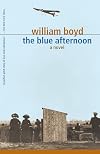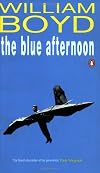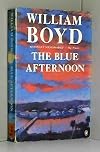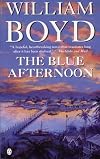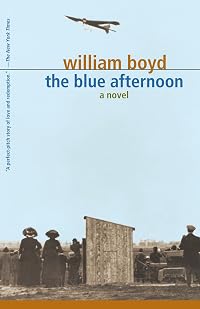
The Blue Afternoon
by William Boyd
On This Page
Description
In 1936, an elderly doctor travels to Lisbon to find the love of his life. He is Dr. Salvador Carriscant of Los Angeles, who as a young man worked in the Philippines when it was a U.S. colony. Tired of his wife, he developed a liaison with the wife of an American officer, quelling a rebellion, and the two planned to flee abroad to start life anew. While she succeeded, he failed and for 30 years they have not seen each other. By the author of A Good Man in Africa.Tags
Recommendations




















Member Reviews
There are plenty of things that I did not like about Boyd's The Blue Afternoon, but the excellent telling of a story is not one of them. The limpid style and the sometimes unexpected note of hitting the human condition right between the eyes adds to an intriguing tale. Published in 1993 this is Boyd's sixth novel to hit the bookstores and he had by this time already established himself as a best selling novelist.
The novel is divided in three unequal parts. The middle section is by far the longest and tells the story of Doctor Carriscant, it is set in Manila in 1902 and although Carriscant is telling the story of his life in the Philippines it is told in the third person. Carriscant was a surgeon in a large hospital and his new ideas of show more scrupulous cleanliness and his operating skills and teamwork had resulted in a huge success rate in comparison with the old style surgeon Dr Cruz who was still wallowing in filth. There is a guerrilla war against American forces taking place in the countryside, but this has little impact on life in Manilla. Doctor Carriscant falls in love with Delphine who is married to an American Officer, they conduct a difficult affair amidst the spying servants and the close knit community. Carriscant has other problems a series of gruesome murders of American serviceman leads Paton Bobby as the investigating officer to Carriscant's door first to help with the medical details, but then as a suspect. Carriscant's anaesthetist Pantaleon after learning of Carriscant's affair blackmails him into co-piloting an attempt on the heavier than air (motorised) flight distance record.
The first section is told in the first person by Kay Fischer making a living as an architect in Los Angeles in 1936. Carriscant contacts her claiming that she is his daughter. Kay has no reason to believe him and her mother who is still alive stays by her story that a certain Englishman Hugh Paget was her father, but he died two months after she was born. Kay however gets drawn into Carriscant's claim and agrees to help him in a search for Paton Bobby who has retired to LA. They find Bobby and this is when Carriscant tells her his story. This first section is told as a pastiche of a Raymond Chandler mystery thriller with Kay acting out the role of a hard headed business woman. The final part is of course the search for Delphine who Carriscant believes is still alive and living in Lisbon and we are back with Kays first person story, but the pastiche is missing. This leads to one of the problems I found with the novel it does not quite hang together. Boyd has created a mystery and a style of telling the story only to abandon it when Cariiscant's story is told. There are also plenty of gaps in Carriscants tale that are never resolved, maybe because he is an unreliable narrator or because Boyd does not want to provide the reader with all the answers, but some of the answers would have been good.
The story of the love affair and the clandestine relationship is the best and most intriguing part of the book. The murder story is gruesome as is the descriptions of the operations and Dr Cruz is shown as a monster, Boyd likes to rub his readers noses in the filth and the dirt, and this can spill over into his telling of acts of physical love, where he strives to convey an erotism that made this reader feel a bit like a voyeur.
As a spinner of tales Boyd is right on the money, but at the end of the day I did not believe any of it, despite some flashing insights in human psychology that the author suddenly seems to pluck out of the ether and that do ring true. This novel is good entertainment with Boyd's skill at setting his characters in a time and place and providing enough of a sketch to fill in some of the background. A beach read, but one that may leave the reader a little frustrated. 3.5 stars.
This was the next unread book on my shelves, which I must have bought in a charity shop. The books price had been reduced from £3.50 to 50p and inside was a newspaper clipping giving a good review of the book. I presume this was an enterprising bookseller but it could have been a reader who wanted to remind him/herself of the book. show less
The novel is divided in three unequal parts. The middle section is by far the longest and tells the story of Doctor Carriscant, it is set in Manila in 1902 and although Carriscant is telling the story of his life in the Philippines it is told in the third person. Carriscant was a surgeon in a large hospital and his new ideas of show more scrupulous cleanliness and his operating skills and teamwork had resulted in a huge success rate in comparison with the old style surgeon Dr Cruz who was still wallowing in filth. There is a guerrilla war against American forces taking place in the countryside, but this has little impact on life in Manilla. Doctor Carriscant falls in love with Delphine who is married to an American Officer, they conduct a difficult affair amidst the spying servants and the close knit community. Carriscant has other problems a series of gruesome murders of American serviceman leads Paton Bobby as the investigating officer to Carriscant's door first to help with the medical details, but then as a suspect. Carriscant's anaesthetist Pantaleon after learning of Carriscant's affair blackmails him into co-piloting an attempt on the heavier than air (motorised) flight distance record.
The first section is told in the first person by Kay Fischer making a living as an architect in Los Angeles in 1936. Carriscant contacts her claiming that she is his daughter. Kay has no reason to believe him and her mother who is still alive stays by her story that a certain Englishman Hugh Paget was her father, but he died two months after she was born. Kay however gets drawn into Carriscant's claim and agrees to help him in a search for Paton Bobby who has retired to LA. They find Bobby and this is when Carriscant tells her his story. This first section is told as a pastiche of a Raymond Chandler mystery thriller with Kay acting out the role of a hard headed business woman. The final part is of course the search for Delphine who Carriscant believes is still alive and living in Lisbon and we are back with Kays first person story, but the pastiche is missing. This leads to one of the problems I found with the novel it does not quite hang together. Boyd has created a mystery and a style of telling the story only to abandon it when Cariiscant's story is told. There are also plenty of gaps in Carriscants tale that are never resolved, maybe because he is an unreliable narrator or because Boyd does not want to provide the reader with all the answers, but some of the answers would have been good.
The story of the love affair and the clandestine relationship is the best and most intriguing part of the book. The murder story is gruesome as is the descriptions of the operations and Dr Cruz is shown as a monster, Boyd likes to rub his readers noses in the filth and the dirt, and this can spill over into his telling of acts of physical love, where he strives to convey an erotism that made this reader feel a bit like a voyeur.
As a spinner of tales Boyd is right on the money, but at the end of the day I did not believe any of it, despite some flashing insights in human psychology that the author suddenly seems to pluck out of the ether and that do ring true. This novel is good entertainment with Boyd's skill at setting his characters in a time and place and providing enough of a sketch to fill in some of the background. A beach read, but one that may leave the reader a little frustrated. 3.5 stars.
This was the next unread book on my shelves, which I must have bought in a charity shop. The books price had been reduced from £3.50 to 50p and inside was a newspaper clipping giving a good review of the book. I presume this was an enterprising bookseller but it could have been a reader who wanted to remind him/herself of the book. show less
This is another thoroughly enjoyable yarn from one of our contemporary masters and one of my favourite authors, William Boyd. Stories that are so vidid and detailed that they feel closer to truth than fiction have become Boyd's trademark, and The Blue Afternoon is no exception. This time he takes us both to another time (beginning of last century) and to foreign environments in more ways than one. It is a wonderful love story, a thriller, a family drama, all in one. Again Boyd weaves real events into his storytellling, this time the beginning of aviation and the American-Phiippine war. The only weakness of this novel is the structure. Boyd starts telling us one story, but then takes us in a diffierent direction without really wrapping show more up the story he started with. He also races toward a conclusion in the end, instead of extending the novel. show less
Reading The blue afternoon confused me a bit. At first, the book starts with scenes from the life of Kay Fisher, but when Salvador Carriscant appears in the book, his story completely takes over, and Kay disappears completely into the background. The story of Carriscant is confusing in itself, as it takes the reader across the world and it is not very clear why or how all of this relates. Parts of the book are interesting, such as Carriscant's life as a doctor uncovering a kind of plot involving murder of patients, but there are so many unconnected parts and plots in the novel, that I lost track, and could not connect the dots. For example, what is the point of Pantaleon developing the first aeroplane.
The book is very well-written, as show more far as language is concerned, but the loose structure, confusing story line and disconnected story elements failed to keep me interested. I have also wondered whether the whole story of Carriscant is fictional or based on fact The book might have been more interesting if that were known. show less
The book is very well-written, as show more far as language is concerned, but the loose structure, confusing story line and disconnected story elements failed to keep me interested. I have also wondered whether the whole story of Carriscant is fictional or based on fact The book might have been more interesting if that were known. show less
Unusual story told in three parts - first in Los Angeles, second, the largest part in Manila, and finally in Lisbon. A murder mystery and a love story. One of the main characters, Kay Fisher, is an architect and the story spends quite a bit of time trying to educate me on how and why this architect does what she does. This should have been interesting but that part of the story didn't interest me at all. What did interest me was the mystery surrounding an old man who appears and claims to be her father.
The characters here weren't likable for the most part and it was hard to be sympathetic. The reader as well as Kay keeps wondering if the old man is scamming her. He seems sincere but he is also extremely obtuse and not forthcoming with show more information. He seems to sucker Kay in by the somewhat devious way he has of getting her to do things. She gets surprised.
The central heart of the story is the middle where we move back in time to hear the old man's story. And he is the one telling it. The beginning of the book had me as a detached observer but once we went back to the Philippines in 1902 I was really pulled in. It represents 2/3 of the book and was really excellent historical fiction around events and a time and place that I was quite intrigued with and knew little about. At the end of the novel I was a little frustrated because we really don't know the truth of what happened and even though we the reader and Kay the daughter have been told a story it doesn't quite fit all the puzzle pieces together properly. I suspect some truths were not revealed and am still unsure of this all, and I suspect that was the author's intention. This gets a few points for atmosphere in 1936 Los Angeles and especially 1902 Manila. There is some interesting history written in here with the story about the American occupation of the Philippines. The descriptions of vivisection and surgical techniques and bodies really gets a little gruesome. Not for the faint of heart.
This was pretty good, but I thought the first part of the story was quite weak and unbelievable. It keeps me from rating this higher. The characters all have very unusual names - I don't know if this is a William Boyd thing or just particular to this book. show less
The characters here weren't likable for the most part and it was hard to be sympathetic. The reader as well as Kay keeps wondering if the old man is scamming her. He seems sincere but he is also extremely obtuse and not forthcoming with show more information. He seems to sucker Kay in by the somewhat devious way he has of getting her to do things. She gets surprised.
The central heart of the story is the middle where we move back in time to hear the old man's story. And he is the one telling it. The beginning of the book had me as a detached observer but once we went back to the Philippines in 1902 I was really pulled in. It represents 2/3 of the book and was really excellent historical fiction around events and a time and place that I was quite intrigued with and knew little about. At the end of the novel I was a little frustrated because we really don't know the truth of what happened and even though we the reader and Kay the daughter have been told a story it doesn't quite fit all the puzzle pieces together properly. I suspect some truths were not revealed and am still unsure of this all, and I suspect that was the author's intention. This gets a few points for atmosphere in 1936 Los Angeles and especially 1902 Manila. There is some interesting history written in here with the story about the American occupation of the Philippines. The descriptions of vivisection and surgical techniques and bodies really gets a little gruesome. Not for the faint of heart.
This was pretty good, but I thought the first part of the story was quite weak and unbelievable. It keeps me from rating this higher. The characters all have very unusual names - I don't know if this is a William Boyd thing or just particular to this book. show less
I'm making my way through William Boyd's back catalogue, relishing most of the novels I uncover. The Blue Afternoon doesn't quite live up to the standards of his best books - Any Human Heart, Restless, Brazzaville Beach or The New Confessions - but it remains an excellent read. Sparingly written, as with his other novels, the plot is well constructed, the seemingly effortless blend of historical detail and human characteristics transporting the reader to the periods and locations in which it is set. It begins in California during the 1930s, but very quickly the reader is transported to the Philippines in 1902, a country still caught in the bitter aftermath of the war between the US and the Spanish. The lead character, Dr Salvador show more Carriscant conducts his practice amongst the higher echelons of Manila society, prey to the professional jealously of his fellow doctors. Though the plot features a murder investigation and the brave attempts of one character to build the first flying machine, in essence it is a story of love found and lost. Though Boyd has written more compelling books, this is a better novel than most authors are capable of writing. show less
What to do when a stranger starts haunting you and claiming to be your real father? Just up and go galavanting off to Europe perhaps? As a devoted Boyd fan, I have to say that this one is just not up to par. Its second part, the major story-within-a-story part, rather resembles a tawdry soap opera. And, after all the backstory you'd think all the mystery's loose ends might get tied up in the end, but [sadly] they are not. Okay, but a bit disappointing overall - this one is for the Boyd completists.
Just as brilliant as when I read it 30 years ago; this is a book to reread, keep on your shelves and re read. Superb on so many levels, whether a treatise on life, love, time passing or just adventure. This is great reading and one I would recommend unequivocally.
Members
- Recently Added By
Lists

Amanda's Guaranteed Books
110 works; 5 members
Talk Discussions
Past Discussions
romance between married women and doctor in an island in Name that Book (September 2016)
Author Information

78+ Works 20,468 Members
William Boyd is a writer who was born in Ghana on March 7, 1952. He was educated at Gordonstoun school; and then the University of Nice, France, the University of Glasgow, and finally Jesus College, Oxford. Between 1980 and 1983 he was a lecturer in English at St Hilda's College, Oxford, and it was while he was there that his first novel, A Good show more Man in Africa (1981), was published. He was appointed Commander of the Order of the British Empire in 2005. Boyd was selected in 1983 as one of the 20 "Best of Young British Novelists" in a promotion run by Granta magazine and the Book Marketing Council. His novels include: A Good Man in Africa, for which he won the Whitbread Book award and Somerset Maugham Award in 1981; An Ice-Cream War, which won the John Llewellyn Rhys Prize and was nominated for the Booker Prize for Fiction in 1982; Brazzaville Beach, published in 1991, and Any Human Heart, which was long-listed for the Booker Prize in 2002. Restless, the tale of a young woman who discovers that her mother had been recruited as a spy during World War II, was published in 2006 and won the Novel Award in the 2006 Costa Book Awards. Boyd published Waiting for Sunrise: A Novel in early 2012. In 2015 his title, Sweet Caress: The Many Lives of Clay, Amory made the new Zealand Best Seller List. (Bowker Author Biography) show less
Some Editions
Awards and Honors
Awards
Series
Belongs to Publisher Series
rororo (13725)
Common Knowledge
- Canonical title
- The Blue Afternoon
- Original title
- The Blue Afternoon
- Original publication date
- 1993
- People/Characters
- Kay Fischer; Dr. Carriscant
- Important places
- The Philippines; Los Angeles, California, USA; Manila, The Philippines
- Important events
- Spanish-American War (1898)
Classifications
Statistics
- Members
- 970
- Popularity
- 27,117
- Reviews
- 19
- Rating
- (3.61)
- Languages
- 10 — Dutch, English, Estonian, French, German, Greek, Italian, Portuguese, Spanish, Swedish
- Media
- Paper, Audiobook, Ebook
- ISBNs
- 35
- ASINs
- 11