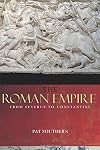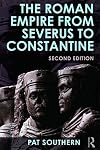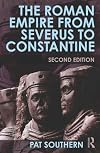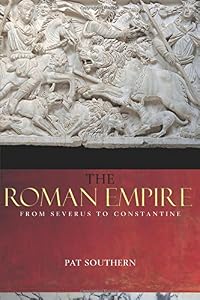
The Roman Empire from Severus to Constantine
by Pat Southern
On This Page
Description
The third century of the Roman Empire is a confused and sparsely documented period, punctuated by wars, victorious conquests and ignominious losses, and a recurring cycle of rebellions that saw several Emperors created and eliminated by the Roman armies. In AD 260 the Empire almost collapsed, and yet by the end of the third century the Roman world was brought back together and survived for another two hundred years. In this new edition of The Roman Empire from Severus to Constantine, show more Patricia Southern examines the anarchic era of the soldier Emperors that preceded the crisis of AD 260, and the show lessTags
Recommendations








Member Reviews
Compared to previous centuries, there are few contemporary histories covering this period. Zosimus and the Historia Augusta are the most comprehensive, but both are unreliable. This is a shame as the period covers the Empire's decent into chaos and emergence under Diocletian and Constantine into a new order that continued through the Byzantine era.
Patricia Southern does an excellent job with meager resources in crafting a narrative of the period. As much as possible, she weighs the existing information without hiding her assumptions or forcing a story where there is none. It's a remarkable achievement, giving coherence to one of the most intriguing periods of antiquity.
Patricia Southern does an excellent job with meager resources in crafting a narrative of the period. As much as possible, she weighs the existing information without hiding her assumptions or forcing a story where there is none. It's a remarkable achievement, giving coherence to one of the most intriguing periods of antiquity.
This work covers one of the more obscure periods of Roman history. After briefly setting the stage, the work discusses the chaotic second and early third century. The Second Century Crisis demonstrates the diverse set of challenges the Empire was facing while at the same time offering signs of its adaptability and resilience. Southern does not ignore the political chaos and the weakness of the Empire during this period of high turnover, but is also careful to note that many of the actions and the reforms attributed to Aurelian or Diocletian had precedents in earlier actions of less admired rulers. Rehabilitating the reputation of Gallienus or Probus shows that much of their lack of recognition arises from the inconclusiveness of their show more reign, generally from an early death. While the second century marked a period of acute crisis, as the effect of plague and economic instability combined with constant pressures along the Northern and Eastern borders, the resiliency of Roman institutions if witnessed by their pattern being imitated in the breakaway and many of the barbarian tribes. One unique feature of the work is the inclusion of a brief examination of the history of the Eastern and Northern foes of the Empire. show less
Ratings
Members
- Recently Added By
Author Information

25+ Works 769 Members
Pat Southern is a community learning librarian currently working for Trafford Library Service in Cheshire, England
Common Knowledge
- People/Characters
- Septimius Severus
Classifications
- Genres
- History, Nonfiction, General Nonfiction
- DDC/MDS
- 937.06 — History & geography History of ancient world (to ca. 499) Italian Peninsula to 476 and adjacent territories to 476 Empire 31 B.C.-476 A.D.
- LCC
- DG298 .S67 — History of Europe, Asia, Africa and Oceania City History of Italy Ancient Italy. Rome to 476 History By period Empire, 27 B.C. - 476 A.D. Constitutional Empire, 27 B.C. - 284 A.D.
- BISAC
Statistics
- Members
- 64
- Popularity
- 484,104
- Reviews
- 2
- Rating
- (3.95)
- Languages
- English
- Media
- Paper, Ebook
- ISBNs
- 9
- ASINs
- 1