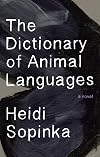
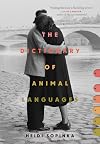
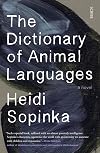
The Dictionary of Animal Languages
by Heidi Sopinka
On This Page
Description
We grant men a right to solitude. Why can't we do the same for women? Born into a wealthy family in northern England and sent to boarding school to be educated by nuns, Ivory Frame rebels. She escapes to inter-war Paris, where she finds herself through art, and falls in with the most brilliantly bohemian set: the surrealists. Torn between an intense love affair with a married Russian painter and her soaring ambition to create, Ivory's life is violently interrupted by the Second World War. show more She flees from Europe, leaving behind her friends, her art, and her love. Now over ninety, Ivory labours defiantly in the frozen north on her last, greatest work-a vast account of animal languages-alone except for her sharp research assistant, Skeet. And then unexpected news from the past arrives: this magnificently fervent, complex woman is told that she has a grandchild, despite never having had a child of her own . . . show lessTags
Recommendations





Member Reviews
A novel loosely based on Leonora Carrington, after Sopinka was able to visit with her. I don't know much about Leonora Carrington but the descriptions of Ivory's art is most obvious like Leonora's. I don't usually like fiction based on real people, as the writer might take too many freedoms with a real person's story. But Ivory herself is an amazing character. She didn't need to be based on anyone else. Ivory will stay with you.
The writing is gorgeous, refreshing, brilliant with wonderful observations on almost every page. You can tell when a character and writer appreciate the small things, but to them, are the big things. I do love a well written book that can appreciate nature. The book bounces around through times of Ivory's life, show more from when she is older studying animal language, Paris with the Surrealist artists when she has escaped the convent her parents sent her to, her time at home when she is younger and her only time for herself is riding her horse around the grounds. A couple tragedies make her recreate her life and turn from art, so she turns to her original safety, nature. Her dictionary of animal languages is a "protest against forgetting." To be honest, I was a little skeptical of this book not being pretentious... I thought the writer owned a clothing company... for horses (she doesn't). But luckily, I was proved wrong. This book is so full of love, friendship, nature, art, war and HEART. Every sentence proves Heidi Sopinka is a WRITER and I will read anything she writes in the future.
Early on in the book, it was reminding me a bit of Jane Eyre, so I love seeing the writer herself mention the Bronte sisters. This book should be sandwiched between the Brontes and also the brilliant 'A Line Made By Walking' by Sara Baume for being so similarly about art and nature (and even for the chapters titled after animals), as well as China Mieville's 'The Last Days of New Paris' for being about the surrealist artists, or rather featuring their art in a very wacky way. Ivory would also get along very well with Patrica Westerford in 'The Overstory' by Richard Powers, if they both didn't love their solitude so much anyway. The book also reminded me of a Tarkovsky film... possibly Nostalghia. Like Tarkovsky, the plot here might be switching around all over the place, but it's all those lovely images and observations that matter. show less
The writing is gorgeous, refreshing, brilliant with wonderful observations on almost every page. You can tell when a character and writer appreciate the small things, but to them, are the big things. I do love a well written book that can appreciate nature. The book bounces around through times of Ivory's life, show more from when she is older studying animal language, Paris with the Surrealist artists when she has escaped the convent her parents sent her to, her time at home when she is younger and her only time for herself is riding her horse around the grounds. A couple tragedies make her recreate her life and turn from art, so she turns to her original safety, nature. Her dictionary of animal languages is a "protest against forgetting." To be honest, I was a little skeptical of this book not being pretentious... I thought the writer owned a clothing company... for horses (she doesn't). But luckily, I was proved wrong. This book is so full of love, friendship, nature, art, war and HEART. Every sentence proves Heidi Sopinka is a WRITER and I will read anything she writes in the future.
Early on in the book, it was reminding me a bit of Jane Eyre, so I love seeing the writer herself mention the Bronte sisters. This book should be sandwiched between the Brontes and also the brilliant 'A Line Made By Walking' by Sara Baume for being so similarly about art and nature (and even for the chapters titled after animals), as well as China Mieville's 'The Last Days of New Paris' for being about the surrealist artists, or rather featuring their art in a very wacky way. Ivory would also get along very well with Patrica Westerford in 'The Overstory' by Richard Powers, if they both didn't love their solitude so much anyway. The book also reminded me of a Tarkovsky film... possibly Nostalghia. Like Tarkovsky, the plot here might be switching around all over the place, but it's all those lovely images and observations that matter. show less
 This review was written for LibraryThing Early Reviewers.
More so than most novels, I think opinions on this one will depend upon the reader's reaction to the author's writing style. If the reader enjoys it, it will be given descriptors like poetic, lyrical, dreamlike, beautiful. If not, it will be florid, overbearing, incoherent, choppy. Here's a sample:
If one enjoys the style, the weaknesses of the book can understandably be overlooked. The titular project of the book's protagonist - the dictionary of animal languages - which is her overriding obsession for 50 years of life, is pretty sketchily described. How do you keep notebooks of animal vocalizations? How do you describe them? How are these deciphered and organized into some sort of dictionary? Chapters of the book are named for animals and given italicized lines from what could be the notebooks, but often they focus on appearances rather than "languages", as in:
Ivory, our protagonist, had a serious flame as a young woman, a painter named Lev. He's a dark, mysterious, charismatic Russian. Women find him irresistible, being a dark mysterious Russian and all. If I recall correctly, he's even compared to Rasputin. We don't learn too much about Lev's character or inner world, or why he's so into her, but he's a dark star around which Ivory feels powerless not to orbit. The relationship feels unconvincing, certainly the depths of intensity it reaches feel unconvincing, even if it is partly during wartime, which can provide intensity where it wouldn't otherwise exist.
The front cover flap teases a shocking revelation: a grandchild! Despite Ivory "never having had a child of her own." First, this is pretty irrelevant to the novel. A letter informing Ivory of the grandchild is brought up on the first few pages, then ignored until close to the novel's end, and the grandchild's existence really doesn't matter, definitely not to a measure justifying the tease. Secondly, this is seriously problematic. We learn finally that Ivory did indeed give birth to a child, but she was told it died when in fact the child was given for adoption, evidently a policy for births to unmarried women at this hospital at the time. Does this mean Ivory really "never had a child"? Obviously she did. Does the qualifier "of her own" rescue the claim of the front cover flap? I don't think I'm inclined to think so; it's a lie, essentially. I don't like book descriptions lying to me.
If the novel's writing style doesn't work for you, and the book's plot is frustrating, there isn't a whole lot here to enjoy. show less
I think of this place. Full of its imagery. The poetics. The corners of antiquity. The disquiet. As though the city was invented for Tacita. And here I am looking for things elsewhere, like the crows that fly over it. It's ridiculous. Like saying yellow is the colour of that red painting. Tacita says we need relatively. How else can we measure? It is not new, the idea of the thing farthest away being the most desired. With longing there isshow more
velocity.Keep in mind this style goes on for 300 pages...
If one enjoys the style, the weaknesses of the book can understandably be overlooked. The titular project of the book's protagonist - the dictionary of animal languages - which is her overriding obsession for 50 years of life, is pretty sketchily described. How do you keep notebooks of animal vocalizations? How do you describe them? How are these deciphered and organized into some sort of dictionary? Chapters of the book are named for animals and given italicized lines from what could be the notebooks, but often they focus on appearances rather than "languages", as in:
Dolphin. Ceta cea. 21" length of symphysis... 5'3" of ramus... 16'6" end of muzzle to palatal notch... 13'10" to preorbital notch... 85 teeth incurved, fang compressed... Habitat, unknown. Creates rings out of blow hole or creates water vortex ring and blows air in.Well, ok, but if that's indicative of the notebooks, I understand why the museum conservatory, which is presented as the bad guys in the novel for cutting funding and other sins (after decades of funding her research! That's gratitude), doesn't really know what to do with this.
Ivory, our protagonist, had a serious flame as a young woman, a painter named Lev. He's a dark, mysterious, charismatic Russian. Women find him irresistible, being a dark mysterious Russian and all. If I recall correctly, he's even compared to Rasputin. We don't learn too much about Lev's character or inner world, or why he's so into her, but he's a dark star around which Ivory feels powerless not to orbit. The relationship feels unconvincing, certainly the depths of intensity it reaches feel unconvincing, even if it is partly during wartime, which can provide intensity where it wouldn't otherwise exist.
The front cover flap teases a shocking revelation: a grandchild! Despite Ivory "never having had a child of her own." First, this is pretty irrelevant to the novel. A letter informing Ivory of the grandchild is brought up on the first few pages, then ignored until close to the novel's end, and the grandchild's existence really doesn't matter, definitely not to a measure justifying the tease. Secondly, this is seriously problematic. We learn finally that Ivory did indeed give birth to a child, but she was told it died when in fact the child was given for adoption, evidently a policy for births to unmarried women at this hospital at the time. Does this mean Ivory really "never had a child"? Obviously she did. Does the qualifier "of her own" rescue the claim of the front cover flap? I don't think I'm inclined to think so; it's a lie, essentially. I don't like book descriptions lying to me.
If the novel's writing style doesn't work for you, and the book's plot is frustrating, there isn't a whole lot here to enjoy. show less
Michelangelo would be baffled by today’s separation of art and science, whether he hid anatomical drawings in The Sistine Chapel or not. Ivory Frame, however, finds a way to unite art and science in studying and creating her “Dictionary of Animal Languages.” A story that jumps from the present to the past, Heidi Sopinka’s The Dictionary of Animal Languages tells the story of an artist/biologist loosely based on the life of Leonora Carrington. Like Carrington, Ivory falls deeply in love with an intense and talented artist in interwar France where modern and surreal art was blossoming. Her love was intense and all-consuming.
We begin, though, in the present, when Ivory is 90 years old and has just been informed she has a show more granddaughter, a tricky feat since she had no children. Through jumping back and forth we learn how such an improbably event could be possible, we learn how Ivory found her life’s work, creating a Diction of Animal Languages, and what she lost and gained in pursuit of her obsession.
One of the true things of life is that which is called dedication at forty and devotion at sixty is dotty at ninety. Even Ivory sometimes doubts herself. Her single-minded dedication to creating her dictionary has meant many sacrifices in her life, but she feels an urgency to capture the language before it is extinguished
I loved this book. The writing is poetic and powerful. There is such beauty in the prose I might call it luminous if I had not made the pledge to never use that cliche. You can google it. However, the language is full of imagery and energy, active and fresh.
This is a book that should not be read in a rush. It’s a book that should be savored slowly, with pauses to think about the ideas. Each chapter is named after an animal and it adds a bit of delight to look for the reason. Much of the book takes place in cold and frozen places, also speaking to my Arctic obsession.
This story is heartbreaking in many ways, though in some ways, the heartbreak is worth it. It also asks terrible questions such as whether we can love too much, if love can hold us back and make us lose ourselves. Can women reach their potential if they love too deeply. What makes life worthwhile? All these and many other themes are tackled in this marvelous book.
I received a copy of The Dictionary of Animal Languages from the publisher through a LibraryThing drawing.
The Dictionary of Animal Languages at Scribe Publications
Heidi Sopinka author site
https://tonstantweaderreviews.wordpress.com/2018/11/08/9781947534520/ show less
We begin, though, in the present, when Ivory is 90 years old and has just been informed she has a show more granddaughter, a tricky feat since she had no children. Through jumping back and forth we learn how such an improbably event could be possible, we learn how Ivory found her life’s work, creating a Diction of Animal Languages, and what she lost and gained in pursuit of her obsession.
One of the true things of life is that which is called dedication at forty and devotion at sixty is dotty at ninety. Even Ivory sometimes doubts herself. Her single-minded dedication to creating her dictionary has meant many sacrifices in her life, but she feels an urgency to capture the language before it is extinguished
I loved this book. The writing is poetic and powerful. There is such beauty in the prose I might call it luminous if I had not made the pledge to never use that cliche. You can google it. However, the language is full of imagery and energy, active and fresh.
This is a book that should not be read in a rush. It’s a book that should be savored slowly, with pauses to think about the ideas. Each chapter is named after an animal and it adds a bit of delight to look for the reason. Much of the book takes place in cold and frozen places, also speaking to my Arctic obsession.
This story is heartbreaking in many ways, though in some ways, the heartbreak is worth it. It also asks terrible questions such as whether we can love too much, if love can hold us back and make us lose ourselves. Can women reach their potential if they love too deeply. What makes life worthwhile? All these and many other themes are tackled in this marvelous book.
I received a copy of The Dictionary of Animal Languages from the publisher through a LibraryThing drawing.
The Dictionary of Animal Languages at Scribe Publications
Heidi Sopinka author site
https://tonstantweaderreviews.wordpress.com/2018/11/08/9781947534520/ show less
This review was written for LibraryThing Early Reviewers.Ivory Frame has always been a rebellious one. She refuses to be subdued by the nuns at the boarding school her wealthy English parents have sent her to. She finds her way to Paris where she meets surrealists. She has a passionate love affair with a married Russian painter and becomes an artist herself. World War II is at its peak in Paris. When tragedy strikes, Ivory leaves Paris and tries to rebuild her life. She has always had an affinity with animals and sets out to record animal languages. Now aged 90, she is still working on her dictionary of animal languages when she’s told that she has a grandchild, which stuns her since she has no children.
This book deeply touched me in a way that few books have ever done. It was a very slow show more read for me as I wanted to savor each word. It’s poetic, it’s majestic and it’s absolutely stunning. I love how each chapter is entitled a different animal Ivory has studied and the way the author incorporates that animal and its characteristics into the chapter. Each chapter is a work of art in and of itself. Some of the chapters are short essays on life and love that are just gorgeous.
The book is loosely based on the life of surrealist Leonora Carrington. The author spent several days with Ms. Carrington in her home in Mexico City and interviewed her for “The Believer”. As soon as I finished the book, I had to read up on this artist. There were some similarities between Leonora Carrington and Ivory Frame but also some quite significant differences.
I’m saddened to see far too many negative reviews of this wonderful book. It’s true that it wouldn’t be for everyone and it isn’t a light read. There isn’t always a lot happening. But the author has a magnificent ability to get to the heart of her characters and brings Ivory’s world vividly to life in the mind of her readers. I hope this book receives the recognition it deserves in the literary world.
This is a book that I will treasure and love and will read again. Most highly recommended.
This book was given to me by the publisher in return for an honest review. show less
This book deeply touched me in a way that few books have ever done. It was a very slow show more read for me as I wanted to savor each word. It’s poetic, it’s majestic and it’s absolutely stunning. I love how each chapter is entitled a different animal Ivory has studied and the way the author incorporates that animal and its characteristics into the chapter. Each chapter is a work of art in and of itself. Some of the chapters are short essays on life and love that are just gorgeous.
The book is loosely based on the life of surrealist Leonora Carrington. The author spent several days with Ms. Carrington in her home in Mexico City and interviewed her for “The Believer”. As soon as I finished the book, I had to read up on this artist. There were some similarities between Leonora Carrington and Ivory Frame but also some quite significant differences.
I’m saddened to see far too many negative reviews of this wonderful book. It’s true that it wouldn’t be for everyone and it isn’t a light read. There isn’t always a lot happening. But the author has a magnificent ability to get to the heart of her characters and brings Ivory’s world vividly to life in the mind of her readers. I hope this book receives the recognition it deserves in the literary world.
This is a book that I will treasure and love and will read again. Most highly recommended.
This book was given to me by the publisher in return for an honest review. show less
This review was written for LibraryThing Early Reviewers.Ivory Frame is a renowned artist. Now in her nineties, the famously reclusive painter remains devoted to her work. She has never married, never had a family, never had a child. So when a letter arrives disclosing that she has a granddaughter living in New York, her world is turned upside down and the past is brought painfully to life.
Disowned by her bourgeois family, the young Ivory had gone to interwar Paris to study art, and quickly found her true home among the avant-garde painters and poets who crowd the city’s cafes. In fellow painter Tacita, she finds the sister she never had. In the Zoological Gardens, she finds a subject for her art capable of fascinating her endlessly. And in Lev, the brooding, haunted Russian emigre painter show more fleeing the Revolution and destined for greatness, she finds the love that will mark her life forever.
But she loses all this, and more, when the Second World War sweeps away the life she has only just discovered. In her grief, she turns to the project she had begun in Paris, and which will consume the rest of her life: a dictionary of animal languages. Part science, part art, the dictionary strives to transcribe the wordless yearning of animals, the lonely and love-laden cries that expect no response.
By nature solitary, Ivory withdraws fully into herself as she pursues her life’s work. Until the discovery of one of Lev’s paintings from 1940, inscribed to Ivory and now worth a fortune, brings to light a secret from her time in Paris that even Ivory could never guess. Now in her nineties, she is forced to acknowledge afresh all she has lost, and also to find meaning and beauty in a world defined by longing.
Masterfully written, and emotionally charged, The Dictionary of Animal Languages is about love and grief and art and the realization that, like tragedy, the best things in life arrive out of the blue.
MY THOUGHTS:
The writing in this book is lyrical and flowing. Yes, it moves slow so don’t go in to it thinking because it’s a thin book, it’ll be a quick read. It’s not meant to be that. Do not rush through this book. Savor every moment for its intended, emotional tidal wave or thoughtful revelation.
You are seeing this story through the eyes of a woman who is in her nineties who has suffered and been thrown away from her real family. She sought comfort in a less than noble man who took advantage of knowing her situation and her secret desires. He succeeded in creating more painful memories, ones Ivory chose to try and forget. If you read this book and are left feeling empty and hollow, then you’ve felt how Ivory felt and why the author wrote the story the way she had.
I did find issues with the perspective jumping between past and present and felt it could have been handled better. I also would have loved fifty more pages that answered a few things or explained them better for me. The book was too short and several of the more poignant parts deserved better lead-ins since these were sections that seemed too blunt and irrelevant at times.
For a first book, I think the author has something here and sure it won’t be for everyone. I doubt a younger crowd would enjoy it as much as those from my generation might. You really need to take your time to appreciate Ivory’s life savoring each glimpse into her past for what it is and not for what you would like to see it be. This character went through a long life with painful experiences and had tried to survive as best as she could until Lev came along with all his contradictions and pain to bring her down to a depth that no one should have to experience leaving her with regrets and pain. show less
Disowned by her bourgeois family, the young Ivory had gone to interwar Paris to study art, and quickly found her true home among the avant-garde painters and poets who crowd the city’s cafes. In fellow painter Tacita, she finds the sister she never had. In the Zoological Gardens, she finds a subject for her art capable of fascinating her endlessly. And in Lev, the brooding, haunted Russian emigre painter show more fleeing the Revolution and destined for greatness, she finds the love that will mark her life forever.
But she loses all this, and more, when the Second World War sweeps away the life she has only just discovered. In her grief, she turns to the project she had begun in Paris, and which will consume the rest of her life: a dictionary of animal languages. Part science, part art, the dictionary strives to transcribe the wordless yearning of animals, the lonely and love-laden cries that expect no response.
By nature solitary, Ivory withdraws fully into herself as she pursues her life’s work. Until the discovery of one of Lev’s paintings from 1940, inscribed to Ivory and now worth a fortune, brings to light a secret from her time in Paris that even Ivory could never guess. Now in her nineties, she is forced to acknowledge afresh all she has lost, and also to find meaning and beauty in a world defined by longing.
Masterfully written, and emotionally charged, The Dictionary of Animal Languages is about love and grief and art and the realization that, like tragedy, the best things in life arrive out of the blue.
MY THOUGHTS:
The writing in this book is lyrical and flowing. Yes, it moves slow so don’t go in to it thinking because it’s a thin book, it’ll be a quick read. It’s not meant to be that. Do not rush through this book. Savor every moment for its intended, emotional tidal wave or thoughtful revelation.
You are seeing this story through the eyes of a woman who is in her nineties who has suffered and been thrown away from her real family. She sought comfort in a less than noble man who took advantage of knowing her situation and her secret desires. He succeeded in creating more painful memories, ones Ivory chose to try and forget. If you read this book and are left feeling empty and hollow, then you’ve felt how Ivory felt and why the author wrote the story the way she had.
I did find issues with the perspective jumping between past and present and felt it could have been handled better. I also would have loved fifty more pages that answered a few things or explained them better for me. The book was too short and several of the more poignant parts deserved better lead-ins since these were sections that seemed too blunt and irrelevant at times.
For a first book, I think the author has something here and sure it won’t be for everyone. I doubt a younger crowd would enjoy it as much as those from my generation might. You really need to take your time to appreciate Ivory’s life savoring each glimpse into her past for what it is and not for what you would like to see it be. This character went through a long life with painful experiences and had tried to survive as best as she could until Lev came along with all his contradictions and pain to bring her down to a depth that no one should have to experience leaving her with regrets and pain. show less
Ivory Frame is an elderly woman who has been working for decades on The Dictionary of Animal Languages, a compendium of the various noises animals make to communicate, from the clicking of insects to bird songs to the howls of wolves. Ivory has had an eventful life, attending art school in Paris, where she falls in love with another artist until the Second Word War drives them apart. She finds her true calling with the dictionary, and even though she is in her nineties, she continues to work on it.
This is an odd novel about a strong and determined woman. Heidi Sopinka tells the story from a very close first person, so much that there is no clear way to tell the difference between what Ivory is thinking and what she is saying aloud. The show more novel is set in two time frames; her life in France and her years after the war, as she finds her vocation. Sopinka's prose is not written with clarity in mind, there's a ornate and poetic feel to the writing that I found got in the way more than it gave greater illumination to the story. The best part of the novel was the character of Lev, a Tortured Artist with a truly fascinating and harrowing past in Ukraine and while he is the great love of Ivory's life, there are many hints that she's just the next girl in a sequence that exists somewhere below his art. There was a lot interesting going on and I wanted to like it more than I did. In the end, it was just too opaquely written and the central conflict shouldn't even exist, the solution being so obvious and predictable. show less
This is an odd novel about a strong and determined woman. Heidi Sopinka tells the story from a very close first person, so much that there is no clear way to tell the difference between what Ivory is thinking and what she is saying aloud. The show more novel is set in two time frames; her life in France and her years after the war, as she finds her vocation. Sopinka's prose is not written with clarity in mind, there's a ornate and poetic feel to the writing that I found got in the way more than it gave greater illumination to the story. The best part of the novel was the character of Lev, a Tortured Artist with a truly fascinating and harrowing past in Ukraine and while he is the great love of Ivory's life, there are many hints that she's just the next girl in a sequence that exists somewhere below his art. There was a lot interesting going on and I wanted to like it more than I did. In the end, it was just too opaquely written and the central conflict shouldn't even exist, the solution being so obvious and predictable. show less
I received a copy of this book through a LibraryThing Early Reviewers program.
My advice to readers is "give this book a chance." Other reviews have noted that it is not a "light" read, and that the author's approach to punctuation and frequent switches in time frame can be confusing. I read the first five or so pages over and over SEVERAL times before I felt as though I knew enough about who was "speaking" and what the context was to move on with the story. So, my first impression was "uh oh." BUT, if a reader is patient, and gives the book time to develop -- ah, what a wonderful read! You will have to pay attention... to the language, to the character development (like peeling layers away to get to know them), and to the changes from show more time/place to another, as the story switches about in Ivory's life. It is well worth the initial work of figuring out how to read this book. It is inventive, it is interesting, and it's an utterly new approach to a historical period we've all read about. We are experiencing it as the characters did -- in an intensely personal (and biased and blind) way. As if living through it, not as if it's an "historical" education.
I recommend this book highly, unless you're looking for a boilerplate, quick, easy, "beach read" sort of book. show less
My advice to readers is "give this book a chance." Other reviews have noted that it is not a "light" read, and that the author's approach to punctuation and frequent switches in time frame can be confusing. I read the first five or so pages over and over SEVERAL times before I felt as though I knew enough about who was "speaking" and what the context was to move on with the story. So, my first impression was "uh oh." BUT, if a reader is patient, and gives the book time to develop -- ah, what a wonderful read! You will have to pay attention... to the language, to the character development (like peeling layers away to get to know them), and to the changes from show more time/place to another, as the story switches about in Ivory's life. It is well worth the initial work of figuring out how to read this book. It is inventive, it is interesting, and it's an utterly new approach to a historical period we've all read about. We are experiencing it as the characters did -- in an intensely personal (and biased and blind) way. As if living through it, not as if it's an "historical" education.
I recommend this book highly, unless you're looking for a boilerplate, quick, easy, "beach read" sort of book. show less
This review was written for LibraryThing Early Reviewers.Members
- Recently Added By
Lists

2019 Tournament of Books
18 works; 17 members
Talk Discussions
Past Discussions
The Dictionary of Animal Languages by Heidi Sopinka - Aug 2019 LTER in Reviews of Early Reviewers Books (October 2019)
Author Information

3 Works 133 Members
Some Editions
Awards and Honors
Common Knowledge
- People/Characters
- Ivory Frame; Lev Aleksander Volkov
- Important places
- Paris, France
- Epigraph
- When you dream of a savage bull, or a lion, or a wolf pursuing you, this means: it wants to come to you. You would like to split it off, you experience it as someting alien -- but it just becomes all the more dangerous.
- Dedication
- For JL
- First words
- My eyes became her eyes, the eyes of someone who died young.
Classifications
Statistics
- Members
- 98
- Popularity
- 329,773
- Reviews
- 21
- Rating
- (3.22)
- Languages
- Dutch, English
- Media
- Paper, Audiobook, Ebook
- ISBNs
- 14
- ASINs
- 1