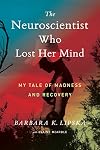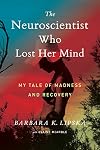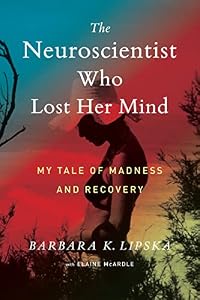
The Neuroscientist Who Lost Her Mind: My Tale of Madness and Recovery
by Barbara K. Lipska
On This Page
Description
"As a deadly cancer spread inside her brain, leading neuroscientist Barbara Lipska was plunged into madness--only to miraculously survive with her memories intact. In the tradition of My Stroke of Insight and Brain on Fire, this powerful memoir recounts her ordeal and explains its unforgettablelessons about the brain and mind. In January 2015, Barbara Lipska--a leading expert on the neuroscience of mental illness--was diagnosed with melanoma that had spread to her brain. Within months, her show more frontal lobe, the seat of cognition, began shutting down. She descended intomadness, exhibiting dementia- and schizophrenia-like symptoms that terrified her family and coworkers. But miraculously, just as her doctors figured out what was happening, the immunotherapy they had prescribed began to work. Just eight weeks after her nightmare began, Lipska returned to normal. With one difference: she remembered her brush with madness with exquisite clarity. In The Neuroscientist Who Lost Her Mind, Lipska describes her extraordinary ordeal and its lessons about the mind and brain. She explains how mental illness, brain injury, and age can change our behavior, personality, cognition, and memory. She tells what it is like to experience these changes firsthand. And she reveals what parts of us remain, evenwhen so much else is gone"-- show lessTags
Recommendations





































Member Reviews
Barbara Lipska is a remarkable scientist with an appalling story that's ultimately inspiring. Within the decade, she survived breast cancer and thereafter a melanoma on her neck. Despite debilitating treatments, she continued to work. Too, she kept fit by running (marathons), cycling, and swimming; in her early 60s, she was preparing to compete in an ironman triathlon.
On the cusp of important scientific confab at a resort in Montana in 2015, she experienced vision impairment and an MRI revealed three tumors on her brain, one of which was bleeding. A brain tumor that bleeds is usually melanoma, and melanoma in the brain is usually a death sentence.
What followed for Dr. Lipska and her family was an often dispiriting trek through a show more labyrinth of clinics, medical offices, and hospitals, and prognostication sessions with her family doctor, an ophthalmologist, neurosurgeons, radiation oncologists. She consulted doctors in Washington, then in Boston, where her sister Maria is a physicist in the oncologic radiation department of Brigham and Women's Hospital. In Washington, the doctors were intent on doing radiation treatments, followed by surgery. The Boston doctors favored surgery first, with radiation after. She chose the latter sequence, and when surgery removed the bleeding tumor, the vision impairment disappeared. She was accepted into an immunotherapy trial; that trial concluded, follow-up MRIs showed new tumors and significant brain swelling.
An alarming aspect of her illness manifested itself to her family and co-workers though she remained unaware of it. She became testy, angry, hypercritical, demanding. Small issues obsessed her; she'd complain about them for days. She got lost in familiar environments (her own neighborhood, for example) and forgot how to do everyday tasks, like using her cell phone. These are symptoms of mental illnesses.
Here's the twist: Dr. Barbara Lipska is in charge of the Human Brain Collection Core at the National Institute of Mental Health, and has spent her professional career studying the relationships between brain tissue and mental illness. Ironically, her tumors and treatments to eradicate them were pushing her into madness. Those around her were acutely aware of the symptoms; she herself was not.
An excellent book. Both thumbs up! show less
On the cusp of important scientific confab at a resort in Montana in 2015, she experienced vision impairment and an MRI revealed three tumors on her brain, one of which was bleeding. A brain tumor that bleeds is usually melanoma, and melanoma in the brain is usually a death sentence.
What followed for Dr. Lipska and her family was an often dispiriting trek through a show more labyrinth of clinics, medical offices, and hospitals, and prognostication sessions with her family doctor, an ophthalmologist, neurosurgeons, radiation oncologists. She consulted doctors in Washington, then in Boston, where her sister Maria is a physicist in the oncologic radiation department of Brigham and Women's Hospital. In Washington, the doctors were intent on doing radiation treatments, followed by surgery. The Boston doctors favored surgery first, with radiation after. She chose the latter sequence, and when surgery removed the bleeding tumor, the vision impairment disappeared. She was accepted into an immunotherapy trial; that trial concluded, follow-up MRIs showed new tumors and significant brain swelling.
An alarming aspect of her illness manifested itself to her family and co-workers though she remained unaware of it. She became testy, angry, hypercritical, demanding. Small issues obsessed her; she'd complain about them for days. She got lost in familiar environments (her own neighborhood, for example) and forgot how to do everyday tasks, like using her cell phone. These are symptoms of mental illnesses.
Here's the twist: Dr. Barbara Lipska is in charge of the Human Brain Collection Core at the National Institute of Mental Health, and has spent her professional career studying the relationships between brain tissue and mental illness. Ironically, her tumors and treatments to eradicate them were pushing her into madness. Those around her were acutely aware of the symptoms; she herself was not.
An excellent book. Both thumbs up! show less
In "The Neuroscientist Who Lost Her Mind," Dr. Barbara K. Lipska, who since 1989 has worked at the National Institute of Mental Health, recounts what happened in 2015 when tests showed that rogue cells from her previous bout with melanoma metastasized to her brain. As a result, for approximately two months, she behaved erratically; was irritable with both strangers and loved ones; suffered from a loss of memory and spatial recognition; and was unaware that she was no longer the loving and warm person whom her husband and children cherished.
With the able assistance of writer and journalist Elaine McArdle, Dr. Lipska, who has a PhD that she received in her native Warsaw, candidly and compellingly describes her ordeal. On one occasion, she show more went for a run without her prosthetic--she is a breast cancer survivor--and with hair dye running down her face (she left the house in the middle of putting in the dye). When she got home, her husband barely recognized his wife, and she was bewildered by his stunned reaction. There would other occasions when Lipska's outbursts put a damper on family gatherings; she became disoriented in previously familiar places; and did not grasp that she was seeing the world around her through a distorted lens.
Lipska is a strong and courageous woman who admits that, even though she studies the brain at the NIMH, she was as clueless as a layman about what was happening to her. One of the author's themes is that we should show more compassion towards individuals who suffer from brain injuries and emotional disorders. After repeated surgeries, radiation, chemotherapy, and immunotherapy, Dr. Lipska is doing better, but she knows that everything can change in an instant. She poignantly states: "In the course of losing and regaining my sanity, I've come to identify with other people who have known mental illnesses firsthand." This is a gripping and terrifying work of non-fiction that proves how far we still have to go in our understanding of the human mind and body. show less
With the able assistance of writer and journalist Elaine McArdle, Dr. Lipska, who has a PhD that she received in her native Warsaw, candidly and compellingly describes her ordeal. On one occasion, she show more went for a run without her prosthetic--she is a breast cancer survivor--and with hair dye running down her face (she left the house in the middle of putting in the dye). When she got home, her husband barely recognized his wife, and she was bewildered by his stunned reaction. There would other occasions when Lipska's outbursts put a damper on family gatherings; she became disoriented in previously familiar places; and did not grasp that she was seeing the world around her through a distorted lens.
Lipska is a strong and courageous woman who admits that, even though she studies the brain at the NIMH, she was as clueless as a layman about what was happening to her. One of the author's themes is that we should show more compassion towards individuals who suffer from brain injuries and emotional disorders. After repeated surgeries, radiation, chemotherapy, and immunotherapy, Dr. Lipska is doing better, but she knows that everything can change in an instant. She poignantly states: "In the course of losing and regaining my sanity, I've come to identify with other people who have known mental illnesses firsthand." This is a gripping and terrifying work of non-fiction that proves how far we still have to go in our understanding of the human mind and body. show less
Lately I've been thinking about how much I enjoy medical histories/thrillers/memoirs, and why don't I read them more often? So when I spied this at the library when I took the kids to stock up on books for summer, of course it went on the pile.
And I did really enjoy this. Even as I was disturbed by it and its implications for free will and perceived reality. We are our brains, and if we cannot say or know when something is wrong with them, then how can we as individuals or as a society fix them? The implications are staggering and can go on forever -- should Lipska been allowed to make such profound decisions for herself when she was clearly not herself? But if she wasn't herself, who was she? And if she couldn't decide, who could?
And show more what would be the chances for survival and recovery for someone who wasn't a neuroscientist, living near D.C. with doctors and medical physicists in her family? And how should we treat people who cannot process reality in the same way that we can?
The questions that this book brings up are challenging and so very interesting. A fascinating story, well-told, even if I would have appreciated the timeline conveyed a little more clearly. show less
And I did really enjoy this. Even as I was disturbed by it and its implications for free will and perceived reality. We are our brains, and if we cannot say or know when something is wrong with them, then how can we as individuals or as a society fix them? The implications are staggering and can go on forever -- should Lipska been allowed to make such profound decisions for herself when she was clearly not herself? But if she wasn't herself, who was she? And if she couldn't decide, who could?
And show more what would be the chances for survival and recovery for someone who wasn't a neuroscientist, living near D.C. with doctors and medical physicists in her family? And how should we treat people who cannot process reality in the same way that we can?
The questions that this book brings up are challenging and so very interesting. A fascinating story, well-told, even if I would have appreciated the timeline conveyed a little more clearly. show less
I found this book very engaging and was fascinated by such a first-person account of a brain injury. Very few people have this perspective!
This was an interesting book about how frontal lobe damage can affect a person's personality. It was a really fascinating story. The only thing that bugged me a little, and the author did address this, was how lucky she was to be someone with so many ins to the medical system. Her children and sister all work in the medical profession and she herself is a neuroscientist, so she had so much more access than normal to doctors and second opinions and the best hospitals. Not to mention that she's also white and wealthy which means even if she didn't have so much access she would still get better health care than a poor person of colour. It's a great story if you're interested in how the brain works and what happens when it doesn't, and it's show more amazing that the author survived and was able to write this book but it's also very sad to think about how this would have worked out for a different person. show less
I started and finished The Neuroscientist Who Lost Her Mind by Barbara K. Lipska. A totally engaging look at the mind and how disease and aging can alter who we are. Only slightly technical, but very insightful. The author personally fought cancer, but she is also an authority on schizophrenia and draws comparisons between what she went through and what other patients suffering from dementia and other mental diseases experience. Fascinating.
One day, Barbara Lipska, two time cancer survivor, doctor, and a researcher trying to discover physical markers of schizophrenia in the brain, puts a nice gloppy mass of henna on her hair, wraps it in plastic, and goes for a run. A very long run- we becomes disoriented and lost for quite a while. She returns with red dye running down her head and body, looking like a victim of a serious crime. Then she suddenly loses a quarter of her visual field. Despite being aware that this means something bad has happened in her brain, she thinks little of it. It’s only with urging from her family that she goes to the doctor. All she is worried about is getting ready for a conference where she’ll be presenting, and also getting some skiing time show more in. This is just the start of another battle with cancer, a return of her melanoma, this time in her brain.
As the cancer spreads and proliferates, her cognitive problems become worse. Radiation brings no permanent solution to her cancer. As the author runs out of treatment options, she enrolls in a clinical trial of immunotherapy. Her cognitive difficulties get worse over the course of the four dose regimen, but she keeps the worst of it to herself. She feels that a lot of her problem is inflammation in her brain due to the immunotherapy, not the cancer itself. She manages to hide her problems enough to get the fourth and final dose, something she knows she wouldn’t be allowed to have if they know how much inflammation she has. If she has too much inflammation, the brain swelling will kill her. If she doesn’t get the final dose, the melanoma will do the job… fortunately, she wins her gamble.
As the inflammation goes down and the tumors shrink away, she begins to remember all the strange things she went to while her brain was swollen and being pushed on by tumors. She realizes she has lived through a situation very like schizophrenia, proving that mental illness can be created by physical stresses on the brain.
It’s interesting to read; Dr. Lipska relates the various cognitive issues she had to the parts of the brain that were inflamed or squeezed by tumors. The prose is a little choppy but readable. You don’t often read accounts of people who “lost their minds” and then were able to get them back. Four stars. show less
As the cancer spreads and proliferates, her cognitive problems become worse. Radiation brings no permanent solution to her cancer. As the author runs out of treatment options, she enrolls in a clinical trial of immunotherapy. Her cognitive difficulties get worse over the course of the four dose regimen, but she keeps the worst of it to herself. She feels that a lot of her problem is inflammation in her brain due to the immunotherapy, not the cancer itself. She manages to hide her problems enough to get the fourth and final dose, something she knows she wouldn’t be allowed to have if they know how much inflammation she has. If she has too much inflammation, the brain swelling will kill her. If she doesn’t get the final dose, the melanoma will do the job… fortunately, she wins her gamble.
As the inflammation goes down and the tumors shrink away, she begins to remember all the strange things she went to while her brain was swollen and being pushed on by tumors. She realizes she has lived through a situation very like schizophrenia, proving that mental illness can be created by physical stresses on the brain.
It’s interesting to read; Dr. Lipska relates the various cognitive issues she had to the parts of the brain that were inflamed or squeezed by tumors. The prose is a little choppy but readable. You don’t often read accounts of people who “lost their minds” and then were able to get them back. Four stars. show less
Members
- Recently Added By
Lists

Books Read in 2021
5,361 works; 114 members
Author Information

7 Works 288 Members
Common Knowledge
- Original publication date
- 2018
Classifications
Statistics
- Members
- 281
- Popularity
- 114,185
- Reviews
- 16
- Rating
- (3.54)
- Languages
- English, Spanish
- Media
- Paper, Audiobook, Ebook
- ISBNs
- 7
- ASINs
- 2