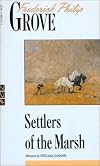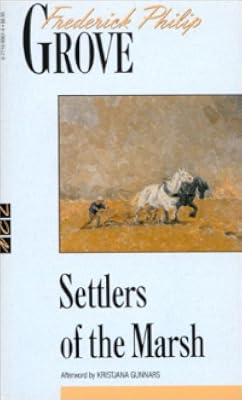
Settlers of the Marsh
by Frederick Philip Grove
On This Page
Description
Settlers of the Marsh was first published in 1925, after a struggle by the author to persuade publishers that his first novel would meet public acceptance. Some critics immediately condemned this hypnotic story of the loss of innocence on the Manitoba frontier, calling it “obscene” and “indecent.” Churches issued warnings to their congregations to avoid its scandalous contents. Only several decades later was Settlers of the Marsh recognized for what it is – a landmark in the show more development of the Canadian novel, and a work of realism in the tradition of Thomas Hardy. A psychological portrait of life in the Canadian West, Settlers of the Marsh presents with chilling accuracy the hopes, passions, and anxieties of young pioneers. show lessTags
Recommendations








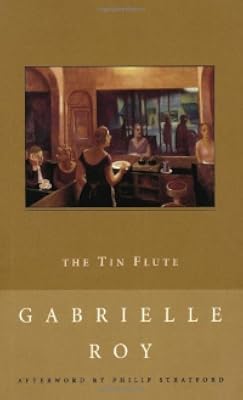
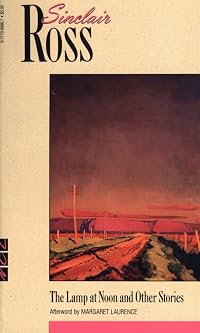

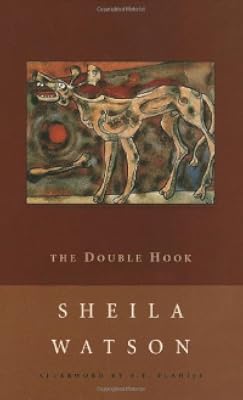


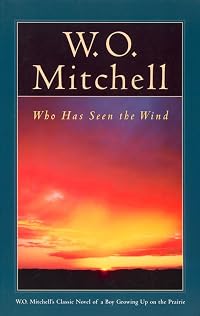













Member Reviews
I consider myself fairly well-read in Canadian literature so how could it have taken me so long to discover this classic that is set right in Manitoba? The New Canadian Library was launched by McClelland and Stewart in 1958 to provide reasonably priced paperbacks of Canadian classics. Over the years I have read quite a few, around 30, but since there were 158 published between 1958 and 1978 I have a lot to go. Obviously I have to try to read more from their collection.
Niels Linstedt came to Manitoba from Sweden with nothing to his name. But he was young and strong and could work for hours. The book opens with he and Lars Nelson making their way through a fierce snowstorm on foot trying to find the place where they were going to dig a show more well. Dwellings were few and far between and the road was more a trail. If you ever want to get a taste of the hardships the pioneers faced the first chapter of this book is a good place to start.
Over the years by dint of his hard work Niels managed to prove a homestead (which means breaking 30 acres of land), build a house, acquire horses and cattle and generally prosper. The whole time he was doing this he was dreaming of marrying Ellen Amundsen, daughter of the household that he and Nelson first went to. Ellen had seen her mother's health suffer from getting pregnant while there was no hope for the children to thrive and had seen her miscarry time and again. She decided she never wanted to get married so when Niels finally asked her she refused him and asked him instead to be like a brother to her. Heartsick by her refusal Niels was easy prey for the Widow Vogel who had been eyeing Niels since his arrival in the district. After she seduced him he asked her to marry him and she accepted. Soon Niels was to regret his decision and tragedy ensues.
The descriptions of the marsh and the woods enhance the theme of loneliness that pervades this book. Days and weeks go by when people see no-one except for those that live with them. And yet neighbours help one another if they can. Niels looks after a young boy and his aging neighbour, helps Ellen with her haying, picks up things in town for others. These people remember and assist him when he needs it. That's a good message to take from this book. show less
Niels Linstedt came to Manitoba from Sweden with nothing to his name. But he was young and strong and could work for hours. The book opens with he and Lars Nelson making their way through a fierce snowstorm on foot trying to find the place where they were going to dig a show more well. Dwellings were few and far between and the road was more a trail. If you ever want to get a taste of the hardships the pioneers faced the first chapter of this book is a good place to start.
Over the years by dint of his hard work Niels managed to prove a homestead (which means breaking 30 acres of land), build a house, acquire horses and cattle and generally prosper. The whole time he was doing this he was dreaming of marrying Ellen Amundsen, daughter of the household that he and Nelson first went to. Ellen had seen her mother's health suffer from getting pregnant while there was no hope for the children to thrive and had seen her miscarry time and again. She decided she never wanted to get married so when Niels finally asked her she refused him and asked him instead to be like a brother to her. Heartsick by her refusal Niels was easy prey for the Widow Vogel who had been eyeing Niels since his arrival in the district. After she seduced him he asked her to marry him and she accepted. Soon Niels was to regret his decision and tragedy ensues.
The descriptions of the marsh and the woods enhance the theme of loneliness that pervades this book. Days and weeks go by when people see no-one except for those that live with them. And yet neighbours help one another if they can. Niels looks after a young boy and his aging neighbour, helps Ellen with her haying, picks up things in town for others. These people remember and assist him when he needs it. That's a good message to take from this book. show less
Rounded down from 3.5
The only other book I think I've read about early settlers on the Canadian Prairie provinces was Shandi Mitchell's spectacular book Under This Unbroken Sky, so I was looking forward to additional perspectives.
This provided it - from the viewpoint of Scandinavian settlers who seem to have arrived two or three decades before the Ukrainians and therefore were more established and "civilized - ie conforming to Western culture. Their little expat community made making the homestead easier. Not a lot of plot though.
The only other book I think I've read about early settlers on the Canadian Prairie provinces was Shandi Mitchell's spectacular book Under This Unbroken Sky, so I was looking forward to additional perspectives.
This provided it - from the viewpoint of Scandinavian settlers who seem to have arrived two or three decades before the Ukrainians and therefore were more established and "civilized - ie conforming to Western culture. Their little expat community made making the homestead easier. Not a lot of plot though.
This was quite good. It's sort of like one of those Willa Cather Prairie Trilogy books or a more adult version of Little House on the Prairie. Which is all to say it's about homesteaders/pioneers back a century and some ago. But, the difference here is we're talking about settlers in Canada, perhaps Saskatchewan or Alberta.
The protagonist is a repressed young Swede, who is very hard working. In his early time, he works like a dog for other people, saves up some money and gets himself his own farm/homestead. He works like a dog to set that up. There's a beautiful, young woman in a nearby homestead, Ellen, who can work like a man and whom Neils Lindstet finds attractive. But Ellen doesn't want to marry. She doesn't want to be someone show more else's property/drudge. Somehow, Neils gets entangled with Mrs. Lund, a "merry widow". Things go downhill from there. Will Neils ever get things straightened out, at least a little bit? show less
The protagonist is a repressed young Swede, who is very hard working. In his early time, he works like a dog for other people, saves up some money and gets himself his own farm/homestead. He works like a dog to set that up. There's a beautiful, young woman in a nearby homestead, Ellen, who can work like a man and whom Neils Lindstet finds attractive. But Ellen doesn't want to marry. She doesn't want to be someone show more else's property/drudge. Somehow, Neils gets entangled with Mrs. Lund, a "merry widow". Things go downhill from there. Will Neils ever get things straightened out, at least a little bit? show less
Loved, loved, loved this book! The author had a real hard time getting this book published. The publishers did not think the public would accept this book. It was criticized for being obscene, indecent and scanalous. (But it's quite tame when measured by today's standards). This is one of my favourite books by a Canadian author.
Ratings
Members
- Recently Added By
Lists

New Canadian Library
191 works; 7 members

Best Books set in Manitoba
85 works; 2 members
Author Information

18+ Works 407 Members
Frederick Philip Grove was actually born Felix Paul Greve in 1879 in Radomno, and raised in Hamburg, Germany. He graduated from Gymnasium Johanneum in 1898 and then studied classical philology and archaeology in Bonn and Munich. In Berlin, he became involved with Else Endell, the wife of his friend August Endell, and they all set out for Palermo show more in 1903. Greve served a prison term for fraud in Bonn between 1903-1904. Afterwards, they lived in Switzerland, France and Berlin; and in 1909, he abruptly left for America. Apparently heavy in debt, he double sold his translation of Swift's "Prose Works" and felt it necessary to stage his suicide. Else joined him in Pittsburgh a year later, but Greve abandoned her on a small farm near Sparta, Kentucky and left for Canada in 1911. In 1912, he arrived in Manitoba as Frederick Philip Grove and claimed to be of Anglo-Swedish descent. He began his career as a Canadian writer from Rapid City in 1922, after spending the past decade teaching in remote districts of Manitoba. His first publication was the essay "Rousseau als Erzieher" (Der Nordwesten, 1914). During the same year, he married fellow teacher Catherine Wiens. He began studies at the University of Manitoba in 1915 and received a B.A. in French and German in 1922. In 1927, their daughter Phyllis May died shortly before her twelfth birthday. They relocated to Ontario and their son Leonard was born in Ottawa in 1930. Grove was now involved with Graphic Publishers and in ill health. He continued to write and publish from his estate until his death on August 19, 1948. Grove received several honors that included the Lorne Pierce Medal in 1934, and two honorary doctorates from the University of Manitoba and Mount Allison University in 1946. His manuscripts were acquired in the early 1960's and since then, several related papers have been added to the collection, notably, the Spettigue collection documenting his German identity. The Grove Library Collection of some 500 titles was donated by Leonard Grove, in 1992, and 160 letters by Grove were acquired by the Archives in 1997. (Bowker Author Biography) show less
Series
Belongs to Publisher Series
Common Knowledge
- Canonical title
- Settlers of the Marsh
- Original publication date
- 1925
- Important places
- Manitoba, Canada
Classifications
Statistics
- Members
- 131
- Popularity
- 249,997
- Reviews
- 4
- Rating
- (3.71)
- Languages
- English
- Media
- Paper, Ebook
- ISBNs
- 11
- ASINs
- 8