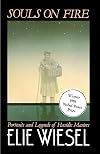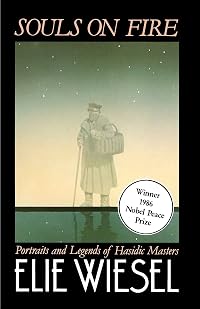
Souls on Fire: Portraits and Legends of Hasidic Masters
by Elie Wiesel
On This Page
Description
His book is difficult for me to describe, I guess I can only say that along with 'Man's Search for Meaning' by Viktor E. Frankl, 'Souls on Fire' by Elie Wiesel is among the two books that have changed my life. In these powerful and beautiful stories of Jewish Hasidic masters Elie Wiesel teaches us to fight depression by deliberately cultivating joy, that we must enjoy life in spite of life, that death is never the answer, and that that life is sacred, so much so that in spite of anything we show more have suffered we must say yes to this life. show lessTags
Recommendations



















Member Reviews
Sadness.
Every time I set this book down after reading a chapter or two I was filled with an odd sense of melancholy mixed with frustration, but above all, sadness.
Hasidic Judaism, one of the branches of Orthodox Judaism, began in 1700 with the birth of Israel Baal Shem Tov. In Souls on Fire, Wiesel paints biographic sketches of the major figures in Hasidism, filling the chapters with stories, parables, and larger-than-life personas.
My biggest surprise was the cavalier attitude that the Hasidic masters had towards God. Instead of approaching God in reverence, some of their attitudes were stunningly arrogant! Take Israel of Rizhin for example. On approaching God in prayer he said, "I am not a slave come to ask favors of the king. I come show more as a counselor to discuss matters of state" (158).
The thing that had the greatest impact on me was the constant longing and despair at the non-arrival of the Messiah. The pages are filled with Hasidic Masters stating how if only [insert condition here] then the Messiah would come. Their extreme boldness plays a role here, too. Some of the Masters believed they could make force the Messiah to arrive if only ...
Perhaps because of this unfulfilled longing for the Messiah, "all [of the masters], to varying degrees, struggled against melancholy" (106). Instead of reading about the life of "Souls on Fire," I learned about the lives of smoldering wicks trying to maintain hope in the face of an apparently uncaring deity. I'm unsure how much of this attitude is true of the Hasidic Masters themselves and how much is imposed by Wiesel—a man who has endured more than anyone's fair share of suffering (see: Night).
In the end, my Christian narrative—that the Messiah has indeed arrived and was largely unrecognized by his own people—added a level of pathos that made the book difficult to read. show less
Every time I set this book down after reading a chapter or two I was filled with an odd sense of melancholy mixed with frustration, but above all, sadness.
Hasidic Judaism, one of the branches of Orthodox Judaism, began in 1700 with the birth of Israel Baal Shem Tov. In Souls on Fire, Wiesel paints biographic sketches of the major figures in Hasidism, filling the chapters with stories, parables, and larger-than-life personas.
My biggest surprise was the cavalier attitude that the Hasidic masters had towards God. Instead of approaching God in reverence, some of their attitudes were stunningly arrogant! Take Israel of Rizhin for example. On approaching God in prayer he said, "I am not a slave come to ask favors of the king. I come show more as a counselor to discuss matters of state" (158).
The thing that had the greatest impact on me was the constant longing and despair at the non-arrival of the Messiah. The pages are filled with Hasidic Masters stating how if only [insert condition here] then the Messiah would come. Their extreme boldness plays a role here, too. Some of the Masters believed they could make force the Messiah to arrive if only ...
Perhaps because of this unfulfilled longing for the Messiah, "all [of the masters], to varying degrees, struggled against melancholy" (106). Instead of reading about the life of "Souls on Fire," I learned about the lives of smoldering wicks trying to maintain hope in the face of an apparently uncaring deity. I'm unsure how much of this attitude is true of the Hasidic Masters themselves and how much is imposed by Wiesel—a man who has endured more than anyone's fair share of suffering (see: Night).
In the end, my Christian narrative—that the Messiah has indeed arrived and was largely unrecognized by his own people—added a level of pathos that made the book difficult to read. show less
Elie Weisel is sympathetic to the Chasid movement, and counts himself one of them. However, my overall impression after reading this book is that the much revered Tsaddikim he describes were suffering from bipolar ... alternating bouts of ecstasy and depression abound in his descriptions of their lives. Weisel liberally sprinkles quotations from the masters throughout the book, but these quotations and their accompanying parables come across as amateur pop psychology. In the end, I can understand the attraction of Chasidism in its time and place, but Weisel's descriptions of the Chasidic masters'' behavior and self-justification do not benefit the cause he propounds. The book has too much repetition and appears too trite. Surely there show more must be more to Chasidism than this. show less
Souls on Fire is a history of Europe's Hassidic Jewish masters. I found this book by accident in the library and had to read it since I love Wiesel's work. This was the first time I read one of his nonfiction books, and it was better than his fiction! This book was really helpful to me in my personal exploration of religion. It may sound funny, but one night after I put it down and was about to go to sleep, I felt this wonderful sense of peace over my whole body and mind. I've never felt that peaceful before or after. Anyone who is at all curious about and open to religion should read this one.
Beautiful, poetic tales of the first Hassidic leaders. After a while, the descriptions began to blend in.
mysticism
NO OF PAGES: 268 SUB CAT I: Hasidism SUB CAT II: SUB CAT III: DESCRIPTION: In its brief splendor, (Hasidism) produced many rabbis whose deeds and stories are still passed on by Jews today, by Jews who feel - as Wiesel makes us feel in this book - that they know these rabbis personally...NOTES: SUBTITLE: Portraits and Legends of Hasidic Masters
CELEBRACIÓN JASÍDICA
«Un jasid, talmudista de renombre, vino a
consultarle: temía perder la fe. El gran Maguid de
Mezeritch no entabló una discusión filosófica, sino
que le pidió que repitiera con él muchas veces la
primera oración que todo niño judío aprende con
el corazón. Y eso fue todo»
El rostro del pequeño Elle Wiesel resplandecía
al escuchar los relatos que su abuelo le contaba
sobre los principales maestros del Jasidlsmo.
La primera Guerra Mundial quedaba ya lejos en
aquellas tierras rumanas que un día pertenecieron
al imperio austro-húngaro. Desde tiempos Inmemoriales,
los Judíos habitaban en florecientes comunidades aquellos
lugares que muy pronto sentiirian el azote del Holocausto.
De hecho, Wlesel fue recluido en show more los campos de
concentración de Auschwitz y Buchenwald con sus
familiares cuando apenas contaba dieciséis años.
En aquella larga noche lo perdió todo. Tal
vez sólo pudo retener, en algún rincón de su memoria,
a llama que un día iluminó su rostro de niño
y que le conectaba con la mejor historia de sus
antepasados..
En Celebración Jasídica el premio Nobel
de la paz evoca las paradojas y las historias de
rabinos míticos como Shem-Tov, Israel de Rizhin o
Méndel de Kotzk, entre otros. En ellos aun se percibe
aquella luz hiriente que cubría el rostro de
Moisés cuando. bajando el monte Sinaí después
de encontrarse con el Dios de Israel, llenaba de temor
a un pueblo en peregrinación permanente. show less
«Un jasid, talmudista de renombre, vino a
consultarle: temía perder la fe. El gran Maguid de
Mezeritch no entabló una discusión filosófica, sino
que le pidió que repitiera con él muchas veces la
primera oración que todo niño judío aprende con
el corazón. Y eso fue todo»
El rostro del pequeño Elle Wiesel resplandecía
al escuchar los relatos que su abuelo le contaba
sobre los principales maestros del Jasidlsmo.
La primera Guerra Mundial quedaba ya lejos en
aquellas tierras rumanas que un día pertenecieron
al imperio austro-húngaro. Desde tiempos Inmemoriales,
los Judíos habitaban en florecientes comunidades aquellos
lugares que muy pronto sentiirian el azote del Holocausto.
De hecho, Wlesel fue recluido en show more los campos de
concentración de Auschwitz y Buchenwald con sus
familiares cuando apenas contaba dieciséis años.
En aquella larga noche lo perdió todo. Tal
vez sólo pudo retener, en algún rincón de su memoria,
a llama que un día iluminó su rostro de niño
y que le conectaba con la mejor historia de sus
antepasados..
En Celebración Jasídica el premio Nobel
de la paz evoca las paradojas y las historias de
rabinos míticos como Shem-Tov, Israel de Rizhin o
Méndel de Kotzk, entre otros. En ellos aun se percibe
aquella luz hiriente que cubría el rostro de
Moisés cuando. bajando el monte Sinaí después
de encontrarse con el Dios de Israel, llenaba de temor
a un pueblo en peregrinación permanente. show less
Oct 12, 2018Spanish
Members
- Recently Added By
Author Information

Eliezer "Elie" Wiesel was born in Sighet, Romania on September 30, 1928. In 1944, he and his family were deported along with other Jews to the Nazi death camp Auschwitz. His mother and his younger sister died there. He loaded stones onto railway cars in a labor camp called Buna before being sent to Buchenwald, where his father died. He was show more liberated by the United States Third Army on April 11, 1945. After the war ended, he learned that his two older sisters had also survived. He was placed on a train of 400 orphans that was headed to France, where he was assigned to a home in Normandy under the care of a Jewish organization. He was educated at the Sorbonne and supported himself as a tutor, a Hebrew teacher and a translator. He started writing for the French newspaper L'Arche. In 1948, L'Arche sent him to Israel to report on that newly founded state. He also became the Paris correspondent for the daily Yediot Ahronot. In this capacity, he interviewed the novelist Francois Mauriac, who urged him to write about his war experiences. The result was La Nuit (Night). After the publication of Night, Wiesel became a writer, literary critic, and journalist. His other books include Dawn, The Accident, The Gates of the Forest, The Jews of Silence: A Personal Report on Soviet Jewry, and Twilight. He received a numerous awards and honors for his literary work including the William and Janice Epstein Fiction Award in 1965, the Jewish Heritage Award in 1966, the Prix Medicis in 1969, and the Prix Livre-International in 1980. He received the Nobel Peace Prize in 1986 for his work in combating human cruelty and in advocating justice. He had a leading role in the creation of the United States Holocaust Memorial Museum in Washington, D. C. He died on July 2, 2016 at the age of 87. (Bowker Author Biography) show less
All Editions
Some Editions
Awards and Honors
Awards
Distinctions
Series
Belongs to Publisher Series
Work Relationships
Common Knowledge
- Canonical title
- Souls on Fire: Portraits and Legends of Hasidic Masters
- Original title
- Célébration hassidique
- People/Characters
- Baal Shem Tov; Maggid of Mezeritch; Levi-Yitzhak of Berditchev; Elimelekh of Lizensk; Israel of Rizhin; Nahman of Bratzlav (show all 7); Menahem-Mendl of Kotzk
- First words
- And it came to pass that the great Rebbe Israel Baal Shem Tov, Master of the Good Name, known for his powers in heaven as well as on earth, decided to try once more to force his Creator's hand.
- Blurbers
- Silberman, Charles E.; Friedlander, Albert H.; Pryce-Jones, Alan; Zborowski, Mark; Prescott, Peter S.
Classifications
Statistics
- Members
- 798
- Popularity
- 34,672
- Reviews
- 8
- Rating
- (4.06)
- Languages
- 11 — Czech, Dutch, English, French, German, Italian, Norwegian, Romanian, Russian, Spanish, Swedish
- Media
- Paper, Ebook
- ISBNs
- 23
- UPCs
- 1
- ASINs
- 11