On This Page
Description
In a vastly overpopulated near-future world, businesses have taken the place of governments and now hold all political power. States exist merely to ensure the survival of huge transnational corporations. Advertising has become hugely aggressive and boasts some of the world's most powerful executives. Through advertising, the public is constantly deluded into thinking that all the products on the market improve the quality of life. However, the most basic elements are incredibly scarce, show more including water and fuel. The planet Venus has just been visited and judged fit for human settlement, despite its inhospitable surface and climate; colonists would have to endure a harsh climate for many generations until the planet could be terraformed. Mitch Courtenay is a star-class copywriter in the Fowler Schocken advertising agency and has been assigned the ad campaign that would attract colonists to Venus, but a lot more is happening than he knows about. Mitch is soon thrown into a world of danger, mystery, and intrigue, where the people in his life are never quite what they seem, and his loyalties and core beliefs will be put to the test.. show less
Tags
Recommendations

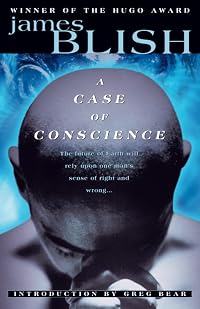
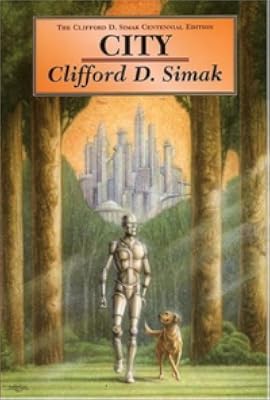
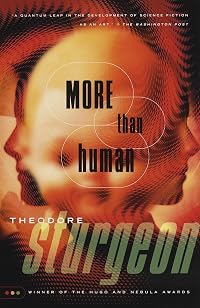



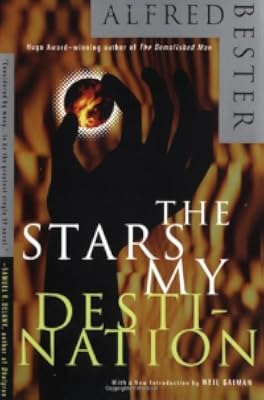



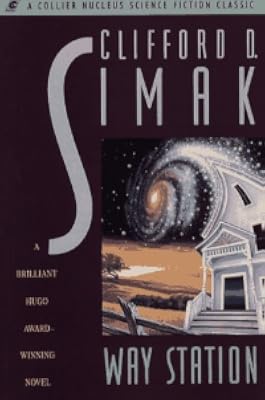

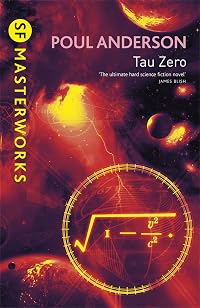


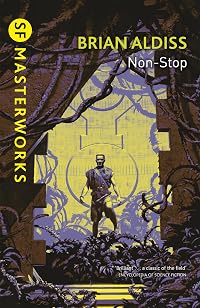
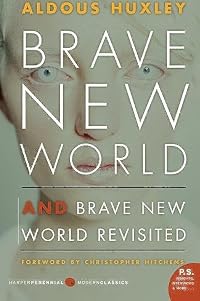









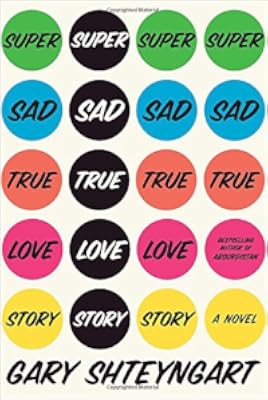
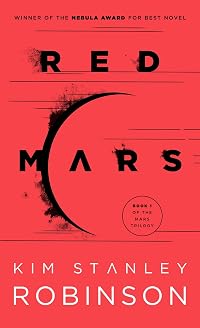



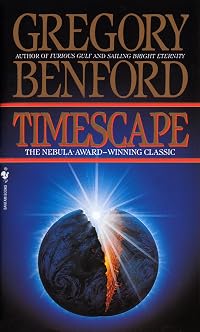
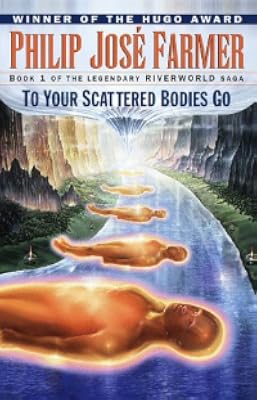
Member Recommendations

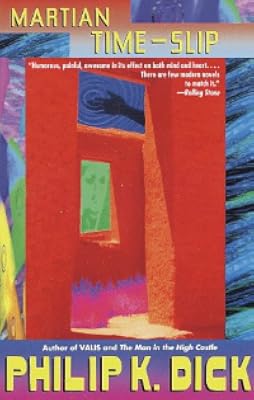
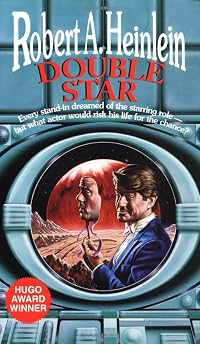
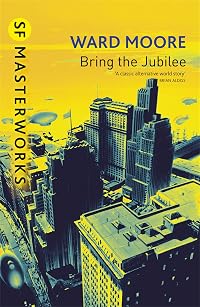
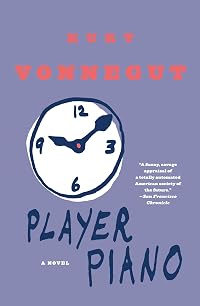
prezzey Two satirical takes on capitalism and consumerism in the future, a classic and a more recent work.
Member Reviews
I really enjoyed this cynical and satirical sci fi novel. It's about Mitchell Courtenay, a high ranking ad exec in a futuristic American society dominated by advertising. Indeed, it's virtually un-patriotic to not adhere to advertising's role in society. Mitch is given the assignment of leading his firm's intention of colonizing Venus, even though it's not remotely habitable, by making American suckers go there based on his expertise in advertising. The book starts taking some bizarre twists at that stage, leading to his being essentially kidnapped and put to work as a "crumb," a common consumer, his escape, his workings with the Consies, or conservations, a Greenpeace-like group which attempts to overcome America's fixation with show more rampant consumerism and its negative impact on the world, and more.
This book was written 60 years ago, but it was seriously ahead of its time. To quote another Goodreads member, Nancy Oakes wrote:
"Awesome book! Hard to believe this was written like 50+ years ago, because it is so incredibly relevant to our modern times. For example: it takes a look at the dangers of imperialistic corporations & greed, the plight of workers and the ungodly conditions under which some of them have to work, the clear and unmistakeable division of class in society, the total lack of concern for the environment and the treatment of those who care about it and want change."
This book is frighteningly applicable to our current times. Pohl (the book was co-written with CM Kornbluth) was a true visionary. The satire is witty and funny. One scene that had me laughing was Mitch's dissing of Moby Dick due to its lack of advertising. LOL! My only complaint, and the reason I'm only giving it four out of five stars, is that the scene transitions are often lacking. You're in a scene and then, boom, something happens in the course of a sentence to radically change the plot and you're left picking up the pieces, trying to figure out what just happened. This occurs several times in the book and I found it very distracting. Nonetheless, it was a good, quick read and I heartily recommend this book. show less
This book was written 60 years ago, but it was seriously ahead of its time. To quote another Goodreads member, Nancy Oakes wrote:
"Awesome book! Hard to believe this was written like 50+ years ago, because it is so incredibly relevant to our modern times. For example: it takes a look at the dangers of imperialistic corporations & greed, the plight of workers and the ungodly conditions under which some of them have to work, the clear and unmistakeable division of class in society, the total lack of concern for the environment and the treatment of those who care about it and want change."
This book is frighteningly applicable to our current times. Pohl (the book was co-written with CM Kornbluth) was a true visionary. The satire is witty and funny. One scene that had me laughing was Mitch's dissing of Moby Dick due to its lack of advertising. LOL! My only complaint, and the reason I'm only giving it four out of five stars, is that the scene transitions are often lacking. You're in a scene and then, boom, something happens in the course of a sentence to radically change the plot and you're left picking up the pieces, trying to figure out what just happened. This occurs several times in the book and I found it very distracting. Nonetheless, it was a good, quick read and I heartily recommend this book. show less
This is one of the classics of the genre during the early 50s (in fact, it was included in the Library of America omnibus American Science Fiction: Four Classic Novels 1953-1956). I'll admit that I thought it was going to be about a trading spaceship visiting different planets, but it's nothing like that. The book is set in a near future (for the 50s) where humans live in a dystopian society, heavily controlled by corporations and where the environment is very deteriorated. In fact, environmentalists are considered social deviants and ruthlessly persecuted. A big corporation specializing in marketing buys the contract for the colonization of Venus (which in the book is a very inhospitable planet but not as much as we now know it to be). show more The first thing they need to do is create a marketing campaign to convince people that they want to volunteer as colonists. We follow the point of view of the executive in charge of this campaign. In the meantime, there are plots by commercial rivals and by an underground environmentalist organization that try to interfere.
One problem with SF written before the computer era is that the futures they depict fail to predict how ubiquitous computers have now become, and the implications for humanity. I do not really consider this a failure, because these people are writers, not fortune tellers, but when reading it it's true that nowadays we need to suspend disbelief in this sense and accept this "retrofuture" with no internet and no smartphones. Also, socially it's extrapolated from the 50s, so the marketing companies depicted work a bit like what we see in the Mad Men TV show.
Pohl did work as a marketing copy writer, so he knows his stuff and it shows. The dystopian element is also very relevant now, with echoes of Huxley's Brave New World. Unlike Brave New World, this novel adds a thriller/action plot, so it's not going to be considered respectable literature. It's well-written, and although it does have outdated elements I still thought it entertaining and worth-reading, particularly if you enjoy classic SF. show less
One problem with SF written before the computer era is that the futures they depict fail to predict how ubiquitous computers have now become, and the implications for humanity. I do not really consider this a failure, because these people are writers, not fortune tellers, but when reading it it's true that nowadays we need to suspend disbelief in this sense and accept this "retrofuture" with no internet and no smartphones. Also, socially it's extrapolated from the 50s, so the marketing companies depicted work a bit like what we see in the Mad Men TV show.
Pohl did work as a marketing copy writer, so he knows his stuff and it shows. The dystopian element is also very relevant now, with echoes of Huxley's Brave New World. Unlike Brave New World, this novel adds a thriller/action plot, so it's not going to be considered respectable literature. It's well-written, and although it does have outdated elements I still thought it entertaining and worth-reading, particularly if you enjoy classic SF. show less
When Advertising Rules the World
The dystopian satire The Space Merchants ranks as one of the best Science Fiction novels of all time, compared in importance to Brave New World by some critics for good reason. Pohl (1919-2013) and Kornbluth (1923-1958) present a plausible world of extreme consumerism in which the ne plus ultra profession is advertising, because of its power to convince consumers, the people, that they live in a Panglossian best of all possible worlds. It diverts their attention from reality, that they really live in a world plagued by overpopulation, environmental ruin, gross inequality, and scarcity of basic resources, a world in which corporations and wealth reign supreme. These themes remain with us to this day and show more though some have been mitigated all remain urgent issues worldwide.
Mitch Courtenay is a star-class copywriter at one of the most prominent and powerful ad agencies, Fowler Schocken. This puts him at the pinnacle of the agency and the corporate world that controls the U.S. (though he can only afford an apartment about the size of a closet). Through much skullduggery, the business process of the day, Fowler Schocken wins the right to colonize and then exploit the resources of Venus. Mitch gets the assignment of persuading consumers that Venus is a potential paradise, a place where they can have everything they can’t have on Earth. Mitch, though, faces two problems: his rivals within his own agency and a competing mega agency, and the desire to resume his relationship with Kathy before their one-year trial marriage contract expires. As Mitch ramps up the project and courts Kathy, he finds himself shanghaied, stripped of his identity and status, and shipped off to a food processing colony in Central America.
There he hooks up with the bane of the advertising and corporate elite, the consies. The consies, slag for conservationists, are an underground radical movement that stand in direct opposition to every thing the corporate elite promote. They seek a world with clean air and water and basic equality. He decides to join up as a ploy to get back to New York and reestablish himself at Fowler Schocken and take his revenge on his opponents. However, the table turns on him when he discovers that, among other things, Kathy is a leading consie and that the wedge between them has been his loyalty to a debased system. In the end, he wins back his leadership position and uses it to give Kathy what she most desires, the right to colonize Venus as a consie world. The novel concludes on Venus with their relationship restored, a new world growing, and Mitch as just an ordinary guy.
The pleasure of the novel isn’t so much the intrigue, of which there is plenty, but the graphic world portrayed by Pohl and Kornbluth, best epitomized by extreme branding and loyalty to brands and products like coffiest, a narcotic based version of coffee that like cigarettes addicts consumers from childhood to death. Even if you are not ordinarily a fan of the Science Fiction genre, you may enjoy the authors’ extrapolation of a consumerist society gone wild. show less
The dystopian satire The Space Merchants ranks as one of the best Science Fiction novels of all time, compared in importance to Brave New World by some critics for good reason. Pohl (1919-2013) and Kornbluth (1923-1958) present a plausible world of extreme consumerism in which the ne plus ultra profession is advertising, because of its power to convince consumers, the people, that they live in a Panglossian best of all possible worlds. It diverts their attention from reality, that they really live in a world plagued by overpopulation, environmental ruin, gross inequality, and scarcity of basic resources, a world in which corporations and wealth reign supreme. These themes remain with us to this day and show more though some have been mitigated all remain urgent issues worldwide.
Mitch Courtenay is a star-class copywriter at one of the most prominent and powerful ad agencies, Fowler Schocken. This puts him at the pinnacle of the agency and the corporate world that controls the U.S. (though he can only afford an apartment about the size of a closet). Through much skullduggery, the business process of the day, Fowler Schocken wins the right to colonize and then exploit the resources of Venus. Mitch gets the assignment of persuading consumers that Venus is a potential paradise, a place where they can have everything they can’t have on Earth. Mitch, though, faces two problems: his rivals within his own agency and a competing mega agency, and the desire to resume his relationship with Kathy before their one-year trial marriage contract expires. As Mitch ramps up the project and courts Kathy, he finds himself shanghaied, stripped of his identity and status, and shipped off to a food processing colony in Central America.
There he hooks up with the bane of the advertising and corporate elite, the consies. The consies, slag for conservationists, are an underground radical movement that stand in direct opposition to every thing the corporate elite promote. They seek a world with clean air and water and basic equality. He decides to join up as a ploy to get back to New York and reestablish himself at Fowler Schocken and take his revenge on his opponents. However, the table turns on him when he discovers that, among other things, Kathy is a leading consie and that the wedge between them has been his loyalty to a debased system. In the end, he wins back his leadership position and uses it to give Kathy what she most desires, the right to colonize Venus as a consie world. The novel concludes on Venus with their relationship restored, a new world growing, and Mitch as just an ordinary guy.
The pleasure of the novel isn’t so much the intrigue, of which there is plenty, but the graphic world portrayed by Pohl and Kornbluth, best epitomized by extreme branding and loyalty to brands and products like coffiest, a narcotic based version of coffee that like cigarettes addicts consumers from childhood to death. Even if you are not ordinarily a fan of the Science Fiction genre, you may enjoy the authors’ extrapolation of a consumerist society gone wild. show less
En un futuro cercano, surge el Proyecto Venus, que tiene como misión colonizar dicho planeta. La Tierra está superpoblada y sobreexplotada y está dominada por grandes corporaciones publicitarias. El mundo se divide en Consumidores, Productores y Ejecutivos. Es entonces cuando surge la gran oportunidad para las empresas de publicidad: dirigir la campaña para potenciar la colonización de Venus. Dicho contrato al final ha caído en manos de la Sociedad Fowler Schocken, a la que pertenece el protagonista y narrador de la novela, Mitchell Courtenay, alto ejecutivo al que se le asigna el Proyecto Venus.
‘Mercaderes del espacio’ (The Space Merchants, 1954), escrita por Frederik Pohl y C.M. Kornbluth, es una visión satírica de una show more sociedad mercantilista y consumista hasta el exceso. Quizá haya personajes y situaciones que hayan envejecido mal, pero sigue siendo una gran novela de ciencia ficción, escrita con gran ritmo, inteligencia e imaginación: estrategias, conspiraciones, política, terroristas, conservacionistas, etc. La historia contiene pasajes que dejan huella, como el de La Gallina. El final, algo precipitado, deja con ganas de más. show less
‘Mercaderes del espacio’ (The Space Merchants, 1954), escrita por Frederik Pohl y C.M. Kornbluth, es una visión satírica de una show more sociedad mercantilista y consumista hasta el exceso. Quizá haya personajes y situaciones que hayan envejecido mal, pero sigue siendo una gran novela de ciencia ficción, escrita con gran ritmo, inteligencia e imaginación: estrategias, conspiraciones, política, terroristas, conservacionistas, etc. La historia contiene pasajes que dejan huella, como el de La Gallina. El final, algo precipitado, deja con ganas de más. show less
The Space Merchants is rightly considered a science fiction classic. Mitchell Courtenay is a successful ad-man in a world run by ad-men, who finds himself discredited and on the run. He avoids assassination attempts and suffers the unpleasant experience of learning how the "other" half (i.e., consumers) live. The book is a pretty blunt indictment of American consumerism, envisioning a dystopian society driven by corporations that use advertising to create consumer needs (for such useful things as "Kiddiebutt" cigarettes for kids).
When I first read it, I found it to be a reasonably entertaining yarn, but somewhat dated. But it's turned out to be one of those books with ideas and images that keep popping up in my memory ("Chicken show more Little", anyone?). Looking back, I wonder whether I wasn't a bit naive in my initial assessment--in a society where the government helps companies make record profits at the expense of taxpayers and the environment, and those companies and their executives turn around and give massive contributions back to the politicians who run the government, Pohl and Kornbluth's vision of "the Senator from Du Pont" doesn't really seem so far fetched. show less
When I first read it, I found it to be a reasonably entertaining yarn, but somewhat dated. But it's turned out to be one of those books with ideas and images that keep popping up in my memory ("Chicken show more Little", anyone?). Looking back, I wonder whether I wasn't a bit naive in my initial assessment--in a society where the government helps companies make record profits at the expense of taxpayers and the environment, and those companies and their executives turn around and give massive contributions back to the politicians who run the government, Pohl and Kornbluth's vision of "the Senator from Du Pont" doesn't really seem so far fetched. show less
2.5/5
A classic from the post WWII era that perhaps has lost a lot of its charm in the ensuing 80 years since. Nevertheless, The Space Merchants displays the archetype of a capitalistic hellscape that many writers would borrow from for a long time.
Here, advertising is king, and the top firms operate what amounts to their own fiefdoms, more powerful than government or God. Our main character is one of top executives at one of these firms, and as such has all of the privileges that make his life in this world (where fresh water, clean air, square footage, and real meat) are luxuries that few can ever hope to afford. His position is thrown into flux when his firm settles on trying to populate Venus for their own benefit through the standard show more set of morally gray and reprehensible tactics, and when they put him in charge of the operation. The other large advertising firm doesn't take too kindly to this, and doesn't hesitate to use bureaucratic assassination, which is legal. This is to say nothing of the 'Consies', or conservationists, who are deemed as a terrorist organization, but seem to be the only group who is fighting to end the capitalist system, and fight for the unwashed, proletariat masses, or as their know here: consumers.
Since The Space Merchants was written by two authors, there's an unevenness to both the quality and tone of the writing that made it hard to get settled into the text. The section that was mostly written by Kornbluth, when Courtenay is cast off into a low-level consumer job, tends to be pretty decent. Kornbluth writes with a darker, biting style in comparison to Pohl's sections that were mostly colored by his insistence on smarmy sarcasm. The satire on display is sometimes good, sometimes heavy-handed. Neither writer blew me away, but Kornbluth certainly seems a cut above a lot of his golden age SF peers. I enjoyed the creativity and animosity he showed.
Honestly, this just feels pretty forgettable to me. Sure, there are standouts. I really enjoyed the word-building. I enjoyed seeing this dystopia from both sides of the divide in such a detailed way. It's admirable that there are many terms used today that were coined here first (sucker-trap, R &D, muzak). But beyond these few bright spots, I can't point to anything I cared for all that much. The characters were either cardboard or grating. The choice to not only write women dreadfully, but also the depiction of the character who happened to be a little person was, I think even at the time it was written, hopelessly offensive. The plot moves along okay, but too much time is spend dawdling on a love interest that can't possibly be engaging to anyone other than a 14 year old boy.
Glad to have read it in a completionist sense, but if you're just looking to just read something good, I'd skip this one. show less
A classic from the post WWII era that perhaps has lost a lot of its charm in the ensuing 80 years since. Nevertheless, The Space Merchants displays the archetype of a capitalistic hellscape that many writers would borrow from for a long time.
Here, advertising is king, and the top firms operate what amounts to their own fiefdoms, more powerful than government or God. Our main character is one of top executives at one of these firms, and as such has all of the privileges that make his life in this world (where fresh water, clean air, square footage, and real meat) are luxuries that few can ever hope to afford. His position is thrown into flux when his firm settles on trying to populate Venus for their own benefit through the standard show more set of morally gray and reprehensible tactics, and when they put him in charge of the operation. The other large advertising firm doesn't take too kindly to this, and doesn't hesitate to use bureaucratic assassination, which is legal. This is to say nothing of the 'Consies', or conservationists, who are deemed as a terrorist organization, but seem to be the only group who is fighting to end the capitalist system, and fight for the unwashed, proletariat masses, or as their know here: consumers.
Since The Space Merchants was written by two authors, there's an unevenness to both the quality and tone of the writing that made it hard to get settled into the text. The section that was mostly written by Kornbluth, when Courtenay is cast off into a low-level consumer job, tends to be pretty decent. Kornbluth writes with a darker, biting style in comparison to Pohl's sections that were mostly colored by his insistence on smarmy sarcasm. The satire on display is sometimes good, sometimes heavy-handed. Neither writer blew me away, but Kornbluth certainly seems a cut above a lot of his golden age SF peers. I enjoyed the creativity and animosity he showed.
Honestly, this just feels pretty forgettable to me. Sure, there are standouts. I really enjoyed the word-building. I enjoyed seeing this dystopia from both sides of the divide in such a detailed way. It's admirable that there are many terms used today that were coined here first (sucker-trap, R &D, muzak). But beyond these few bright spots, I can't point to anything I cared for all that much. The characters were either cardboard or grating. The choice to not only write women dreadfully, but also the depiction of the character who happened to be a little person was, I think even at the time it was written, hopelessly offensive. The plot moves along okay, but too much time is spend dawdling on a love interest that can't possibly be engaging to anyone other than a 14 year old boy.
Glad to have read it in a completionist sense, but if you're just looking to just read something good, I'd skip this one. show less
Lately I've been getting a big kick out of classic SF from the 1950s. The Space Merchants by Frederik Pohl and Cyril M. Kornbluth is a dystopia with a twist: it imagines a future ruled by advertising.
When star ad-man Mitch Courtenay (a sure inspiration for Mad Men's Don Draper) lands the job of insuring his agency is the first to get their claws into Venus, he discovers how brutal office politics can be: his identity is stole from him and he's hurled to the back of the rat race his world has become.
Recent developments in lab-grown meat make this book's most famous episode (concerning a monster known as 'Chicken Little') more topical than ever. But this snappy, thrilling satire would be a treat anytime.
When star ad-man Mitch Courtenay (a sure inspiration for Mad Men's Don Draper) lands the job of insuring his agency is the first to get their claws into Venus, he discovers how brutal office politics can be: his identity is stole from him and he's hurled to the back of the rat race his world has become.
Recent developments in lab-grown meat make this book's most famous episode (concerning a monster known as 'Chicken Little') more topical than ever. But this snappy, thrilling satire would be a treat anytime.
Members
- Recently Added By
Lists

The Guardian's 1000 Novels Everyone Must Read
1,005 works; 547 members

Best Science Fiction Novels
816 works; 426 members

Best Dystopias
280 works; 276 members
Survey of Classic Science Fiction
171 works; 47 members

S.F. Masterworks (Complete)
229 works; 15 members

David Pringle's Science Fiction: The 100 Best Novels
101 works; 9 members

SF Masterworks
193 works; 8 members

The 5 Parsec Shelf
50 works; 7 members

made me cackle as I read (fiction)
20 works; 3 members
Unshelved Book Clubs
579 works; 5 members

Future Politics Political Science 300
18 works; 1 member

Books Read in 2016
4,666 works; 197 members

Books Read in 2013
1,630 works; 51 members

Books Read in 2020
4,379 works; 124 members
Favorite Science Fiction
456 works; 218 members
Author Information

640+ Works 42,833 Members
Frederik Pohl was born in New York City on November 26, 1919. More interested in writing than in school, he dropped out of high school in his senior year and took a job with a publishing company. After serving as a public relations officer in the United States Army from 1943 to 1945, he returned to publishing as copywriter for Popular Science, a show more literary agent for several sci-fi writers, and the editor for the magazines Galaxy and If from 1959 until 1969, with If winning three successive Hugo awards. His first published work, a poem entitled Elegy to a Dead Satellite: Luna, was printed in Amazing Stories magazine in 1937 under the pen name Elton Andrews. His first science fiction novels were published in the mid 1960's, some written in collaboration with other writers, others created alone. During his lifetime, he won over 16 major awards for his writing (much of which was published pseudonymously) including six Hugo Awards and three Nebula Awards. His works include Gateway, which won the Campbell Memorial, Hugo, Locus SF, and Nebula Awards, Beyond the Blue Event Horizon, and Jem, which won the National Book Award in 1979. He also embraced blogging in his later years, using his online journal as an ongoing sequel to his autobiography, The Way the Future Was. He died on September 2, 2013 at the age 93. (Bowker Author Biography) show less

145+ Works 7,603 Members
Some Editions
Awards and Honors
Distinctions
Notable Lists
Series

Belongs to Publisher Series
Delta Pocket (4)
Penguin Science Fiction (2224)
UTOPIA Grossband (145)
Urania [Mondadori] (297)
SF Masterworks (54)
Présence du futur (134)
Gli Oscar [Mondadori] (593)
Work Relationships
Common Knowledge
- Canonical title*
- I mercanti dello Spazio
- Original title
- The Space Merchants; Gravy Planet
- Alternate titles*
- Eine Handvoll Venus; Geschäfte mit Venus
- Original publication date
- 1953
- People/Characters
- Mitch Courtenay; Matt Runstead; Fowler Schocken; Kathy; Jack O'Shea; B.J. Taunton
- Important places
- Madison Avenue, Manhattan, New York, New York, USA; Venus
- First words
- As I dressed that morning I ran over in my mind the long list of statistics, evasions, and exaggerations, that they would expect in my report.
- Quotations*
- Die Welt ist unsere Auster.
- Last words
- (Click to show. Warning: May contain spoilers.)It didn't take that long.
- Publisher's editor*
- Arnoldo Mondadori Editore S.p.A., Milano
- Blurbers
- Amis, Kingsley
- Original language
- English
*Some information comes from Common Knowledge in other languages. Click "Edit" for more information.
Classifications
Statistics
- Members
- 2,147
- Popularity
- 9,496
- Reviews
- 64
- Rating
- (3.77)
- Languages
- 18 — Catalan, Chinese, Czech, Danish, Dutch, English, Finnish, French, German, Greek, Hebrew, Hungarian, Italian, Polish, Portuguese, Spanish, Swedish, Turkish
- Media
- Paper, Audiobook, Ebook
- ISBNs
- 49
- ASINs
- 35