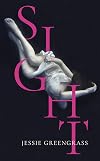
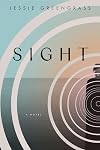
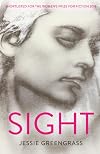
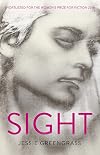
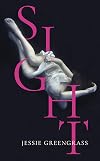
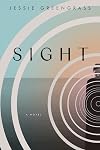
Sight
by Jessie Greengrass
On This Page
Description
"The remarkable first novel from the award-winning British writer, Jessie Greengrass 'It seemed, at times, an act of profound selfishness, to have a child so that I might become a parent; but selfish, too, to have a child and stay the same, or not to have one - unless the only honest choice would have been to try to become this kinder version of myself without the need to bring another into it.' Set at the twin poles of life and death, Sight is a novel about being a parent and a child, what show more it is like to bring a person in to the world, and what it is to let one go. With forays into the history of psychoanalysis and the origins of modern surgery, our unnamed narrator shines a light on those hidden parts that lie at the heart of us, to reveal an examined life laid bare in all its desire and grief. Fiercely intelligent and exquisitely written, Jessie Greengrass's remarkable debut is an incisive exploration of how we see others, and how we might know ourselves"-- show lessTags
Recommendations











Member Reviews
The narrator of the book is currently expecting her second child, with her partner, Johannes. This second time around in her life is causing her to contemplate the relationships that she had with her late grandmother and her mother, as well as the effects of having a second child will have on the bond she has with her daughter. To better comprehend the complexity of being a parent and a child at the same time she spends time in the Wellcome Trust library reading various books. Whilst she is in the library she discovers and reads the works of Wilhelm Röntgen, and the X-Rays he discovered, and about Anna Freud, daughter of the psychoanalyst Sigmund Freud’s and John Hunter, the pioneer of modern surgery.
There was a lot that I liked show more about this book; the recollection of her childhood with her grandmother and the time that she spent there and her looking after her mother at the end of her life and how she sees her kinship developing with her own children make for fascinating reading. She has a beautiful way of writing too, it is sparse and yet eloquent.
However, I thought that the wandering off into the realms of Freud and the other medical practitioners really didn't fit with the rest of the story for me. I get the psychoanalyst link to Freud with her grandmother, but it distracted from the story. Greengrass is definitely an author to watch though. show less
There was a lot that I liked show more about this book; the recollection of her childhood with her grandmother and the time that she spent there and her looking after her mother at the end of her life and how she sees her kinship developing with her own children make for fascinating reading. She has a beautiful way of writing too, it is sparse and yet eloquent.
However, I thought that the wandering off into the realms of Freud and the other medical practitioners really didn't fit with the rest of the story for me. I get the psychoanalyst link to Freud with her grandmother, but it distracted from the story. Greengrass is definitely an author to watch though. show less
‘It strikes me as extraordinary, now, that we should be so hidden from ourselves, our bodies and minds so inaccessible, in such large part uncharted.’
In my reading of the shortlist for the James Tait Black prize for 2019 I come to Jessie Greengrass’ debut novel, and I’ll admit that, having read some of the rave reviews, and knowing that it was also shortlisted for the 2018 Women’s Prize for Fiction, I wasn’t quite prepared for what I read. I will be as analytical as I can, and will give the balance I can, but I was very disappointed.
The positives: the ambition of the novel is admirable. As the opening quote shows, this is a book about what lies beneath, both physically and emotionally. Weaving the story of our (nameless) show more narrator, as she is expecting her second child with her husband Johannes, and the stories of the origins of x-rays, psychiatry and anatomy, Greengrass explores the connections between mothers and daughters, and between the scientific and the emotional worlds in which we surround ourselves. The narrative explores the central character’s relationships with her mother and her grandmother (known as Doctor K, an eminent psychiatrist), and there are some touching, intimate family moments between them, and between the central narrator and her own daughter and husband. Where the prose is simple, pared back and concentrates on one thing, then Greengrass proves herself a subtle, careful writer.
However, there are too many flaws to the novel for me to ignore. Firstly, where was the editor in all of this? Greengrass launches into epic, flowery, seemingly never-ending sentences that just try and throw everything at the reader. For example:
‘In that narrow passage-way left over from an earlier iteration of the familiar city I felt that I could breathe again, and as Haggerston gave onto London Fields and the sharp striations of gentility and grime above the towpath began to meld into a kind of uniform grubbiness, when darkness was beginning to spread through the evening air like ink, I felt at last a brief alleviation of my disconnection from myself and for a quarter of an hour, before I reached the steps which led back up to road level and the entrance to my building, everything else fell away, and for that short stretch I felt only what I was: young, adrift, bereft.’
Jeepers! I pretty much chose that at random, because every page is filled with these interminable sentences. Something just can’t be, it has to be like something, and then like something else. And as I read on, I noticed something very odd: everything comes in 3’s. It feels like the author has been to a creative writing class and was told that descriptions should be vivid, come in pairs or 3’s to make an impact. Here’s another random example:
‘She filled the house with the almost-audible sound of pen on paper until we felt ourselves become periphery, ousted from our own comfort and routine, forced to deviate from those paths which habit trod for us across the carpet of the living room.’
The book is relatively short, coming in at just under 200 pages, but really it could be 150 pages or less. It just needed a strong editor wielding a pen to score through all the excess linguistic baggage and then it wouldn’t have annoyed me. Because it did, and every time I started one of these sentences, I got quite irritated. And, on a side point, no-one – I mean absolutely no-one – talks like that. The whole narrative voice is just unrealistic; it reads like a character from a literary novel, not like real life, and this is a major distraction.
In the passages – mini-essays, almost – where the focus is on Wilhelm Rontgen’s discovery of x-rays, or Freud’s developing psychoanalysis and his relationship with his daughter Anna, or on the development of the study of anatomy by John and William Hunter, the narrative style is much less intrusive. But again, when the two narratives merge and the central character starts to draw parallels and inferences from these historical moments to her own life, and human relations in general, then it becomes more of a clash than a subtle merging. The styles just jar, and it feels like there are two completely different books going on at the same time.
And what are we, the reader, to make of the anonymity of the main female characters? Our narrator, her mother and grandmother, and her daughter all remain nameless – is this to suggest the universality of the female experience? It almost feels like the individual has been written out of the novel – which would be fine if this was the intent, but as I say, no-one in real life speaks like the narrative ‘I’ of the book, which causes a problem of emotional connection.
The ambition of the novel is bold, and Greengrass can clearly write very well. But going into this with expectations for a prize-shortlisted book, it felt very flawed. It read exactly as a first novel, based on personal biography, and as if the author was just trying to write too much, to be too literary. So, I’m conflicted – I want to praise the ambition, but I need to be honest in my reaction, so I give it 2 stars. Others have and will continue to praise this, so it just goes to show how varied readers can be. show less
In my reading of the shortlist for the James Tait Black prize for 2019 I come to Jessie Greengrass’ debut novel, and I’ll admit that, having read some of the rave reviews, and knowing that it was also shortlisted for the 2018 Women’s Prize for Fiction, I wasn’t quite prepared for what I read. I will be as analytical as I can, and will give the balance I can, but I was very disappointed.
The positives: the ambition of the novel is admirable. As the opening quote shows, this is a book about what lies beneath, both physically and emotionally. Weaving the story of our (nameless) show more narrator, as she is expecting her second child with her husband Johannes, and the stories of the origins of x-rays, psychiatry and anatomy, Greengrass explores the connections between mothers and daughters, and between the scientific and the emotional worlds in which we surround ourselves. The narrative explores the central character’s relationships with her mother and her grandmother (known as Doctor K, an eminent psychiatrist), and there are some touching, intimate family moments between them, and between the central narrator and her own daughter and husband. Where the prose is simple, pared back and concentrates on one thing, then Greengrass proves herself a subtle, careful writer.
However, there are too many flaws to the novel for me to ignore. Firstly, where was the editor in all of this? Greengrass launches into epic, flowery, seemingly never-ending sentences that just try and throw everything at the reader. For example:
‘In that narrow passage-way left over from an earlier iteration of the familiar city I felt that I could breathe again, and as Haggerston gave onto London Fields and the sharp striations of gentility and grime above the towpath began to meld into a kind of uniform grubbiness, when darkness was beginning to spread through the evening air like ink, I felt at last a brief alleviation of my disconnection from myself and for a quarter of an hour, before I reached the steps which led back up to road level and the entrance to my building, everything else fell away, and for that short stretch I felt only what I was: young, adrift, bereft.’
Jeepers! I pretty much chose that at random, because every page is filled with these interminable sentences. Something just can’t be, it has to be like something, and then like something else. And as I read on, I noticed something very odd: everything comes in 3’s. It feels like the author has been to a creative writing class and was told that descriptions should be vivid, come in pairs or 3’s to make an impact. Here’s another random example:
‘She filled the house with the almost-audible sound of pen on paper until we felt ourselves become periphery, ousted from our own comfort and routine, forced to deviate from those paths which habit trod for us across the carpet of the living room.’
The book is relatively short, coming in at just under 200 pages, but really it could be 150 pages or less. It just needed a strong editor wielding a pen to score through all the excess linguistic baggage and then it wouldn’t have annoyed me. Because it did, and every time I started one of these sentences, I got quite irritated. And, on a side point, no-one – I mean absolutely no-one – talks like that. The whole narrative voice is just unrealistic; it reads like a character from a literary novel, not like real life, and this is a major distraction.
In the passages – mini-essays, almost – where the focus is on Wilhelm Rontgen’s discovery of x-rays, or Freud’s developing psychoanalysis and his relationship with his daughter Anna, or on the development of the study of anatomy by John and William Hunter, the narrative style is much less intrusive. But again, when the two narratives merge and the central character starts to draw parallels and inferences from these historical moments to her own life, and human relations in general, then it becomes more of a clash than a subtle merging. The styles just jar, and it feels like there are two completely different books going on at the same time.
And what are we, the reader, to make of the anonymity of the main female characters? Our narrator, her mother and grandmother, and her daughter all remain nameless – is this to suggest the universality of the female experience? It almost feels like the individual has been written out of the novel – which would be fine if this was the intent, but as I say, no-one in real life speaks like the narrative ‘I’ of the book, which causes a problem of emotional connection.
The ambition of the novel is bold, and Greengrass can clearly write very well. But going into this with expectations for a prize-shortlisted book, it felt very flawed. It read exactly as a first novel, based on personal biography, and as if the author was just trying to write too much, to be too literary. So, I’m conflicted – I want to praise the ambition, but I need to be honest in my reaction, so I give it 2 stars. Others have and will continue to praise this, so it just goes to show how varied readers can be. show less
There's an awful lot here about motherhood and being pregnant, and the gap between a parent and child. And whilst I don't think that I have to identify with a character to enjoy a book, I felt quite shut out by this one. I was reminded of Rachel Cusk (the slightly blurred I narrative, the focus on personal experience). I did enjoy the sections about the history of medicine: the problem was I didn't want to go back to the navel gazing mother narrative. Fascinating stuff about discovering the anatomy of pregnancy, and Freud and his daughter Anna
When is the best moment to have a child? Can you ever be ready to become a parent? And what does being a “good” parent actually mean? Jessie Greengrass unnamed narrator has to face these questions. Her husbands would like to have children, she is unsure. Her own childhood comes to her mind, her mother and grandmother, the way they treated her when she was a child, their complex family relationships and the fact that neither her mother not her grandmother is still alive. Yet, families and relationships are never easy, thus, Röntgen and Freud come to her mind as well as the beginnings of modern child birth.
Jessie Greengrass debut novel directly made it to the short list of the 2018 Women’s Prize for Fiction. It is an unexpected show more and uncommon combination of medical history, on the one hand, and a very personal reflection on the narrator’s own life and her feelings about motherhood. It starts with the narrator confronted with the essential question of becoming a mother or not when suddenly her rumination is interrupted by the report about Röntgen. Again and again, these two perspectives alternate which is interesting, but also difficult to follow since it often seems to lack a red thread. They are not isolated accounts, she cleverly combines the topics, e.g. her grandmother was a psychoanalyst like Freud, to give a reason for these interludes.
I can see why the novel made it to the Women’s Prize for Fiction’s short list. The topic tackles a core question of human beings and a deep wish we all share: knowing something for sure, being able to use medical precision for personal decisions and knowing that you do the right thing. Being able to look at something from a neutral and objective point of view, analysing and then making a decision – that’s what we often wish for, however, that’s not how life works.
Contradictory emotions, uncertainty – a lot of apparent opposites come together in the novel. Even though I found the narrator’s thoughts often easy to following and from a topical point of view most interesting, the novel as a whole did not completely convince me. I would have liked to stick with the narrator’s thoughts. Maybe it was all a bit too philosophical for my understanding. show less
Jessie Greengrass debut novel directly made it to the short list of the 2018 Women’s Prize for Fiction. It is an unexpected show more and uncommon combination of medical history, on the one hand, and a very personal reflection on the narrator’s own life and her feelings about motherhood. It starts with the narrator confronted with the essential question of becoming a mother or not when suddenly her rumination is interrupted by the report about Röntgen. Again and again, these two perspectives alternate which is interesting, but also difficult to follow since it often seems to lack a red thread. They are not isolated accounts, she cleverly combines the topics, e.g. her grandmother was a psychoanalyst like Freud, to give a reason for these interludes.
I can see why the novel made it to the Women’s Prize for Fiction’s short list. The topic tackles a core question of human beings and a deep wish we all share: knowing something for sure, being able to use medical precision for personal decisions and knowing that you do the right thing. Being able to look at something from a neutral and objective point of view, analysing and then making a decision – that’s what we often wish for, however, that’s not how life works.
Contradictory emotions, uncertainty – a lot of apparent opposites come together in the novel. Even though I found the narrator’s thoughts often easy to following and from a topical point of view most interesting, the novel as a whole did not completely convince me. I would have liked to stick with the narrator’s thoughts. Maybe it was all a bit too philosophical for my understanding. show less
Told in three sections, the nameless narrator explores being a daughter taking care of her dying mother, a granddaughter with her psychoanalyst grandmother, and a mother. Tied to these meditations are the stories of Roentgen’s discovery of the X-ray, Sigmund and Anna Freud’s work in psychoanalysis, and the beginnings of modern surgery and the study of babies in the uterus. This is not a plot driven novel, nor is it strong on character- we learn little about the narrator. It’s a kind of meditation on seeing ourselves- body and mind and how we change depending on our roles.
It was a slow read for only 200 pages. It seems like a book I’m supposed to like, but actually don’t. I suspect it’s too intellectual for me. I found it show more interesting but I was not drawn into it. Three stars. show less
It was a slow read for only 200 pages. It seems like a book I’m supposed to like, but actually don’t. I suspect it’s too intellectual for me. I found it show more interesting but I was not drawn into it. Three stars. show less
Greengrass provides a thoughtful look at how being pregnant and becoming a mother is closely interwoven with the relationship one’s own mother. Filled with colorful descriptions, at time she provides examples overrun with emotions that are offset by the casual historic review of surgical procedures. A sense of helplessness and sadness causes the author to become an impartial observer to retain some sense of sanity.
This is one of the most beautiful novels I have read recently. The author has a wonderful ability to move lightly between the historical facts and the life of her heroism, from the Lumiere brothers to the life of Freud family then the surgeon William Hunter and the painter Jane Van Rymsdyk.
Greengrass tells the story of children, mothers and grandmothers in a passionate way full of human sense. I read it one session without interruption.
Greengrass tells the story of children, mothers and grandmothers in a passionate way full of human sense. I read it one session without interruption.
Members
- Recently Added By
Published Reviews
ThingScore 75
Sight gives an authoritative account of one woman’s decision to become a mother, while simultaneously weaving in biographical stories of famous visionaries down through the centuries....But this is not a novel about uncertainty; the narrator is clear from the beginning that she would like a child. What she ties herself up in knots over is the question as to whether she would make a good show more mother. Greengrass sets up this interesting philosophical topic with ease, drawing the reader in with a voice that is fiercely intelligent and always probing ...The reflection-heavy narrative of Sight, which is virtually dialogue free, weighs on the reader at times, particularly in the closing section. For all its meticulous thought, not a whole lot happens. Readers who are interested in philosophy, parenting and heredity will nonetheless be satisfied...Readers hoping for a plot might also wonder, but this accomplished and melancholic work nonetheless offers what the narrator herself calls “a lifetime’s inculcated faith in the explanatory power of books” show less
added by vancouverdeb
here is a moment early in Sight when the narrator observes: “Revelation is by definition isolate, it can neither be communicated nor transferred, and trying to comprehend it we feel only the chill of our own exclusion.”
The search for knowledge – whether human advancement or self-awareness – and its accompanying wonders and hazards are at the heart of Jessie Greengrass’s fiercely show more intelligent and assured first novel...This ambiguous tension between intimate knowledge and inevitable distance in parent-child relationships is weaved deftly through the novel. The narrator describes caring for her cancer-ridden mother, and the grief and depression she experienced when she was left without parents at the age of 21...Beyond its insights into grief, motherhood and the monotonous yet exquisite rhythm of quotidian family life, Sight is also a bold experiment in form...Stylistically, Sight is confident and measured, and although the prose can at times feel distant – for all her confidences, the narrator keeps the reader at arm’s length, and the fragmented, nonlinear storytelling does not encourage deep emotional engagement – it nonetheless has a hypnotic quality to it show less
The search for knowledge – whether human advancement or self-awareness – and its accompanying wonders and hazards are at the heart of Jessie Greengrass’s fiercely show more intelligent and assured first novel...This ambiguous tension between intimate knowledge and inevitable distance in parent-child relationships is weaved deftly through the novel. The narrator describes caring for her cancer-ridden mother, and the grief and depression she experienced when she was left without parents at the age of 21...Beyond its insights into grief, motherhood and the monotonous yet exquisite rhythm of quotidian family life, Sight is also a bold experiment in form...Stylistically, Sight is confident and measured, and although the prose can at times feel distant – for all her confidences, the narrator keeps the reader at arm’s length, and the fragmented, nonlinear storytelling does not encourage deep emotional engagement – it nonetheless has a hypnotic quality to it show less
added by vancouverdeb
What we can know of our bodies, ourselves, or each other is the subject of Jessie Greengrass’s debut novel. The author of an award-winning short story collection, An Account of the Decline of the Great Auk, According to One Who Saw It, Greengrass adapts to the novel format with enviable flexibility. Or rather, she adapts it to her own specific literary sensibilities: ruminative, taking a show more judicious distance from things, just far enough to see the links between them, but not so far she misses their textures....The long trails of thought sometimes break off this way, on a dash and a line break; Greengrass employs the same device to register dialogue, as if speaking were just an interruption in the flow of our internal monologue...By using words like ruminative or meditative to describe the book, I am not implying it is messy or haphazard. On the contrary, the writing is poised – but as if on the edge of a precipice. Hovering between the novel and the essay, unfolding through long, languorous sentences, Sight builds meaning through juxtaposition, through surprising mirrorings and parallels...It’s the inability to know anything for sure that Greengrass tracks across her story; we fear the things we can’t see, and validate or classify, but they are the very things that make us live show less
added by vancouverdeb
Lists

2018 Women's Prize for Fiction Longlist
16 works; 11 members

Baileys Women's Prize for Fiction Winners and Shortlisted Books
61 works; 11 members
Author Information

7+ Works 445 Members
Some Editions
Awards and Honors
Awards
Distinctions
The Guardian Book of the Day (2018-02-21)
Common Knowledge
- Original publication date
- 2018
- People/Characters
- Wilhelm Röntgen
- Dedication
- For Ada, who made this hard, and made it possible
- First words
- The start of summer, the weather uncertain but no longer sharply edged, and I am pregnant again.
- Blurbers
- Wang, Weike; Porter, Max; Albert, Elisa; Quatro, Jamie; Spielgelman, Nadja; Elkin, Lauren (show all 7); Baume, Sara
- Original language
- English
Classifications
Statistics
- Members
- 172
- Popularity
- 191,533
- Reviews
- 8
- Rating
- (3.27)
- Languages
- English, German, Swedish, Turkish
- Media
- Paper, Audiobook, Ebook
- ISBNs
- 10
- ASINs
- 5