On This Page
Description
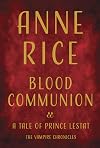
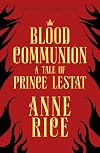
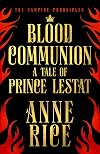
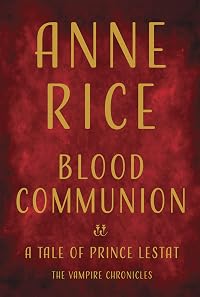
In this spellbinding novel, Lestat, rebel outlaw, addresses the tribe of vampires, directly, intimately, passionately, and tells the mesmerizing story of the formation of the Blood Communion and how he became Prince of the vampire world, the true ruler of this vast realm, and how his vision for all the Children of the Universe to thrive as one, came to be. The tale spills from Lestat's heart, as he speaks first of his new existence as reigning monarch--and then of his fierce battle of wits show more and words with the mysterious Rhoshamandes, proud Child of the Millennia, reviled outcast for his senseless slaughter of the legendary ancient vampire Maharet, avowed enemy of Queen Akasha; Rhoshamandes, a demon spirit who refuses to live in harmony at the Court of Prince Lestat and threatens all that Lestat has dreamt of. As the tale unfolds, Lestat takes us from the towers and battlements of his ancestral castle in the snow-covered mountains of France to the verdant wilds of lush Louisiana with its lingering fragrances of magnolias and night jasmine; from the far reaches of the Pacific's untouched islands to the 18th-century city of St. Petersburg and the court of the Empress Catherine . . . show lessTags
Recommendations








Member Reviews
BLOOD COMMUNION: A TALE OF PRINCE LESTAT turned out to be the 13th and final book for Anne Rice’s VAMPIRE CHRONICLES, a series that began way back in the ‘70s with INTERVIEW WITH THE VAMPIRE and continued on through THE VAMPIRE LESTAT and QUEEN OF THE DAMNED. I faithfully made my way through almost all of her tales of the Undead, a series of books coming out over more than three decades before her death in 2021. I even read her Mayfair Witches books, though the less said about them, the better. In her long writing career, Rice proved herself to be a literary world builder with the best of them, with a good eye for detail; too much so some would say, as she could display an over fondness for adjectives and a passion for description show more that strayed into self-indulgence. She also had a keen grasp of cultural history and background that was well used in laying a strong foundation for her stories that often spanned centuries, encompassing the rise and falls of great empires and religions. Her immortal characters had distinct voices and personalities, capable of expounding at great length on the struggle between good and evil. To read her books was to get a crash course in various philosophies of human nature; she knew how to craft an argument and present it well. Also, nobody ever made better use of the first person POV, as her narrators, usually Lestat or some other immortal, always made the reader feel as if they were confiding in just them, as those who turned the pages of her books were fellow creatures of the night, members of a secret world known only to those who dwelled there. Give her credit for coming up with the concept of centering the story centered around the monster, not the victim.
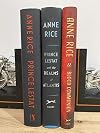
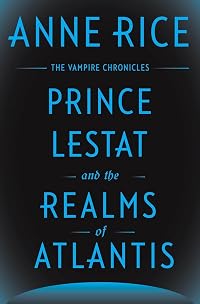
But it can also be said that Anne Rice wrote too much and too often, and that the Vampire Chronicles ran out of steam about a half dozen books back; her penultimate installment in the series, PRINCE LESTAT AND THE REALMS OF ATLANTIS was a downright embarrassment as it tried to marry the vampire myth with ancient astronauts. Anyone who knew anything about Anne Rice, knew that she loved her fans dearly, and she clearly kept trying to please them with ever more stories about her blood drinking immortals. My paperback copy of BLOOD COMMUNION comes in at 255 pages, a very short book compared to some of her earlier epics, and really most of it could have simply been folded into the Atlantis book without much trouble, as the plot concerns a loose end left over from that story. Reading BLOOD COMMUNION (which was published in 2018) now, leaves me with the sense that Rice knew the end was coming, and this slim volume is simply a grace note on which to go out on. The main conflict in the story is Lestat vs. Rhoshamandes, an ancient blood drinker who holds a grudge against Lestat, and seeks revenge. Some new vampires are introduced early on, there is a big clash between Lestat and Rhosh that resolves the conflict about middle way through the book, and then all the vampires gather at Lestat’s ancestral home in France, where, as the newly proclaimed ruler of all vampires, he is given a throne to sit upon, and a court that bows and scraps to him, not to mention a couple more new characters arrive. It all ends with a big vampire shindig where all the immortals revel in how beautiful and awesome they are. Really, not that much happens, even the deaths of some long time characters turn out to be a big fake out. And it feels as if we’ve come a very long way from the wild and adventurous character of Lestat we met in those early books, that character had a real air of danger about him, one that generated excitement, a far cry from the monarch he ultimately becomes. The very concept of a court and a monarchy feel so very antiquated in the 21st Century, which does remind us that, though she held very liberal political views during her life, the Anne Rice of her books could be something of a cultural snob. Still, here at the end, I cut her some slack, as she still knew how to deliver gore when necessary, and the final chapters, where her amazing cast of vampires take their final bows, does feel like a proper farewell. It is also an uplifting analogy for marginalized groups finding happiness and acceptance in being with each other, and being their true selves (as long as you forget they are bloodthirsty killers). Though I did notice the absence of Daniel, the boy with the tape recorder who we meet in the first chapter of her first book, INTERVIEW WITH THE VAMPIRE; it would have felt fitting if he’d been there in the last chapter.
BLOOD COMMUNION is the end of the line for the VAMPIRE CHRONICLES, as there are no plans to continue the series after Anne Rice’s death. Maybe that is for the best; I won’t spew what I think of the AMC adaptations of her vampire books or the Mayfair witches, just say that they are not the stories Anne Rice told. What we have is enough, for at the end of the story, there is nothing left to be told. show less
But it can also be said that Anne Rice wrote too much and too often, and that the Vampire Chronicles ran out of steam about a half dozen books back; her penultimate installment in the series, PRINCE LESTAT AND THE REALMS OF ATLANTIS was a downright embarrassment as it tried to marry the vampire myth with ancient astronauts. Anyone who knew anything about Anne Rice, knew that she loved her fans dearly, and she clearly kept trying to please them with ever more stories about her blood drinking immortals. My paperback copy of BLOOD COMMUNION comes in at 255 pages, a very short book compared to some of her earlier epics, and really most of it could have simply been folded into the Atlantis book without much trouble, as the plot concerns a loose end left over from that story. Reading BLOOD COMMUNION (which was published in 2018) now, leaves me with the sense that Rice knew the end was coming, and this slim volume is simply a grace note on which to go out on. The main conflict in the story is Lestat vs. Rhoshamandes, an ancient blood drinker who holds a grudge against Lestat, and seeks revenge. Some new vampires are introduced early on, there is a big clash between Lestat and Rhosh that resolves the conflict about middle way through the book, and then all the vampires gather at Lestat’s ancestral home in France, where, as the newly proclaimed ruler of all vampires, he is given a throne to sit upon, and a court that bows and scraps to him, not to mention a couple more new characters arrive. It all ends with a big vampire shindig where all the immortals revel in how beautiful and awesome they are. Really, not that much happens, even the deaths of some long time characters turn out to be a big fake out. And it feels as if we’ve come a very long way from the wild and adventurous character of Lestat we met in those early books, that character had a real air of danger about him, one that generated excitement, a far cry from the monarch he ultimately becomes. The very concept of a court and a monarchy feel so very antiquated in the 21st Century, which does remind us that, though she held very liberal political views during her life, the Anne Rice of her books could be something of a cultural snob. Still, here at the end, I cut her some slack, as she still knew how to deliver gore when necessary, and the final chapters, where her amazing cast of vampires take their final bows, does feel like a proper farewell. It is also an uplifting analogy for marginalized groups finding happiness and acceptance in being with each other, and being their true selves (as long as you forget they are bloodthirsty killers). Though I did notice the absence of Daniel, the boy with the tape recorder who we meet in the first chapter of her first book, INTERVIEW WITH THE VAMPIRE; it would have felt fitting if he’d been there in the last chapter.
BLOOD COMMUNION is the end of the line for the VAMPIRE CHRONICLES, as there are no plans to continue the series after Anne Rice’s death. Maybe that is for the best; I won’t spew what I think of the AMC adaptations of her vampire books or the Mayfair witches, just say that they are not the stories Anne Rice told. What we have is enough, for at the end of the story, there is nothing left to be told. show less
I read the majority of this latest Vampire Chronicle at some ridiculous hour of the night while unable to sleep. Although it was pleasantly distracting, being very tired was not sufficient to quiet the more critical parts of my mind. ‘Blood Communion’ is a short and fairly slight novel. As with the previous two books, it is dominated by Lestat. In this case, to the exclusion of all other points of view. There isn’t even a lengthy flashback from another character, the staple of the series. Now, I’ve adored Lestat for nearly twenty years so I say this with love, but he needs to pipe down. ‘Blood Communion’ introduced several new characters whose stories I would prefer to have heard. They were not given the chance to tell them. show more In [b:Prince Lestat|21412673|Prince Lestat (The Vampire Chronicles, #11)|Anne Rice|https://images.gr-assets.com/books/1394635385s/21412673.jpg|40713679], it was lovely to read the first new tale of my beloved vampires for more than ten years. In [b:Prince Lestat and the Realms of Atlantis|23267873|Prince Lestat and the Realms of Atlantis (The Vampire Chronicles, #12)|Anne Rice|https://images.gr-assets.com/books/1470266560s/23267873.jpg|42808388], there was the wonderfully bizarre alien business to shake things up. Here, everything felt a little too familiar. Upon reading the previous book, I hoped the next would shift focus to someone else and/or delve into the constitutional difficulties of setting up a vampire world government. Neither of these eventuated.
Before getting into over-analysis, I should mention various things that I liked. The illustrations were charming. I immediately liked Lestat’s ultra-efficient chief civil servant/housekeeper Barbara. It was adorable when Lestat bonded with a new vampire pal over parquet flooring. Louis’ attempts to read in peace were very relatable and I’m glad he found someone to discuss Tolstoy with. Lestat’s joy at giving young vampires makeovers is sweet. Obviously I am still emotionally invested in the main characters of this series. And I always enjoy the lavish descriptions of antique furnishings and velvet garments, even though they don’t vary much. I began the book laughing at Lestat’s perpetual need to remind the reader of his handsomeness, just in case you failed to notice in the previous twelve books that he’s six feet tall with long blond hair. It’s sort of endearing, especially as he inevitably follows up with, “All my friends are super-sexy too, let me explain how!”
I found the plot a bit underwhelming, however.The central theme is how the new Lestat-ruled vampire kingdom deals with vampires killing (or trying to kill) other vampires. I felt the lack of Rhoshamanades point of view was rather a weakness, whereas his voice was a strength in [b:Prince Lestat|21412673|Prince Lestat (The Vampire Chronicles, #11)|Anne Rice|https://images.gr-assets.com/books/1394635385s/21412673.jpg|40713679]. Here he was a rather opaque antagonist, apparently motivated to threaten Lestat’s closest loved ones by the loss of his lover Benedict. Yet Benedict’s death evidently wasn’t Lestat’s fault. Rhoshamanades was, as I recall, the only character not to be in love with Lestat in previous books. Possibly the fact that everyone else was pushed him over the edge? His death at Lestat’s hand, while dramatic, lacked the power that it would have had if his motivations had been clearer, I think. Moreover, I was puzzled by prior scenes in which Lestat was the only one arguing that Rhoshamanades shouldn’t be killed. Lestat has never struck me as the most merciful vampire in the world. I expected a less murderous attitude from David and the science vampires, in particular. Events then overtook what could have been a fascinating schism, as the court disagreed en masse with their feudal lord/prince/god-emperor.
The worshipful attitude that all other vampires have towards Lestat continued to be interesting and maddening in about equal measure. The character I was most disappointed with was Marius, who as Lestat’s self-styled Prime Minister had supposedly been working on a vampire constitution. When Marius started making a speech at the denouement ball, I was expecting something good. Then there was practically nothing! He’d been painting a mural on the ceiling instead. His so-called constitution was just ‘Slay the evildoer for one’s own peace of mind. And keep the secret always of our presence, our nature, and our powers.’ That’s no basis for the government of a global diaspora! You were a Roman, Marius, surely you could come up with something more sophisticated? There’s nothing there about not killing each other, let alone resolving pettier matters of property destruction and interpersonal conflict. Armand’s belief that all the aliens (still unfortunately referred to as Replimoids) should be killed is clearly going to cause problems. That boy has shown an impressive ability to hold a grudge in the past. How will such issues be resolved in a civilised manner, without arson? Perhaps the ballroom was not the place for a long constitutional speech. That’s still what I wanted, though. In the penultimate chapter Lestat says: ‘It was a feudal pact that we were offering: Come to the Court, acknowledge it and its rules, and you will forever have its protection, no matter where you go.’ But what are its rules, exactly? And is it really sensible to recreate the French Ancien Régime’s absolutism? Do none of the vampires remember the French Revolution?
Another matter I felt was rather sidestepped concerned this ‘slay the evildoer’ clause. Lestat apparently signed everything that crossed his desk with little attention, including documents that result in his castle’s dungeons being stocked with human snacks for the young vamps: murderers, arms dealer, and people traffickers are mentioned. The vampires seem to take a costumed vigilante’s perspective on evil-doing; kill the individual, ignore the system. Imagine if they looked more closely at the political and economic structures that encourage individual acts of violence, that create a market for weapons dealers, and that cause human trafficking. It certainly doesn’t seem like they prey on shareholders in weapons manufacturers, or CEOs of firms who use trafficked labour, or politicians whose policies worsen inequality and suffering. In fact, ‘Blood Communion’ and the rest of the Vampire Chronicles depict vampires as the 0.1%, hoarding their extensive wealth for themselves and their children with no regard for the world around them. Their furnishing of islands and castles with antiques and art is unlikely to result in much wealth trickling down.
Why are there no Marxist vampires, is what I’m asking.
Tangents aside, with no bizarre alien nonsense dominating the plot I found Lestat’s cult of personality less endearing than in previous books. Now that there seems to be stability, albeit of an emphatically feudal kind, in the vampire world, I think it’s time for someone else to narrate for a change. If there isn’t going to be a civil war over the constitution, could we perhaps hear Barbara’s story? Although I found this a weaker entry in the Vampire Chronicles, it was still enjoyable. I loved the many outfit descriptions and Louis dancing with Lestat. I suspect I would have enjoyed it more as a teenager, though. show less
Before getting into over-analysis, I should mention various things that I liked. The illustrations were charming. I immediately liked Lestat’s ultra-efficient chief civil servant/housekeeper Barbara. It was adorable when Lestat bonded with a new vampire pal over parquet flooring. Louis’ attempts to read in peace were very relatable and I’m glad he found someone to discuss Tolstoy with. Lestat’s joy at giving young vampires makeovers is sweet. Obviously I am still emotionally invested in the main characters of this series. And I always enjoy the lavish descriptions of antique furnishings and velvet garments, even though they don’t vary much. I began the book laughing at Lestat’s perpetual need to remind the reader of his handsomeness, just in case you failed to notice in the previous twelve books that he’s six feet tall with long blond hair. It’s sort of endearing, especially as he inevitably follows up with, “All my friends are super-sexy too, let me explain how!”
I found the plot a bit underwhelming, however.
The worshipful attitude that all other vampires have towards Lestat continued to be interesting and maddening in about equal measure. The character I was most disappointed with was Marius, who as Lestat’s self-styled Prime Minister had supposedly been working on a vampire constitution. When Marius started making a speech at the denouement ball, I was expecting something good. Then there was practically nothing! He’d been painting a mural on the ceiling instead. His so-called constitution was just ‘Slay the evildoer for one’s own peace of mind. And keep the secret always of our presence, our nature, and our powers.’ That’s no basis for the government of a global diaspora! You were a Roman, Marius, surely you could come up with something more sophisticated? There’s nothing there about not killing each other, let alone resolving pettier matters of property destruction and interpersonal conflict. Armand’s belief that all the aliens (still unfortunately referred to as Replimoids) should be killed is clearly going to cause problems. That boy has shown an impressive ability to hold a grudge in the past. How will such issues be resolved in a civilised manner, without arson? Perhaps the ballroom was not the place for a long constitutional speech. That’s still what I wanted, though. In the penultimate chapter Lestat says: ‘It was a feudal pact that we were offering: Come to the Court, acknowledge it and its rules, and you will forever have its protection, no matter where you go.’ But what are its rules, exactly? And is it really sensible to recreate the French Ancien Régime’s absolutism? Do none of the vampires remember the French Revolution?
Another matter I felt was rather sidestepped concerned this ‘slay the evildoer’ clause. Lestat apparently signed everything that crossed his desk with little attention, including documents that result in his castle’s dungeons being stocked with human snacks for the young vamps: murderers, arms dealer, and people traffickers are mentioned. The vampires seem to take a costumed vigilante’s perspective on evil-doing; kill the individual, ignore the system. Imagine if they looked more closely at the political and economic structures that encourage individual acts of violence, that create a market for weapons dealers, and that cause human trafficking. It certainly doesn’t seem like they prey on shareholders in weapons manufacturers, or CEOs of firms who use trafficked labour, or politicians whose policies worsen inequality and suffering. In fact, ‘Blood Communion’ and the rest of the Vampire Chronicles depict vampires as the 0.1%, hoarding their extensive wealth for themselves and their children with no regard for the world around them. Their furnishing of islands and castles with antiques and art is unlikely to result in much wealth trickling down.
Why are there no Marxist vampires, is what I’m asking.
Tangents aside, with no bizarre alien nonsense dominating the plot I found Lestat’s cult of personality less endearing than in previous books. Now that there seems to be stability, albeit of an emphatically feudal kind, in the vampire world, I think it’s time for someone else to narrate for a change. If there isn’t going to be a civil war over the constitution, could we perhaps hear Barbara’s story? Although I found this a weaker entry in the Vampire Chronicles, it was still enjoyable. I loved the many outfit descriptions and Louis dancing with Lestat. I suspect I would have enjoyed it more as a teenager, though. show less
When I was a teenager, there were two authors (among others) I fell in love with when I read their first book. I read Clan of the Cave Bear and thought Jean M. Auel was a fantastic author. I read Interview with the Vampire and thought Anne Rice was fantastic too.
SO over the next few years, I devoured the books they had available at that time. Each author/series had a signature character. Ms. Auel's Earth's Children series had Ayla, the tall, gorgeous blonde woman who can do pretty much everything and impress everything around her. Ms. Rice had Lestat, the tall, gorgeous blonde man who could pretty much do everything, too.
However, both characters (Auel's Ayla and Rice's Lestat) didn't start out that way. They were more realistic at show more first, but then as the books went on, they both became more and more like Mary Sue/Gary Stu's. By the end of the Earth's Children series, Ayla had turned into a uber-female who had unlocked all the secrets of mankind pretty much, and not only that but she was so hot everyone wanted to bang her.
Lestat has gone down the same path. He went from being a regular vampire to the fucking KING of vampires, with people fawning over him, and a couple of haters thrown in (like with Ayla) and the recent books, and this one, go on and on and on about how awesome he is.
People, this is what happens when authors fall in love with their characters and can't stand for anything bad to happen to them. I know writing is an emotional process and authors can get really invested in their characters and all that but characters also have to be accessible and likable to readers, and unfortunately, that's just not happening anymore with the Vampire Chronicles.
Ms. Rice should have retired from the vampires permanently when she said she was quitting after she wrote the Blood Canticle. I was excited when I heard she had changed her mind about more vampire books because the Blood Canticle really was awful, but all the books after that have been pretty mediocre.
If Ms. Rice wants to write more vampire books, she'd be better off focusing on other characters like Marius, Vittorio, etc etc. We need a break from Lestat, the vampire Gary Stu. show less
SO over the next few years, I devoured the books they had available at that time. Each author/series had a signature character. Ms. Auel's Earth's Children series had Ayla, the tall, gorgeous blonde woman who can do pretty much everything and impress everything around her. Ms. Rice had Lestat, the tall, gorgeous blonde man who could pretty much do everything, too.
However, both characters (Auel's Ayla and Rice's Lestat) didn't start out that way. They were more realistic at show more first, but then as the books went on, they both became more and more like Mary Sue/Gary Stu's. By the end of the Earth's Children series, Ayla had turned into a uber-female who had unlocked all the secrets of mankind pretty much, and not only that but she was so hot everyone wanted to bang her.
Lestat has gone down the same path. He went from being a regular vampire to the fucking KING of vampires, with people fawning over him, and a couple of haters thrown in (like with Ayla) and the recent books, and this one, go on and on and on about how awesome he is.
People, this is what happens when authors fall in love with their characters and can't stand for anything bad to happen to them. I know writing is an emotional process and authors can get really invested in their characters and all that but characters also have to be accessible and likable to readers, and unfortunately, that's just not happening anymore with the Vampire Chronicles.
Ms. Rice should have retired from the vampires permanently when she said she was quitting after she wrote the Blood Canticle. I was excited when I heard she had changed her mind about more vampire books because the Blood Canticle really was awful, but all the books after that have been pretty mediocre.
If Ms. Rice wants to write more vampire books, she'd be better off focusing on other characters like Marius, Vittorio, etc etc. We need a break from Lestat, the vampire Gary Stu. show less
This is a big nothing of a book. While the last couple books were weird and tone-deaf as hell, a lot more happened.
The first 25% of the book is largely a vague and repetitive retelling of the previous few books. For someone who has read the series, this is a waste of time. For those who are jumping in at book 13 for some obtuse reason, these summaries are so vague and disorganized that they would be of no help.
Lestat is made prince of the vampires for reasons that aren't well-explained. Despite being prince, he has no actual authority or input - he's easily coerced into doing whatever the current petitioner wants him to do, and in the rare cases when he does object to something, he's roundly ignored and the others do whatever the hell show more they want anyway. He also seems to have only two settings: loving everything and everyone, or feeling absolutely nothing. It just doesn't feel like Lestat anymore - for Gods' sake, he was a rebel! And now he's enforcing a monarchy.
The lush descriptions from previous books rarely raise their head in this one, but when they do, its the same description of the same types of fashion over and over. There are only so many ways one can describe velvet, lace, and brocade. The Gothic tone of the earlier books is largely gone - there are a few haunting descriptions of torture/violence that are effective in the middle of the book, but for the most part it reads closer to wish-fulfillment fanfiction. The character's voices are largely interchangeable (and some, like Pandora, lose all their earlier characterization), and with a cast that continues to grow unabated, what is intended as a rich tapestry of individuals becomes more of a muddled, shifting crowd.
The story is terribly paced, starting just before the middle of the book and ending about 2/3s of the way through. Before that we just have endless rehashing and circular conversations lifted nearly verbatim from the previous book. After that we have...endless rehashing of the events that just occurred, and circular conversations lifted from the previous books.
Anne retcons her own mythos a bit by stating vampirescan have their abilities totally blocked by iron (and, by extension, steel) . This didn't feel well-thought-out and seemed more like a desperate attempt to make the one (entirely predictable) twist work. Part of me wonders if it will even be in the next book. show less
The first 25% of the book is largely a vague and repetitive retelling of the previous few books. For someone who has read the series, this is a waste of time. For those who are jumping in at book 13 for some obtuse reason, these summaries are so vague and disorganized that they would be of no help.
Lestat is made prince of the vampires for reasons that aren't well-explained. Despite being prince, he has no actual authority or input - he's easily coerced into doing whatever the current petitioner wants him to do, and in the rare cases when he does object to something, he's roundly ignored and the others do whatever the hell show more they want anyway. He also seems to have only two settings: loving everything and everyone, or feeling absolutely nothing. It just doesn't feel like Lestat anymore - for Gods' sake, he was a rebel! And now he's enforcing a monarchy.
The lush descriptions from previous books rarely raise their head in this one, but when they do, its the same description of the same types of fashion over and over. There are only so many ways one can describe velvet, lace, and brocade. The Gothic tone of the earlier books is largely gone - there are a few haunting descriptions of torture/violence that are effective in the middle of the book, but for the most part it reads closer to wish-fulfillment fanfiction. The character's voices are largely interchangeable (and some, like Pandora, lose all their earlier characterization), and with a cast that continues to grow unabated, what is intended as a rich tapestry of individuals becomes more of a muddled, shifting crowd.
The story is terribly paced, starting just before the middle of the book and ending about 2/3s of the way through. Before that we just have endless rehashing and circular conversations lifted nearly verbatim from the previous book. After that we have...endless rehashing of the events that just occurred, and circular conversations lifted from the previous books.
Anne retcons her own mythos a bit by stating vampires
No one paints a picture with words like Anne Rice. Blood Communion is the last book in the Vampire Chronicles and is a thrilling—if not bloody—fantasy rich in texture and full of surprises on every page. Lestat, The Brat Prince, has finally realized his dream of creating a haven for the undead by refurbishing his ancestral home high in the mountains of France. But just as Lestat’s dream of vampires living peacefully together begins, the ancient Rhoshamandes, who carries off Lestat’s closest family and friends, threatens everything. Only by offering himself to a monster can Lestat save those he loves. I’ve read and loved all of the Vampire Chronicle books, and this one did not disappoint. It was a fitting end to a stunning show more world of horror and passion. show less
Er, after the one with the aliens I wasn’t sure I was ready to read this, but… I liked it! I might have been over-generous because it’s the last and also not as cracktastic as the previous one, but…
There were a few minor points of things I didn’t like, but… in general, I (sorry) appreciated the shipping. It tied up the series as a journey from isolation to community.
Things I didn’t like (in a good way): Benedict’s death—genuinely horrific. People thinking Gabrielle, Louis, and Marius were dead (but if Alessandra and Magnus came back, surely Anne wouldn’t do that to us in the last book!).
Things I didn’t like (in a bad way): Lestat famously preferred drinking evildoers until the previous book, where Amel hounded him show more for “innocent blood” and now that Amel is gone he’s still preferring “innocent blood” now? Boo!
I’m torn on Lestat having to make the hard decisions, provide evildoer humans for his new baby vampires to drink, order deaths, etc. Anne was always pretty insistent that they’re monsters, though. I was most dismayed by Kapetria (sp?) offering her almost will-free offspring as eternal lunch. I…. Oh boy. I… am not certain this meets my ethical standards.
But! Generally, it tied up the things, so. show less
There were a few minor points of things I didn’t like, but… in general, I (sorry) appreciated the shipping. It tied up the series as a journey from isolation to community.
Things I didn’t like (in a good way): Benedict’s death—genuinely horrific. People thinking Gabrielle, Louis, and Marius were dead (but if Alessandra and Magnus came back, surely Anne wouldn’t do that to us in the last book!).
Things I didn’t like (in a bad way): Lestat famously preferred drinking evildoers until the previous book, where Amel hounded him show more for “innocent blood” and now that Amel is gone he’s still preferring “innocent blood” now? Boo!
I’m torn on Lestat having to make the hard decisions, provide evildoer humans for his new baby vampires to drink, order deaths, etc. Anne was always pretty insistent that they’re monsters, though. I was most dismayed by Kapetria (sp?) offering her almost will-free offspring as eternal lunch. I…. Oh boy. I… am not certain this meets my ethical standards.
But! Generally, it tied up the things, so. show less
I've read all of Anne Rice's Vampire Chronicles and I generally love them. They are the only fiction book series I read. This was not written to her usual standards in my opinion. I believe this was probably the weakest book in the series.
Lots of things felt very forced, lots of action, but no story. Characters were mentioned being in the scene but they had no purpose being there. Several times they go back to redescribe things that happened in other novels, but yet doesn't remind you of who certain characters are who might have played roles but were not even explained who they were. Just basically "Hey there is so-and-so."
Additionally, there are at least two references where she seemingly changes the rules of what happens when one show more is given the Dark Gift. Barbara (new character brought in) goes from gray to black haired. Another character, one of the First Brood if I remember correctly, shows up clean-shaven and with his hair clipped in Lestat's crypt and references that that was how he looked when he was turned which implies that is not how he *usually* looks thousands of years later. Did something change? Is this a First Brood thing?
Everywhere else in the series, the references are basically how you look at death is how you look for all time which is one of the reasons that vampires were careful about who they brought over generally and would often prepare them. If your hair is long, that is how it is. If you cut your hair, it grows back very quickly (overnight in the books, immediately in the movie), but won't exceed what it was when you were turned. Think of how Marius was prepared prior to being given to the old god. His nails and hair was all lightly trimmed.
And other things were new additions, such as stuff about wrapping a vampire in iron stops telepathic abilities. What?
They also bring new people in for some huge build up but it just falls flat. It makes you wonder why.
I think some known characters were acting off. I can't place why Marius felt off, but he did. Armand doesn't seem to be the little angel and seems to be complaining even more than usual, hard to imagine him as a leader back in the day. I've never felt Pandora to be the type to be abused in any way. Gabrielle acts more elegant than her tomboyish self. Lestat is pretty typical Lestat though.
I am so confused as to why this book was written as it seems to be very hasty. Please Anne, if you are reading this, please take this back to the drawing board or have a beta reader read it as it confused this long time fan! show less
Lots of things felt very forced, lots of action, but no story. Characters were mentioned being in the scene but they had no purpose being there. Several times they go back to redescribe things that happened in other novels, but yet doesn't remind you of who certain characters are who might have played roles but were not even explained who they were. Just basically "Hey there is so-and-so."
Additionally, there are at least two references where she seemingly changes the rules of what happens when one show more is given the Dark Gift. Barbara (new character brought in) goes from gray to black haired. Another character, one of the First Brood if I remember correctly, shows up clean-shaven and with his hair clipped in Lestat's crypt and references that that was how he looked when he was turned which implies that is not how he *usually* looks thousands of years later. Did something change? Is this a First Brood thing?
Everywhere else in the series, the references are basically how you look at death is how you look for all time which is one of the reasons that vampires were careful about who they brought over generally and would often prepare them. If your hair is long, that is how it is. If you cut your hair, it grows back very quickly (overnight in the books, immediately in the movie), but won't exceed what it was when you were turned. Think of how Marius was prepared prior to being given to the old god. His nails and hair was all lightly trimmed.
And other things were new additions, such as stuff about wrapping a vampire in iron stops telepathic abilities. What?
They also bring new people in for some huge build up but it just falls flat. It makes you wonder why.
I think some known characters were acting off. I can't place why Marius felt off, but he did. Armand doesn't seem to be the little angel and seems to be complaining even more than usual, hard to imagine him as a leader back in the day. I've never felt Pandora to be the type to be abused in any way. Gabrielle acts more elegant than her tomboyish self. Lestat is pretty typical Lestat though.
I am so confused as to why this book was written as it seems to be very hasty. Please Anne, if you are reading this, please take this back to the drawing board or have a beta reader read it as it confused this long time fan! show less
Members
- Recently Added By
Lists

Books Read in 2018
4,360 works; 110 members

Vampire Chronicles - Anne Rice
13 works; 1 member
Author Information

132+ Works 189,697 Members
Anne Rice was born Howard Allen O'Brien on October 4, 1941 in New Orleans, Louisiana. She received a bachelor's degree in political science in 1964 and master's degree in English and creative writing in 1972 from San Francisco State University. She published her first short story in 1965 called October 4, 1948. Her first book, Interview with the show more Vampire, was published in 1976. It was made into a film starring Brad Pitt, Kirsten Dunst, and Tom Cruise in 1994. She wrote various series in the same genre including the rest of the Vampire Chronicles, the Mayfair Witches books, and The Wolf Gift Chronicles. Her novel, Feast of All Saints, became a Showtime mini-series in 2001. Her other works include Cry to Heaven, Servant of the Bones, and Violin. In 1998, Rice returned to the Catholic Church and for some time only wrote for Christ or about Christ. These works include Christ the Lord: Out of Egypt, Christ the Lord: The Road to Cana, and Called Out of Darkness. Anne Rice died on December 11, 2021 at the age of 80. (Bowker Author Biography) show less
Series

Work Relationships
Is contained in
Common Knowledge
- Canonical title
- Blood Communion: A Tale of Prince Lestat
- Original title
- Blood Communion: A Tale of Prince Lestat
- Original publication date
- 2018
Classifications
Statistics
- Members
- 645
- Popularity
- 44,882
- Reviews
- 13
- Rating
- (3.59)
- Languages
- English, German, Portuguese (Portugal), Spanish
- Media
- Paper, Audiobook, Ebook
- ISBNs
- 24
- ASINs
- 4