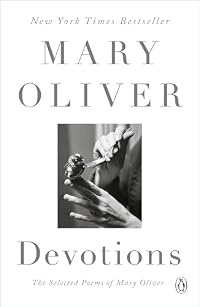
Devotions: The Selected Poems of Mary Oliver
by Mary Oliver
On This Page
Description
"Pulitzer Prize-winning poet Mary Oliver presents a personal selection of her best work in this definitive collection spanning more than five decades of her esteemed literary career. Throughout her celebrated career, Mary Oliver has touched countless readers with her brilliantly crafted verse, expounding on her love for the physical world and the powerful bonds between all living things. Identified as "far and away, this country's best selling poet" by Dwight Garner, she now returns with a show more stunning and definitive collection of her writing from the last fifty years. Carefully curated, these 200 plus poems feature Oliver's work from her very first book of poetry, No Voyage and Other Poems, published in 1963 at the age of 28, through her most recent collection, Felicity, published in 2015. This timeless volume, arranged by Oliver herself, showcases the beloved poet at her edifying best. Within these pages, she provides us with an extraordinary and invaluable collection of her passionate, perceptive, and much-treasured observations of the natural world"-- show lessTags
Recommendations





Member Reviews
In "Devotions," Mary Oliver selects her own poetry, beginning with her most recent collection ("Felicity," 2015) and continuing in reverse chronological order to her first collection ("No Voyage and Other Poems," 1963). The result is a showcase of her work over the years and a phenomenal reading experience whether the reader works her way from beginning to end or dips in at random.
Oliver is known for her focus on the natural world, and that is evident throughout this collection with most of the poems giving at least one image from nature even when it is not the focus of the poems. And nature is not just poetic: she is aware of the dog-eat-dog (or, to be more precise, heron-eat-frog) world out there. By the end of her work, Oliver could show more really encapsulate a moment or an image in a universal way, inserting herself in the poem with an "I" in such a way that the reader is also drawn in and could be that "I" as she reads the poem. As I read back to her older work, that "I" was much more her and the reading much more personal as some poems were clearly about a very specific, singular experience in Oliver's life. In that way, reading back chronologically almost felt like starting a friendship, and by the time I got to the end we already had enough rapport that I cared about those personal experiences in a way I would not have if I read it first. This would be an excellent introduction to Oliver's work for first-time readers and a welcome revisit to those who have read multiple collections. show less
Oliver is known for her focus on the natural world, and that is evident throughout this collection with most of the poems giving at least one image from nature even when it is not the focus of the poems. And nature is not just poetic: she is aware of the dog-eat-dog (or, to be more precise, heron-eat-frog) world out there. By the end of her work, Oliver could show more really encapsulate a moment or an image in a universal way, inserting herself in the poem with an "I" in such a way that the reader is also drawn in and could be that "I" as she reads the poem. As I read back to her older work, that "I" was much more her and the reading much more personal as some poems were clearly about a very specific, singular experience in Oliver's life. In that way, reading back chronologically almost felt like starting a friendship, and by the time I got to the end we already had enough rapport that I cared about those personal experiences in a way I would not have if I read it first. This would be an excellent introduction to Oliver's work for first-time readers and a welcome revisit to those who have read multiple collections. show less
Love her wonder for the world, wide-eyed appreciation and gratitude, and an unerring sense for the spiritual lurking behind every bird and leaf. She laps up life and throws a party for existence.
Instructions for living a life:
1. Pay attention
2. Be astonished
3. Tell about it
Instructions for living a life:
1. Pay attention
2. Be astonished
3. Tell about it
Summary: A selection of the poetry of Mary Oliver written between 1963 to 2015.
I have only discovered the poetry of Mary Oliver since her death in 2019. Isn’t that how it often has been with great writers? One of the ironies of this was that I lived in Oliver’s birthplace of Maple Heights, Ohio for nine years. How did I miss knowing of her for so long? She was even teaching at nearby Case Western Reserve during some of the time I lived there and it was during this time that she won the Pulitzer prize in 1984 for her collection American Primitive. I am glad at last to have found her, a writer roughly of my generation.
This collection is a good introduction to her work, a selection of her poetry written between 1963 and 2015 and show more published in 2017, a couple years before her passing. The book features over 200 of her poems arranged in reverse chronological order, most recent first. One of the most striking things one notices is that most of the poems are of sights on her daily walks near her home in Provincetown in New England. She writes of snakes and swans, of the pond near her home, of blueberries and violets, sunrises and sparrows. Her poetry is suffused with wonder at the simplest things, her sense of the oneness of all things and her desire to be one with them.
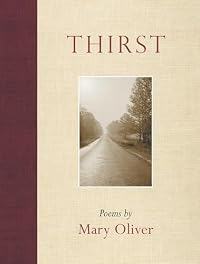
The transcendent is never far, sometimes in the Romantic awareness of the Ultimate in all things, sometimes in echoes of Christianity, writing of “Gethsemane” and Psalm 145. Her poem “Praying” (from Thirst, 2006) might do as well as anything to encapsulate the prayers of the “spiritual but not religious”:
It doesn't have to be
the blue iris, it could be
weeds in a vacant lot, or a few
small stones; just
pay attention, then patch
a few words together and don't try
to make them elaborate, this isn't
a contest but the doorway
into thanks, and a silence in which
another voice may speak.
The reference “into thanks” reflects another theme running through her work, a profound thankfulness for life, even in its transience. In the concluding lines of “Why I Wake Early” (2004) she writes, “Watch, now, how I start the day/in happiness, in kindness.”
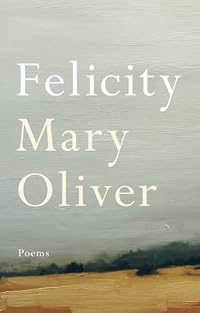
One of the striking things evident in the arrangement of the poems is that her later poems are much shorter, and to me carry more meaning in fewer words. Another morning poem, “I Wake Close to Morning” (Felicity, 2015) opens this selection:
Why do people keep asking to see
God's identity papers
when the darkness opening into morning
is more than enough?
Certainly any god might turn away in disgust.
Think of Sheba approaching
the kingdom of Solomon
Do you think she had to ask,
"Is this the place?"
Perhaps it is the “simplicity on the other side of complexity” or perhaps the waning of life’s energies that both slows her steps and leads her to choose her words as she writes in “The Gift” when she states: “So, be slow if you must, but let/the heart still play its true part.”
It would be wrong to give the impression that all here is sweetness and light. She writes of loneliness, and disappointment, and of death. One of the few poems of social comment is on the death of Tecumseh, one of the native leaders who fought displacement from the Ohio lands. Yet the dominant note is the wonder of the world around her that makes me wonder as to how much I miss on daily walks. We see, but do we pay attention? Oliver’s poems suggest she lived a life of paying attention show less
I have only discovered the poetry of Mary Oliver since her death in 2019. Isn’t that how it often has been with great writers? One of the ironies of this was that I lived in Oliver’s birthplace of Maple Heights, Ohio for nine years. How did I miss knowing of her for so long? She was even teaching at nearby Case Western Reserve during some of the time I lived there and it was during this time that she won the Pulitzer prize in 1984 for her collection American Primitive. I am glad at last to have found her, a writer roughly of my generation.
This collection is a good introduction to her work, a selection of her poetry written between 1963 and 2015 and show more published in 2017, a couple years before her passing. The book features over 200 of her poems arranged in reverse chronological order, most recent first. One of the most striking things one notices is that most of the poems are of sights on her daily walks near her home in Provincetown in New England. She writes of snakes and swans, of the pond near her home, of blueberries and violets, sunrises and sparrows. Her poetry is suffused with wonder at the simplest things, her sense of the oneness of all things and her desire to be one with them.
The transcendent is never far, sometimes in the Romantic awareness of the Ultimate in all things, sometimes in echoes of Christianity, writing of “Gethsemane” and Psalm 145. Her poem “Praying” (from Thirst, 2006) might do as well as anything to encapsulate the prayers of the “spiritual but not religious”:
It doesn't have to be
the blue iris, it could be
weeds in a vacant lot, or a few
small stones; just
pay attention, then patch
a few words together and don't try
to make them elaborate, this isn't
a contest but the doorway
into thanks, and a silence in which
another voice may speak.
The reference “into thanks” reflects another theme running through her work, a profound thankfulness for life, even in its transience. In the concluding lines of “Why I Wake Early” (2004) she writes, “Watch, now, how I start the day/in happiness, in kindness.”
One of the striking things evident in the arrangement of the poems is that her later poems are much shorter, and to me carry more meaning in fewer words. Another morning poem, “I Wake Close to Morning” (Felicity, 2015) opens this selection:
Why do people keep asking to see
God's identity papers
when the darkness opening into morning
is more than enough?
Certainly any god might turn away in disgust.
Think of Sheba approaching
the kingdom of Solomon
Do you think she had to ask,
"Is this the place?"
Perhaps it is the “simplicity on the other side of complexity” or perhaps the waning of life’s energies that both slows her steps and leads her to choose her words as she writes in “The Gift” when she states: “So, be slow if you must, but let/the heart still play its true part.”
It would be wrong to give the impression that all here is sweetness and light. She writes of loneliness, and disappointment, and of death. One of the few poems of social comment is on the death of Tecumseh, one of the native leaders who fought displacement from the Ohio lands. Yet the dominant note is the wonder of the world around her that makes me wonder as to how much I miss on daily walks. We see, but do we pay attention? Oliver’s poems suggest she lived a life of paying attention show less
I have come to believe that 2023 will go down in my memory as The Year I Appreciated Poetry. [a:Mary Oliver|23988|Mary Oliver|https://images.gr-assets.com/authors/1634180145p2/23988.jpg]'s collection is the thing that cemented this designation. I am so lucky to have tumbled onto it. The editors made an interesting choice for a collection that spans the author's entire career by ordering it with the most recent poems first and working backward to her earliest. This was a wise choice because her later work is imbued with a subtlety and simplicity that some of her earlier work does not quite possess. Even before finishing this volume, I purchased [b:Blue Horses|20821239|Blue Horses|Mary show more Oliver|https://i.gr-assets.com/images/S/compressed.photo.goodreads.com/books/1398032287l/20821239._SY75_.jpg|40167110]. I look forward to settling in with it over the holidays. show less
I don't read a lot of poetry, and aside from the ubiquitous quotes from Mary Oliver, I haven't read her work. This was lovely and quite grounding, a quiet connection to the natural world and care for being alive. And what a perfect title for the collection.
Uff da. I should just own all of Oliver's smaller books... this is heavy as being so many pages and so encompassing. But thanks to a generous library I'm simply renewing it over & over and I will finish soon!
It's very interesting in that it works backwards in time. The first poems are the very most accessible, as she's honed her craft and focused on her theme. Even those readers who are just barely ready for more than Shel Silverstein can enjoy these. Later in the book, as we approach her at a younger age, she's more metaphorical, more experimental, and, frankly, more interesting to me.
Newbies not interested in this whole big book might do well to start with [b:Dog Songs|17707772|Dog Songs|Mary show more Oliver|https://i.gr-assets.com/images/S/compressed.photo.goodreads.com/books/1367269165l/17707772._SX50_.jpg|24757302]. The charm of the subject of dogs & of the poems, and the mutual devotion (yes) between Oliver and her canine companions touches me, despite that I've never had a desire to own a dog.
---
*The Storm:*
Now through the white orchard my little dog
romps, breaking the new snow
with wild feet.
Running here, running there, excited
hardly able to stop, he leaps, he spins
until the white snow is written upon
in large exuberant letters
a long sentence, expressing
the pleasures of the body in this world.
Oh, I could not have said it better
myself.
---
From *Sometimes*
Instructions for living a life:
Pay attention.
Be astonished.
Tell about it.
---
From *From the Book of Time"
"Have I admired sufficiently the little hurricane
of the hummingbird?"
---
*White Owl Flies Into and Out of the Field* is too long & too unified to present here, but know that it makes death a beautiful thing. Not to be chosen, no, but not to fear either.
---
Now here's the first verse of a poem the title of which is a spoiler. Please, Ms Oliver, could you not have let us try to "pay attention" and figure out what you were referencing?
Across the wide waters
something comes
floating--a slim
and delicate
ship filled
with white flowers....
The Swan
---
(note again that GR won't hold spacing, and most poetry is shaped by indented lines, so bear in mind that my samples are not quite accurate)
Imagine... I have heard the name Tecumseh before but never knew who he was... now, because of a poem, I'm going to go learn some history.
I'm also going to look for a location called Truro. Apparently it was wild enough, a few decades ago, that people who said they saw a bear were almost believed. Now, it must be in the East somewhere, because in the West bears are relatively common 'pests.'
And don't think the poems deteriorate in quality as we get further in the book, to when Oliver was younger and less experienced. I very much appreciated *Farm Country* which concisely reminds us where fresh home-made chicken soup comes from.
---
Ok done. That took me seven weeks to read, but really I would have enjoyed it more if I'd taken a few years. Glorious. show less
It's very interesting in that it works backwards in time. The first poems are the very most accessible, as she's honed her craft and focused on her theme. Even those readers who are just barely ready for more than Shel Silverstein can enjoy these. Later in the book, as we approach her at a younger age, she's more metaphorical, more experimental, and, frankly, more interesting to me.
Newbies not interested in this whole big book might do well to start with [b:Dog Songs|17707772|Dog Songs|Mary show more Oliver|https://i.gr-assets.com/images/S/compressed.photo.goodreads.com/books/1367269165l/17707772._SX50_.jpg|24757302]. The charm of the subject of dogs & of the poems, and the mutual devotion (yes) between Oliver and her canine companions touches me, despite that I've never had a desire to own a dog.
---
*The Storm:*
Now through the white orchard my little dog
romps, breaking the new snow
with wild feet.
Running here, running there, excited
hardly able to stop, he leaps, he spins
until the white snow is written upon
in large exuberant letters
a long sentence, expressing
the pleasures of the body in this world.
Oh, I could not have said it better
myself.
---
From *Sometimes*
Instructions for living a life:
Pay attention.
Be astonished.
Tell about it.
---
From *From the Book of Time"
"Have I admired sufficiently the little hurricane
of the hummingbird?"
---
*White Owl Flies Into and Out of the Field* is too long & too unified to present here, but know that it makes death a beautiful thing. Not to be chosen, no, but not to fear either.
---
Now here's the first verse of a poem the title of which is a spoiler. Please, Ms Oliver, could you not have let us try to "pay attention" and figure out what you were referencing?
Across the wide waters
something comes
floating--a slim
and delicate
ship filled
with white flowers....
---
(note again that GR won't hold spacing, and most poetry is shaped by indented lines, so bear in mind that my samples are not quite accurate)
Imagine... I have heard the name Tecumseh before but never knew who he was... now, because of a poem, I'm going to go learn some history.
I'm also going to look for a location called Truro. Apparently it was wild enough, a few decades ago, that people who said they saw a bear were almost believed. Now, it must be in the East somewhere, because in the West bears are relatively common 'pests.'
And don't think the poems deteriorate in quality as we get further in the book, to when Oliver was younger and less experienced. I very much appreciated *Farm Country* which concisely reminds us where fresh home-made chicken soup comes from.
---
Ok done. That took me seven weeks to read, but really I would have enjoyed it more if I'd taken a few years. Glorious. show less
Mary Oliver is my favorite poet and this collection of poems from her different works is a delight that I will revisit again and again.
I would like to share one of the dog-eared poems in my copy (that I dog-eared poems in this book at all says something, because I am one of those peculiar sorts who like to keep books in pristine condition). It is titled, "Invitation."
"Oh do you have time
to linger
for just a little while
out of your busy
and very important day
for the goldfinches
that have gathered
in a field of thistles
for a musical battle,
to see who can sing
the highest note,
or the lowest,
or the most expressive of mirth,
or the most tender?
Their strong, blunt beaks
drink the air
as they strive
melodiously
not for your sake
and not for mine
and not show more for the sake of winning
but for sheer delight and gratitude -
believe us, they say, it is a serious thing
just to be alive
on this fresh morning
in this broken world.
I beg of you,
do not walk by
without pausing
to attend to this
rather ridiculous performance.
It could mean something.
It could mean everything.
It could be what Rilke meant, when he wrote:
You must change your life." show less
I would like to share one of the dog-eared poems in my copy (that I dog-eared poems in this book at all says something, because I am one of those peculiar sorts who like to keep books in pristine condition). It is titled, "Invitation."
"Oh do you have time
to linger
for just a little while
out of your busy
and very important day
for the goldfinches
that have gathered
in a field of thistles
for a musical battle,
to see who can sing
the highest note,
or the lowest,
or the most expressive of mirth,
or the most tender?
Their strong, blunt beaks
drink the air
as they strive
melodiously
not for your sake
and not for mine
and not show more for the sake of winning
but for sheer delight and gratitude -
believe us, they say, it is a serious thing
just to be alive
on this fresh morning
in this broken world.
I beg of you,
do not walk by
without pausing
to attend to this
rather ridiculous performance.
It could mean something.
It could mean everything.
It could be what Rilke meant, when he wrote:
You must change your life." show less
Members
- Recently Added By
Lists

At the Library
217 works; 1 member

Books That Made Us Cry
278 works; 145 members

Physical TBR List
68 works; 1 member

Poetry
78 works; 1 member

2024-2025 Ezra Klein Guest Recommendations
213 works; 6 members

Read with Jenna
91 works; 2 members
Author Information

54+ Works 21,173 Members
Mary Oliver was born in Cleveland, Ohio on September 10, 1935. She attended Ohio State University and Vassar College, but did not receive a degree. Her first collection of poems, No Voyage and Other Poems, was published in 1963. She wrote more than 20 volumes of poetry including The River Styx, Ohio; The Leaf and the Cloud; Evidence; Blue Horses; show more and Felicity. She received several awards including the Pulitzer Prize for American Primitive, the Christopher Award and the L. L. Winship/PEN New England Award for House of Light, and the National Book Award for New and Selected Poems. Her books of prose include A Poetry Handbook, Rules for the Dance: A Handbook for Writing and Reading Metrical Verse, and Long Life: Essays and Other Writings. She held the Catharine Osgood Foster Chair for Distinguished Teaching at Bennington College from 1995 to 2001. She died on January 17, 2019 at the age of 83. (Bowker Author Biography) show less
Some Editions
Awards and Honors
Distinctions
Read with Jenna (2024-12 – 2024)
Work Relationships
Has as a reference guide/companion
Common Knowledge
- Original publication date
- 1963 (No Voyage and Other Poems) (No Voyage and Other Poems); 2015 (Felicity) (Felicity)
Classifications
Statistics
- Members
- 2,004
- Popularity
- 10,424
- Reviews
- 30
- Rating
- (4.42)
- Languages
- English, Spanish
- Media
- Paper, Audiobook, Ebook
- ISBNs
- 9
- ASINs
- 4