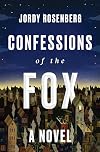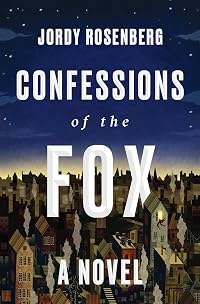
Confessions of the Fox
by Jordy Rosenberg
On This Page
Description
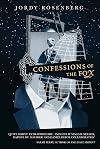
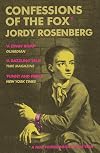
"Set in the eighteenth century London underworld, this bawdy, genre-bending novel reimagines the life of thief and jailbreaker Jack Sheppard to tell a profound story about gender, love, and liberation. Recently jilted and increasingly unhinged, Dr. Voth throws himself into his work, obsessively researching the life of Jack Sheppard, a legendary eighteenth century thief. No one knows Jack's true story--his confessions have never been found. That is, until Dr. Voth discovers a mysterious show more stack of papers titled Confessions of the Fox. Dated 1724, the manuscript tells the story of an orphan named P. Sold into servitude at twelve, P struggles for years with her desire to live as "Jack." When P falls dizzyingly in love with Bess, a sex worker looking for freedom of her own, P begins to imagine a different life. Bess brings P into the London underworld where scamps and rogues clash with London's newly established police force, queer subcultures thrive, and ominous threats of an oncoming plague abound. At last, P becomes Jack Sheppard, one of the most notorious--and most wanted--thieves in history. An imaginative retelling of Brecht's Threepenny Opera, Confessions of the Fox blends high-spirited adventure, subversive history, and provocative wit to animate forgotten histories and the extraordinary characters hidden within. "Confessions of the Fox is a riotous and transporting novel. It's rich in the sound of another time, while thrillingly germane to our own. Jordy Rosenberg is a total original--part scamp, part genius--who has written a rollicking page-turner of a first novel. Hang on for the ride."--Maggie Nelson, author of The Argonauts "Hot damn! Jordy Rosenberg is one of the finest new talents I've seen in many years, and Confessions of the Fox is a startlingly good debut novel. The book is rich with fact and well-invented fiction, bubbling with ideas that surprise and satisfy."--Victor LaValle, author of The Changeling"-- show lessTags
Recommendations





Member Reviews
It's a common experience among transgender people, especially those of us who read a lot, to start to get frustrated with the knowledge that none of the books we read are really For us.
It's hard to explain because of course not every book you read has to be For You, and in fact it's necessary and preferable to read books that are not explicitly For You because that's how you begin to understand the experiences of people who are different than you-- but at the end of the day, it's very lonely to read stacks of books and know that a lot, if not most, of the authors are ignorant of or even morally opposed to your very existence.
It's even more difficult to explain that it's not always as simple as just going down a list and picking books show more with transgender characters, because most of those books aren't really For us either; they're for cisgender people who want an easily understood, easily digestible trans narrative to swallow so that they can feel like they've successfully absorbed a story that wasn't For them.
Even books by trans authors aren't always For us, despite being generally more respectful, usually because the author assumes that in order to appeal to cisgender readers they must dilute the trans experience into something that cisgender people can relate to (which is, of course, nigh impossible).
This book is possibly the first book I've read that I knew, without a single doubt, was For Me. This was written by a trans man, for trans people, without any dumbing-down, hand-holding, or explanations for cis people. I could go into the hows and whys, try and explain all the things this book made me feel, but I'm not sure I would do it justice. This book is unlike anything else. show less
It's hard to explain because of course not every book you read has to be For You, and in fact it's necessary and preferable to read books that are not explicitly For You because that's how you begin to understand the experiences of people who are different than you-- but at the end of the day, it's very lonely to read stacks of books and know that a lot, if not most, of the authors are ignorant of or even morally opposed to your very existence.
It's even more difficult to explain that it's not always as simple as just going down a list and picking books show more with transgender characters, because most of those books aren't really For us either; they're for cisgender people who want an easily understood, easily digestible trans narrative to swallow so that they can feel like they've successfully absorbed a story that wasn't For them.
Even books by trans authors aren't always For us, despite being generally more respectful, usually because the author assumes that in order to appeal to cisgender readers they must dilute the trans experience into something that cisgender people can relate to (which is, of course, nigh impossible).
This book is possibly the first book I've read that I knew, without a single doubt, was For Me. This was written by a trans man, for trans people, without any dumbing-down, hand-holding, or explanations for cis people. I could go into the hows and whys, try and explain all the things this book made me feel, but I'm not sure I would do it justice. This book is unlike anything else. show less
A fascinating, makes-you-think read from the "found manuscript" genre (with all the various pitfalls that this sort of book usually presents). Rosenberg has managed to write it so that the shortcomings of the form are nearly all addressed by the meta-narrative, though I still had a few questions about what the manuscript was supposed to have looked like. Anyway, a weird (in the best way!) debut from an author to keep an eye on for sure.
2018. Jack Shepard, the real person on whom Mack-the-Knife was based, is a master thief and jailbreaker. He’s also trans in 18th century London. This novel attempts to somewhat decolonize its era, having more queers, and sex workers, and being distinctly anti police. At the same time it is a rollicking good tale. Top surgery is certainly gory, and testosterone perhaps somewhat far-fetched, but I liked it.
This is a wonderfully out-there debut novel—ambitious as hell, smart, and fun. At its surface level the book is a twinned narrative involving a discovered manuscript and a contemporary academic who annotates it heavily (and personally) as he transcribes it. But there's a whole lot more going on, particularly in the manuscript, which is ostensibly a biography of the early 18th-century English folk hero Jack Sheppard—who was the model for Macheath in John Gay's The Beggar's Opera and later Brecht and Weill's Threepenny Opera—and his prostitute/moll Edgworth Bess. But aside from being a rollicking retelling, it's also a queering of the legend: in Jordy Rosenberg's retelling Sheppard is a trans man (as is his modern-day professor show more Voth), Bess is Southeast Asian, and one of the main characters is a gay black man. But beyond even that set of identity politics, which would be innovative and entertainingly loaded on its own (Rosenberg is a trans man as well), there is a lot of really interesting subtext—on colonialism, big pharma, academia, archival authority, racial and gender identity and rights, industrialism, commodification, medical ethics, slavery, and I'm sure I'm missing something else. You get the idea, though.
For the most part Rosenberg pulls off this hyper-intersectionality, and mainly he keeps the energy rolling along. Voth's personal footnoted drama can wears a little thin at parts, although I'm sure it was written to, and there is some overly neat—and slightly wtf-inducing—consummation of Voth's intellectual odyssey toward the very end. But this is a fun, thoughtful, prickly read. Rosenberg absolutely goes big here, and it's worth your time if you're up for it. (This is not, obviously, a beach read, unless this sounds like your idea of a beach read—it is mine, or would be if I ever got within ten miles of a beach—in which case, have at it.) show less
For the most part Rosenberg pulls off this hyper-intersectionality, and mainly he keeps the energy rolling along. Voth's personal footnoted drama can wears a little thin at parts, although I'm sure it was written to, and there is some overly neat—and slightly wtf-inducing—consummation of Voth's intellectual odyssey toward the very end. But this is a fun, thoughtful, prickly read. Rosenberg absolutely goes big here, and it's worth your time if you're up for it. (This is not, obviously, a beach read, unless this sounds like your idea of a beach read—it is mine, or would be if I ever got within ten miles of a beach—in which case, have at it.) show less
This novel is doing A LOT, and it takes guts to attempt something this experimental. I'm happy I found this novel, even happier I read it, and mostly happy that there is an author just crazy and brave enough to write it.
I don't think I'm the author's idea audience - to me, it seems clear he is writing primarily for fellow trans folks, and the rest of us are just lucky to be listening it. It's part history, part social commentary, part collective catharsis, and I enjoyed the heck out of it even when I'm pretty sure I didn't always understand it.
This novel is not like anything else I've read in a long time, and I'm pretty sure I'm better for the reading.
I don't think I'm the author's idea audience - to me, it seems clear he is writing primarily for fellow trans folks, and the rest of us are just lucky to be listening it. It's part history, part social commentary, part collective catharsis, and I enjoyed the heck out of it even when I'm pretty sure I didn't always understand it.
This novel is not like anything else I've read in a long time, and I'm pretty sure I'm better for the reading.
Back when I was in grade school, the historical figures we studied largely consisted of straight, white, mostly Christian, mostly Western [cis] men. I don’t know how much has changed since then, but I know in my day there was a lot of stories that were omitted or, more egregiously, interpreted in such a way as to maintain the status quo and paint history's “victors” as the good guys.
Jordy Rosenberg’s ambitious Confessions of the Fox begins with a foreward penned by a professor on the lam from the New England university where he formerly taught, after he stumbles upon [and absconds with] a potentially valuable discovery. It seems he has in his possession an unbound manuscript chronicling the life story of Jack Sheppard, the 18th show more Century criminal on whose life Brecht’s “The Three Penny Opera” is based.
What makes the manuscript particularly explosive is that the infamous thief and jail breaker had a compelling secret – he was born female. Sheppard’s story starts when he is a child sold into indentured servitude by his mother, through his escape into the mean streets of London, his romance with the prostitute known as Edgeworth Bess and his subsequent exploits as a thief who gains notoriety amongst the oppressed working class by breaking out of Newgate Prison multiple times. All this while figuring out how to live authentically as a male. No small feat in the 1720’s.
With the exception of the forward and epilogue, Confessions of the Fox is basically the manuscript in its entirety, heavily foot-noted by the professor, who feels a particular connection to the story - being a trans-man himself.
Initially, I wasn’t too enamored of this one. While I enjoyed the exploits of Sheppard, Bess and their criminal associates, I wasn’t particularly interested in the professor’s footnotes, which are chock-a-block with personal information that didn’t strike me as germane to either storyline. Plus, I found the author’s zeal to re-frame all of modern society’s ills in an 18th Century setting to feel distractingly anachronistic. Even if I agree with a writer’s politics (as in this case), an overly proselytizing tone tends to keep me from enjoying the story. Rosenberg manages to address police brutality, racial/ethnic prejudice (Bess is Indian and another underworld colleague is both black and homosexual), immigration, animal cruelty, women’s rights, environmental destruction, prison conditions, corrupt politicians, LGBTQ rights, sexual confirmation surgery and hormone therapy. At one point, the manuscript makes reference to a fabled utopian collective aboard a docked ship run by a group of “retired” female pirates and their liberated captives that is eerily similar to a scenario in Annmarie Monahan’s criminally underappreciated feminist novel, Three. Rosenberg even manages to somewhat awkwardly shoe-horn in issues of privacy rights and the evils of the massive pharma companies via the professor’s footnotes. Every reference jolted me out of the story and I was disappointed by the lack of subtlety in the presentation of this material until nearly the end of the book, when it all made perfect sense.
Ultimately Confessions of the Fox, both the novel and the fictional manuscript, is about re-visiting that history of straight, white, Christian and Western [cis] men and pushing them aside to make room for the rest of us. It’s about writing oneself back into history. Reclaiming it for those who have been minimized, vilified, marginalized or simply systematically written out. Despite my initial reservations, this proved to be a fascinating and rewarding read.
Highly Recommended. show less
Jordy Rosenberg’s ambitious Confessions of the Fox begins with a foreward penned by a professor on the lam from the New England university where he formerly taught, after he stumbles upon [and absconds with] a potentially valuable discovery. It seems he has in his possession an unbound manuscript chronicling the life story of Jack Sheppard, the 18th show more Century criminal on whose life Brecht’s “The Three Penny Opera” is based.
What makes the manuscript particularly explosive is that the infamous thief and jail breaker had a compelling secret – he was born female. Sheppard’s story starts when he is a child sold into indentured servitude by his mother, through his escape into the mean streets of London, his romance with the prostitute known as Edgeworth Bess and his subsequent exploits as a thief who gains notoriety amongst the oppressed working class by breaking out of Newgate Prison multiple times. All this while figuring out how to live authentically as a male. No small feat in the 1720’s.
With the exception of the forward and epilogue, Confessions of the Fox is basically the manuscript in its entirety, heavily foot-noted by the professor, who feels a particular connection to the story - being a trans-man himself.
Initially, I wasn’t too enamored of this one. While I enjoyed the exploits of Sheppard, Bess and their criminal associates, I wasn’t particularly interested in the professor’s footnotes, which are chock-a-block with personal information that didn’t strike me as germane to either storyline. Plus, I found the author’s zeal to re-frame all of modern society’s ills in an 18th Century setting to feel distractingly anachronistic. Even if I agree with a writer’s politics (as in this case), an overly proselytizing tone tends to keep me from enjoying the story. Rosenberg manages to address police brutality, racial/ethnic prejudice (Bess is Indian and another underworld colleague is both black and homosexual), immigration, animal cruelty, women’s rights, environmental destruction, prison conditions, corrupt politicians, LGBTQ rights, sexual confirmation surgery and hormone therapy. At one point, the manuscript makes reference to a fabled utopian collective aboard a docked ship run by a group of “retired” female pirates and their liberated captives that is eerily similar to a scenario in Annmarie Monahan’s criminally underappreciated feminist novel, Three. Rosenberg even manages to somewhat awkwardly shoe-horn in issues of privacy rights and the evils of the massive pharma companies via the professor’s footnotes. Every reference jolted me out of the story and I was disappointed by the lack of subtlety in the presentation of this material until nearly the end of the book, when it all made perfect sense.
Ultimately Confessions of the Fox, both the novel and the fictional manuscript, is about re-visiting that history of straight, white, Christian and Western [cis] men and pushing them aside to make room for the rest of us. It’s about writing oneself back into history. Reclaiming it for those who have been minimized, vilified, marginalized or simply systematically written out. Despite my initial reservations, this proved to be a fascinating and rewarding read.
Highly Recommended. show less
I was excited to get my hands on this book, since it rings two of my favorite fun-reading bells, 18th century fiction of the bawdy, funny Fielding/Sterne variety, and gender creativity. Happy to say I wasn't disappointed - and I got the added bonus of the corollary story of the 'editor's' life, told in footnotes - a technique I loved in [b:Pale Fire|7805|Pale Fire|Vladimir Nabokov|https://images.gr-assets.com/books/1388155863s/7805.jpg|1222661], although this editor doesn't go nearly as far off the rails as Kinbote. There's all kinds of nods to post-colonial and queer thought both in the plot of the Confessions and in the editor's commentary, but you can immerse yourself in them as deeply or (like me) as shallowly you want - either way show more they give depth and meaning to both story lines without killing the plot, the pacing or the fun. I did get a bit lost in the 'Archives/Stretches', but I wasn't bothered by it - that's what archives are for anyway. show less
Members
- Recently Added By
Published Reviews
"...the novel is most memorable when evoking the pain behind such liberations: the constraints of individual and collective bodies, and the infinite guises of the yearning to break free."
added by jagraham684
Lists

Trans Books by Trans Authors
134 works; 10 members

Kirkus Starred Fiction Reviews of Books Published in 2018
330 works; 3 members

Amazon best fictional genre picks monthly for 2018
418 works; 9 members

2025 Christmas Gifts
70 works; 19 members
Author Information

6+ Works 738 Members
Some Editions
Awards and Honors
Awards
Distinctions
Notable Lists
Work Relationships
Is a retelling of
Common Knowledge
- Canonical title
- Confessions of the Fox
- Original publication date
- 2018
- People/Characters
- Jack Sheppard
- Important places
- London, England, UK
- Dedication
- For Victory Matsui
- Publisher's editor
- Matsui, Victory; Jackson, Chris
- Blurbers
- Link, Kelly; Yuknavitch, Lidia; Mieville, China; Chee, Alexander; Nelson, Maggie; LaValle, Victor (show all 9); Febos, Melissa; Myles, Eileen; Moten, Fred
- Original language
- English
Classifications
Statistics
- Members
- 536
- Popularity
- 55,655
- Reviews
- 18
- Rating
- (3.79)
- Languages
- English
- Media
- Paper, Audiobook, Ebook
- ISBNs
- 10
- ASINs
- 3