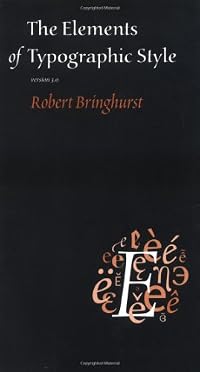
The Elements of Typographic Style
by Robert Bringhurst
On This Page
Description
Renowned typographer and poet Robert Bringhurst brings clarity to the art of typography with this masterful style guide. Combining the practical, theoretical, and historical, this edition is completely updated, with a thorough revision and updating of the longest chapter, "Prowling the Specimen Books," and many other small but important updates based on things that are continually changing in the field.Tags
Recommendations

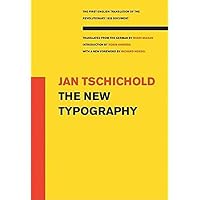
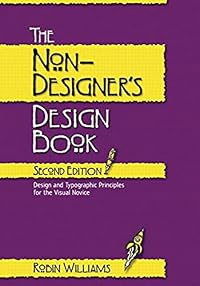

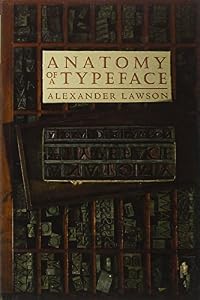
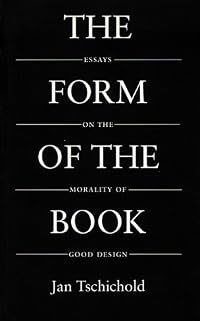







Member Recommendations



Member Reviews
Quite comprehensive and clearly written, exactly what I was looking for after reading Stop Stealing Sheep. It was funnier than I expected, the author writes with a lot of character and clearly has a bone to pick with computers, which was entertaining as a web developer reading this to learn more about typography. It's obviously a beautifully crafted book and I'm glad to have read it as a physically printed book rather than digitally. Feels like Bringhurst would have approved.
Full disclosure, I didn't read all of the appendices (which make up like 1/3 of the book)
Full disclosure, I didn't read all of the appendices (which make up like 1/3 of the book)
I'm sure it's only the tip of the iceberg, but the book is engrossing enough that I now cast my amateur eye at any piece of text that floats my way. The author knows his stuff; better yet, he weaves humour and passion into what could have been a very dry introductory text.
Although there is a glossary in the back, I would have appreciated more graceful (read: the existence of) introductions to many of the technical terms. There were a few that weren't defined in the glossary and I had to go hunting for the meanings myself.
Other than that, I highly recommend this book for someone with a little bit of patience and a lot of tolerance towards never being able to look at text the same way again.
Although there is a glossary in the back, I would have appreciated more graceful (read: the existence of) introductions to many of the technical terms. There were a few that weren't defined in the glossary and I had to go hunting for the meanings myself.
Other than that, I highly recommend this book for someone with a little bit of patience and a lot of tolerance towards never being able to look at text the same way again.
I've read this twice now, and twice I have thought it amazing that there are people who have not heard about this book. I suppose this is because I am buried in my own perspective: former college graphic design major and current amateur letterpress printer.
The re-read was prompted by my recent work of rehabilitating my old Chandler & Price press, and trying to learn everything about this elegant art. Bringhurst's brilliant book is both reference and narrative, something to keep at hand when setting type and trying to remember average letters per 20-pica line in 10-point fonts, but also something to curl up with. What a peculiar balance!
Bringhurst isn't just a type expert; he's also a poet. As such, the tone is master-crafted and show more evocative. He speaks of motion and negative space and the moods of the printed word. All this while dosing you with history and the occasional barbed interjection (Mr. Bringhurst is not a fan of Helvetica or Cheltenham, for example).
The first half a dozen chapters focus on type in a pan-technological study. The foundations laid here are relevant both to setting type by hand as well as kerning in Adobe Illustrator. Then there are a few chapters on layout--which manage to integrate proportion, mathematics, musical harmonies, the Golden Mean and a certain amount of mysticism and reverence. Toward the end of the book, there is more detail on digital typography (which I must admit I skimmed because of my current focus).
If you do anything with type, read this book. It is required. show less
The re-read was prompted by my recent work of rehabilitating my old Chandler & Price press, and trying to learn everything about this elegant art. Bringhurst's brilliant book is both reference and narrative, something to keep at hand when setting type and trying to remember average letters per 20-pica line in 10-point fonts, but also something to curl up with. What a peculiar balance!
Bringhurst isn't just a type expert; he's also a poet. As such, the tone is master-crafted and show more evocative. He speaks of motion and negative space and the moods of the printed word. All this while dosing you with history and the occasional barbed interjection (Mr. Bringhurst is not a fan of Helvetica or Cheltenham, for example).
The first half a dozen chapters focus on type in a pan-technological study. The foundations laid here are relevant both to setting type by hand as well as kerning in Adobe Illustrator. Then there are a few chapters on layout--which manage to integrate proportion, mathematics, musical harmonies, the Golden Mean and a certain amount of mysticism and reverence. Toward the end of the book, there is more detail on digital typography (which I must admit I skimmed because of my current focus).
If you do anything with type, read this book. It is required. show less
Bringhurst's manual is the first reference for the aspiring typographer. It's full of pithy wisdom, and obviously written to be quoted:
“Letterforms that honour and eluciate what humans see and say deserve to be honored in their turn. Well-chosen words deserve well-chosen letters; these in their turn deserve to be set with affection, intelligence, knowledge and skill. Typography is a link, and it ought, as a matter of honor, courtesy and pure delight, to be as strong as the others in the chain.” (Pg. 18)
There's an awful lot of much more specific advice and analysis, but the overwhelming impression is of the passion Bringhurst has for the craft of typography, and which he communicates to the reader at every turn.
As one would expect, show more Elements is beautifully designed and typeset, and indeed showcases many of the techniques Bringhurst argues for or suggests as possibilities. Variations are usually shown by altering the design of the main text, as are some of the bad habits that he argues against; this destroys the unified vision of some pages, but it's very helpful to see the examples in real text which you're reading, rather than lorem ipsum or endless repeats of the same advertising copy.
The design has very generous outer margins, which are used for example images, (literal) asides and references, and running section heads. My only quibble here is that the running heads are dropped below the head of the text block by about one fifth of its height, where they are most naturally interpreted as relating to whatever text they are adjacent to instead of to the page as a whole. I'd call this a case of the conscious design getting in the way of clear communication, while Bringhurst's main thesis is that typographic design should support communication. Such a minor slip is pretty forgivable, especially when you realise that the manual really has to stand out in terms of design, in order to sell its content.
The first 200 pages are given to advice and general analysis, from book design and page layout through choice of font and use of symbols to the minutiae of font management and optical corrections for badly-kerned fonts. This is followed by 80 pages of typeface samples, each with a single-line large sample and a paragraph or two of history and description. Unfortunately this explanatory text is all set in the same text face, so you don't get to see how the typeface handles at text size in running text. For the display and script faces this was obviously the right choice, but it's rather a shame for the faces designed for text. Still this is a fantastic resource for browsing through, with a single letter sample in the margin at about 70 pt to give the character of each typeface at a glance.
The trailing sixty pages are given over to appendices, probably the least useful part of the book for most readers. We are given a list of over a thousand named letters (“e-circumflex-grave…e-circumflex-caron…e-underdot…”), as well as a list of commonly-used symbols. Likely to be more useful are the lists of type designers and foundries; there is an extensive list of further reading, with some items flagged as essential or benchmark but without explanation beyond the bibliographical information.
Apart from these slightly excessive encyclopaedic listings, Elements is accessible and written in an engaging style, and packed with historical information, design principles and technical detail. It's an introduction to the field, so you'll want more detail eventually, but as an introduction it comes highly recommended.
(I haven't made any inroads yet in the related reading list, if anyone wants to recommend me a starting point or their own personal favourite I'd be delighted.) show less
“Letterforms that honour and eluciate what humans see and say deserve to be honored in their turn. Well-chosen words deserve well-chosen letters; these in their turn deserve to be set with affection, intelligence, knowledge and skill. Typography is a link, and it ought, as a matter of honor, courtesy and pure delight, to be as strong as the others in the chain.” (Pg. 18)
There's an awful lot of much more specific advice and analysis, but the overwhelming impression is of the passion Bringhurst has for the craft of typography, and which he communicates to the reader at every turn.
As one would expect, show more Elements is beautifully designed and typeset, and indeed showcases many of the techniques Bringhurst argues for or suggests as possibilities. Variations are usually shown by altering the design of the main text, as are some of the bad habits that he argues against; this destroys the unified vision of some pages, but it's very helpful to see the examples in real text which you're reading, rather than lorem ipsum or endless repeats of the same advertising copy.
The design has very generous outer margins, which are used for example images, (literal) asides and references, and running section heads. My only quibble here is that the running heads are dropped below the head of the text block by about one fifth of its height, where they are most naturally interpreted as relating to whatever text they are adjacent to instead of to the page as a whole. I'd call this a case of the conscious design getting in the way of clear communication, while Bringhurst's main thesis is that typographic design should support communication. Such a minor slip is pretty forgivable, especially when you realise that the manual really has to stand out in terms of design, in order to sell its content.
The first 200 pages are given to advice and general analysis, from book design and page layout through choice of font and use of symbols to the minutiae of font management and optical corrections for badly-kerned fonts. This is followed by 80 pages of typeface samples, each with a single-line large sample and a paragraph or two of history and description. Unfortunately this explanatory text is all set in the same text face, so you don't get to see how the typeface handles at text size in running text. For the display and script faces this was obviously the right choice, but it's rather a shame for the faces designed for text. Still this is a fantastic resource for browsing through, with a single letter sample in the margin at about 70 pt to give the character of each typeface at a glance.
The trailing sixty pages are given over to appendices, probably the least useful part of the book for most readers. We are given a list of over a thousand named letters (“e-circumflex-grave…e-circumflex-caron…e-underdot…”), as well as a list of commonly-used symbols. Likely to be more useful are the lists of type designers and foundries; there is an extensive list of further reading, with some items flagged as essential or benchmark but without explanation beyond the bibliographical information.
Apart from these slightly excessive encyclopaedic listings, Elements is accessible and written in an engaging style, and packed with historical information, design principles and technical detail. It's an introduction to the field, so you'll want more detail eventually, but as an introduction it comes highly recommended.
(I haven't made any inroads yet in the related reading list, if anyone wants to recommend me a starting point or their own personal favourite I'd be delighted.) show less
Put succinctly: this is the typographer's Bible.
Warning, this is no "typography for dummies" or even a simplified approach to good type work, it is a very dense volume that leaves nothing out. if you really want to understand typography down to the endless details it involves, Elements will enchant you. It doesn't hurt to be a bit of a geek either (*cough cough*).
A typographer himself with vast experience in the old school (that is, pre-computer typesetting), Bringhurst set out to compile working principles and ended up with 350 pages of such principles, the historical reasons for their existence, and how to apply them practically. Topics covered are discussed in general then the author really gets down to specifics, technicalities show more even, making this a workbook just as much as a textbook. The book answers questions you would never think of asking until you run into the problem and then you can't think of whom to ask. For instance: "If a text in parentheses is in italics, should the parentheses be italic as well?" Such details may appear meaningless, but the secret to making a text optimally legible lies in them.
This is going to be a little long but I would like to give an overview of the contents. After general principles of typography, the proper use of kerning, leading, hyphenation, pagination etc are discussed in detail, as are numerals, small caps, ligatures, font families. We then "zoom out" a bit as we get into guidelines for dealing with blocks of text, titles, headings, superscripts etc. I particularly enjoyed the chapter examining analphabetical symbols (:&/-§ and the like), how they are meant to be used, and how to make them look extra good. Then we learn what to look out for when combining fonts or different alphabets (and things to avoid), something that is also priceless to designers who routinely need to adapt non-Latin scripts (such as Arabic in my case) to existing Latin fonts. Then follows a historical interlude, and we learn how to shape a page, proportioning it and its margins to fit our aesthetic needs.
The second half of the book (all this was just the first!) focuses on fonts. A number of "classics" are discussed in detail: their history and visual characteristics, and even their faults and what figures can be foudn in the family. This was very useful in helping me build a font library that is actually useful. Like everyone else, I have thousands of fonts on my harddrive, 90% of which can only be used for titles or the like. When it comes to body text, we need something tried and true, and the selection offered (which includes serif, sanserif, blackletter, uncials, even greeks and cyrillics) saves us much time and headaches.
Appendix A provides the names and story of a few dozen characters (bet you didn't know the # symbol is called an octothorp); B is a glossary of terms; C is a biographical index of type designers; D a list of typefoundries.
Obviously this is not a book you pick up if you're just curious about working with type. Beginners will find it intimidating – it's a LOT of reading, for longer attention spans, and it's more info than most beginners will have bargained for anyway. On the other hand, font and/or layout designers (professional or serious amateur) will really benefit from it.
[Considering a purchase? Please use this URL: http://www.amazon.com/exec/obidos/ISBN=0881792063/thequillandthebrA/ ] show less
Warning, this is no "typography for dummies" or even a simplified approach to good type work, it is a very dense volume that leaves nothing out. if you really want to understand typography down to the endless details it involves, Elements will enchant you. It doesn't hurt to be a bit of a geek either (*cough cough*).
A typographer himself with vast experience in the old school (that is, pre-computer typesetting), Bringhurst set out to compile working principles and ended up with 350 pages of such principles, the historical reasons for their existence, and how to apply them practically. Topics covered are discussed in general then the author really gets down to specifics, technicalities show more even, making this a workbook just as much as a textbook. The book answers questions you would never think of asking until you run into the problem and then you can't think of whom to ask. For instance: "If a text in parentheses is in italics, should the parentheses be italic as well?" Such details may appear meaningless, but the secret to making a text optimally legible lies in them.
This is going to be a little long but I would like to give an overview of the contents. After general principles of typography, the proper use of kerning, leading, hyphenation, pagination etc are discussed in detail, as are numerals, small caps, ligatures, font families. We then "zoom out" a bit as we get into guidelines for dealing with blocks of text, titles, headings, superscripts etc. I particularly enjoyed the chapter examining analphabetical symbols (:&/-§ and the like), how they are meant to be used, and how to make them look extra good. Then we learn what to look out for when combining fonts or different alphabets (and things to avoid), something that is also priceless to designers who routinely need to adapt non-Latin scripts (such as Arabic in my case) to existing Latin fonts. Then follows a historical interlude, and we learn how to shape a page, proportioning it and its margins to fit our aesthetic needs.
The second half of the book (all this was just the first!) focuses on fonts. A number of "classics" are discussed in detail: their history and visual characteristics, and even their faults and what figures can be foudn in the family. This was very useful in helping me build a font library that is actually useful. Like everyone else, I have thousands of fonts on my harddrive, 90% of which can only be used for titles or the like. When it comes to body text, we need something tried and true, and the selection offered (which includes serif, sanserif, blackletter, uncials, even greeks and cyrillics) saves us much time and headaches.
Appendix A provides the names and story of a few dozen characters (bet you didn't know the # symbol is called an octothorp); B is a glossary of terms; C is a biographical index of type designers; D a list of typefoundries.
Obviously this is not a book you pick up if you're just curious about working with type. Beginners will find it intimidating – it's a LOT of reading, for longer attention spans, and it's more info than most beginners will have bargained for anyway. On the other hand, font and/or layout designers (professional or serious amateur) will really benefit from it.
[Considering a purchase? Please use this URL: http://www.amazon.com/exec/obidos/ISBN=0881792063/thequillandthebrA/ ] show less
I bought this book to help me understand font selection, and ended up learning a whole lot more. It's a great book, and surprisingly readable for a textbook. It's obvious that a lot of effort has been put into the presentation as it's very nicely laid out, indeed just looking at the layout can be instructive.
I can't really find much wrong with this book. If I were forced to find fault, it would be that the author is sometimes a little opinionated, and could occasionally accept that there are multiple acceptable ways to do something.
I can't really find much wrong with this book. If I were forced to find fault, it would be that the author is sometimes a little opinionated, and could occasionally accept that there are multiple acceptable ways to do something.
The best work on type that I know. Bringhurst is the typographer's typographer, and writes like the poet he is. Possibly my favorite book.
Members
- Recently Added By
Published Reviews
ThingScore 92
[T]here can be no last word about typography and Bringhurst himself still has a lot more to say.
added by Katya0133
The author's prose is sometimes flowery, and some of his strongly expressed opinions are questionable. Nonetheless, there's a wealth of sound advice and instruction here.
added by Katya0133
Bringhurst has created a work that deserves to become a classic in the field and belongs in any collection with an interest in the graphic arts.
added by Katya0133
Lists

Books That Changed Me
156 works; 47 members

Recommend the 20 best books you've read in the last five years
2,168 works; 606 members

Unshelved Book Clubs
579 works; 5 members
Author Information

57+ Works 3,431 Members
Robert Bringhurst was born October 16, 1946, in the ghetto of South Central Los Angeles and raised in the mountain and desert country of Alberta, Montana, Utah, Wyoming and British Columbia. He spent ten years as an undergraduate, studying physics, architecture and linguistics at the Massachusetts Institute of Technology, philosophy and oriental show more languages at the University of Utah, and comparative literature at Indiana University, which gave him a Bachelor of Arts in 1973. He had published two books of poems before entering the writing program at the University of British Columbia, which awarded him an MFA in 1975. From 1977 to 1980 he taught writing and English literature at UBC, and after that, made his living as a typographer. He has also been poet-in-residence and writer-in-residence at several universities in North America and Europe. His book, The Elements of Typographic Style is considered a standard text in its field, and Black Canoe is one of the classics in the field of Native American art history. He received the Macmillan Prize for Poetry in 1975. (Bowker Author Biography) show less
Common Knowledge
- Canonical title
- The Elements of Typographic Style
- Original publication date
- 1992
- People/Characters
- Carol Twombly; Adrian Frutiger; Claude Garamond; Hermann Zapf; Frederic Goudy; Robert Slimbach
- Epigraph
- -- Everything written symbols can say has already passed by. They are like tracks left by animals. That is why the masters of meditation refuse to accept that writings are final. The aim is to reach true being by means of tho... (show all)se tracks, those letters, those signs -- but reality itself is not a sign, and it leaves no tracks. It doesn't come to us by way of letters or words. We can go toward it, by following those words and letters back to what they came from. But so long as we are preoccupied with symbols, theories and opinions, we will fail to reach the principle.
-- But when we give up symbols and opinions, aren't we left in the utter nothingness of being?
--Yes.
Kimura Kyuho, Kenjutsu Fushigi Hen [On the Mysteries of Swordsmanship], 1768
A true revelation, it seems to me, will only emerge from stubborn concentration on a solitary problem. I am no in league with inventors or adventurers, nor with travellers to exotic destinations. The surest -- also the quicke... (show all)st -- way to awake the sense of wonder in ourselves is to looki intently, undeterred, at a single object. Suddenly, miraculously, it will reveal itself as something we have never seen before.
Cesare Pavese, Dialoghi con Leuco, 1947 - Dedication
- for my colleagues & friends in the worlds of letters: writers & editors, type designers, typographers, printers & publishers, shepherding words and books on their lethal and innocent ways
- First words
- Like oratory, music, dance, calligraphy—like anything that lends its grace to language—typography is an art that can be deliberately misused.
Classifications
- Genres
- Art & Design, Nonfiction, General Nonfiction
- DDC/MDS
- 686.224 — Applied Science & Technology Manufacture for specific uses Printing and related activities Printing Typography Typefaces
- LCC
- Z246 .B74 — Bibliography, Library Science and Information Resources Book industries and trade Practical printing
- BISAC
Statistics
- Members
- 2,200
- Popularity
- 9,161
- Reviews
- 21
- Rating
- (4.49)
- Languages
- 8 — English, Greek, Italian, Korean, Polish, Russian, Spanish, Portuguese (Portugal)
- Media
- Paper
- ISBNs
- 20
- UPCs
- 1
- ASINs
- 3