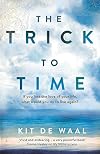
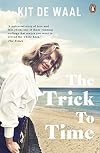
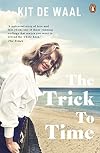
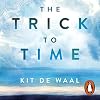
The Trick to Time
by Kit de Waal
On This Page
Description
Mona is a young Irish girl in the big city, with the thrill of a new job and a room of her own in a busy boarding house. On her first night out in 1970s Birmingham, she meets William, a charming Irish boy with an easy smile and an open face. They embark upon a passionate affair and a whirlwind marriage, before a sudden tragedy tears them apart. Decades later, Mona pieces together the memories of the years that separate them. But can she ever learn to love again?Tags
Recommendations















Member Reviews
This is excellent, is also unbearably sad and has a twist I never saw coming (although, thinking about it, the clues are there).
Mona is a dollmaker, Irish, living in England (took me quite a while to grasp that, the narrator being Irish made me think it was set in Ireland, rather than simply reflecting Mona's Irish origins.) and about to turn 60. We find out about her life, her business, her assistant, Joley, and Joley's plans to go and be a teaching assistant. We also find ourselves willing Mona on when an elegant looking man salutes her with his mug in the wee small hours during mutual bouts of insomnia. They meet, they have coffee and cake, might this be going somewhere?
Along side this, we hear of Mona's past, from her childhood show more and the loss of her mother, growing up with just her father & visits to Bridie O'Connor. She then travels to Birmingham, where she meets and very soon falls for William. So far, so much smooth sailing. However there is clearly a deep sorrow in Mona's life. In the present, of the activity she undertakes with those who have suffered a still birth or an early loss of a baby. We hear one session where the woman tells of her hopes and dreams for the lost little one and this acts as a form of therapy. By now, we are, therefore, expecting that Mona & William lose their baby. What we don't expect is for that to happen the night of the Birmingham pub bombings, and for this to have a dramatic effect on their lives.
In the present we hear of the life Mona has created for herself. It's not been very exciting, it's not involved great adventure, it's been a quietly satisfactory life carried out under a great sadness. We wonder what she is doing in an English sea side town and why she has remained resolutely single. Actually, I had less problem with this aspect of a widow staying single, it's been my experience that's what widowed women do. My mother, grandmother & great grandmothers were all widowed and remains so for 11, 20 & over 50 years.
The things that left me doubting slightly were timing. If Beatrice was born and lost in 1974, when Mona was 20 and as she's now 60 this is set in about 2014. Reading that now, the timings felt off, but they're probably right. In 2014, at no point does anyone use a mobile phone. OK, they weren't smart phone levels of ubiquity, but they were fairly common even them. Mona does run her business partly over the internet, but that's mostly Joley by the descriptions given. Based on her being 60 in about 2014, she was of an age with my mother, who was pretty tech savvy and learnt most of that in her late 40s/50s. Mona only learns how to do it when she has to, which felt a bit awry in some way. I listened to this and a couple of times it was not clear to me where we were in time until we were a couple of sentences in. Personally I could have done with a date or an indicator of timeframe at the start of each chapter, as that would have helped anchor me more securely in the narrative era. I don't understand the homing instinct, I don't have that, but I appreciate it may be part of someone else's mental makeup.
This is a life lived under a shadow. Loss comes to Mona in many ways, her mother while a child, her father while away, her child and husband. These different losses play on her in different ways and their echoes are felt in her present in different ways. That makes this books oppressively sad and it isn't, it just sits under a shadow. There is light and shade, but it is not a life in technicolor, it remains coloured in sepia. In several places we hear about time and the relationship between than and love. The trick to time is to speed it up and slow it down according to the state of relationship and love. It doesn't work, of course, time is what it is. But there are moments that seem to last for ever, or the memory of them lasts for ever. show less
Mona is a dollmaker, Irish, living in England (took me quite a while to grasp that, the narrator being Irish made me think it was set in Ireland, rather than simply reflecting Mona's Irish origins.) and about to turn 60. We find out about her life, her business, her assistant, Joley, and Joley's plans to go and be a teaching assistant. We also find ourselves willing Mona on when an elegant looking man salutes her with his mug in the wee small hours during mutual bouts of insomnia. They meet, they have coffee and cake, might this be going somewhere?
Along side this, we hear of Mona's past, from her childhood show more and the loss of her mother, growing up with just her father & visits to Bridie O'Connor. She then travels to Birmingham, where she meets and very soon falls for William. So far, so much smooth sailing. However there is clearly a deep sorrow in Mona's life. In the present, of the activity she undertakes with those who have suffered a still birth or an early loss of a baby. We hear one session where the woman tells of her hopes and dreams for the lost little one and this acts as a form of therapy. By now, we are, therefore, expecting that Mona & William lose their baby. What we don't expect is for that to happen the night of the Birmingham pub bombings, and for this to have a dramatic effect on their lives.
In the present we hear of the life Mona has created for herself. It's not been very exciting, it's not involved great adventure, it's been a quietly satisfactory life carried out under a great sadness. We wonder what she is doing in an English sea side town and why she has remained resolutely single. Actually, I had less problem with this aspect of a widow staying single, it's been my experience that's what widowed women do. My mother, grandmother & great grandmothers were all widowed and remains so for 11, 20 & over 50 years.
The things that left me doubting slightly were timing. If Beatrice was born and lost in 1974, when Mona was 20 and as she's now 60 this is set in about 2014. Reading that now, the timings felt off, but they're probably right. In 2014, at no point does anyone use a mobile phone. OK, they weren't smart phone levels of ubiquity, but they were fairly common even them. Mona does run her business partly over the internet, but that's mostly Joley by the descriptions given. Based on her being 60 in about 2014, she was of an age with my mother, who was pretty tech savvy and learnt most of that in her late 40s/50s. Mona only learns how to do it when she has to, which felt a bit awry in some way. I listened to this and a couple of times it was not clear to me where we were in time until we were a couple of sentences in. Personally I could have done with a date or an indicator of timeframe at the start of each chapter, as that would have helped anchor me more securely in the narrative era. I don't understand the homing instinct, I don't have that, but I appreciate it may be part of someone else's mental makeup.
This is a life lived under a shadow. Loss comes to Mona in many ways, her mother while a child, her father while away, her child and husband. These different losses play on her in different ways and their echoes are felt in her present in different ways. That makes this books oppressively sad and it isn't, it just sits under a shadow. There is light and shade, but it is not a life in technicolor, it remains coloured in sepia. In several places we hear about time and the relationship between than and love. The trick to time is to speed it up and slow it down according to the state of relationship and love. It doesn't work, of course, time is what it is. But there are moments that seem to last for ever, or the memory of them lasts for ever. show less
I loved Kit de Waal's My Name is Leon, so when I saw The Trick to Time was coming out, I grabbed an ARC as quickly as I could. This book is fairly different from the previous one, but by no means less powerful. The focus here is on Mona, a sixty-year-old Irish dollmaker, and her efforts to live to the full the life she has left.
The book alternates between present-day Mona and her past, first as child in Ireland trying to cope with her mother's illness, and later as a young woman attempting to build a new life in England. I loved slowly getting to know Mona: as her past is unveiled and her present unfolds before our eyes, she gradually shapes up to be a wonderfully complex character. Supported by an unforgettable cast of secondary show more characters, Mona tries to put together pieces of her past life, and tries to overcome pain bigger than anyone should ever have to face.
The author's wonderful writing style takes us back to a time when life was different, and when social tensions exploded, immediately contrasting that with the quiet seaside town where present-day Mona lives. And it just works. Mona is complex and charismatic enough to hold the whole story together, the settings and historical elements add depth to the story, and the final revelations did surprise me a little bit, as I had drawn completely the wrong conclusion! The only negative for me is that, at times, the narration felt a bit slow, making this feel longer than it really is, but it was definitely worth it!
For this and more reviews, visit Book for Thought.
I received an e-arc of this book from the publisher via NetGalley in exchange for my honest review. This did not affect my opinion of the book in any way. show less
The book alternates between present-day Mona and her past, first as child in Ireland trying to cope with her mother's illness, and later as a young woman attempting to build a new life in England. I loved slowly getting to know Mona: as her past is unveiled and her present unfolds before our eyes, she gradually shapes up to be a wonderfully complex character. Supported by an unforgettable cast of secondary show more characters, Mona tries to put together pieces of her past life, and tries to overcome pain bigger than anyone should ever have to face.
The author's wonderful writing style takes us back to a time when life was different, and when social tensions exploded, immediately contrasting that with the quiet seaside town where present-day Mona lives. And it just works. Mona is complex and charismatic enough to hold the whole story together, the settings and historical elements add depth to the story, and the final revelations did surprise me a little bit, as I had drawn completely the wrong conclusion! The only negative for me is that, at times, the narration felt a bit slow, making this feel longer than it really is, but it was definitely worth it!
For this and more reviews, visit Book for Thought.
I received an e-arc of this book from the publisher via NetGalley in exchange for my honest review. This did not affect my opinion of the book in any way. show less
I chose"The Trick To Time" by Kit De Waal as one of the six books I wanted to read from the sixteen books on the 2018 Women's Fiction Prize Longlist and I'm delighted that I did as it is one of the best books I've read so far this year. I recommend the audiobook version of "The Trick To Time" as Fiona Shaw's narration is perfect. Hearing the voices of the two Irish Aunts nicknames Pestilence and Famine, I was transported back to listening to my grandmother and her sister who spoke in exactly the same way.
I went into the book without reading the publisher's summary and I'm glad I did as it reads like the summary of a different book entirely, suggesting either magical realism or a historical romance.
For me, the strength of "The Trick To show more Time" is that exists purely to tell the story of how the main character, Mona, came to be Mona. The story is told in two parallel timelines: Mona as she reaches her sixtieth birthday, living alone in a seaside town in England, making dolls and providing some mysterious service to some of the women who visit her shop and Mona as a little girl, growing up in Ireland and then moving, in her late teens, to Birmingham to make a new life for herself.
The thing that most engaged me about the book was understanding how the little girl playing on the beach, and the young woman going nervously to her first dance in Birmingham, became the calm, strong but sad woman who makes wooden dolls. The parallel timeline structure of the book kept this at the centre of my attention and kept surprising me, not through the use of tricks or crazy plot twists but by how real and honest the changes in Mona seemed. I'm the same age as Mona and when I look back, I also wonder how the boy I was became the man I am. I was there and I yet I understand Mona's journey better than my own.
I was delighted to see that the sixty-year-old Mona isn't presented either as an old-woman far along the crone road or a woman still pretending to be twenty. Mona knows herself, she knows what's happened to her, she recognises the compromises and limitations in how she lives now and she has still a strong desire to find a way to live her life.
There is a real sense of time passing and perceptions changing while the people themselves remain who they have always truly been as if time simply wears away the bits of themselves that they'd only dressed up in in their youth.
This is a deeply empathic book about the nature of grief, the enduring impact of loss and the effect of time on emotions, memory and our own sense of identity.
I won't put spoilers in this review so I won't talk about the central trauma of Mona's life, except to say that it made me angry and it made me cry and it filled me with deep admiration for the service that Mona provided to others in later life.
Mona is a working-class Irish woman, living as an immigrant in Birmingham at the time of the IRA bombing that unleashed so much pain and hate. Her ambition is simple: to make a family with the man she loves. By today's standards, they have nothing but they have enough to live independently and dream of a life filled with children who are loved and cared for with: "A roof on the house, food on the table and a coat on the hook".. I recognise those kinds of circumstances and that simple ambition but I rarely see it in books that are nominated for literary prizes. I also recognise the situation of being an immigrant and just trying to make your way. I like the matter-of-fact way this was dealt with: no polemics, no dog-whistle posturing, just an honest personal narrative.
The writing is beautiful without being flowery. From the beginning, I understood that there was more going on than I yet knew about and that understanding filled me with pleasant anticipation of a real story worth waiting for. It was a story that caught me by surprise time and again, up to the final chapter, but each surprise made more sense of Mona's life and actions rather than feeling like a magic trick.
Although this is Mona's story, the other people in it are more than cyphers. They are people with histories and emotions and opinions of their own and they rarely take the path that convention or cliché would channel them to.
For example, Mona's father is a complex and compassionate man. When his still-young wife is dying and Mona, his daughter, is playing on the beach to avoid her mother's illness, he finds her and persuades her to spend time with her mother. He says:
"One day, you will want these hours back, my girl. You will wonder how you lost them and you will want to get them back. There's a trick to time. You can make it expand or you can make it contract. Make it shorter or make it longer."
The gentle, sad truth of this sets the tone for the whole novel.
I'll be reading Kit de Waal's back-catalogue and anything else she publishes. I think she's an extraordinary talent.
If you'd like to know more about her and how she wrote "The Trick To Time", take a look at this Interview with Kit de Waal in "The Guardian" covering:
"The novelist on her Irish heritage, the passing of time and why she’s glad she didn’t start young" show less
I went into the book without reading the publisher's summary and I'm glad I did as it reads like the summary of a different book entirely, suggesting either magical realism or a historical romance.
For me, the strength of "The Trick To show more Time" is that exists purely to tell the story of how the main character, Mona, came to be Mona. The story is told in two parallel timelines: Mona as she reaches her sixtieth birthday, living alone in a seaside town in England, making dolls and providing some mysterious service to some of the women who visit her shop and Mona as a little girl, growing up in Ireland and then moving, in her late teens, to Birmingham to make a new life for herself.
The thing that most engaged me about the book was understanding how the little girl playing on the beach, and the young woman going nervously to her first dance in Birmingham, became the calm, strong but sad woman who makes wooden dolls. The parallel timeline structure of the book kept this at the centre of my attention and kept surprising me, not through the use of tricks or crazy plot twists but by how real and honest the changes in Mona seemed. I'm the same age as Mona and when I look back, I also wonder how the boy I was became the man I am. I was there and I yet I understand Mona's journey better than my own.
I was delighted to see that the sixty-year-old Mona isn't presented either as an old-woman far along the crone road or a woman still pretending to be twenty. Mona knows herself, she knows what's happened to her, she recognises the compromises and limitations in how she lives now and she has still a strong desire to find a way to live her life.
There is a real sense of time passing and perceptions changing while the people themselves remain who they have always truly been as if time simply wears away the bits of themselves that they'd only dressed up in in their youth.
This is a deeply empathic book about the nature of grief, the enduring impact of loss and the effect of time on emotions, memory and our own sense of identity.
I won't put spoilers in this review so I won't talk about the central trauma of Mona's life, except to say that it made me angry and it made me cry and it filled me with deep admiration for the service that Mona provided to others in later life.
Mona is a working-class Irish woman, living as an immigrant in Birmingham at the time of the IRA bombing that unleashed so much pain and hate. Her ambition is simple: to make a family with the man she loves. By today's standards, they have nothing but they have enough to live independently and dream of a life filled with children who are loved and cared for with: "A roof on the house, food on the table and a coat on the hook".. I recognise those kinds of circumstances and that simple ambition but I rarely see it in books that are nominated for literary prizes. I also recognise the situation of being an immigrant and just trying to make your way. I like the matter-of-fact way this was dealt with: no polemics, no dog-whistle posturing, just an honest personal narrative.
The writing is beautiful without being flowery. From the beginning, I understood that there was more going on than I yet knew about and that understanding filled me with pleasant anticipation of a real story worth waiting for. It was a story that caught me by surprise time and again, up to the final chapter, but each surprise made more sense of Mona's life and actions rather than feeling like a magic trick.
Although this is Mona's story, the other people in it are more than cyphers. They are people with histories and emotions and opinions of their own and they rarely take the path that convention or cliché would channel them to.
For example, Mona's father is a complex and compassionate man. When his still-young wife is dying and Mona, his daughter, is playing on the beach to avoid her mother's illness, he finds her and persuades her to spend time with her mother. He says:
"One day, you will want these hours back, my girl. You will wonder how you lost them and you will want to get them back. There's a trick to time. You can make it expand or you can make it contract. Make it shorter or make it longer."
The gentle, sad truth of this sets the tone for the whole novel.
I'll be reading Kit de Waal's back-catalogue and anything else she publishes. I think she's an extraordinary talent.
If you'd like to know more about her and how she wrote "The Trick To Time", take a look at this Interview with Kit de Waal in "The Guardian" covering:
"The novelist on her Irish heritage, the passing of time and why she’s glad she didn’t start young" show less
Another beautiful story! Very slow and sad, don't get me wrong, but well told and very easy to read. Poor Mona has lived a hard life, from losing her mother as a child in Ireland (Wexford again!) to her tumultuous life with weak William in Birmingham in the 70s. (Don't trust a character called William who actually calls himself William - a rule to live by!) The trials and tragedies in Mona's life, however, only make her stronger - like the best female protagonists - and when she turns sixty, Mona meets the dashing Karl, who has her believing that she is ready for romance. But has Mona left the past behind?
Told partly in flashback, which always throws some readers, I found sixty year old Mona very endearing, but was captivated by her show more memories of moving to England and getting married after a whirlwind love affair with William. He's a suitably unstable character, even in retrospect, alternating between grand speeches and the wobbling chin of a five year old. I hoped that he wasn't going to let her down, that maybe the 'sudden tragic loss' mentioned in the blurb was connected to the 1974 Birmingham pub bombings. But no. He made me so mad! I want to say more about what young Mona goes through, especially her treatment at the hospital - which was sadly very true to life - but don't want to give away the only real moment of drama in the book.
The one part of the story that I didn't really know what to do with is Mona and her dolls. She and her mysterious carpenter craft wooden dolls, made to match a baby's birth weight or dressed in a precious item of clothing or shawl, and give the 'baby' to the grieving mother, who then talks through her lost child's life in Mona's flat, like some sort of bizarre therapy session. I know the dolls are symbolic, but Mona never really explains how the whole process started.
Overall, I really felt for Mona, let down again and again, and wished for a fresh new start for her. I also loved the descriptions of the seaside, in both locations, and how Kit De Waal fleshes out the characters with very human failings so that they are always sympathetic, if not entirely lovable. An amazing journey. show less
Told partly in flashback, which always throws some readers, I found sixty year old Mona very endearing, but was captivated by her show more memories of moving to England and getting married after a whirlwind love affair with William. He's a suitably unstable character, even in retrospect, alternating between grand speeches and the wobbling chin of a five year old. I hoped that he wasn't going to let her down, that maybe the 'sudden tragic loss' mentioned in the blurb was connected to the 1974 Birmingham pub bombings. But no. He made me so mad! I want to say more about what young Mona goes through, especially her treatment at the hospital - which was sadly very true to life - but don't want to give away the only real moment of drama in the book.
The one part of the story that I didn't really know what to do with is Mona and her dolls. She and her mysterious carpenter craft wooden dolls, made to match a baby's birth weight or dressed in a precious item of clothing or shawl, and give the 'baby' to the grieving mother, who then talks through her lost child's life in Mona's flat, like some sort of bizarre therapy session. I know the dolls are symbolic, but Mona never really explains how the whole process started.
Overall, I really felt for Mona, let down again and again, and wished for a fresh new start for her. I also loved the descriptions of the seaside, in both locations, and how Kit De Waal fleshes out the characters with very human failings so that they are always sympathetic, if not entirely lovable. An amazing journey. show less
Kit de Waal’s new novel The Trick to Time has been eagerly anticipated by many of us who fell in love with Leon – the child narrator in her debut novel My name is Leon. I rather lost my heart to Leon – and so this novel had rather a lot to live up to. I enjoyed A Trick to Time every bit as much as I enjoyed that earlier novel – though probably in a different way.
My Name is Leon, is a novel with the city of Birmingham very much at its heart. The Trick to Time is (in part at least) a novel about who some of the people who came to Birmingham from Ireland were. Where they came from, how they lived and the shattering effect upon them of the night of November 21st, 1974. I was just six in November 1974, living in a suburb of show more Birmingham, my mum was in the city centre that day with some other women from her church. She was in a different part of the city centre up on broad street, so didn’t even know about what had happened till she got home. It was an event that had a massive impact on the city – and I think continues to. The Birmingham pub bombings are a back drop to the novel – and highlights the volatile nature of the relationships between Irish and non-Irish in the city during those years.
However, it is also about much more than that, there is a deceptive lightness of touch here, but Kit de Waal executes this multi-layered novel exquisitely. The Trick to Time is a novel about love, loss and grief – what do you do when you lose the love of your life? Using three, time periods and three different settings, kit de Waal weaves together the heart-breaking stories of people who carry a grief inside them every day.
“One day, you will want these hours back, my girl. You will wonder how you lost them and you will want to get them back. There’s a trick to time. You can make it expand or you can make it contract. Make it shorter or make it longer.”
Mona grew up in a small town on the coast of Ireland. Her mother died when she was a child, for years Mona is her father’s constant companion. She is a witness to his grief, feeling the absence of her mother throughout her childhood. She and her father spend many Sundays with Bridie – a distant relative of Mona’s mother – who Mona is horribly bored by – not appreciating how for Bridie she and her father are all she has left.
As a young woman, Mona travels to Birmingham, gets a room in a boarding house, a job – the independence and excitement she had once dreamed of in Ireland. Here she meets William, also originally from Ireland, he’s charming with an easy smile and the two are soon smitten. Mona meets Williams’s aunts nicknamed Pestilence and Famine, they become family.
“In the evenings they go to the Bear in Sparkhill. It’s an Irish pub and a man’s pub full of labourers who want a break from their rented rooms and their own company, and middle-aged husbands let off the leash after mass. Nicholas Doyle is always in the corner with his accordion or violin and a couple of drinks lined up on the table to his right. That’s where William likes to sit, right near the music, near the musician’s elbow jerking his bow through the air or folding and unfolding the accordion that sits in his lap like a baby. Talking is almost impossible.”
Mona and William marry, but these are difficult days, and sometimes William has to work away. The world conspires to separate them at the end of 1974 – and Mona has to find a way of carrying on.
Now Mona lives in an English seaside town, she is contemplating her sixtieth birthday in a few days’ time, and works quietly in her shop, making dolls for collectors, creating gorgeously detailed outfits for them. With the help of a local carpenter Mona makes other dolls – special dolls that she uses to help women grappling with the over whelming grief of a stillbirth.
“‘It was only the kindness of a stranger that gave me the time to say goodbye. And that kindness gave me forty-five minutes with my child and I turned that forty-five minutes into a lifetime, into all the days and hours and weeks and years that we would never have together.”
The Trick to Time is a wonderfully compelling novel – I loved Mona – her story is one I’ll not forget easily. Many people I suspect will be profoundly moved and affected by the themes in this novel which are explored with sensitivity and understanding. It is a novel with a wonderful final line – I do love a novel with a heart stopping final line. show less
My Name is Leon, is a novel with the city of Birmingham very much at its heart. The Trick to Time is (in part at least) a novel about who some of the people who came to Birmingham from Ireland were. Where they came from, how they lived and the shattering effect upon them of the night of November 21st, 1974. I was just six in November 1974, living in a suburb of show more Birmingham, my mum was in the city centre that day with some other women from her church. She was in a different part of the city centre up on broad street, so didn’t even know about what had happened till she got home. It was an event that had a massive impact on the city – and I think continues to. The Birmingham pub bombings are a back drop to the novel – and highlights the volatile nature of the relationships between Irish and non-Irish in the city during those years.
However, it is also about much more than that, there is a deceptive lightness of touch here, but Kit de Waal executes this multi-layered novel exquisitely. The Trick to Time is a novel about love, loss and grief – what do you do when you lose the love of your life? Using three, time periods and three different settings, kit de Waal weaves together the heart-breaking stories of people who carry a grief inside them every day.
“One day, you will want these hours back, my girl. You will wonder how you lost them and you will want to get them back. There’s a trick to time. You can make it expand or you can make it contract. Make it shorter or make it longer.”
Mona grew up in a small town on the coast of Ireland. Her mother died when she was a child, for years Mona is her father’s constant companion. She is a witness to his grief, feeling the absence of her mother throughout her childhood. She and her father spend many Sundays with Bridie – a distant relative of Mona’s mother – who Mona is horribly bored by – not appreciating how for Bridie she and her father are all she has left.
As a young woman, Mona travels to Birmingham, gets a room in a boarding house, a job – the independence and excitement she had once dreamed of in Ireland. Here she meets William, also originally from Ireland, he’s charming with an easy smile and the two are soon smitten. Mona meets Williams’s aunts nicknamed Pestilence and Famine, they become family.
“In the evenings they go to the Bear in Sparkhill. It’s an Irish pub and a man’s pub full of labourers who want a break from their rented rooms and their own company, and middle-aged husbands let off the leash after mass. Nicholas Doyle is always in the corner with his accordion or violin and a couple of drinks lined up on the table to his right. That’s where William likes to sit, right near the music, near the musician’s elbow jerking his bow through the air or folding and unfolding the accordion that sits in his lap like a baby. Talking is almost impossible.”
Mona and William marry, but these are difficult days, and sometimes William has to work away. The world conspires to separate them at the end of 1974 – and Mona has to find a way of carrying on.
Now Mona lives in an English seaside town, she is contemplating her sixtieth birthday in a few days’ time, and works quietly in her shop, making dolls for collectors, creating gorgeously detailed outfits for them. With the help of a local carpenter Mona makes other dolls – special dolls that she uses to help women grappling with the over whelming grief of a stillbirth.
“‘It was only the kindness of a stranger that gave me the time to say goodbye. And that kindness gave me forty-five minutes with my child and I turned that forty-five minutes into a lifetime, into all the days and hours and weeks and years that we would never have together.”
The Trick to Time is a wonderfully compelling novel – I loved Mona – her story is one I’ll not forget easily. Many people I suspect will be profoundly moved and affected by the themes in this novel which are explored with sensitivity and understanding. It is a novel with a wonderful final line – I do love a novel with a heart stopping final line. show less
Leaving her home in rural Ireland in the 1970s Mona moves to Birmingham where she quickly finds love with William, a fellow Irish boy. Married and quickly pregnant Mona settles into a life of domesticity but all her dreams are taken away from her when her baby is stillborn and William suffers a breakdown. Fastforward forty years and Mona now leaves in a seaside town and runs a toyshop but she also helps those who have lost babies. However as Mona is wooed by a sophisticated German she thinks about her life and her future.
I really enjoyed de Waal first novel and I completely fell in love with this book, Kit de Waal is developing into a truly brilliant writer. I found the book slow at first but that is part of the charm of it, it gently show more woos the reader with the contrasting tales of Mona in modern times and the naive country girl from Ireland. The emotions around loss, both of stillborn babies and mental health are raw and beautifully expressed. I loved the fact that almost forty years of detail was actually left out and the twist at the end was unexpected yet felt so right. show less
I really enjoyed de Waal first novel and I completely fell in love with this book, Kit de Waal is developing into a truly brilliant writer. I found the book slow at first but that is part of the charm of it, it gently show more woos the reader with the contrasting tales of Mona in modern times and the naive country girl from Ireland. The emotions around loss, both of stillborn babies and mental health are raw and beautifully expressed. I loved the fact that almost forty years of detail was actually left out and the twist at the end was unexpected yet felt so right. show less
The Trick to Time was a book of ups and downs for me. I started underwhelmed, got hooked in the middle, appreciated Kit de Waal's cleverness with 40 pages to go and thought she copped out with the ending.
Members
- Recently Added By
Lists

2018 Women's Prize for Fiction Longlist
16 works; 11 members
Author Information

9+ Works 727 Members
Awards and Honors
Awards
Common Knowledge
- People/Characters
- Mona; William
- Important places
- Birmingham, England, UK
Classifications
Statistics
- Members
- 117
- Popularity
- 277,401
- Reviews
- 9
- Rating
- (3.88)
- Languages
- English
- Media
- Paper, Audiobook, Ebook
- ISBNs
- 9
- ASINs
- 2