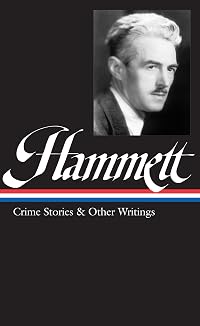
Crime Stories and Other Writings
by Dashiell Hammett
The Continental Op (Collections and Selections — short stories)
On This Page
Description
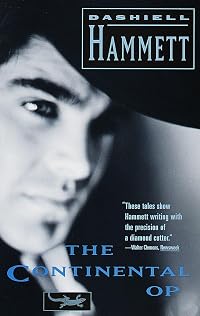
In the stories and novellas he wrote for Black Mask and other pulp magazines in the 1920s and 1930s, Dashiell Hammett took the detective story and turned it into a medium for capturing the jarring textures and revved-up cadences of modern American life. In this volume, The Library of America collects the finest of these stories: 24 in all, along with some revealing essays and an earlier version of his novel The Thin Man. Mixing melodramatic panache and poker-faced comedy, a sensitivity to show more place and a perceptive grasp of social conflict, Hammett's stories are hard-edged entertainments for an era of headlong change and extravagant violence. For the heroic sagas of earlier eras Hammett substituted the up-tempo, devious, sometimes nearly nihilistic exploits of con men and blackmailers, fake spiritualists and thieving politicians, slumming socialites and deadpan assassins. As a guide through this underworld he created the Continental Op, the nameless, laconic detective, world-weary and unblinking, who serves as protagonist of most of these stories. The deliberately unheroic Op is separated only by his code of professionalism from the brutality and corruption that run rampant in stories such as "Zigzags of Treachery," "Dead Yellow Women," "Fly Paper," and "106,000 Blood Money." Hammett's years of experience as a Pinkerton detective give even his most outlandishly plotted mysteries a gritty credibility, and his intimate knowledge of San Francisco made him the perfect chronicler of that city's waterfronts, back alleys, police stations, and luxury hotels. By connecting crime fiction to the realities of American streets and American speech, his Black Mask stories opened up new vistas for generations of writers and readers. In the most comprehensive collection of his stories ever published, read the Hammett you've never read: reprinted here for the first time are the texts that originally appeared in the 1920's & 1930's pulps, without the cuts & revisions introduced by later editors. Also included are revealing essays & an early version of the novel The Thin Man. show lessTags
Recommendations


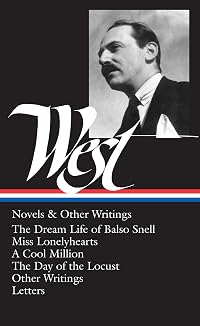
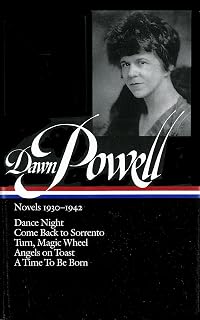
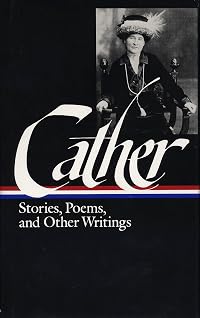
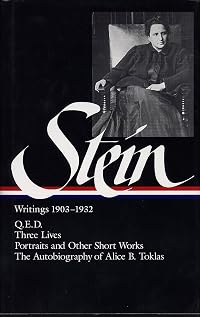
Member Recommendations

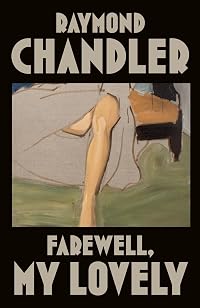
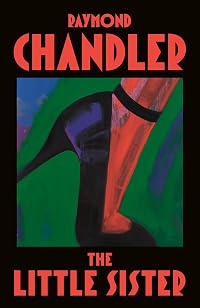
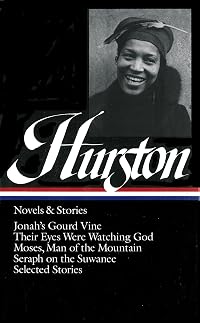
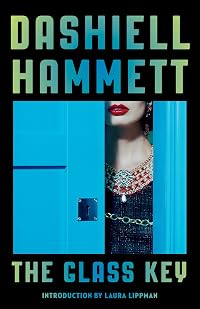
Thomas64 Paul Cain and Hammett were two of the major Black Mask writers.
Member Reviews
Hammett's noir stories are fun and well told. Typically I completed a story at one sitting, though these are longer than Chandler's and broken into sections -- I could pause before the end if need be. Interestingly, the famous twist in The Usual Suspects is markedly similar to that in Hammett's story, "The Big Knock-Over". Unclear whether Hammett influenced that screenplay, though, but he provides a follow-up story in "106,000 Dollar Blood Money".
I don't like eloquence: if it isn't effective enough to pierce your hide, it's tiresome; and if it is effective enough, then it muddles your thoughts.
-- "Zigzags of Treachery" / 89
I noted in my reading of Chandler short stories that typically they scan easily, the action comes thick and fast, show more and generally the plot propels the narrative so it's easy for a reader not to take a breath or try to get an angle on the whole tale. This narrative compulsion perfectly suits the shamus's effort to figure the angles while distracting others with banter and tough talk. The narration, in other words, is an accomplice, and this observation applies doubly for Hammett.
The Continental Op epitomises Hammett's sleuth, he's the default character even when Hammett writes him under other names. His sleuth Guild (in the "Thin Man" draft) has a similar personality but is described from outside, and there are exceedingly interesting interactions with another character on this very point. LOA's marketing flier notes the Op has a "professional code" that separates him from criminals, though I'd argue that Code is simply a different species of crime in some cases: it is a professional code, primarily, not a moral one.
All Continental Op stories are told in the first person. The Op has a distinct outlook and motivation, different than Chandler's Marlow or Macdonald's Archer. The Op (it's a standing joke that he's never named) is motivated by the work, by the puzzle, and is far less concerned with justice or other principles in his pursuit. At various points, Hammett demonstrates the Op will allow innocents die, will commit perjury, falsely accuse witnesses or suspects to provoke mistakes, or conceal developments if it furthers his abilities to solve the case and defeat (outsmart) the bad guy. His is a very zero-sum and self-centred outlook. There are a cast of fellow operatives from the Continental Detective Agency, they are not all like that but perhaps the Old Man is --the Op's supervisor, head of the SF branch office-- and it seems the Op admires if not idolises him.
Reflecting on these stories, I wonder what to make of the fact Hammett creates this personality, mostly manifesting as the Op but recognisably the same under different guises, sticks with it despite some experimentation, and makes it the center of the Op's expertise and success ... what to make of those facts, and the fact that Hammett was himself an Op? The only one of himself, Chandler, Macdonald. It would be too easy to make too much of it, no doubt, and yet equally easy to dismiss it out of hand.
//
By my count all but 3 stories are Continental Op. (The other 3 feature three different characters, and then there's an incomplete draft of a Thin Man novel appended to this volume, each told in third person.) Hammett wrote many stories not compiled here, but not Contintental Op stories: the only Op stories missing were repurposed for the Op novels, The Dain Curse and Red Harvest, which LOA publishes in a separate volume.
LOA's typical Chronology as useful as ever, as are notes on original sources. The two essays by Hammett are fun if not particularly necessary to understanding the stories, providing tongue-in-cheek advice to would-be crime writers and a glimpse into Hammett's own past as a Pinkerton detective. show less
I don't like eloquence: if it isn't effective enough to pierce your hide, it's tiresome; and if it is effective enough, then it muddles your thoughts.
-- "Zigzags of Treachery" / 89
I noted in my reading of Chandler short stories that typically they scan easily, the action comes thick and fast, show more and generally the plot propels the narrative so it's easy for a reader not to take a breath or try to get an angle on the whole tale. This narrative compulsion perfectly suits the shamus's effort to figure the angles while distracting others with banter and tough talk. The narration, in other words, is an accomplice, and this observation applies doubly for Hammett.
The Continental Op epitomises Hammett's sleuth, he's the default character even when Hammett writes him under other names. His sleuth Guild (in the "Thin Man" draft) has a similar personality but is described from outside, and there are exceedingly interesting interactions with another character on this very point. LOA's marketing flier notes the Op has a "professional code" that separates him from criminals, though I'd argue that Code is simply a different species of crime in some cases: it is a professional code, primarily, not a moral one.
All Continental Op stories are told in the first person. The Op has a distinct outlook and motivation, different than Chandler's Marlow or Macdonald's Archer. The Op (it's a standing joke that he's never named) is motivated by the work, by the puzzle, and is far less concerned with justice or other principles in his pursuit. At various points, Hammett demonstrates the Op will allow innocents die, will commit perjury, falsely accuse witnesses or suspects to provoke mistakes, or conceal developments if it furthers his abilities to solve the case and defeat (outsmart) the bad guy. His is a very zero-sum and self-centred outlook. There are a cast of fellow operatives from the Continental Detective Agency, they are not all like that but perhaps the Old Man is --the Op's supervisor, head of the SF branch office-- and it seems the Op admires if not idolises him.
Reflecting on these stories, I wonder what to make of the fact Hammett creates this personality, mostly manifesting as the Op but recognisably the same under different guises, sticks with it despite some experimentation, and makes it the center of the Op's expertise and success ... what to make of those facts, and the fact that Hammett was himself an Op? The only one of himself, Chandler, Macdonald. It would be too easy to make too much of it, no doubt, and yet equally easy to dismiss it out of hand.
//
By my count all but 3 stories are Continental Op. (The other 3 feature three different characters, and then there's an incomplete draft of a Thin Man novel appended to this volume, each told in third person.) Hammett wrote many stories not compiled here, but not Contintental Op stories: the only Op stories missing were repurposed for the Op novels, The Dain Curse and Red Harvest, which LOA publishes in a separate volume.
LOA's typical Chronology as useful as ever, as are notes on original sources. The two essays by Hammett are fun if not particularly necessary to understanding the stories, providing tongue-in-cheek advice to would-be crime writers and a glimpse into Hammett's own past as a Pinkerton detective. show less
THE MALTESE FALCON
July 11, 2017
I'm not a big fan of Hammett, but I revisited this as my daughter was reading it for a RL book club. I can never remember the actual story here. Now I know why. There isn't a particle of story in it. A few people get bumped off, a lot of dumb slang gets thrown about, and a woman acts like a complete ninny. Pages and pages are spent in pointless argument about how to go about something, neither side presenting any new reasons for "doing it my way". I like me a good noir novel; this one failed to establish the atmosphere for me. I love a fine hard-boiled detective, but Sam Spade has nothing to love. Sorry to trash a classic, but I'm not impressed. Also, there's the misogyny, and the fairly distasteful show more representation of homosexuals. show less
July 11, 2017
I'm not a big fan of Hammett, but I revisited this as my daughter was reading it for a RL book club. I can never remember the actual story here. Now I know why. There isn't a particle of story in it. A few people get bumped off, a lot of dumb slang gets thrown about, and a woman acts like a complete ninny. Pages and pages are spent in pointless argument about how to go about something, neither side presenting any new reasons for "doing it my way". I like me a good noir novel; this one failed to establish the atmosphere for me. I love a fine hard-boiled detective, but Sam Spade has nothing to love. Sorry to trash a classic, but I'm not impressed. Also, there's the misogyny, and the fairly distasteful show more representation of homosexuals. show less
This is a collection primarily of short stories. There are a few other items (chiefly an early draft of what became "The Thin Man"), but the vast majority of the book is stories.
I enjoyed the ones starring The Continental Op. Hammett's spare, detached style suited that character's voice. However, the voice doesn't change when the protagonist does. In fact, I'd go so far as to say that the protagonist doesn't really change much - they don't tend to vary much in personality, although there are differences in surface characteristics. I found this jarring, and several times was unpleasantly jerked out of the story by the realization that what I was reading was not a Continental Op story.
Those stories build a consistent world, existing in show more the seedy underworld of San Francisco. There are recurring characters and locations, things fit in well together. Hammett's world building is first rate. He also constructs real detective stories. There are clues, and the Continental Op figures things out, based (mostly) on material actually present on the page.
Worth reading, but I'll be looking for his novels next, rather than more short stories. show less
I enjoyed the ones starring The Continental Op. Hammett's spare, detached style suited that character's voice. However, the voice doesn't change when the protagonist does. In fact, I'd go so far as to say that the protagonist doesn't really change much - they don't tend to vary much in personality, although there are differences in surface characteristics. I found this jarring, and several times was unpleasantly jerked out of the story by the realization that what I was reading was not a Continental Op story.
Those stories build a consistent world, existing in show more the seedy underworld of San Francisco. There are recurring characters and locations, things fit in well together. Hammett's world building is first rate. He also constructs real detective stories. There are clues, and the Continental Op figures things out, based (mostly) on material actually present on the page.
Worth reading, but I'll be looking for his novels next, rather than more short stories. show less
Ratings
Members
- Recently Added By
Lists

Noirvember: The Best Noir
113 works; 56 members

Books Read in 2016
4,666 works; 199 members
Author Information

Samuel Dashiell Hammett was born on May 27, 1894 in St Mary's County, Maryland. Raised in Baltimore and Philadelphia, he attended Baltimore Polytechnic until he was 13 years old, but was forced to drop out and work a series of jobs to help support his family. At the age of 21 Hammett was hired by the Pinkerton National Detective Agency as an show more operative. After a stint in the United States Army during World War II, he married a nurse named Josephine Annas Dolan, whom he met when he fell ill with tuberculosis. In 1922, Hammett began writing for Black Mask magazine. Using his background in detective work, he created the tough guy detective characters Sam Spade and the Continental Op, as well as debonair sleuths Nick and Nora Charles. By 1927, Hammett had written the Poisonville series, which later became the novel Red Harvest. He wrote more than 85 short stories and five novels during his lifetime. The novels include The Dain Curse, The Glass Key, The Thin Man, and The Maltese Falcon, which was later adapted into a classic movie starring Humphrey Bogart. He also wrote an autobiography entitled Beams Falling: The Art of Dashiell Hammett. After his marriage faltered in the late 1920s, Hammett met Lillian Hellman, then a married 24-year-old aspiring playwright. In 1930, Hellman left her husband for Hammett. Eventually they both divorced their spouses and, although the two never married, they remained together until Hammett's death on January 10, 1961. (Bowker Author Biography) show less
All Editions
Series

Belongs to Publisher Series
Library of America (125)
Work Relationships
Common Knowledge
- Canonical title
- Crime Stories and Other Writings
- Original publication date
- 2001-09-06
- People/Characters
- Continental Op; Jim Tarr; Frederick Grover; Joseph Clane; George Farr; Harvey Gatewood (show all 73); Audrey Gatewood; Penny Quayle; Charles Gantvoort; Creda Dexter; Madden Dexter; Vance Richmond; Edna Fife; Lucy Coe; Jacob Ledwich; John Boyd; Tai Choon Tau; Burke Pangburn; Jeanne Delano; Roy F. Axford; Porky Grout; Fag Kilcourse; Cara Kenbrook; Lina Best; Stanley Tennant; Norman Ashcraft; Gooseneck Flinn; Edward Bohannon; Steve Threefall; Tobin Denvir; Roy Camp; Larry Ormsby; Nova Vallance; Conan Elder; David Brackett; Grant Fernie; Lew Maher; Inés Almad; Edouard Maurois; Alfred Banbrock; Myra Banbrock; Ruth Banbrock; Pat Reddy; Irma Correll; Raymond Elwood; Dick Foley; Hador; Lillian Shan; Neil Conyers; Chang Li Ching; John Garthorne; Hsiu Hsiu; Sun Yat-sen; Keith Hendrixson; Alexander Rush; Ralph Millar; Hubert Landow; Scuttle Zeipp; Madeline Boudin; Polly Bangs; Henry Bangs; Austin Richter; Sam Molloy; Bluepoint Vance; Angel Grace Cardigan; Red O'Leary; Jack Counihan; Nancy Regan; Alfredo Estanislao Cristobal Carrero; Sam Arlie; Andrew MacElroy; Ann Newhall; Detective-Sergeant O'Gar
- Important places
- San Francisco, California, USA; Montgomery Hotel, San Francisco, California, USA
- Publisher's editor
- Marcus, Steven
- Disambiguation notice
- This is an omnibus unique to the Library of America; therefore, all CK facts apply to this publication only.
Classifications
Statistics
- Members
- 389
- Popularity
- 80,215
- Reviews
- 3
- Rating
- (4.36)
- Languages
- English
- Media
- Paper
- ISBNs
- 1
- ASINs
- 1