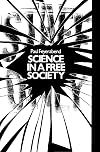
Science in a Free Society
by Paul Feyerabend
On This Page
Description
No study in the philosophy of science created such controversy in the seventies as Paul Feyerabend's Against Method. In this work, Feyerabend reviews that controversy, and extends his critique beyond the problem of scientific rules and methods, to the social function and direction of science today. In the first part of the book, he launches a sustained and irreverent attack on the prestige of science in the West. The lofty authority of the "expert" claimed by scientists is, he argues, show more incompatible with any genuine democracy, and often merely serves to conceal entrenched prejudices and divided opinions with the scientific community itself. Feyerabend insists that these can and should be subjected to the arbitration of the lay population, whose closes interests they constantly affect--as struggles over atomic energy programs so powerfully attest. Calling for far greater diversity in the content of education to facilitate democratic decisions over such issues, Feyerabend recounts the origin and development of his own ideas--successively engaged by Brecht, Ehrenhaft, Popper, Mill and Lakatos--in a spirited intellectual self-portrait. Science in a Free Society is a striking intervention into one of the most topical debates in contemporary culture and politics. show lessTags
Recommendations




























Member Reviews
Like his Against Method, Paul Feyerabend’s Science in a Free Society “has one aim: to remove obstacles intellectuals and specialists create for traditions different from their own and to prepare the removal of the specialists (scientists) themselves from the life centres of society” (pg. 7). He argues, “A free society is a society in which all traditions have equal rights and equal access to the centes of power (this differs from the customary definition where individuals have equal rights of access to positions defined by a special tradition – the tradition of Western Science and Rationalism)" (pg. 9). Feyerabend proposes to answer both what science is and what is so great about it (pg. 73).
Feyerabend writes, “In a free show more society there is room for many strange beliefs, doctrines, institutions. But the assumption of the inherent superiority of science has moved beyond science and has become an article of faith for almost everyone. Moreover, science is no longer a particular institution; it is now part of the basic fabric of democracy just as the Church was once part of the basic fabric of society” (pg. 77). Furthermore, “There is nothing in science or in any other ideology that makes them inherently liberating. Ideologies can deteriorate and become dogmatic religions (example: Marxism). They start deteriorating when they become successful, they turn into dogma the moment opposition is crushed: their triumph is their downfall. The development of science in the 19th and 20th centuries and especially after the Second World War is a good example. The very same enterprise that once gave man the ideas and the strength to free himself from the fears and the prejudices of a tyrannical religion now turns him into a slave of its interests” (pg. 75).
He continues, “There is hardly any difference between the members of a ‘primitive’ tribe who defend their laws because they are the laws of their gods, or of their ancestors and who spread these laws in the name of the tribe and a rationalist who appeals to ‘objective’ standards, except that the former know what they are doing while the latter does not” (pg. 82). Even when there is agreement, “Unanimity is often the result of a political decision: dissenters are suppressed, or remain silent to preserve the reputation of science as a source of trustworthy and almost infallible knowledge. On other occasions unanimity is the result of shared prejudices: positions are taken without detailed examination of the matter under review and are infused with the same authority that proceeds from detailed research” (pg. 88). In this way, “Every piece of knowledge contains valuable ingredients side by side with ideas that prevent the discovery of new things” (pg. 89).
He allows, “It is true that science has made marvelous contributions to our understanding of the world and that this understanding has led to even more marvelous practical achievements. It is also true that most rivals of science have by now either disappeared, or have been changed so that a conflict with science (and therefore the possibility of results that differ from the results of science) no longer arises” (pg. 101). Despite this conclusion, “This does not mean that the beaten rivals are without merit and that they have ceased to be capable of making a contribution to our knowledge, it only means that they have temporarily run out of steam. They may return and cause the defeat of their defeaters” (pg. 101). More to the point, “If science is praised because of its achievements, then myth must be praised a hundred times more fervently because its achievements were incomparable greater. The inventors of myth started culture while rationalists and scientists just changed it, and not always for the better” (pg. 104-105).
Feyerabend concludes, “A person trying to solve a problem whether in science or elsewhere must be given complete freedom and cannot be restricted by any demands, norms, however plausible they may seem to the logician or the philosopher who has thought them out in the privacy of his study. Norms and demands must be checked by research, not by appeal to theories of rationality” (pg. 117). show less
Feyerabend writes, “In a free show more society there is room for many strange beliefs, doctrines, institutions. But the assumption of the inherent superiority of science has moved beyond science and has become an article of faith for almost everyone. Moreover, science is no longer a particular institution; it is now part of the basic fabric of democracy just as the Church was once part of the basic fabric of society” (pg. 77). Furthermore, “There is nothing in science or in any other ideology that makes them inherently liberating. Ideologies can deteriorate and become dogmatic religions (example: Marxism). They start deteriorating when they become successful, they turn into dogma the moment opposition is crushed: their triumph is their downfall. The development of science in the 19th and 20th centuries and especially after the Second World War is a good example. The very same enterprise that once gave man the ideas and the strength to free himself from the fears and the prejudices of a tyrannical religion now turns him into a slave of its interests” (pg. 75).
He continues, “There is hardly any difference between the members of a ‘primitive’ tribe who defend their laws because they are the laws of their gods, or of their ancestors and who spread these laws in the name of the tribe and a rationalist who appeals to ‘objective’ standards, except that the former know what they are doing while the latter does not” (pg. 82). Even when there is agreement, “Unanimity is often the result of a political decision: dissenters are suppressed, or remain silent to preserve the reputation of science as a source of trustworthy and almost infallible knowledge. On other occasions unanimity is the result of shared prejudices: positions are taken without detailed examination of the matter under review and are infused with the same authority that proceeds from detailed research” (pg. 88). In this way, “Every piece of knowledge contains valuable ingredients side by side with ideas that prevent the discovery of new things” (pg. 89).
He allows, “It is true that science has made marvelous contributions to our understanding of the world and that this understanding has led to even more marvelous practical achievements. It is also true that most rivals of science have by now either disappeared, or have been changed so that a conflict with science (and therefore the possibility of results that differ from the results of science) no longer arises” (pg. 101). Despite this conclusion, “This does not mean that the beaten rivals are without merit and that they have ceased to be capable of making a contribution to our knowledge, it only means that they have temporarily run out of steam. They may return and cause the defeat of their defeaters” (pg. 101). More to the point, “If science is praised because of its achievements, then myth must be praised a hundred times more fervently because its achievements were incomparable greater. The inventors of myth started culture while rationalists and scientists just changed it, and not always for the better” (pg. 104-105).
Feyerabend concludes, “A person trying to solve a problem whether in science or elsewhere must be given complete freedom and cannot be restricted by any demands, norms, however plausible they may seem to the logician or the philosopher who has thought them out in the privacy of his study. Norms and demands must be checked by research, not by appeal to theories of rationality” (pg. 117). show less
Ningún trabajo sobre filosofía de la ciencia ha despertado tanta polémica en los años setenta como el Tratado contra el método de Paul Feyerabend. En esta nueva obra Feyerabend vuelve sobre esa polémica y amplía ,su crítica iconoclasta, más allá del problema de las reglas y los métodos científicos, a la orientación y la función social de la ciencia de nuestros días. En la primera parte del libro lanza un continuo e irreverente ataque contra el prestigio de la ciencia en Occidente. La noble autoridad del “experto” que para sí reclaman los científicos es, sostiene, incompatible con una democracia auténtica, y a menudo sirve tan sólo para ocultar arraigados prejuicios y opiniones divididas en el seno de la propia show more comunidad científica. Feyerabend insiste en que éstas pueden y deben someterse al arbitrio del hombre de la calle, cuyos más directos intereses son los que están continuamente en juego (como la polémica actual acerca de los programas nucleares atestigua de forma tan clara). Exigiendo una diversidad mucho mayor en el contenido de la educación para facilitar las decisiones democráticas sobre tales cuestiones, Feyerabend refiere el origen y desarrollo de sus propias ideas -Brecht, Ehrenhaft, Popper, Mili y Lakatos- en un vigoroso autorretrato intelectual. Por último ofrece una serie de inimitables respuestas a sus objetores liberales, marxistas y popperianos, las cuales sin duda afianzarán su reputación como polemista. La ciencia en una sociedad libre constituye una notable intervención en una de las discusiones más candentes en la cultura y la política de nuestra época. show less
Jul 27, 2020Spanish
markiert
May 18, 2026German
Ratings
Members
- Recently Added By
Author Information

64+ Works 3,309 Members
A controversial and influential voice in the philosophy of science, Paul K. Feyerabend was born and educated in Vienna. After military service during World War II and further study at the University of London, he returned to Vienna as a lecturer at the university. In 1959, having taught for several years at Bristol University in England, he came show more to the United States to join the faculty of the University of California at Berkeley, from which, after numerous visiting appointments elsewhere, he retired in 1990. Since the 1970s, Feyerabend has devoted much of his career to arguing that science as practiced cannot be described, let alone regulated, by any coherent methodology, whether understood historically, as in Thomas Kuhn's use of paradigms, or epistemologically, as in classical positivism and its offspring. He illustrates this stance on the dust jacket of one of his books, Against Method (1975), by publishing his horoscope in the place usually reserved for a biographical sketch of the author. In his entry in the Supplement to Who's Who in America, he is quoted as saying, "Leading intellectuals with their zeal for objectivity are criminals, not the liberators of mankind." (Bowker Author Biography) show less
Series
Belongs to Publisher Series
Common Knowledge
- Original title
- Science in a free society
Classifications
Statistics
- Members
- 205
- Popularity
- 159,870
- Reviews
- 3
- Rating
- (3.44)
- Languages
- 6 — English, German, Italian, Portuguese, Spanish, Turkish
- Media
- Paper, Ebook
- ISBNs
- 11
- ASINs
- 1