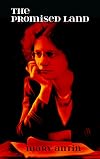
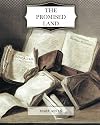
The Promised Land
by Mary Antin
On This Page
Description
The author describes her Jewish American experience emigrating from Eastern Europe to Boston in the 1890s, and explores her struggle to balance her Old World heritage with her New World identity as an American citizen.Tags
Recommendations


















Member Reviews
I've decided to try “The Promised Land” by Mary Antin, with expectation of a crushing depression setting in:
“Could it be that the country's vices are now (finally) harmful to society?”
I'd say that the countries vices were always harmful to the country, with the need to endlessly consume, renew, rebuild, scrap and start over. But only now that "general prosperity supports the stability of all governments" is NO longer the case for the vast majority of people in the USA, regardless of race, the wounds inflicted by the vices have started to fester. The adherence to a mythology of the self-made man can be soul-crushing to those 99.9% that can't pull themselves up by their bootstraps. Carnegie is still seen as a goal, as opposed to a show more mass murderer. And the new generation of Trumps and Hiltons and Kardashians have bled their insanity into the American fabric, without any acceptance of the simple fact that those fuckers all emerged from wombs with deep pockets.
The “end” of America was written on the wall a real long time, simply because I do not know of almost anyone of America’s generation of today who can honestly say that they are in a better place economically, health-wise or spiritually than their parents. So, contrary to the nightly suckfests to show the NASDAQ index and Standard and Poor ratings, I know very few Americans who have more than their nostrils above water, so they almost all have started to question what kind of life democracy can promise.
I actually think that the process going on in the USA is essentially that which happened 100-150 years ago in Europe, when the natural resources started petering out, and the hope is that the States turn in the same way that Europe did: towards greater social justice and safety nets. Hopefully, without the necessity of 2 World Wars in the meantime. show less
“Could it be that the country's vices are now (finally) harmful to society?”
I'd say that the countries vices were always harmful to the country, with the need to endlessly consume, renew, rebuild, scrap and start over. But only now that "general prosperity supports the stability of all governments" is NO longer the case for the vast majority of people in the USA, regardless of race, the wounds inflicted by the vices have started to fester. The adherence to a mythology of the self-made man can be soul-crushing to those 99.9% that can't pull themselves up by their bootstraps. Carnegie is still seen as a goal, as opposed to a show more mass murderer. And the new generation of Trumps and Hiltons and Kardashians have bled their insanity into the American fabric, without any acceptance of the simple fact that those fuckers all emerged from wombs with deep pockets.
The “end” of America was written on the wall a real long time, simply because I do not know of almost anyone of America’s generation of today who can honestly say that they are in a better place economically, health-wise or spiritually than their parents. So, contrary to the nightly suckfests to show the NASDAQ index and Standard and Poor ratings, I know very few Americans who have more than their nostrils above water, so they almost all have started to question what kind of life democracy can promise.
I actually think that the process going on in the USA is essentially that which happened 100-150 years ago in Europe, when the natural resources started petering out, and the hope is that the States turn in the same way that Europe did: towards greater social justice and safety nets. Hopefully, without the necessity of 2 World Wars in the meantime. show less
We get it, you were precocious and lucky. And grew up to be earnest.
Mary Antin's memoir about early childhood in a Russian Jewish community, emigrating to Boston (?) with her family, and the process by which American patriotism replaced Judaism as the definitive faith of her character and life. There's an overall tone of nerdy arrogance to the writing, reminiscent of Annie Dillard's and Agatha Christie's writings about childhood, though sadly minus most of the wry humor. But here and there are some beautiful passages evocative of landscape and the individual's smallness relative to the vastness of cultural and national identity.
Mary Antin's memoir about early childhood in a Russian Jewish community, emigrating to Boston (?) with her family, and the process by which American patriotism replaced Judaism as the definitive faith of her character and life. There's an overall tone of nerdy arrogance to the writing, reminiscent of Annie Dillard's and Agatha Christie's writings about childhood, though sadly minus most of the wry humor. But here and there are some beautiful passages evocative of landscape and the individual's smallness relative to the vastness of cultural and national identity.
This is a wonderful and complicated story of Antin's childhood as she lives first in Russia and then in America. It is a picture of immigration, the search for what is the American dream however it is told, a great appreciation of learning, and a story of all the things that in the end matter more than either wealth of position. Antin's prose is graceful and literary, as well as entertaining throughout. It may start slowly, but this book is worth reading as both historical testimony and document as well as personal narrative and autobiography.
4519. The Promised Land, by Mary Antin (read 23 Dec 2008) I read this because I had never heard of it, and Jay Parini called it one of 13 books of lasting American significance. It tells of a Jewish girl born in 1881 in Russia, and of her life in poverty within the Pale and of the Jewish atmosphere in Polotzk. Her father finally goes to America and three years later the rest of the family comes to America and they live in Chelsea, Mass. amid much poverty. But Mary enthusiastically becomes enamored of America and George Washington, and does very well in school. It is a sweet book, and sometimes is of considerable interest. She quickly sheds her religious faith, but becomes interested in natural science. The account of her life in Russia show more and of her coming to America is of interest, but the book is not too exciting in the last few chapters. show less
Illustrations are from photographs. An excerpt of her life as a schoolchild, in which she wins an award for her writing, was made into a picture book for children.
Ratings
Members
- Recently Added By
Lists

Trinity College Booklist (1951): Class Six, Biography
119 works; 4 members

Publisher's Weekly NON-Fiction list - 1912 - 1975
486 works; 4 members
Author Information

8+ Works 341 Members
Some Editions
Awards and Honors
Distinctions
Series
Belongs to Publisher Series
Work Relationships
Common Knowledge
- Original title
- The Promised Land
- Original publication date
- 1912
- Dedication
- To the Memory of
JOSEPHINE LAZARUS
Who lives in the fulfilment
of her prophecies - First words
- I was born, I have lived, and I have been made over.
- Last words
- (Click to show. Warning: May contain spoilers.)Mine is the whole majestic past, and mine is the shining future.
Classifications
Statistics
- Members
- 296
- Popularity
- 108,612
- Reviews
- 5
- Rating
- (3.46)
- Languages
- English
- Media
- Paper, Ebook
- ISBNs
- 29
- UPCs
- 1
- ASINs
- 10