
Michael Gold (1) (1894–1967)
Author of Jews Without Money
For other authors named Michael Gold, see the disambiguation page.
About the Author
Michael Gold (1893-1967) was born in New York City, where later he wrote for radical journals and newspapers such as New Masses and The Liberator
Image credit: wikipedia
Works by Michael Gold
The hollow men 6 copies
Change the world! 4 copies
The Mike Gold reader 3 copies
Charlie Chaplins Parade 2 copies
Associated Works
Years of Protest: A Collection of American Writings of the 1930's (1967) — Contributor — 44 copies, 1 review
Tagged
Common Knowledge
- Legal name
- Granich, Itzok Isaac
Granich, Irving - Other names
- Gold, Michael
Gold, Mike - Birthdate
- 1894
- Date of death
- 1967
- Gender
- male
- Occupations
- columnist
journalist
editor
novelist - Organizations
- Communist Party USA
- Nationality
- USA
- Birthplace
- Lower East Side, New York, New York, USA
- Places of residence
- Terra Inda, California, USA (death)
New York, New York, USA (birth) - Place of death
- Terra Linda, California, USA
- Map Location
- USA
Members
Reviews
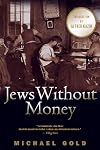
Powerful, passionate, and pulsing - one of the best books I've ever read
"Is there any gangster who is as cruel and heartless as the present legal State?"
In the pounding, passionate, instinctive musicality of his words, the working class boy - who became the working class people's columnist and writer - tells his tale of Jewish poverty in the ghetto on the lower east side of Manhattan in the early twentieth century. In vibrant, descriptive bursts, activist, dean of proletarian literature show more Michael Gold introduces us to prostitutes, pimps, hoodlums, thieves, mensches, bearded rabbis, (some good, some not), idolized and inept doctors, witch doctors, and everyday heroes, along with his hard working, skilled storyteller father, who had and lost success due to betrayal and bad luck, and his rock, his heroine mother who had a warm bosom for everyone to cry on, including weepy prostitutes.
Author and activist Michael Gold, who reinvented himself from Itzok Issac Granich, was a communist in the days when people were red because workers were treated like abused cattle and the world was raw and rough, unless you were one of the few fortunate enough to catch a break. Hard work means nothing if you fall off a ladder and end up languishing in bed, powerless, and melancholy like Michael's father. Here in his semi-autobiographical novel, (originally published in 1930, and republished 25 times since in 16 languages), is the classic I never knew about until now.
To young Michael, a first generation Romanian Jew, it is a hurry up world, when does the fun start world. He writes, "America is so rich and fat, because it has eaten the tragedy of millions of immigrants."
I have, in just the last several weeks, (this is 2023), come across several people I thought were fairly educated who believe the propaganda that all Jewish people are rich and powerful. We have never needed the book "Jews Without Money" as much as we do now. The only part of this brilliant book that I hated, yes hated, is Alfred Kazin’s contemptuous introduction that tries to undermine Gold as an injured soul who was not that bright. I am so enthralled by Gold's ardent writing that I'm now reading a biography about him, "Michael Gold, The People's Writer."
It is a rare book indeed that so moves me both due to the author's style and subject. Gold writes with heartbreaking honesty about the lives of the oppressed from the eyes of a child. --- "It is said that the Dawn is beautiful, but where? On the roof nobody loved that hour when the feverglow appeared on the pale sky, as on a consumptive cheek. Then the swarms of bloodsucking flies arrived, and sleep was intolerable, and the humid day was here, and reality, and poverty." show less
"Is there any gangster who is as cruel and heartless as the present legal State?"
In the pounding, passionate, instinctive musicality of his words, the working class boy - who became the working class people's columnist and writer - tells his tale of Jewish poverty in the ghetto on the lower east side of Manhattan in the early twentieth century. In vibrant, descriptive bursts, activist, dean of proletarian literature show more Michael Gold introduces us to prostitutes, pimps, hoodlums, thieves, mensches, bearded rabbis, (some good, some not), idolized and inept doctors, witch doctors, and everyday heroes, along with his hard working, skilled storyteller father, who had and lost success due to betrayal and bad luck, and his rock, his heroine mother who had a warm bosom for everyone to cry on, including weepy prostitutes.
Author and activist Michael Gold, who reinvented himself from Itzok Issac Granich, was a communist in the days when people were red because workers were treated like abused cattle and the world was raw and rough, unless you were one of the few fortunate enough to catch a break. Hard work means nothing if you fall off a ladder and end up languishing in bed, powerless, and melancholy like Michael's father. Here in his semi-autobiographical novel, (originally published in 1930, and republished 25 times since in 16 languages), is the classic I never knew about until now.
To young Michael, a first generation Romanian Jew, it is a hurry up world, when does the fun start world. He writes, "America is so rich and fat, because it has eaten the tragedy of millions of immigrants."
I have, in just the last several weeks, (this is 2023), come across several people I thought were fairly educated who believe the propaganda that all Jewish people are rich and powerful. We have never needed the book "Jews Without Money" as much as we do now. The only part of this brilliant book that I hated, yes hated, is Alfred Kazin’s contemptuous introduction that tries to undermine Gold as an injured soul who was not that bright. I am so enthralled by Gold's ardent writing that I'm now reading a biography about him, "Michael Gold, The People's Writer."
It is a rare book indeed that so moves me both due to the author's style and subject. Gold writes with heartbreaking honesty about the lives of the oppressed from the eyes of a child. --- "It is said that the Dawn is beautiful, but where? On the roof nobody loved that hour when the feverglow appeared on the pale sky, as on a consumptive cheek. Then the swarms of bloodsucking flies arrived, and sleep was intolerable, and the humid day was here, and reality, and poverty." show less

Life of John Brown is in the public domain and was recently posted to Project Gutenberg.
This hagiography of abolitionist John Brown is more interesting when one knows the political and historical context of its author and publisher. Haldeman-Julius Publications was a socialist press based in Kansas, so much of the book focuses on parts of Brown's activism during Bleeding Kansas that I did not previously know about. Its author, Michael Gold, was a communist, and at a few points he tries to show more claim Brown as an anticapitalist or leftist. Although there are now leftist gun clubs named after Brown, this assertion does not seem to be supported by historical facts; Brown was more motivated by his deep religious convictions than by any specific political ideology.
I recommend this book to people interested in the history of leftist writing in the United States, but people with a more scholarly focus on American history will probably not enjoy this book. I would give this book to someone curious about what Haldeman-Julius Publications was up to, but not as a reliable source of Bleeding Kansas history.
Distributed Proofreaders (the volunteer team that provides texts to Project Gutenberg) is currently working on a large backlog of "Little Blue Books" from this publisher, so there will likely be more reviews to come. show less
This hagiography of abolitionist John Brown is more interesting when one knows the political and historical context of its author and publisher. Haldeman-Julius Publications was a socialist press based in Kansas, so much of the book focuses on parts of Brown's activism during Bleeding Kansas that I did not previously know about. Its author, Michael Gold, was a communist, and at a few points he tries to show more claim Brown as an anticapitalist or leftist. Although there are now leftist gun clubs named after Brown, this assertion does not seem to be supported by historical facts; Brown was more motivated by his deep religious convictions than by any specific political ideology.
I recommend this book to people interested in the history of leftist writing in the United States, but people with a more scholarly focus on American history will probably not enjoy this book. I would give this book to someone curious about what Haldeman-Julius Publications was up to, but not as a reliable source of Bleeding Kansas history.
Distributed Proofreaders (the volunteer team that provides texts to Project Gutenberg) is currently working on a large backlog of "Little Blue Books" from this publisher, so there will likely be more reviews to come. show less
This is a partly autobiographical novel of life in the tenements of New York's Lower East Side in the early part of this century. It's a day-in-the-life tale of thieves, gangsters, and honest folks just trying to get by in a new country. Gold's father, whose desire to run his own business is greater than his ability to actually run the business, is injured at work and confined to bed for a year. Different ethnic groups congregate on different city blocks; finding someone from a different show more block on "your" street is taken very seriously by the children and adolescents. Feeling that their worship isn't complete without a rabbi from the old country, the neighborhood Orthodox Jews, very poor themselves, pay the sea passage for a young rabbi to come to America. He turns out to be a jerk, and, at the first opportunity, splits for a larger congregation.
Gold does a wonderful job at putting the reader right in the middle of the sights, smells and sounds of people who may be materially poor, but very rich emotionally. This has been called the urban version of John Steinbeck's great agricultural protest novel,The Grapes of Wrath. This book is that good. It's a very passionate piece of writing, and is highly recommended. show less
Gold does a wonderful job at putting the reader right in the middle of the sights, smells and sounds of people who may be materially poor, but very rich emotionally. This has been called the urban version of John Steinbeck's great agricultural protest novel,The Grapes of Wrath. This book is that good. It's a very passionate piece of writing, and is highly recommended. show less

A proletarian novel of the 30s, this chronicles a few years in the life of a Jewish boy on Chyristie St. in the Lower East Side before WW1. 101 Uses For a Dead Cat has nothing on this kid, who has little else to play with. Lots of dead cats, dogs, horses and people. Prostitutes, peddlers, gangsters and Tammany Hall stooges. Very vivid and colorful, but not too charming in the way A Tree Grows in Brooklyn is. Doesn't romanticise poverty. Elucidates the plight of the worker. Very Jewish, but show more not enough Yiddish for me. My favorite quote: "Every persecuted race becomes a race of fanatics." Good book. show less
Lists
Awards

You May Also Like


Associated Authors
Statistics
- Works
- 10
- Also by
- 5
- Members
- 377
- Popularity
- #64,010
- Rating
- 3.7
- Reviews
- 7
- ISBNs
- 48
- Languages
- 4