
Joachim Neugroschel (1938–2011)
Author of Yenne Velt: The Great Works of Jewish Fantasy and Occult
About the Author
Joachim Neugroschel was a well known literary translator (he translated French, German, Italian, Russian, Yiddish, and German). He also published poetry and was a poetry magazine founder. Neugroschel was born in Vienna on January 13, 1938. He grew up in New York City and graduated from Bronx show more Science in 1954, and Columbia University in 1958 with a degree in English and Comparative Literature. He moved to Europe and returned to New York six years later where he became a literary translator. Neugroschel was the winner of three PEN Translation Awards, the 1994 French-American Translation Prize, and the Guggenheim Fellowship in German Literature (1998). Neugroschel died on May 23, 2011 in Brooklyn, N.Y. He was 73. (Bowker Author Biography) show less
Image credit: Portrait by Sylvia Sleigh (1970).
Works by Joachim Neugroschel
Radiant Days, Haunted Nights: Great Tales from the Treasury of Yiddish Literature (2005) — Editor — 72 copies, 1 review
The Golem: A New Translation of the Classic Play and Selected Short Stories (2006) — Editor — 63 copies, 3 reviews
Associated Works
Death in Venice and Seven Other Stories (1912) — Translator, some editions — 2,606 copies, 19 reviews
The Metamorphosis, In the Penal Colony, and Other Stories: The Great Short Works of Franz Kafka (1988) — Translator, some editions — 1,835 copies, 11 reviews
Philosophy in the Boudoir: Or, The Immoral Mentors (1795) — Translator, some editions — 1,192 copies, 16 reviews
The Tongue Set Free: Remembrance of a European Childhood (1977) — Translator, some editions — 1,034 copies, 10 reviews
The Necklace and Other Short Stories {Dover Thrift Editions} (1992) — Translator, some editions — 593 copies, 6 reviews
Death in Venice and Other Tales (1998) — Translator, some editions; Preface, some editions — 574 copies, 4 reviews
On the Mystical Shape of the Godhead: Basic Concepts in the Kabbalah (Mysticism & Kabbalah) (1991) — Translator, some editions — 272 copies, 4 reviews
Nutcracker and Mouse King / The Tale of the Nutcracker (2007) — Translator, some editions — 228 copies, 8 reviews
The Chronicle of the Lodz Ghetto, 1941-1944 (1965) — Translator, some editions — 189 copies, 3 reviews
The Complete Short Stories of Marcel Proust (2001) — Translator, some editions — 160 copies, 1 review
The Necklace and Other Tales {Modern Library Classics} (2003) — Translator, some editions — 135 copies, 3 reviews
The Metamorphosis and Other Stories: The Great Short Works of Franz Kafka (1993) — Translator, some editions — 111 copies, 1 review
The Enemy at His Pleasure: A Journey Through the Jewish Pale of Settlement During World War I (2002) — Translator, some editions — 67 copies, 1 review
The Shadows of Berlin: The Berlin Stories of Dovid Bergelson (2005) — Translator, some editions — 35 copies, 1 review
Tagged
Common Knowledge
- Canonical name
- Neugroschel, Joachim
- Other names
- NEUGROSCHEL, Joachim
- Birthdate
- 1938-01-13
- Date of death
- 2011-05-23
- Gender
- male
- Education
- Columbia University
Bronx High School of Science, New York, New York, USA - Occupations
- translator
poet
art critic
magazine founder and editor - Awards and honors
- PEN Translation Prize
Ordre des Arts et des Lettres (Chevalier, 1996)
French-American Translation Prize (1994)
Guggenheim Fellowship - Relationships
- Neugroschel, Mendel (father)
- Short biography
- Joachim Neugroschel was born to a Jewish family in Vienna, Austria. His father, the Yiddish poet Mendel Neugroschel, was sent to the Nazi concentration camps at Dachau and Buchenwald but was released in 1939. The family then emigrated to Rio de Janeiro, Brazil, and two years later, arrived in New York City. Joachim graduated from Bronx High School of Science and earned a bachelor's degree in English and Comparative Literature from Columbia University in 1958. After graduating, he lived in Paris and Berlin. Neugroschel returned to New York after six years, and became a literary translator. Although his father was a native Yiddish speaker, Neugroschel did not grow up speaking the language, and learned it on his own in the 1970s. He translated more than 200 books from Yiddish, French, German, Russian, and Italian, including works by Sholem Aleichem, Anton Chekhov, Alexandre Dumas, Hermann Hesse, Franz Kafka, Thomas Mann, Moliere, Marcel Proust, Joseph Roth, and Isaac Bashevis Singer, as well as contemporary writers. His translations of S. Ansky's play "The Dybbuk" and Sholem Asch‘s drama "God of Vengeance" were produced for the stage. He edited and translated the Yiddish anthologies Yenne Velt: The Great Works of Jewish Fantasy and Occult (1976), The Shtetl (1979), and The Golem (2006). He also was a critic and poet, and founded and edited, with Suzanne Ostro Zavrian, the poetry journal Extensions, which published in 1970-1975. Neugroschel was the winner of three PEN Translation Awards, the 1994 French-American Translation Prize, and a Guggenheim Fellowship in German Literature. In 1996, he was named to the French Ordre des Arts et des Lettres.
- Nationality
- Austria (birth)
- Birthplace
- Vienna, Austria
- Places of residence
- Berlin, Germany
New York, New York, USA
Paris, France
Rio de Janeiro, Brazil - Place of death
- Brooklyn, New York, USA
Members
Reviews
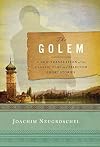
The golem and his creator, Rabbi Leyb, appear here in four different stories/story collections by four authors.
The first, by Yudl Rosenberg, appearing first in 1904, is a collection of very short tales titled “The Golem or The Miraculous Deeds of Rabbi Leyb.” The editor describes the stories as “pulp fiction” or “grade-B gothic,” which seems a bit harsh, but the stories are stylistically pretty rough. They have a sort of folk tale feel to them, and in most of them, the brilliant show more Rabbi Leyb protects the Jews of Prague from destruction with the assistance of his obedient golem, often as a result of the blood libel, and often involving the machinations of the evil Christian priest, Tadeush.
The second section, which is very short, is by S. Bastomski, published in 1923. The first part, “The Jewish Ghetto,” talks about... the Jewish ghetto. The second tells about the clever Rabbi Leyb, and his interactions with the King on behalf of the Jewish residents. We learn about the admiration of Christian scholars far and wide (including Tycho Brahe!) for the brilliant rabbi, and, in a fairy tale-like interlude, of the magical transformation of the rabbi's modest home when the king and his courtiers come for a visit, including the appearance of a fabulous banquet. Somewhat incongruously, we also get the story of how the rabbi created the golem as a manual laborer, but then forgot to turn him off one Sabbath, with the result (we never find out why) that the golem smashes everything in the rabbi's house and yard. The rabbi, having learned his lesson, never activates the golem again.
The third section, “The Golem,” by Dovid Frishman, published in 1922, feels more like a typical short story than any of the others. Well, “typical” is hardly right. In it, Rabbi Leyb, apparently as a diversion during the twenty-eight years he spends in isolation while studying the “great mystery,” creates the golem to be the ultimate student. The rabbi's granddaughter, Eve, finds the golem one day, while cleaning her grandfather's study, and falls passionately (and I mean passionately!) in love. For the rest of the story the poor golem is pulled back and forth between the intellectual rabbi and his lusty granddaughter, agonizing between a life of religious study or sensual pleasures (never minding that, what with having a wife and granddaughter, the rabbi obviously didn't see this as an “either/or” for himself. “What's sauce for the goose...”).
The fourth section, the play, “The Golem,” by H. Leivick, is the longest in the book and is... really pretty bizarre. I hardly know how to describe it. A hallucinogenic house of horrors. A psychedelic Jewish rock opera. Rabbi Leyb appears as a sort of Dr. Frankenstein, with the golem as his despairing, lonely monster. Their drama, in which a demanding creator is unwilling to respond to the needs of the creature he created merely as a tool, is perhaps just another tragedy in the smoke and terror filled city of Prague, but eventually their dysfunctional relationship becomes a direct cause of tragedy. There were a number of scenes which might have been dreams, but I wasn't quite sure, and a battered young man who is a Jewish messiah figure, probably. Well, actually, at one point, the golem, the Jewish beggar/messiah, and Jesus are all sitting inside a circle on the floor of a cave, the second two having narrowly avoided being tricked by the golem into drinking from a bottle of blood (complements of the evil priest we met in one of Rosenberg's stories back at the beginning of the book), while a troupe of cave spirits dance around them, singing. Like I said, this is trippy stuff. So we might be pretty confident we have a couple messiahs, but then it turns out that this part may have all been a dream. Plus, the rabbi drives the messiah(?)/beggar out of town, which seems... odd. Lots of fear, loneliness, and sorrow, mysticism and madness. As with some of the earlier stories in the book, the rabbi is eventually forced to recognize his error in creating the golem, in this case with a pacifist conclusion.
The editor, Joachim Neugroschel, has done a wonderful job of arranging the stories, beginning with the simple and straightforward and ending with the complicated and confusing. If I'd jumped straight into Leivick's play I'd have been completely lost, but building on the background provided by the stories of Rosenberg and Bastomski I had at least a sporting chance. Not that I didn't get fairly muddled at points in Leivick's work anyway. I give this 3 ½ stars, but am rounding up to 4 because it's memorably quirky and if I were a better reader I'd likely have gotten more out of Leivick's piece. show less
The first, by Yudl Rosenberg, appearing first in 1904, is a collection of very short tales titled “The Golem or The Miraculous Deeds of Rabbi Leyb.” The editor describes the stories as “pulp fiction” or “grade-B gothic,” which seems a bit harsh, but the stories are stylistically pretty rough. They have a sort of folk tale feel to them, and in most of them, the brilliant show more Rabbi Leyb protects the Jews of Prague from destruction with the assistance of his obedient golem, often as a result of the blood libel, and often involving the machinations of the evil Christian priest, Tadeush.
The second section, which is very short, is by S. Bastomski, published in 1923. The first part, “The Jewish Ghetto,” talks about... the Jewish ghetto. The second tells about the clever Rabbi Leyb, and his interactions with the King on behalf of the Jewish residents. We learn about the admiration of Christian scholars far and wide (including Tycho Brahe!) for the brilliant rabbi, and, in a fairy tale-like interlude, of the magical transformation of the rabbi's modest home when the king and his courtiers come for a visit, including the appearance of a fabulous banquet. Somewhat incongruously, we also get the story of how the rabbi created the golem as a manual laborer, but then forgot to turn him off one Sabbath, with the result (we never find out why) that the golem smashes everything in the rabbi's house and yard. The rabbi, having learned his lesson, never activates the golem again.
The third section, “The Golem,” by Dovid Frishman, published in 1922, feels more like a typical short story than any of the others. Well, “typical” is hardly right. In it, Rabbi Leyb, apparently as a diversion during the twenty-eight years he spends in isolation while studying the “great mystery,” creates the golem to be the ultimate student. The rabbi's granddaughter, Eve, finds the golem one day, while cleaning her grandfather's study, and falls passionately (and I mean passionately!) in love. For the rest of the story the poor golem is pulled back and forth between the intellectual rabbi and his lusty granddaughter, agonizing between a life of religious study or sensual pleasures (never minding that, what with having a wife and granddaughter, the rabbi obviously didn't see this as an “either/or” for himself. “What's sauce for the goose...”).
The fourth section, the play, “The Golem,” by H. Leivick, is the longest in the book and is... really pretty bizarre. I hardly know how to describe it. A hallucinogenic house of horrors. A psychedelic Jewish rock opera. Rabbi Leyb appears as a sort of Dr. Frankenstein, with the golem as his despairing, lonely monster. Their drama, in which a demanding creator is unwilling to respond to the needs of the creature he created merely as a tool, is perhaps just another tragedy in the smoke and terror filled city of Prague, but eventually their dysfunctional relationship becomes a direct cause of tragedy. There were a number of scenes which might have been dreams, but I wasn't quite sure, and a battered young man who is a Jewish messiah figure, probably. Well, actually, at one point, the golem, the Jewish beggar/messiah, and Jesus are all sitting inside a circle on the floor of a cave, the second two having narrowly avoided being tricked by the golem into drinking from a bottle of blood (complements of the evil priest we met in one of Rosenberg's stories back at the beginning of the book), while a troupe of cave spirits dance around them, singing. Like I said, this is trippy stuff. So we might be pretty confident we have a couple messiahs, but then it turns out that this part may have all been a dream. Plus, the rabbi drives the messiah(?)/beggar out of town, which seems... odd. Lots of fear, loneliness, and sorrow, mysticism and madness. As with some of the earlier stories in the book, the rabbi is eventually forced to recognize his error in creating the golem, in this case with a pacifist conclusion.
The editor, Joachim Neugroschel, has done a wonderful job of arranging the stories, beginning with the simple and straightforward and ending with the complicated and confusing. If I'd jumped straight into Leivick's play I'd have been completely lost, but building on the background provided by the stories of Rosenberg and Bastomski I had at least a sporting chance. Not that I didn't get fairly muddled at points in Leivick's work anyway. I give this 3 ½ stars, but am rounding up to 4 because it's memorably quirky and if I were a better reader I'd likely have gotten more out of Leivick's piece. show less
Since the start of the mythology, the Golem, a clay creation brought to life by Rabbi Leyb of Prague in the sixteenth century, has served as an alluring subject for fiction authors. In some of his writings, Rabbi Leyb creates the Golem to relieve the Jews' oppressive workload. In some, the Golem serves as the Jews' guardian, keeping watch over them the nights leading up to Passover to prevent a Gentile from setting up shop in a Jewish home to fabricate evidence of a blood libel. Yet, the show more strong Golem might also become out of control and need to be destroyed. Some of the best works with the Golem have been collected by Joachim Neugroschel, including Yudl Rosenberg's "pamphlet" and H. Leivick's excellent blank verse play. show less
Great Tales of Jewish Fantasy and the Occult: The Dybbuk and Thirty Other Classic Stories by Joachim Neugroschel
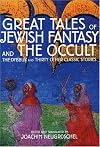
Even though I like the genres (Jewish stories and fantasy) and have enjoyed other books that combined them, I did not enjoy many of these stories, many of which seemed to ramble.
One story that stood out was "The Gilgul or The Transformation", by A.B. Gotlober, an entertaining satire of that recounts the successive reincarnations of a Jewish soul through various roles in the Jewish community and animals that shared their worst characteristics.
One story that stood out was "The Gilgul or The Transformation", by A.B. Gotlober, an entertaining satire of that recounts the successive reincarnations of a Jewish soul through various roles in the Jewish community and animals that shared their worst characteristics.
Interesting as a collection of folklore, but, in the main, the stories are pretty dull.
Lists
Awards

You May Also Like


Associated Authors
Statistics
- Works
- 7
- Also by
- 36
- Members
- 786
- Popularity
- #32,383
- Rating
- 3.9
- Reviews
- 6
- ISBNs
- 21
- Favorited
- 3