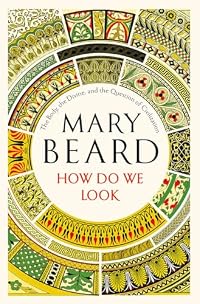
How Do We Look: The Body, the Divine, and the Question of Civilization
by Mary Beard
On This Page
Description
"From prehistoric Mexico to modern Istanbul, Mary Beard looks beyond the familiar canon of Western imagery to explore the history of art, religion, and humanity. Conceived as a gorgeously illustrated accompaniment to "How Do We Look" and "The Eye of Faith," the famed Civilisations shows on PBS, renowned classicist Mary Beard has created this elegant volume on how we have looked at art. Focusing in Part I on the Olmec heads of early Mesoamerica, the colossal statues of the pharaoh Amenhotep show more III, and the nudes of classical Greece, Beard explores the power, hierarchy, and gender politics of the art of the ancient world, and explains how it came to define the so-called civilized world. In Part II, Beard chronicles some of the most breathtaking religious imagery ever made--whether at Angkor Wat, Ravenna, Venice, or in the art of Jewish and Islamic calligraphers-- to show how all religions, ancient and modern, have faced irreconcilable problems in trying to picture the divine. With this classic volume, Beard redefines the Western-and male-centric legacies of Ernst Gombrich and Kenneth Clark"-- show lessTags
Recommendations

































Member Reviews
This book is a companion to Mary Beard’s programme Civilisations, specifically the shows “How Do We Look” and “The Eye of Faith”. In this book, Beard examines art from a variety of cultures and specifically how viewers have responded to this art over the years. So often we’re seeing classical art in isolation in a museum, or there are only fragments of a much bigger piece, or we’re filtering our views of the art through the lens of our own culture. Beard puts this context back where she can and explains how the art we know today would have been viewed in the culture in which it was created. An example is Greek vases with paintings of women on them: we think of these as “art”, but in reality they were produced en masse show more in a pottery workshop and used as everyday crockery—like if someone were to find my Doctor Who “disappearing TARDIS” mug and thinking it was Art. (Of course it isn’t art—the disappearing TARDIS is MAGIC.)
This book is well presented—in an art book I expect lots of pictures of the art being discussed, and this one delivers in spades. Every photo is labelled and is positioned exactly where it should be. There are several two-page spreads, and the book itself is printed on glossy paper. And as for the content, Beard’s writing is as clear and precise as always. I love her introductions, in which she sets out exactly how the book is organized, and her Further Reading sections, in which she explains why the books and articles listed should be read further.
I’d recommend this especially if you can’t get a hold of the programme. It’s very well put together and makes a fine read. show less
This book is well presented—in an art book I expect lots of pictures of the art being discussed, and this one delivers in spades. Every photo is labelled and is positioned exactly where it should be. There are several two-page spreads, and the book itself is printed on glossy paper. And as for the content, Beard’s writing is as clear and precise as always. I love her introductions, in which she sets out exactly how the book is organized, and her Further Reading sections, in which she explains why the books and articles listed should be read further.
I’d recommend this especially if you can’t get a hold of the programme. It’s very well put together and makes a fine read. show less
From the wording of the title, I thought Beard had created a critique of how we view antiquity in the manner of John Berger. Inside, she explains that it's more of a re-definition of previous interpretations by the likes of Johann Joachim Winckelmann, Christiana Herringham, Ernst Gombrich and Kenneth Clark.
With the aloofness of a Taoist or the mischievousness of a conceptual artist, Mary Beard considers all that happens to an artwork after its inception to be legitimate contributions to its artistic qualities, whether it's criticism, religious objection, vandalism or even rape! It makes me think that Beard is being a bit like Marcel Duchamp, who, when his Large Glass (1915-23) was accidentally damaged in 1927, repaired the damage but show more left many of the cracks intact.
Apart from the usual places Kenneth Clark would have visited back in his day, Beard's tour takes us beyond Europe to Mexico, Egypt, China, India, Turkey, etc. And instead of focusing on creators, Beard highlights the artworks' spiritual and physical connections with their viewers throughout history. This is a quick, thoroughly enjoyable read containing many attractive colour photos. show less
With the aloofness of a Taoist or the mischievousness of a conceptual artist, Mary Beard considers all that happens to an artwork after its inception to be legitimate contributions to its artistic qualities, whether it's criticism, religious objection, vandalism or even rape! It makes me think that Beard is being a bit like Marcel Duchamp, who, when his Large Glass (1915-23) was accidentally damaged in 1927, repaired the damage but show more left many of the cracks intact.
Apart from the usual places Kenneth Clark would have visited back in his day, Beard's tour takes us beyond Europe to Mexico, Egypt, China, India, Turkey, etc. And instead of focusing on creators, Beard highlights the artworks' spiritual and physical connections with their viewers throughout history. This is a quick, thoroughly enjoyable read containing many attractive colour photos. show less
I picked How Do We Look off the New Arrivals shelf at my library without having seen the new Civilizations series (or, honestly, being much aware of it, except for a tweet from Tim Spalding asking about a cut-short episode), but I was aware of Mary Beard being popular amongst my friends who like to read about history and Classics. I mention all of this because I'm definitely reading the book from a different perspective than someone who is already very familiar with Beard's work or who found it because of the tv series.
The book is glossy with comfortably-large type and lots of pictures - every artwork discussed in the pages has at least one photo (often multiple angles or close-ups!), and there are other photos to add a bit of contrast show more or comparison of similar themes. They all have explanatory captions. It's fairly short at 240 pages because of the size of the text and the numerous pictures, many of which are fully one or two pages, but these pages are used to put a lot of detail about the works represented, rather than cramming a new object for discussion on every page.
From the title and a brief skimming, I had hoped for more philosophical/sociological discussion of the act of looking at art and how the viewer imbues artwork with meaning and context as much as the artwork has on its own. I don't mean to say this isn't the theme of the book - it certainly is! - but I wanted more. Several times, Beard backs away from an artwork without fully exploring what this means, or else leaves it unspoken for the reader to determine. Perhaps in a few examples it's because we can't know the original contexts to really have a deep conversation about the artwork, but most of the time the pages skitter away to the next work, it reminded me that the book is based on the tv show, and of scenes skipping ahead for time.
But on the whole, I did find the book interesting. Its emphasis is that artwork is made for the viewer and for specific societal purposes as much as it is made for the artist's skill or identity. Modern viewers of ancient art bring their own contexts and interpretations, which may skew the understanding of the past, as much as only seeing bleached-white marble or giant wall murals cut into vignettes for books might do. Or even as much as artwork in sterile museum displays, far from the point of origin.
I am likely to seek out more of Mary Beard's work now, probably even her Civilizations series, but what I really want is more detailed discussion of the context of ancient art and a broader view towards societies that are not touched on here (particularly Indigenous American and Pacific work). show less
The book is glossy with comfortably-large type and lots of pictures - every artwork discussed in the pages has at least one photo (often multiple angles or close-ups!), and there are other photos to add a bit of contrast show more or comparison of similar themes. They all have explanatory captions. It's fairly short at 240 pages because of the size of the text and the numerous pictures, many of which are fully one or two pages, but these pages are used to put a lot of detail about the works represented, rather than cramming a new object for discussion on every page.
From the title and a brief skimming, I had hoped for more philosophical/sociological discussion of the act of looking at art and how the viewer imbues artwork with meaning and context as much as the artwork has on its own. I don't mean to say this isn't the theme of the book - it certainly is! - but I wanted more. Several times, Beard backs away from an artwork without fully exploring what this means, or else leaves it unspoken for the reader to determine. Perhaps in a few examples it's because we can't know the original contexts to really have a deep conversation about the artwork, but most of the time the pages skitter away to the next work, it reminded me that the book is based on the tv show, and of scenes skipping ahead for time.
But on the whole, I did find the book interesting. Its emphasis is that artwork is made for the viewer and for specific societal purposes as much as it is made for the artist's skill or identity. Modern viewers of ancient art bring their own contexts and interpretations, which may skew the understanding of the past, as much as only seeing bleached-white marble or giant wall murals cut into vignettes for books might do. Or even as much as artwork in sterile museum displays, far from the point of origin.
I am likely to seek out more of Mary Beard's work now, probably even her Civilizations series, but what I really want is more detailed discussion of the context of ancient art and a broader view towards societies that are not touched on here (particularly Indigenous American and Pacific work). show less
As a physical object, this book is a triumph: the cover shimmers, the paper is heavy and smooth, the art is well chosen and beautifully rendered. As a text, though, it has little to offer. Although the title (and to some extent, the layout) positions it as a revisit of John Berger's influential Ways of Seeing, the chapters are short, shallow, and overly simple. Interesting pieces of art—some well known, some not—are touched upon, Beard's main point about each is briefly stated, and then we move on. Other reviewers indicate that these chapters are actually transcriptions of the script for a television show I haven't seen, which would help explain this. But it left me disappointed in Beard, whom I had admired, especially when she show more seems to honestly believe that an ancient Greek man (almost certainly fictional, too) who masturbated onto a statue was guilty of rape—of the statue. This bizarre opinion is not just tossed off, but actually returned to later. It's one of those things that can leave a reader wondering about the author's sanity.
So I'd recommend this book as a tiny coffee table book and as an introduction to works of art and architecture, many non-Western, that merit further investigation. As a work by a distinguished classicist and public intellectual, it's an embarrassment. show less
So I'd recommend this book as a tiny coffee table book and as an introduction to works of art and architecture, many non-Western, that merit further investigation. As a work by a distinguished classicist and public intellectual, it's an embarrassment. show less
The title of this book tells us exactly what it is about, how humans look at and interact with the art they create and that has been created. This is a gorgeous tome, heavy with beautiful photographs, beginning with giant heads carved in Latin America. The concept of how we look at Art is new to me, but this book was created after the author worked on the documentary, civilization. Mary Beard was following up on a 1969 documentary by a man named Kenneth Clark. She believed his documentary was two Eurocentric and focused too much on how men interact with art rather than women. So she set out to update the documentary and this beautiful book is part of the result. Highly recommended.
I was drawn to this book by Mary Beard, whose reputation proceeds her. I don't typically read a lot of art history or analysis, but this short volume was both interesting and highly readable. Looking at the role of the viewer in art and traveling around the world, this book manages to make a complex topic approachable. If you're interesting in art and the ancient world, this book is likely for you.
Some new insights into how Art reflects what was going on in society at the time. In depth look at faith and how the artist expresses one’s religious and political context at the time.
Members
- Recently Added By
Lists

TBR of Books I Don't Own
132 works; 1 member
Author Information

50+ Works 15,375 Members
Classifications
Statistics
- Members
- 312
- Popularity
- 101,646
- Reviews
- 9
- Rating
- (3.73)
- Languages
- Dutch, English
- Media
- Paper, Audiobook, Ebook
- ISBNs
- 5
- ASINs
- 1