On This Page
Description
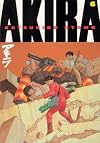
As Tetsuo begins losing control of his abilities, the military's forces converge on Neo-Tokyo for the final confrontation.Tags
Recommendations




Member Reviews
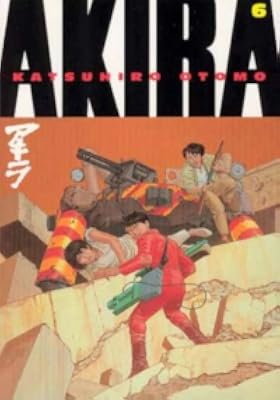
Furious action rips across the page as Kaneda and Tetsuo clash in the olympic stadium. There are also special forces armed with bio-weapons and bikers with machine guns and Akira-worshipping junkies and a fleet of bomber planes and a trio of psychics exerting their power through Kei and the Major armed with a whole freakin' space laser. Kaneda's got a laser rifle and Tetsuo is transforming into a monstrosity and his powers are starting to resonate with Akira's which will probably blow up the world and there's ANOTHER freakin' space laser and the whole thing is epic destruction on a massive scale, horrifying and beautiful.
This concludes my re-read of Akira as an adult. Due to its fast pace and heavy action, I enjoyed it as a kid, even though most of the themes went strait over my head. On my second read, I truly understand why this is such a revered work in the realm of manga. It tackles a wide variety of societal and personal struggles such as: identity, youth, oppression, anarchy, death, rebirth, evolution, the military complex, religion, western vs eastern values, (gang) wars, violence, and many more.
Otomo shows that manga can be so much deeper and richer than what it is, unfortunately, sometimes perceived as.
Otomo shows that manga can be so much deeper and richer than what it is, unfortunately, sometimes perceived as.
Pretty damn epic. Not nearly as perfect as my memory claimed, but still very good. I think the finale throws a bit too much at you that could have been expanded on earlier. It does connect to some things set up in earlier volumes, but there are maybe a few too many "wait, what?" moments.
It still trumps the movie by miles though.
I had great fun re-reading this series. Since this is the last volume I'll give it a quick rank:
Vol. 5 - 4.5
Vol. 4 - 4.25
Vol. 6 - 4
Vol. 2 - 4
Vol. 1 - 3.75
Vol. 3 - 3.5
It still trumps the movie by miles though.
I had great fun re-reading this series. Since this is the last volume I'll give it a quick rank:
Vol. 5 - 4.5
Vol. 4 - 4.25
Vol. 6 - 4
Vol. 2 - 4
Vol. 1 - 3.75
Vol. 3 - 3.5
Grand finale of the story. And it left me scratching my head :)
Akira was an object of fear and hatred by almost everyone in the story, I mean it was even said that Akira lost personality and became the de-facto avatar of the power within, until this last chapter. All of a sudden it seems that Tetsuo played the role of huge battery - once power overtook him Miyako's [and rest of children from experiment] effort seems to be to save Akira and what happens? Akira consumes (literally) Tetsuo. In the end all people that fell during the conflict, they all reached some unknown level of existence but they did not ascend. Insetad, if I understand correctly, they remain present and start acting as protectors of Neo Tokyo. Something like new show more pantheon protecting the city while Takeda, Kei and other survivors become the leaders of city militia intent on repelling any foreigners from its shores. Also role of Kaneda (prophesied by Miyako in previous volumes) was a lot of noise about nothing. I was expecting something more here than Kaneda knocking off Tetsuo with few uppercuts.
Art as always is excellent.
Excellent story, maybe a bit of a convoluted ending but in overall highly recommended to SF and comic books fans. show less
Art as always is excellent.
Excellent story, maybe a bit of a convoluted ending but in overall highly recommended to SF and comic books fans. show less
The ending is confusing and disappointing. I won't say more to avoid spoilers.
Some complaints — not specific about this volume but about the series:
In real life, skyscrapers probably don't tilt so much without collapsing: Neo-Tokyo is a forest of tall buildings, standing erect presumably for hundreds of metres, at truly impossible angles. It simply cannot be that after so many huge blasts and cataclysmic events, one after another, and all more or less happening around the same places (Neo-Tokyo at large, the area surrounding the Olympic Stadium and the cryo-chamber in particular) there be still buildings standing and, more importantly, people alive (if detonations are so intense, some characters would have died several times by show more now). The quality of the art, as I noted previously, varies quite a lot from one chapter to the next (chapter as in “originally published issue”, spanning a couple dozen pages or whatever): sometimes figures are drawn hastily, to the point that some faces are comical (unintendedly!). This is probably a fault of this particular translation into Spanish, but: the dialogues! Weird, convoluted statements; unexpected expletives; nonsensical philosophical claims; tacky “explanations” by scientists and comical “commands” uttered by military… Finally, the plot isn't clear throughout the series: is Akira feared/hated/admired by his followers/enemies/creators — by the Americans, the UN corps, the “refugees” (refugees from what, exactly?), Lady Miyako's followers, the resistance…? What exactly are each of the foreign scientists, Ryu, Chiyoko, the Colonel, Masaru & Kiyoko, trying to achieve: kill Akira, contain him, tame his powers… institute a new government, destroy the current one… medicate and teach Tetsuo, kill him, tap into his powers…? All that is very blurry, at best.
And still, Akira as a whole is an absolute marvel. It creates an atmosphere and a universe that is unique and inspiring and moving for me and for so many other people. I will always be in love with this manga and with the film. show less
Some complaints — not specific about this volume but about the series:
In real life, skyscrapers probably don't tilt so much without collapsing: Neo-Tokyo is a forest of tall buildings, standing erect presumably for hundreds of metres, at truly impossible angles. It simply cannot be that after so many huge blasts and cataclysmic events, one after another, and all more or less happening around the same places (Neo-Tokyo at large, the area surrounding the Olympic Stadium and the cryo-chamber in particular) there be still buildings standing and, more importantly, people alive (if detonations are so intense, some characters would have died several times by show more now). The quality of the art, as I noted previously, varies quite a lot from one chapter to the next (chapter as in “originally published issue”, spanning a couple dozen pages or whatever): sometimes figures are drawn hastily, to the point that some faces are comical (unintendedly!). This is probably a fault of this particular translation into Spanish, but: the dialogues! Weird, convoluted statements; unexpected expletives; nonsensical philosophical claims; tacky “explanations” by scientists and comical “commands” uttered by military… Finally, the plot isn't clear throughout the series: is Akira feared/hated/admired by his followers/enemies/creators — by the Americans, the UN corps, the “refugees” (refugees from what, exactly?), Lady Miyako's followers, the resistance…? What exactly are each of the foreign scientists, Ryu, Chiyoko, the Colonel, Masaru & Kiyoko, trying to achieve: kill Akira, contain him, tame his powers… institute a new government, destroy the current one… medicate and teach Tetsuo, kill him, tap into his powers…? All that is very blurry, at best.
And still, Akira as a whole is an absolute marvel. It creates an atmosphere and a universe that is unique and inspiring and moving for me and for so many other people. I will always be in love with this manga and with the film. show less
Okay now I see the movie wasn't as far off as I initially thought. This was kind of trippy? I'm not even sure how to explain it. It's all violence and supernatrual powers. It's about power and evolution and the birth of the universe. Like I said, trippy. Akira...I'm not even sure why this whole thing was named after him. Maybe because he was the beginning, but he was also the end. He wasn't evil; he was just a child who was experimented on--and eveloped earth shattering powers. None of it was really his fault, although he was the cause. But in the end, he was the solution. Tetsuo was practically the main protagonist of this series...poor Tetuso. In the end you feel for him because he was just a lonely, bullied kid who only wanted love show more and frienship. It wasn't his fault the government chose to experiment on him and unleash his powers. In the end he couldn't handle it; in the end he called for Kaneda, not Akira. It was almost kind of sad...once you get past the confusion and the insanity. This may warrant a re-read. show less
This review is written with a GPL 3.0 license and the rights contained therein shall supersede all TOS by any and all websites in regards to copying and sharing without proper authorization and permissions. Crossposted
at Bookstooge.booklikes.blogspot.wordpress.leafmarks.tumblr.com by express permission of this reviewer Title: Akira #6 Series: Akira Author & Artist: Katsuhiro Otomo Rating: 4.5 of 5 Stars Genre: Manga Pages: 460 Synopsis: Tetsuo pretty much fights with everybody-the Americans, Kaneda & Kei, Lady Miyako and the Specials- and loses control. Loses control of his power, his body and his mind and keeps morphing between being Tetsuo and an amorphous conduit for the Energy of Life. Neo-Tokyo is bombed, solar lasered show more multiple times and then Akira'd. The Ending, where Kaneda and Kei take up where Tetsuo left off with the Great Tokyo Empire, was a bit of a disappointment but considering when this was written and what the culture was at the time, not surprising. My Thoughts: This had some seriously awesome battles. Tetsuo morphing into a giant blob and destroying things, Tetsuo capturing one of the laser arrays and crashing it into the American naval group, Tetsuo and Akira's energy getting jiggy. Kaneda shooting, laser gunning and then just punching out Tetsuo. It was great. 5 star Great in fact. However, the ending, where it turns out that Akira and the specials were the next genetic step of Mankind but had been forced by the scientists to become what they were and Akira's desire to just be with his friends, was a let down. The kid started/ended World War III, was cryogenically frozen and was the Fear of the whole freaking world, turns out to just want his friends? Yeah, lame. I don't understand the whole Tetsuo/Akira thing. Somehow they had to meet at just the right time, their energies combine and then all the kids could be together? I realize manga likes to be vague, but this was positively opaque. The final message, that Japan was going to stand on its own 2 feet and would no longer brook foreign intervention was definite political pandering of the day. Overall, the series was good and I am glad I bought these. I highly recommend this to older teens and up, as this is a good series to show the roots of manga in America. " show less
at Bookstooge.booklikes.blogspot.wordpress.leafmarks.tumblr.com by express permission of this reviewer Title: Akira #6 Series: Akira Author & Artist: Katsuhiro Otomo Rating: 4.5 of 5 Stars Genre: Manga Pages: 460 Synopsis: Tetsuo pretty much fights with everybody-the Americans, Kaneda & Kei, Lady Miyako and the Specials- and loses control. Loses control of his power, his body and his mind and keeps morphing between being Tetsuo and an amorphous conduit for the Energy of Life. Neo-Tokyo is bombed, solar lasered show more multiple times and then Akira'd. The Ending, where Kaneda and Kei take up where Tetsuo left off with the Great Tokyo Empire, was a bit of a disappointment but considering when this was written and what the culture was at the time, not surprising. My Thoughts: This had some seriously awesome battles. Tetsuo morphing into a giant blob and destroying things, Tetsuo capturing one of the laser arrays and crashing it into the American naval group, Tetsuo and Akira's energy getting jiggy. Kaneda shooting, laser gunning and then just punching out Tetsuo. It was great. 5 star Great in fact. However, the ending, where it turns out that Akira and the specials were the next genetic step of Mankind but had been forced by the scientists to become what they were and Akira's desire to just be with his friends, was a let down. The kid started/ended World War III, was cryogenically frozen and was the Fear of the whole freaking world, turns out to just want his friends? Yeah, lame. I don't understand the whole Tetsuo/Akira thing. Somehow they had to meet at just the right time, their energies combine and then all the kids could be together? I realize manga likes to be vague, but this was positively opaque. The final message, that Japan was going to stand on its own 2 feet and would no longer brook foreign intervention was definite political pandering of the day. Overall, the series was good and I am glad I bought these. I highly recommend this to older teens and up, as this is a good series to show the roots of manga in America. " show less
Members
- Recently Added By
Lists

Best Science Fiction Comics and Graphic Novels
144 works; 11 members

Classic Manga
31 works; 4 members

Drawn Out: The 50 Best Non-Superhero Graphic Novels
175 works; 8 members

Books Read in 2017
4,249 works; 130 members

Recommended Comics / Graphic Novels
595 works; 122 members
Author Information

419+ Works 10,974 Members
Some Editions
Awards and Honors
Awards
Notable Lists
Series

Work Relationships
Common Knowledge
- Canonical title
- Akira, Volume 6
- Original title
- AKIRA 第6巻
- Alternate titles*
- Akira - Vol. 06
- Original publication date
- 1993-03-23
- Original language
- Japanese
*Some information comes from Common Knowledge in other languages. Click "Edit" for more information.
Classifications
- Genre
- Graphic Novels & Comics
- DDC/MDS
- 741.5952 — Arts & recreation Drawing & decorative arts Drawing Comic books, graphic novels, fotonovelas, cartoons, caricatures, comic strips History, geographic treatment, biography Asian Japanese
- LCC
- PN6790 .J3 .A3613 — Language and Literature Literature (General) Literature (General) Collections of general literature Comic books, strips, etc.
- BISAC
Statistics
- Members
- 852
- Popularity
- 32,004
- Reviews
- 14
- Rating
- (4.34)
- Languages
- 10 — Chinese, Danish, Dutch, English, French, German, Italian, Japanese, Portuguese, Spanish
- Media
- Paper
- ISBNs
- 15