On This Page
Description
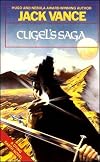
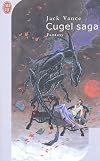
Jack Vance is one of the most remarkable talents to ever grace the world of science fiction. His unique, stylish voice has been beloved by generations of readers. One of his enduring classics is his Mazirian the Magician (previously titled The Dying Earth), and its sequels--a fascinating, baroque tale set on a far-future Earth, under a giant red sun that is soon to go out forever. In Cugel: the Skybreak Spatterlight , Cugel the Clever is still seeking revenge on the magician Iucounu, whom he show more blames for his exile and all his troubles. But revenge is hard to come by, and the adventures on the way are so very diverting…. At the Publisher's request, this title is being sold without Digital Rights Management Software (DRM) applied. show lessTags
Recommendations























Member Reviews
Jack Vance is one hell of a storyteller. I may have gotten off on a slightly wrong foot with the first Tales of the Dying Earth, but once I fell into the groove in the second novel, it and the third are a pure delight.
Why?
Because it's nonstop trickery, confidence games, theft, and conscience-less knavery. :)
We follow Cugel the Clever who falls into every situation on both feet, lying the most grandiose lies and cheating his way through every fantasy location only to get found out and run out of every town. He never stops running.
He amassed and lost massive wealth in equal measure to each chapter. Quite delightful. Wicked. And cruel. :)
What Vance lacks in worldbuilding and reasons for a dying sun is more than made up for in chicanery show more and amusement. :) show less
Why?
Because it's nonstop trickery, confidence games, theft, and conscience-less knavery. :)
We follow Cugel the Clever who falls into every situation on both feet, lying the most grandiose lies and cheating his way through every fantasy location only to get found out and run out of every town. He never stops running.
He amassed and lost massive wealth in equal measure to each chapter. Quite delightful. Wicked. And cruel. :)
What Vance lacks in worldbuilding and reasons for a dying sun is more than made up for in chicanery show more and amusement. :) show less
Cugel’s Saga and The Eyes of the Overworld are both described as picaresques, but in my mind, a key element of a picaresque is to take the absurdity and dial it up to eleven. Cugel as portrayed in the 1966 short stories has a kind of obtuse earnestness to his quest for revenge. Cugel in the 1983 novel is almost like a parody of his former incarnation.
The world changed a lot inbetween 1950 and 1983. The Dying Earth [Amazon affiliate link] did too. In a sense, we have something much like before. The episodic structure remains, as some chapters were previously published as short stories. However, Cugel himself seems a bit different.
I often laughed out loud while reading Cugel’s Saga, but I also struggled a bit to finish it. While it show more is funny, I don’t primarily look to adventure novels for laughs, so I found my interest in Cugel waning a bit in this volume. The earlier chapters are perhaps the most absurd, but this truly is Cugel’s saga, and there was a grander story lurking in the background. My initial impression was redeemed by the denouement.
One of the really fascinating things about The Dying Earth is how infrequently lethal violence is used between men. The world is plenty dangerous, with wild beasts and ravenous flesh-eating half-men in abundance, so in Cugel’s many journeys, I was honestly a little surprised at how infrequently he solved his problems by killing them.
In part, this is due to Cugel’s style, which is very much that of the confidence man. He is apt to skip town the second things start looking like they are going sideways. In The Eyes of the Overworld, the alien parasite nestled in his belly kept Cugel moving, but it turns out that Cugel himself doesn’t often hang around long, as his marks get wise to him.
The other part of it is this just seems to be how things are done in The Dying Earth. Iucounu didn’t simply kill Cugel for breaking and entering, he imposed a quest upon him instead. You see this style in other places too; revenge often stops short of death. This gives the series a unique flavor, and I appreciate the difference.
I very much see why Cugel was an inspiration to Gygax. Even though this volume came after the Dungeon Master Guide by some years, it still very much has the feel of the kind of adventure which D&D was intended to imitate. At least in my case, the whole was better than some of the parts, but that may be a matter of taste; if you like anti-heroes and the absurd, this may be just the ticket. show less
The world changed a lot inbetween 1950 and 1983. The Dying Earth [Amazon affiliate link] did too. In a sense, we have something much like before. The episodic structure remains, as some chapters were previously published as short stories. However, Cugel himself seems a bit different.
I often laughed out loud while reading Cugel’s Saga, but I also struggled a bit to finish it. While it show more is funny, I don’t primarily look to adventure novels for laughs, so I found my interest in Cugel waning a bit in this volume. The earlier chapters are perhaps the most absurd, but this truly is Cugel’s saga, and there was a grander story lurking in the background. My initial impression was redeemed by the denouement.
One of the really fascinating things about The Dying Earth is how infrequently lethal violence is used between men. The world is plenty dangerous, with wild beasts and ravenous flesh-eating half-men in abundance, so in Cugel’s many journeys, I was honestly a little surprised at how infrequently he solved his problems by killing them.
In part, this is due to Cugel’s style, which is very much that of the confidence man. He is apt to skip town the second things start looking like they are going sideways. In The Eyes of the Overworld, the alien parasite nestled in his belly kept Cugel moving, but it turns out that Cugel himself doesn’t often hang around long, as his marks get wise to him.
The other part of it is this just seems to be how things are done in The Dying Earth. Iucounu didn’t simply kill Cugel for breaking and entering, he imposed a quest upon him instead. You see this style in other places too; revenge often stops short of death. This gives the series a unique flavor, and I appreciate the difference.
I very much see why Cugel was an inspiration to Gygax. Even though this volume came after the Dungeon Master Guide by some years, it still very much has the feel of the kind of adventure which D&D was intended to imitate. At least in my case, the whole was better than some of the parts, but that may be a matter of taste; if you like anti-heroes and the absurd, this may be just the ticket. show less
I've read this in the omnibus Tales Of The Dying Earth. Cugel's adventures continue in his own saga now, following The Eyes Of The Overworld. Here he again has to work his way back to reality, to get even with Iucounu, the magician who tricked him a second time.
Cugel experiences many adventures, gains wealth, has to bust his ass off for it, but only works enough to get the money (terces) and then continue his journey. He also encounters people that provide him with food, shelter and so on, but again Cugel uses the hospitality only to his advantage. On many occasions he does have to abandon his riches to save his life, but somehow he's like MacGyver or the A-Team; he always manages to escape, talk himself out of further trouble. Luckily show more for him he does get to fulfill his goal and trick Iucounu.
The story itself was much better, more attractive than The Eyes Of The Overworld. The writing is more enticing. However, I sometimes wished there would be less pages. Cugel may be a nice character, but after a while, one can become fed up with him, to be honest. Other than that, recommended reading it is: 8/10. show less
Cugel experiences many adventures, gains wealth, has to bust his ass off for it, but only works enough to get the money (terces) and then continue his journey. He also encounters people that provide him with food, shelter and so on, but again Cugel uses the hospitality only to his advantage. On many occasions he does have to abandon his riches to save his life, but somehow he's like MacGyver or the A-Team; he always manages to escape, talk himself out of further trouble. Luckily show more for him he does get to fulfill his goal and trick Iucounu.
The story itself was much better, more attractive than The Eyes Of The Overworld. The writing is more enticing. However, I sometimes wished there would be less pages. Cugel may be a nice character, but after a while, one can become fed up with him, to be honest. Other than that, recommended reading it is: 8/10. show less
ORIGINALLY POSTED AT Fantasy Literature.
Cugel “the clever” is one of the scummiest, nastiest, lowliest rogues in all of fantasy literature. He’s got no morals and no respect for women, he’s often a coward, he’s not good looking, nor is he particularly good with a sword. In the words of one of Cugel’s acquaintances, “who could imagine such protean depravity?” The answer, apparently, is Jack Vance. And that's why Cugel is one of my favorite “heroes” — because he belongs to Jack Vance.
Cugel’s Saga, book 3 of The Dying Earth and the direct sequel to The Eyes of the Overworld, begins ironically — with Cugel again fallen afoul of Iucounu, the Laughing Magician, who has now banished Cugel across the dying earth to show more exactly the same place he had sent Cugel before and from which Cugel had just returned to seek his revenge. Thus, Cugel begins another long journey back to Almery to get even with Iucounu, and of course it’s another series of hilarious misadventures. These usually involve Cugel entering a village, pretending to be a gentleman and getting involved in some profitable scheme, and eventually having to flee or being run out of town.
During each of these episodes, Jack Vance uses his characteristic humor to highlight absurd human behavior. For example, in chapter 3, after penniless Cugel has just narrowly escaped a man whose ship, wife, and daughters he kidnapped, he happens upon a town in which the men spend their days sunning themselves atop columns of stone while their wives work to pay Nisbet the quarryman to add additional stones to their husbands’ towers, thus elevating them, both literally and figuratively, above the other townsmen. Cugel, noticing how eager the women are to please Nisbet, sees this as an opportunity not only for monetary gain, but also perhaps to score benefits that Nisbet may not have imagined… Yes, Cugel is a scoundrel, but it’s hard to think too badly of him when most of the people he encounters are equally corrupt. Cugel himself explains it this way:
I am not one to crouch passively with my hindquarters raised awaiting either the kick or the caress of Destiny! I am Cugel! Fearless and indomitable!
Cugel’s various adventures do not become predictable and they never get stale — each is unique, fresh, and delightfully funny. Besides the sheer entertainment value, Jack Vance’s voice is consistently a pleasure to read. Nobody writes just like Vance and I never tire of it.
I listened to Brilliance Audio’s version of Cugel’s Saga, which was read by Arthur Morey, who has narrated their other Vance titles. He is excellent as usual — one of the finest audiobook readers I’ve ever listened to. He and Jack Vance have entertained me for many an hour as I commute back and forth to work. I’ll bet my colleagues wonder why I’m always chuckling wickedly when I pull into the parking lot. show less
Cugel “the clever” is one of the scummiest, nastiest, lowliest rogues in all of fantasy literature. He’s got no morals and no respect for women, he’s often a coward, he’s not good looking, nor is he particularly good with a sword. In the words of one of Cugel’s acquaintances, “who could imagine such protean depravity?” The answer, apparently, is Jack Vance. And that's why Cugel is one of my favorite “heroes” — because he belongs to Jack Vance.
Cugel’s Saga, book 3 of The Dying Earth and the direct sequel to The Eyes of the Overworld, begins ironically — with Cugel again fallen afoul of Iucounu, the Laughing Magician, who has now banished Cugel across the dying earth to show more exactly the same place he had sent Cugel before and from which Cugel had just returned to seek his revenge. Thus, Cugel begins another long journey back to Almery to get even with Iucounu, and of course it’s another series of hilarious misadventures. These usually involve Cugel entering a village, pretending to be a gentleman and getting involved in some profitable scheme, and eventually having to flee or being run out of town.
During each of these episodes, Jack Vance uses his characteristic humor to highlight absurd human behavior. For example, in chapter 3, after penniless Cugel has just narrowly escaped a man whose ship, wife, and daughters he kidnapped, he happens upon a town in which the men spend their days sunning themselves atop columns of stone while their wives work to pay Nisbet the quarryman to add additional stones to their husbands’ towers, thus elevating them, both literally and figuratively, above the other townsmen. Cugel, noticing how eager the women are to please Nisbet, sees this as an opportunity not only for monetary gain, but also perhaps to score benefits that Nisbet may not have imagined… Yes, Cugel is a scoundrel, but it’s hard to think too badly of him when most of the people he encounters are equally corrupt. Cugel himself explains it this way:
I am not one to crouch passively with my hindquarters raised awaiting either the kick or the caress of Destiny! I am Cugel! Fearless and indomitable!
Cugel’s various adventures do not become predictable and they never get stale — each is unique, fresh, and delightfully funny. Besides the sheer entertainment value, Jack Vance’s voice is consistently a pleasure to read. Nobody writes just like Vance and I never tire of it.
I listened to Brilliance Audio’s version of Cugel’s Saga, which was read by Arthur Morey, who has narrated their other Vance titles. He is excellent as usual — one of the finest audiobook readers I’ve ever listened to. He and Jack Vance have entertained me for many an hour as I commute back and forth to work. I’ll bet my colleagues wonder why I’m always chuckling wickedly when I pull into the parking lot. show less
Absolutely brilliant. The ending is a bit rushed, but the rest is just great and in a sense you can see how Vance became a better writer over the years. One difference between this and The Eyes of the Overworld: in the first book you might consider Cugel to be a serious asshole or a swindler. In this book, almost every character is a swindler. I did read Michael Shea's sequel, and I think this one is better - but that one is still enjoyable in its own right.
Poor Cugel, here he is way back up north again... Yes, it's basically more of the same a'la Eyes of the Overworld and anyone who enjoyed that will enjoy this, with the reverse true as well.
How does this compare to EotO? I consider them about the same in terms of quality. I think whilst Eyes was more consistent and felt more of a complete collection (which is odd given the episodic nature of its writing) the highs here in Cugel's Saga are greater, though the lows are slightly lower too. For instance, I hadn't read anything as hilarious as Cugel's various competitions with Bunderwal in a long time, whilst the final chapters as Cugel neared Almery somewhat dragged.
Overall though it's very entertaining and required reading for anyone who show more enjoys Vance's Dying Earth. show less
How does this compare to EotO? I consider them about the same in terms of quality. I think whilst Eyes was more consistent and felt more of a complete collection (which is odd given the episodic nature of its writing) the highs here in Cugel's Saga are greater, though the lows are slightly lower too. For instance, I hadn't read anything as hilarious as Cugel's various competitions with Bunderwal in a long time, whilst the final chapters as Cugel neared Almery somewhat dragged.
Overall though it's very entertaining and required reading for anyone who show more enjoys Vance's Dying Earth. show less
"Cugel the clever" in here comes off as a bit more likable than the previous book. He still lies, cheats and steals, but more often to those who have wronged him. Also the fact that most of the people he meets are scoundrels shows him in a better light.
Members
- Recently Added By
Lists

Best Fantasy Novels
821 works; 361 members

Best Science Fiction Novels
816 works; 430 members

Favourite Science Fantasy Books
49 works; 6 members

20th Century Literature
1,161 works; 54 members

1980s
356 works; 23 members

Favourite Books
1,817 works; 308 members
Talk Discussions
Past Discussions
It bugs me in Good Show Sir! — bad science fiction and fantasy covers (April 2025)
Author Information

373+ Works 34,776 Members
John Holbrook Vance (August 28, 1916 - May 26, 2013) was an American mystery, fantasy and science fiction writer. Most of his work was published under the name Jack Vance. He also wrote 11 mystery novels as John Holbrook Vance and three as Ellery Queen, and once each used pseudonyms Alan Wade, Peter Held, John van See, and Jay Kavanse. Vance won show more the World Fantasy Award for Life Achievement in 1984. The Science Fiction Hall of Fame inducted him in 2001. Among his awards for particular works were: Hugo Awards, in 1963 for The Dragon Masters, in 1967 for The Last Castle, and in 2010 for his memoir This is Me, Jack Vance!; a Nebula Award in 1966, also for The Last Castle; the Jupiter Award in 1975; the World Fantasy Award in 1990 for Lyonesse: Madouc. He also won an Edgar (the mystery equivalent of the Nebula) for the best first mystery novel in 1961 for The Man in the Cage. He died at his home in Oakland, California, on May 26, 2013, aged 96. (Bowker Author Biography) show less
Some Editions
Awards and Honors
Awards
Distinctions
Series

Belongs to Publisher Series
Work Relationships
Is contained in
Contains
Common Knowledge
- Canonical title
- Cugel's Saga
- Original title
- Cugel's Saga
- Alternate titles
- Cugel: The Skybreak Spatterlight
- Original publication date
- 1983-11
- People/Characters
- Cugel the Clever
- Publisher's editor*
- Fuchs, Werner
- Original language*
- Englisch
*Some information comes from Common Knowledge in other languages. Click "Edit" for more information.
Classifications
Statistics
- Members
- 652
- Popularity
- 44,117
- Reviews
- 16
- Rating
- (3.87)
- Languages
- 10 — Dutch, English, French, German, Greek, Hungarian, Italian, Russian, Spanish, Swedish
- Media
- Paper, Audiobook, Ebook
- ISBNs
- 30
- ASINs
- 7