On This Page
Description
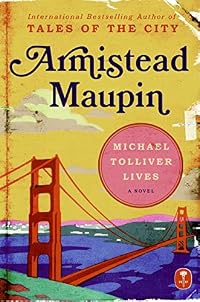
Inspiration for the Netflix Limited Series, Tales of the CityThe seventh novel in the beloved Tales of the City series, Armistead Maupin's best-selling San Francisco saga.
Nearly two decades after ending his groundbreaking Tales of the City saga of San Francisco life, Armistead Maupin revisits his all-too-human hero Michael Tolliver—the fifty-five-year-old sweet-spirited gardener and survivor of the plague that took so many of his friends and lovers—for a single day at once mundane and show more extraordinary... and filled with the everyday miracles of living.
. show less
Tags
Recommendations





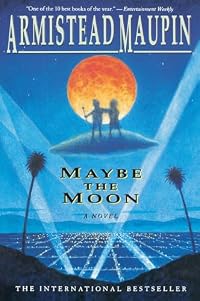
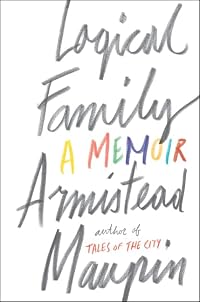






























Member Recommendations
Member Reviews
As I've grown older, I've learned that pleasures aren't always better when shared:
It's a mistake, sometimes show more anyway, to attempt more than the most superficial reconnections to those who once were important to you. There are new faces at the table, and their novelty doesn't make their importance any the less for its fleetingness:
This sweet novel, a continuation of if not sequel to the greatly belovèd Tales of the City series, has done what Author Maupin's stories always do: reached back to me from the slight head start he has always had, assuring and reassuring me that the road *does* go on, the path stays open.
I value that so much. I overlook a certain lack of inspiration, a kind of well-trodden feel, that this story left me with. It's not like authors always need to break new ground, or even strive to, to make their stories delightful. But overlooking leaves a mark on one's pleasure.
Still...pleasure there was. show less
Over the next eight years, almost without noticing, I arrived at a quiet revelation. You could make a home by yourself. You could fill that home with friends and friendly strangers without someone sleeping next to you. You could tend your garden and cook your meals and find predictable pleasure in your own autonomy.
–and–
Still, I gave her a call, wondering if she might have lost someone herself, but our talk was limited to the surreal events we’d just watched on television. A crisis does draw people together, but rarely for the right reason. The old wounds flare up again soon enough; the bond lasts no longer than the terror.
It's a mistake, sometimes show more anyway, to attempt more than the most superficial reconnections to those who once were important to you. There are new faces at the table, and their novelty doesn't make their importance any the less for its fleetingness:
“Who’s Sally Bowles?” asked Ben.
I turned and looked at my younger, less theatrical half. “She used to be married to Ansel Adams.”
“You’re kidding?”
“Yes, I am,” I said.
–and–
And I’d like Ben there, of course, cuddling me into the void with the usual sweet assurances.
This sweet novel, a continuation of if not sequel to the greatly belovèd Tales of the City series, has done what Author Maupin's stories always do: reached back to me from the slight head start he has always had, assuring and reassuring me that the road *does* go on, the path stays open.
I value that so much. I overlook a certain lack of inspiration, a kind of well-trodden feel, that this story left me with. It's not like authors always need to break new ground, or even strive to, to make their stories delightful. But overlooking leaves a mark on one's pleasure.
Still...pleasure there was. show less
This is a follow-up to the Tales of the City series, which ended 17 years ago with Sure of You. If you haven't read the six Tales of the City books yet, you have a treat in store, so do that first, and come back when you've got to the end of Sure of You.
Michael Tolliver Lives isn't really a continuation or a sequel in the traditional sense. In Sure of You, it was clear that Maupin's anger with the way the world was going, especially the AIDS epidemic, was making it difficult for him to continue the light, comic style of the series. It was inevitable that he would have to go away and do something different for a while. I never really expected that he would bring back the Tales of the City characters, but here they are...
The central show more character in the new book is still Maupin's fictional alter ego Michael Tolliver, but the fast-cutting multiple-POV style Maupin developed to suit the newspaper serial format of the original stories is replaced by a more introspective first-person narrative, with Michael himself telling the story. This gives us a more focussed novel -- we are closer to the world of Maybe the Moon and The Night Listener than to the Tales.
On the other hand, we can still revel in Michael's taste for excruciating puns and his ability to relate every situation in life to an old movie (though he's clearly fighting to suppress his "inner Baby Jane" in this book).
Maupin is still a master of comic economy, of course: I always enjoy his wonderful ability to sum up a situation by chucking in a couple of product names ("We sat on the edge of the bed and, almost simultaneously, tore at the Velcro of our Tevas.").
The subject-matter is a natural development of Maupin's concerns in Tales of the City. Michael is nearly twenty years older, and age, in various aspects, is a major new theme. The core of the story is the conflict between "San Francisco" (open-minded tolerance; relationships between people based on free, loving choice) and "Orlando" (closed-minded prejudice; relationships based on biology and contracts). Things are more nuanced than that, of course; Michael is older and more mature now than back in the seventies, and discovers that he has his own barriers of prejudice to overcome when it comes to dealing with his relatives in Florida. But equally, Maupin reminds us that there are still battles to be fought, and the forces of reaction haven't packed up and gone home quite yet (he's probably preaching to the converted here, but it can't do any harm...).
Tales of the City was an important part of my growing up and learning about gay culture. My first reaction on starting this book was incredulity that Michael could be so old already. It makes me feel horribly ancient too! The characters are old friends, and reading the book at times felt like a slightly weepy family reunion do. Not that there's anything wrong with that. show less
Michael Tolliver Lives isn't really a continuation or a sequel in the traditional sense. In Sure of You, it was clear that Maupin's anger with the way the world was going, especially the AIDS epidemic, was making it difficult for him to continue the light, comic style of the series. It was inevitable that he would have to go away and do something different for a while. I never really expected that he would bring back the Tales of the City characters, but here they are...
The central show more character in the new book is still Maupin's fictional alter ego Michael Tolliver, but the fast-cutting multiple-POV style Maupin developed to suit the newspaper serial format of the original stories is replaced by a more introspective first-person narrative, with Michael himself telling the story. This gives us a more focussed novel -- we are closer to the world of Maybe the Moon and The Night Listener than to the Tales.
On the other hand, we can still revel in Michael's taste for excruciating puns and his ability to relate every situation in life to an old movie (though he's clearly fighting to suppress his "inner Baby Jane" in this book).
Maupin is still a master of comic economy, of course: I always enjoy his wonderful ability to sum up a situation by chucking in a couple of product names ("We sat on the edge of the bed and, almost simultaneously, tore at the Velcro of our Tevas.").
The subject-matter is a natural development of Maupin's concerns in Tales of the City. Michael is nearly twenty years older, and age, in various aspects, is a major new theme. The core of the story is the conflict between "San Francisco" (open-minded tolerance; relationships between people based on free, loving choice) and "Orlando" (closed-minded prejudice; relationships based on biology and contracts). Things are more nuanced than that, of course; Michael is older and more mature now than back in the seventies, and discovers that he has his own barriers of prejudice to overcome when it comes to dealing with his relatives in Florida. But equally, Maupin reminds us that there are still battles to be fought, and the forces of reaction haven't packed up and gone home quite yet (he's probably preaching to the converted here, but it can't do any harm...).
Tales of the City was an important part of my growing up and learning about gay culture. My first reaction on starting this book was incredulity that Michael could be so old already. It makes me feel horribly ancient too! The characters are old friends, and reading the book at times felt like a slightly weepy family reunion do. Not that there's anything wrong with that. show less
I was pleasantly surprised by how much I enjoyed this. I've complained before about my increasing frustration and even anger with the last few "Tales of the City" novels, in which all the female characters had to completely renounce their hetero- or bisexuality or instead become HIDEOUS HOME-DESTROYING BITCHES; however, I couldn't resist reading this new, seventh installment, because, well, I'm a completist. (Or an addict. Call it what you will.) But like I said: I was pleasantly surprised. This seventh volume finds Michael Tolliver, the gardener formerly known as Mouse, still alive in the present day despite having been HIV positive since the '80s. This book is much less wacky than its predecessors—there are no plotlines about child show more pornography rings or Jim Jones or the Bohemian Grove. Instead, most of the plot revolves around making peace with the past. Michael takes his new lover with him to Florida to visit his dying mother, and there's a lot of stuff about family (both the one you're born with and the one you make) that seemed very real to me. Maupin even managed to rehumanize Mary Ann a little bit; of course, he also had Michael use "my little spunk bucket" as a term of endearment. Um. It's a step up from "All straight women are EVIL!", anyway. show less
maupin claims that this book is not a "tales of the city" book, and i can see what he means. it is in the first person, told by his most-fitting alter ego, michael tolliver. not much happens through most of the book. there is no shocking twist, no tongue-in-cheek plot line, no short, serialized chapters to rush through. it is merely a check-in, check-up, re-affirmation. but it happens to be pretty. and kinda fulfilling.
when i finished "sure of you," the 6th book of the series, i was actually mad at the author. he had made one character, the supposed heart of the first three books, into a heartless bitch. everyone else just kinda floundered. not much happened, but when it did it was bad. i thought i had to read it, to find out what show more happened next in the stories of these people, but i wish i hadn't.
turns out i really didn't need to. this most recent installment recaps those stories, glossing over the worst defects of character. it brings so many things back into focus. i liked it.
confession time: i am a recent convert to this tales of the city thing. but not really. about ten to twelve years ago, about the time i was about to move to san francisco, or was perhaps just here, i turned on PBS. i was met with a strange scene, an older, besuited man crying on a bench in what turned out to be alamo square, that famous san francisco trollop of the film and t.v. world. and a woman comes up to him, talks to him, makes him laugh and gives him a sandwich. i knew the woman was olympia dukakis, because i grew up in massachusetts and was too young to vote when her cousin ran for president. but i did get to see her cheer him on, her academy award clenched in her proud fist, an award she won for moonstruck, a movie i really really liked.
so, yeah, on the t.v. there she is. and she cheers this man, and feeds him, and the credits roll. and i watched that and thought, "what the fuck was that?"
i didn't know what it was, but i knew that feeling of being greeted by strangers on these wonderfully tilted streets, the way that chance seemed to follow on my heels as i walked them. i knew that i held that image in my mind as i began to learn how to maneuver myself around my new home. i finally found out what the story was when my brother, also a recent transplant to these parts, started renting the mini-series. tales of the city. oh yeah, think i heard of that.
it wasn't until a copy of the first book fell into my lap (almost literally) so very recently, a decade after the image of that meeting in the park was burned into my brain, that i finally learned the rest of the story. and i didn't intend to read on. i thought the first was enough. and then a copy of the second book fell into my lap (pretty literally). and i was hooked.
so this most recent book (i kinda hope it is the last, but i have read otherwise) feels very much like coming full circle in so many ways. without even knowing it, the characters that armistead maupin has created have influenced me, comforted me, shown me around the city.
for that i thank them. show less
when i finished "sure of you," the 6th book of the series, i was actually mad at the author. he had made one character, the supposed heart of the first three books, into a heartless bitch. everyone else just kinda floundered. not much happened, but when it did it was bad. i thought i had to read it, to find out what show more happened next in the stories of these people, but i wish i hadn't.
turns out i really didn't need to. this most recent installment recaps those stories, glossing over the worst defects of character. it brings so many things back into focus. i liked it.
confession time: i am a recent convert to this tales of the city thing. but not really. about ten to twelve years ago, about the time i was about to move to san francisco, or was perhaps just here, i turned on PBS. i was met with a strange scene, an older, besuited man crying on a bench in what turned out to be alamo square, that famous san francisco trollop of the film and t.v. world. and a woman comes up to him, talks to him, makes him laugh and gives him a sandwich. i knew the woman was olympia dukakis, because i grew up in massachusetts and was too young to vote when her cousin ran for president. but i did get to see her cheer him on, her academy award clenched in her proud fist, an award she won for moonstruck, a movie i really really liked.
so, yeah, on the t.v. there she is. and she cheers this man, and feeds him, and the credits roll. and i watched that and thought, "what the fuck was that?"
i didn't know what it was, but i knew that feeling of being greeted by strangers on these wonderfully tilted streets, the way that chance seemed to follow on my heels as i walked them. i knew that i held that image in my mind as i began to learn how to maneuver myself around my new home. i finally found out what the story was when my brother, also a recent transplant to these parts, started renting the mini-series. tales of the city. oh yeah, think i heard of that.
it wasn't until a copy of the first book fell into my lap (almost literally) so very recently, a decade after the image of that meeting in the park was burned into my brain, that i finally learned the rest of the story. and i didn't intend to read on. i thought the first was enough. and then a copy of the second book fell into my lap (pretty literally). and i was hooked.
so this most recent book (i kinda hope it is the last, but i have read otherwise) feels very much like coming full circle in so many ways. without even knowing it, the characters that armistead maupin has created have influenced me, comforted me, shown me around the city.
for that i thank them. show less
I've just finished this after devouring it in two sittings. My first thoughts are that this could be my favourite of the Tales of the City series. Written in the first person it is a more intimate and tender account of Mouse / Michael Tolliver's life now. In fact I had tears rolling down my cheeks for the last two chapters, not just because of the story, but also because it was like coming to the end of a reunion with long lost but much loved friends. Armistead Maupin should be really proud of this book, it has a genuine warmth that is very hard to find in books, and somehow it never slips into corniness. I think maybe it helps that the story isn't as eventful and action packed as some of the earlier ones, it reflects the changes to show more Mouse's life as he approaches old age, as he looks back to old loves and friends as much as he looks ahead with an acceptance that life will never be as it was, but that doesn't mean there won't be happiness and pleasures of a different kind. Altogether a hopeful, affectionate book, this has left me with a mix of sadness and happiness, not an unpleasant combination actually. Mr Maupin I salute you.. show less
It was tough to reacquaint myself with my favorite Tales of the City characters now that they're in their 50s. But once I adjusted to the reality of aging, the book was really great. A bit less carefree than the earlier books, but the tone matches the series' new adulthood well.
Light, not terribly involving story of the now 50+ Barbary Lane characters. The heralding and overly written angle of Michael's marriage to his young husband Ben seems a bit outdated given today's acceptance of "gay" marriage, which at the time of publication was a controversial. Still, Maupin's prose is fun to read and very witty.
Members
- Recently Added By
Lists

Best 21st Century Books (So Far)
670 works; 86 members

Books Set in California
110 works; 15 members

Good LGBT fiction for LGBT folk and friends
537 works; 54 members

Books Set in San Francisco
31 works; 8 members

Books Read in 2024
4,623 works; 126 members
Author Information

40+ Works 24,027 Members
Armistead Maupin was born in Washington D.C. on May 13, 1944. He received a B.A. from the University of North Carolina at Chapel Hill. He served as a naval officer in the Mediterranean and with the River Patrol Force in Vietnam. He worked as a reporter for a newspaper in Charleston, South Carolina, before being assigned to the San Francisco bureau show more of the Associated Press in 1971. In 1976, he launched his groundbreaking Tales of the City serial in the San Francisco Chronicle. The series describes a group of characters that live together in a boarding house in San Francisco. Eventually, these Tales were collected into a series of six novels. In 1993, the British Broadcasting Company adapted them for a television series that aired on PBS in 1994. His other works include Maybe the Moon, Michael Tolliver Lives, and The Days of Anna Madrigal. The Night Listener was adapted into a movie starring Robin Williams and Toni Collette. (Bowker Author Biography) show less
Some Editions
Awards and Honors
Series

Common Knowledge
- Canonical title
- Michael Tolliver Lives
- Original title
- Michael Tolliver Lives
- Original publication date
- 2007
- People/Characters
- Michael Tolliver; Brian Hawkins; Anna Madrigal; Ben McKenna
- Important places
- San Francisco, California, USA
- First words
- Not long ago, down on Castro Street, a stranger in a Giants parka gave me a loaded glance as we passed each other in front of Cliff's Hardware.
- Last words
- (Click to show. Warning: May contain spoilers.)And more than I'd ever expected.
Classifications
Statistics
- Members
- 1,474
- Popularity
- 15,712
- Reviews
- 52
- Rating
- (3.77)
- Languages
- English, French, German
- Media
- Paper, Audiobook, Ebook
- ISBNs
- 24
- UPCs
- 1
- ASINs
- 13