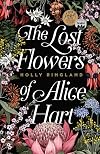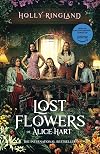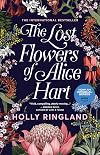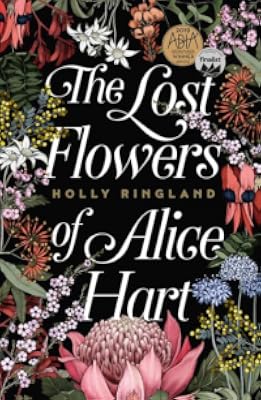
The Lost Flowers of Alice Hart
by Holly Ringland
On This Page
Description
An enchanting and captivating novel about how our untold stories haunt us — and the stories we tell ourselves in order to survive.After her family suffers a tragedy, nine-year-old Alice Hart is forced to leave her idyllic seaside home. She is taken in by her grandmother, June, a flower farmer who raises Alice on the language of Australian native flowers, a way to say the things that are too hard to speak.
Under the watchful eye of June and the women who run the farm, Alice settles, but show more grows up increasingly frustrated by how little she knows of her family's story. In her early twenties, Alice's life is thrown into upheaval again when she suffers devastating betrayal and loss. Desperate to outrun grief, Alice flees to the dramatically beautiful central Australian desert. In this otherworldly landscape Alice thinks she has found solace, until she meets a charismatic and ultimately dangerous man.
Spanning two decades, set between sugar cane fields by the sea, a native Australian flower farm, and a celestial crater in the central desert, The Lost Flowers of Alice Hart follows Alice's unforgettable journey, as she learns that the most powerful story she will ever possess is her own.
. show less
Tags
Recommendations







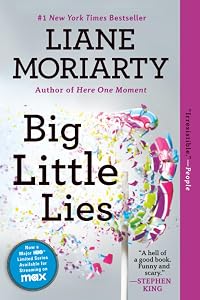
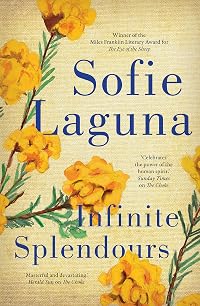
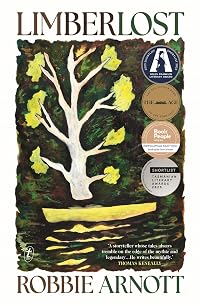
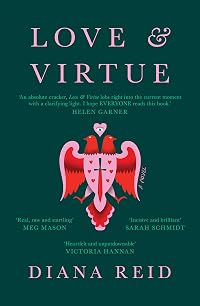






Member Reviews
When a fire destroys her Australian coastal home and culminates in the death of her parents, Alice goes to live with her grandmother on her flower farm which is also a refuge for women. As Alice grows older, she finds she has a certain connection with flowers and that she can use them to say things she cannot voice. But then a sudden turn of events has Alice on the run into the desert in search of a different life.
I very much enjoyed this story, the first half maybe more than the second. I love the idea of the language of flowers voicing words you cannot say in person. Fire and butterflies are also used as a way of symbolising change and metamorphosis. Alice is like a phoenix rising from the ashes in many ways as she opens her wings and show more develops into a beautiful butterfly. Some of the events in the second half of the book felt a little convenient at times as if they were trying to push the story along, hence my reason for it not being a 5* read. It’s a lovely story all the same. It’s well written and meaningful with a sort of fairytale feel about it. It’s a story about family secrets, finding yourself again and the meaning of home, an engaging and worthwhile read. I was sad when I turned the last page. show less
I very much enjoyed this story, the first half maybe more than the second. I love the idea of the language of flowers voicing words you cannot say in person. Fire and butterflies are also used as a way of symbolising change and metamorphosis. Alice is like a phoenix rising from the ashes in many ways as she opens her wings and show more develops into a beautiful butterfly. Some of the events in the second half of the book felt a little convenient at times as if they were trying to push the story along, hence my reason for it not being a 5* read. It’s a lovely story all the same. It’s well written and meaningful with a sort of fairytale feel about it. It’s a story about family secrets, finding yourself again and the meaning of home, an engaging and worthwhile read. I was sad when I turned the last page. show less
This book's got a bit of everything: inter-generational saga, romance, a touch of magic realism and even the odd bush noir overtone. Holly Ringland has created a deeply sympathetic heroine in Alice Hart. I quailed in fear right along with her as she weathered her father's terrifying rages, and I felt her bone-deep love of books and the transformative magic of a story.
Floriography was a Victorian fashion for saying things with flowers, for example, jonquils signified affection, returned. Ringland has adapted the 19th-century European fad to encompass a multitude of native Australian flora. This device allows our protagonist and other characters to express their emotions when words fail them, as well as driving a reasonable amount of the show more narrative. One of the joys of reading this book was the collection of beautiful illustrations, not only the cover art, which is outstanding, but the opening pages of each chapter. In this age of electronic books, it was so lovely to have this extra bonus of holding a beautiful object while I read. show less
Floriography was a Victorian fashion for saying things with flowers, for example, jonquils signified affection, returned. Ringland has adapted the 19th-century European fad to encompass a multitude of native Australian flora. This device allows our protagonist and other characters to express their emotions when words fail them, as well as driving a reasonable amount of the show more narrative. One of the joys of reading this book was the collection of beautiful illustrations, not only the cover art, which is outstanding, but the opening pages of each chapter. In this age of electronic books, it was so lovely to have this extra bonus of holding a beautiful object while I read. show less
The moving and exquisite tale of a young girl, Alice Hart, navigating her way to womanhood through a miasma of domestic violence and family secrets, The Lost Flowers is an impressive debut novel.
In particular, the first half of the novel is captivating. The use of the language of flowers is a clever concept to tie elements of the story together, but a couple of times it seemed a little forced.
The book is presented beautifully, and somebody (or somebodies) at the publisher deserve resounding congratulations for the cover art and the detailed illustrations of flowers inside. Simply for the pleasure of holding this book in your hands, it's very much worth reading.
The first sentence! Such an attention grabber!
There is, of course, a show more dissonance between the beauty of the flowers and the horror of the domestic violence, loss, damaged relationships, grief and guilt at the heart of the novel. I always cringe when reading these scenes because I know it's going to end badly - especially for the dog - more than once in Alice's life. Like many children of abusive fathers, she enters a relationship with another abuser, and that is a situation that is unresolved. Violent but gorgeous Dylan gets away not only with knocking Alice about, but also (like many bullies) with turning the tables on her by reporting her for domestic violence. I felt that, for Alice and for many domestic abuse victims, there really is no getting away from it.
Towards the end of the novel, it seems that the carefully crafted story-with-flower-language hurries on to a conclusion, and that was a little disappointing. The sudden recovery of the lost brother after the death of June (the alcoholic grandmother with the magnificent flower farm) felt a little forced - and Sally, much as I loved her and wondered what had become of her, is really too good for the tenor of the rest of the novel, in that she doesn't display human flaws (apart from stupidly having a one night stand with Alice's horrible father Clem Hart. Ugh.).
I found I could enter the mindset of most of the women in this novel, which is no mean feat. I found it more difficult to engage with the male characters, either because I am predisposed to think that there is no excuse for domestic violence, or because the author actually places the reader in the position of the abused - we don't understand, we just suffer.
All in all, an intriguing novel and one which will repay the reader with much to think about and talk about. If you are part of a reading group, definitely put this on the list for 2018! show less
In particular, the first half of the novel is captivating. The use of the language of flowers is a clever concept to tie elements of the story together, but a couple of times it seemed a little forced.
The book is presented beautifully, and somebody (or somebodies) at the publisher deserve resounding congratulations for the cover art and the detailed illustrations of flowers inside. Simply for the pleasure of holding this book in your hands, it's very much worth reading.
The first sentence! Such an attention grabber!
There is, of course, a show more dissonance between the beauty of the flowers and the horror of the domestic violence, loss, damaged relationships, grief and guilt at the heart of the novel. I always cringe when reading these scenes because I know it's going to end badly - especially for the dog - more than once in Alice's life. Like many children of abusive fathers, she enters a relationship with another abuser, and that is a situation that is unresolved. Violent but gorgeous Dylan gets away not only with knocking Alice about, but also (like many bullies) with turning the tables on her by reporting her for domestic violence. I felt that, for Alice and for many domestic abuse victims, there really is no getting away from it.
Towards the end of the novel, it seems that the carefully crafted story-with-flower-language hurries on to a conclusion, and that was a little disappointing. The sudden recovery of the lost brother after the death of June (the alcoholic grandmother with the magnificent flower farm) felt a little forced - and Sally, much as I loved her and wondered what had become of her, is really too good for the tenor of the rest of the novel, in that she doesn't display human flaws (apart from stupidly having a one night stand with Alice's horrible father Clem Hart. Ugh.).
I found I could enter the mindset of most of the women in this novel, which is no mean feat. I found it more difficult to engage with the male characters, either because I am predisposed to think that there is no excuse for domestic violence, or because the author actually places the reader in the position of the abused - we don't understand, we just suffer.
All in all, an intriguing novel and one which will repay the reader with much to think about and talk about. If you are part of a reading group, definitely put this on the list for 2018! show less
I thoroughly enjoyed "The Lost Flowers of Alice Hart". From the first page, I was captured by Alice and felt I was beside her as she journeyed through life. At times it was heartbreaking but she always found solace amongst the local plants.
Women and their stories played a vital role in this novel as did the sense of place, whether it was the can fields, the ocean, the river with its gigantic gum, Agnus' garden, the flower farm or the harsh beauty of the Northern Territory. They were brought alive by the talented penmanship of the author. The descriptions of Kililpitjara (Earnshaw Crater) fascinated me, especially with the Sturt desert peas growing in its centre. I desperately wanted to visit it and see this magical sight.
I liked how show more each chapter started with a description of a native Australian flower. While I knew a number of them, there were some I didn't know and had to Google them to see what they looked like. I would love to have seen a photo or coloured illustration included with the descriptions. I think that would have added charm to this novel.
Dealing with family, loss, love identity and secrets, "The Lost Flowers of Alice Hart" was a fabulous debut. show less
Women and their stories played a vital role in this novel as did the sense of place, whether it was the can fields, the ocean, the river with its gigantic gum, Agnus' garden, the flower farm or the harsh beauty of the Northern Territory. They were brought alive by the talented penmanship of the author. The descriptions of Kililpitjara (Earnshaw Crater) fascinated me, especially with the Sturt desert peas growing in its centre. I desperately wanted to visit it and see this magical sight.
I liked how show more each chapter started with a description of a native Australian flower. While I knew a number of them, there were some I didn't know and had to Google them to see what they looked like. I would love to have seen a photo or coloured illustration included with the descriptions. I think that would have added charm to this novel.
Dealing with family, loss, love identity and secrets, "The Lost Flowers of Alice Hart" was a fabulous debut. show less
“This is the story of 9yo Alice Hart through to adulthood, as she learns that the most powerful story that she will ever possess is her own; and includes a language of Australian native flowers as a way to say the things that are too hard to speak” - Holly Ringland.
• • •
This novel is equally devastating and inspiring. It is a truly beautiful read.
The book touches on many stories of male perpetuated violence and the women that survive it, as well as how hard that pattern & generational cycle can be to break.
There are beautiful tributes to the essence of outback Australia and it’s unique flora; and to the traditional owners. While the aboriginal stories mentioned are fictional, the relationship to the land and the fight to show more educate and earn respect for traditional values rung very true.
I have nothing but praise and admiration. .
**************************************************
I've seen a few reviews criticizing or expressing concern over the Domestic abuse and the flowers aspect, I will briefly address below- (there is what you may consider spoilers nested in these notes below)
FLOWERS
The book mentions flowers consistently throughout, there is a language of flowers influenced by the Victorian era but reinvented here in an Australian context. These flowers tie this family together, are use express ideas and feelings throughout out the books, specifically for the main character who has experience intense childhood trauma and is a selective mute. It serves to create a strong visual. I cannot comment on its likeness to another book about the language of flowers but from what I've heard its not the same.
ABUSE & TRAUMA
I've run a program in a Domestic & Family Violence Center and have training on the subjects, as well as the affects of trauma. My comments all come from me experience in this sector in Australia.
If you feel that the representation in this novel was unrealistic you may not be aware of the true extent of this issues in today's society and I do encourage you to look into it. It is a huge topic with many layers and factors.
Male perpetrated violence is the majority of domestic abuse incidents (this includes male and female victims).
There is a pattern of abuse that is made very clear in this novel with more than on character. There is also the generational cycle which is a very real thing. Statistically many children of abusive households will go on to be victims again as adults or become perpetrators themselves. Many take to substance abuse as a coping mechanism, as another character does in this book.
Manipulation is abused in most relationships - including friendships and this is not limited to DV relationships.
Trauma is different for every person. PTSD is not limited to veterans. Sometimes a person experiences a large situation and walk away 'fine' and then what you may consider to be a small issues will be the breaking point.
Childhood trauma is especially nasty and deep rooted, particularly if the child does not get counselling to deal with these issues. Trauma will be displayed in a very physical reaction when not addressed in some people.
I'm sorry to report I have worked with women who have experienced horrific things, and I was not at all surprised by the character portrayals in this book, and find them to be accurate and not at all exaggerated. I do realize for the typical person this may seem far fetched but from experience I'm saddened to say its not unbelievable in the slightest.
Sorry for the "rant" but things needed to be said. I also recommend "But He Says He Loves Me" by Dr Dina L McMillan if you are looking for a non-fictional educational tool about domestic violence and what to do about them. show less
• • •
This novel is equally devastating and inspiring. It is a truly beautiful read.
The book touches on many stories of male perpetuated violence and the women that survive it, as well as how hard that pattern & generational cycle can be to break.
There are beautiful tributes to the essence of outback Australia and it’s unique flora; and to the traditional owners. While the aboriginal stories mentioned are fictional, the relationship to the land and the fight to show more educate and earn respect for traditional values rung very true.
I have nothing but praise and admiration. .
**************************************************
I've seen a few reviews criticizing or expressing concern over the Domestic abuse and the flowers aspect, I will briefly address below- (there is what you may consider spoilers nested in these notes below)
FLOWERS
The book mentions flowers consistently throughout, there is a language of flowers influenced by the Victorian era but reinvented here in an Australian context. These flowers tie this family together, are use express ideas and feelings throughout out the books, specifically for the main character who has experience intense childhood trauma and is a selective mute. It serves to create a strong visual. I cannot comment on its likeness to another book about the language of flowers but from what I've heard its not the same.
ABUSE & TRAUMA
I've run a program in a Domestic & Family Violence Center and have training on the subjects, as well as the affects of trauma. My comments all come from me experience in this sector in Australia.
If you feel that the representation in this novel was unrealistic you may not be aware of the true extent of this issues in today's society and I do encourage you to look into it. It is a huge topic with many layers and factors.
Male perpetrated violence is the majority of domestic abuse incidents (this includes male and female victims).
There is a pattern of abuse that is made very clear in this novel with more than on character. There is also the generational cycle which is a very real thing. Statistically many children of abusive households will go on to be victims again as adults or become perpetrators themselves. Many take to substance abuse as a coping mechanism, as another character does in this book.
Manipulation is abused in most relationships - including friendships and this is not limited to DV relationships.
Trauma is different for every person. PTSD is not limited to veterans. Sometimes a person experiences a large situation and walk away 'fine' and then what you may consider to be a small issues will be the breaking point.
Childhood trauma is especially nasty and deep rooted, particularly if the child does not get counselling to deal with these issues. Trauma will be displayed in a very physical reaction when not addressed in some people.
I'm sorry to report I have worked with women who have experienced horrific things, and I was not at all surprised by the character portrayals in this book, and find them to be accurate and not at all exaggerated. I do realize for the typical person this may seem far fetched but from experience I'm saddened to say its not unbelievable in the slightest.
Sorry for the "rant" but things needed to be said. I also recommend "But He Says He Loves Me" by Dr Dina L McMillan if you are looking for a non-fictional educational tool about domestic violence and what to do about them. show less
“Life is lived forward but only understood backward.”
This is the debut novel by Australian author Holly Ringland, a lyrical story that shifts between fairytale and reality, love and loss. Alice Hart grows up in coastal Queensland, a childhood that oscillates between the wonder and beauty of the sea, the garden, and her mother’s stories; and fear at her father’s rages and dark moods. One fiery night it all comes to an end and she goes to live with her grandmother June, on Thornfield, a wildflower farm full of secrets and silence, the language of flowers being the preferred speech. After a stunning betrayal Alice runs to the desert country and begins to work as a ranger on Kililpitjara, a meteor crater in the red centre of show more Australia. Here she meets the handsome Dylan and falls head over heels in love, not recognizing the danger he poses.
I found this to be a beautifully written book, with a feeling of magic and enchantment. There are many sad moments in the book, and family violence is a central theme but handled sensitively. There are troubled relationships, like that with her authoritarian grandmother, trying to protect but ultimately driving Alice away. There are also moments of sweetness like Alice’s friendship with Oggi and the dog Harry. Alice is an endearing child although as an adult mildly irritating at times. The use of invented places in central Australia with accompanying made up Indigenous stories did not sit well with me, as the sense of place was so vital to the story. I also found the audiobook did not quite live up to the story and struggled somewhat with the different accents. Nevertheless a great read I would definitely recommend. show less
This is the debut novel by Australian author Holly Ringland, a lyrical story that shifts between fairytale and reality, love and loss. Alice Hart grows up in coastal Queensland, a childhood that oscillates between the wonder and beauty of the sea, the garden, and her mother’s stories; and fear at her father’s rages and dark moods. One fiery night it all comes to an end and she goes to live with her grandmother June, on Thornfield, a wildflower farm full of secrets and silence, the language of flowers being the preferred speech. After a stunning betrayal Alice runs to the desert country and begins to work as a ranger on Kililpitjara, a meteor crater in the red centre of show more Australia. Here she meets the handsome Dylan and falls head over heels in love, not recognizing the danger he poses.
I found this to be a beautifully written book, with a feeling of magic and enchantment. There are many sad moments in the book, and family violence is a central theme but handled sensitively. There are troubled relationships, like that with her authoritarian grandmother, trying to protect but ultimately driving Alice away. There are also moments of sweetness like Alice’s friendship with Oggi and the dog Harry. Alice is an endearing child although as an adult mildly irritating at times. The use of invented places in central Australia with accompanying made up Indigenous stories did not sit well with me, as the sense of place was so vital to the story. I also found the audiobook did not quite live up to the story and struggled somewhat with the different accents. Nevertheless a great read I would definitely recommend. show less
Oh this book is so beautiful! I can't remember the last time I found a book that drew me in so instantaneously! I was literally hooked from the second page!
Nine year old Alice Hart lives on a cane farm in a fairy tale world with her mother that helps shield her from her abusive father's dark moods. When tragedy strikes, Alice's world is turned upside down when she goes to live with the grandmother she never knew she had on her native flower farm. And so begins a story of generational strife, family secrets & finding your own way.
When we first meet Alice, the story has a dream-like quality as Alice & her mother find ways to cope with her father's abuse. The descriptions are so vivid they almost jump off the page. The prose is so show more beautiful & written so clearly you can almost see it playing out in front of you. I had quite a few favourite quotes from this book too.
As the story progresses the writing loses that quality as Alice comes to grips with her new circumstances. The story still holds you in it's grasp though!
I never once lost interest in this book. It pulled on my heartstrings from the start & I had such a hard time putting it down, it only took me three days to read it. This is a new firm favourite & definite five star read. show less
Nine year old Alice Hart lives on a cane farm in a fairy tale world with her mother that helps shield her from her abusive father's dark moods. When tragedy strikes, Alice's world is turned upside down when she goes to live with the grandmother she never knew she had on her native flower farm. And so begins a story of generational strife, family secrets & finding your own way.
When we first meet Alice, the story has a dream-like quality as Alice & her mother find ways to cope with her father's abuse. The descriptions are so vivid they almost jump off the page. The prose is so show more beautiful & written so clearly you can almost see it playing out in front of you. I had quite a few favourite quotes from this book too.
As the story progresses the writing loses that quality as Alice comes to grips with her new circumstances. The story still holds you in it's grasp though!
I never once lost interest in this book. It pulled on my heartstrings from the start & I had such a hard time putting it down, it only took me three days to read it. This is a new firm favourite & definite five star read. show less
Members
- Recently Added By
Lists


Author Information

5 Works 862 Members
Some Editions
Awards and Honors
Awards
Distinctions
Work Relationships
Has the adaptation
Common Knowledge
- Canonical title*
- Ascolta i fiori dimenticati
- Original title
- The Lost Flowers of Alice Hart
- Important places
- Australia
*Some information comes from Common Knowledge in other languages. Click "Edit" for more information.
Classifications
Statistics
- Members
- 649
- Popularity
- 44,705
- Reviews
- 17
- Rating
- (3.73)
- Languages
- 17 — Catalan, Chinese, Czech, Dutch, English, Finnish, French, German, Hungarian, Italian, Norwegian, Polish, Portuguese, Romanian, Spanish, Swedish, Turkish
- Media
- Paper, Audiobook, Ebook
- ISBNs
- 48
- ASINs
- 9