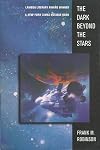
The Dark Beyond the Stars
by Frank M. Robinson
On This Page
Description
For two thousand years, the starshipAstronhas search the galaxy for alien life--without success. Now, just as the ship is falling apart, the only direction left to explore is across the Dark, a one-hundred-generation journey through empty space. The ship's captain--immortal, obessed--refuses to abandon the quest. He will cross the Dark, or destroy the ship trying. Only Sparrow, a young crewman uncertain of his own past, can stand against the captain, and against the lure and challenge of the show more dark beyond the stars.... show lessTags
Recommendations




















Member Reviews
A truly excellent sci-fi book in my estimation.
This is a sci-fi novel in the spirit of the best and reminded me in a few ways of Frank Herbert's Dune. The story is good, but the underlying discussion of loneliness, humanity, the mind, morality and evolution make this one of the best books I've read.
I'd seen some reports that this book is full of gay sex. It's not. Not all of the characters are entirely heterosexual, and it is clear that Robinson has created a future where sexuality isn't the issue that it can be today.
It's unforunately not so easy to get hold of this book now. It seems to be out of print, not in many/any libraries and unavailable in eBook form. I bought a used copy from a well known online marketplace.
This is a sci-fi novel in the spirit of the best and reminded me in a few ways of Frank Herbert's Dune. The story is good, but the underlying discussion of loneliness, humanity, the mind, morality and evolution make this one of the best books I've read.
I'd seen some reports that this book is full of gay sex. It's not. Not all of the characters are entirely heterosexual, and it is clear that Robinson has created a future where sexuality isn't the issue that it can be today.
It's unforunately not so easy to get hold of this book now. It seems to be out of print, not in many/any libraries and unavailable in eBook form. I bought a used copy from a well known online marketplace.
A fantastic read. The whole idea of mult-generational spaceflight has always grabbed me, and this is a doozy of a story. A massive ship launched many generation ago, now steadily breaking down, a crew who have no real idea what their purpose is, performing routine and to them seemingly meaningless actions repeatedly and seeking escape in sex, and a captain reminiscent of Ahab, driven, determined and who will stop at nothing to conceal his darkest secret. Opposed to him is the likeable Sparrow, who is unique among the ships' crew in apparently being as immortal as the captain. How Sparrow breaks the captain's iron grip, reveals the real secret of the Astron, and his own true identity is skilfully handled. The resolution between Kusaka show more and Sparrow is beautifully done, and the final few pages where Sparrow presides over succeeding generations, who remind him of former crewmen he knew, and then reaches Earth to find that while they were searching for aline life, but alien life has finally discovered them is wisttful, thought-provoking and absorbing. Love this book. show less
Robinson, Frank M. The Dark Beyond the Stars. Tor, 1991.
Sparrow, a crewmember on a generation starship, wakes in the medical bay with partial amnesia and vague memories of a serious fall during a planetary exploration. All his crewmates, except the captain, have names drawn from birds, the Bible, or Shakespeare. He has no clear memories of any of them, but they all seem to expect something from him. As his memory slowly returns, he finds himself more and more embroiled in the complex politics onboard. The ship is 100 generations out from Sol on a mission to discover another communicating intelligence. So far, they have found no hint of life of any kind. It seems that the solution to Frank Drake’s 1961 equation identifying the unknowns show more in estimating the chances of meeting other intelligent life is as uncertain as ever. Every compartment in the ship is a kind of holodeck that allows the crew to ignore the ship’s dilapidated condition. Is the mission a fool’s errand, or is there an alien civilization at the next star along the way? Some readers found the book a bit slow, but the character drama kept me engaged. show less
Sparrow, a crewmember on a generation starship, wakes in the medical bay with partial amnesia and vague memories of a serious fall during a planetary exploration. All his crewmates, except the captain, have names drawn from birds, the Bible, or Shakespeare. He has no clear memories of any of them, but they all seem to expect something from him. As his memory slowly returns, he finds himself more and more embroiled in the complex politics onboard. The ship is 100 generations out from Sol on a mission to discover another communicating intelligence. So far, they have found no hint of life of any kind. It seems that the solution to Frank Drake’s 1961 equation identifying the unknowns show more in estimating the chances of meeting other intelligent life is as uncertain as ever. Every compartment in the ship is a kind of holodeck that allows the crew to ignore the ship’s dilapidated condition. Is the mission a fool’s errand, or is there an alien civilization at the next star along the way? Some readers found the book a bit slow, but the character drama kept me engaged. show less
My reactions to reading this book in 1992. Spoilers follow.
Up until the last six paragraphs, I was impressed by how much Robinson got away with in this book. He gives us 408 pages of little physical action or violence bolstered with off the shelf sf elements of dubious plausbility: shadowscreens whose operation is unclear as is how the falsies (virtual reality projections filtered out -- not created -- by eye masks) work; a centuries old scheme to breed traits of empathy, sensitivity, and nonviolence into a "new" crew (delibrate breeding for personality traits seems barely plausible); an obsessed captain whose personality is locked by millennia old "conditioning" (always a pulp favorite -- I remember one review of this book emphasizing show more Robinson's love of pulp sf and how it shows up here); computers that require great manual dexterity to use effectively.
Yet, it moves, it's thrilling.
The book reminded me, with its central character of Captain Michael Kusaka, of Jack London's The Sea Wolf or Herman Melville's Moby Dick with their mad, obsessed, sometimes violent captains. The starship venturing for eons also reminded me of Poul Anderson's Tau Zero. Robinson gives us a story relying on the quirks and interactions of personalities (an interesting part is how the recombination of genes through the centuries produces, for Sparrow/Raymond Stone, an echo of previous crew members he's known) played out over centuries, long term conspiracies of eugenics and mutiny, the loveliness of being the sole spark of life in the universe, a plausible ship's culture (lots of sex in this book but it's not graphic, contrived, or unnecessary), a starship never intended to voyage for longer than 80 years (40 out, 40 back), an Earth vacant of man (very probably, not definitely), the relations of a near immortal to the crew "mayflies", Sparrow's discovery of his past lives, constant revelations of intrigue, obsession, and personality.
In short, an interesting, very well done story (with some good science on why life would be so rare) that Robinson completley sours with his last 6 paragraphs. One blurb says this is a fine parable on the preciousness of life. That's right. But Robinson spoils his sorrowful, mournful, but hopeful ending mood and theme with an ending that seems contrived, pulpy, and thematically inconsistent: The possibility of a hostile alien life form destroying man on Earth. It's a tonally jarring out of place ending an editor whould have removed. show less
Up until the last six paragraphs, I was impressed by how much Robinson got away with in this book. He gives us 408 pages of little physical action or violence bolstered with off the shelf sf elements of dubious plausbility: shadowscreens whose operation is unclear as is how the falsies (virtual reality projections filtered out -- not created -- by eye masks) work; a centuries old scheme to breed traits of empathy, sensitivity, and nonviolence into a "new" crew (delibrate breeding for personality traits seems barely plausible); an obsessed captain whose personality is locked by millennia old "conditioning" (always a pulp favorite -- I remember one review of this book emphasizing show more Robinson's love of pulp sf and how it shows up here); computers that require great manual dexterity to use effectively.
Yet, it moves, it's thrilling.
The book reminded me, with its central character of Captain Michael Kusaka, of Jack London's The Sea Wolf or Herman Melville's Moby Dick with their mad, obsessed, sometimes violent captains. The starship venturing for eons also reminded me of Poul Anderson's Tau Zero. Robinson gives us a story relying on the quirks and interactions of personalities (an interesting part is how the recombination of genes through the centuries produces, for Sparrow/Raymond Stone, an echo of previous crew members he's known) played out over centuries, long term conspiracies of eugenics and mutiny, the loveliness of being the sole spark of life in the universe, a plausible ship's culture (lots of sex in this book but it's not graphic, contrived, or unnecessary), a starship never intended to voyage for longer than 80 years (40 out, 40 back), an Earth vacant of man (very probably, not definitely), the relations of a near immortal to the crew "mayflies", Sparrow's discovery of his past lives, constant revelations of intrigue, obsession, and personality.
In short, an interesting, very well done story (with some good science on why life would be so rare) that Robinson completley sours with his last 6 paragraphs. One blurb says this is a fine parable on the preciousness of life. That's right. But Robinson spoils his sorrowful, mournful, but hopeful ending mood and theme with an ending that seems contrived, pulpy, and thematically inconsistent: The possibility of a hostile alien life form destroying man on Earth. It's a tonally jarring out of place ending an editor whould have removed. show less
Lots of intrigue, mystery, which made it a little challenging for me. Def. thought-provoking. And fun hard sf, too. Well-done, and recommended.
This novel starts with the main character losing his memory due to an accident while exploring a planet. As Sparrow struggles to understand his place in the lives of the people around him and on the starship Astron (a generational ship traveling through the galaxy in search of life on other planets), he observes the sometimes suspicious behavior of his enemies and apparent friends, attitudes and reactions towards him sometimes incongruent with what little information Sparrow has been given about his past, and wonders at what is being hidden from him, and if his accident may not have been so accidental. Along with Sparrows personal struggles are the struggles of the Astron crew, always hoping to finally return to earth, dealing with an show more obsessive captain that may take them on a journey which the ship is incapable of surviving.
The Dark Beyond the Stars starts off very promising. From the moment Sparrow begins interacting with his crew mates, it has you analyzing their behavior and grabbing for what clues, if any, they give in regards to Sparrows identity and relationship with them, and what they may be trying to hide. Supporting characters have realistic personalities and interesting dialog.
But this is a very, VERY character driven novel. At first I was quite happy with this, but after a while, I realized (again? I feel like I've done this before and just keep forgetting) that there's more than one way to be character driven, and it wasn't exactly the kind I like. This novel is about Sparrows struggle and Sparrows feelings and Sparrow's motivation. Other characters are there and he interacts with them, but the bottom line is always how things have affected Sparrow. The crew's psychology as a unit plays a semi-important role in the book, but the others as single characters are not meant to be deeply explored. Now, I don't require huge delving into multiple characters, but what let me down the most was that Sparrow's relationship with others isn't even a huge factor. He has various friendly, romantic, and sexual liaisons that are clearly important to him and affect his attitude, but the novel is one-character driven, not character-relationship driven.
That in and of itself might not be a flaw, but I do think its a semi-dangerous move (on top of the semi-dangerous move of making it so character driven) when there isn't huge amounts of plot or something else to provide a little more tension or momentum. Because while the mystery is intriguing in the beginning, as we find out a little more, it begins to stagnate a little, and even when new revelations are sometimes made I had difficulty reacting with more than vague interest as all it meant was that Sparrow knew a little more. Even when the revelation significantly affected how he saw a friend or other crew member, it wasn't horribly engaging since such things aren't horribly important in this novel, anyway.
Still, while it needs to find some way to make the reader care a little more about its mystery and developments, this is a pretty good read, if just for being a little more intelligent and, yes, character driven than most. Considering it's action-low, interaction-and-inner-musings-heavy style, frankly I'm surprised it turned out as solid as it did. I wouldn't jump to recommend it to anyone in general, but if someone was looking for something a little different and seemed to have the patience, it's worth considering.
(Oh, and a side note for those reading this for this for teh gay. Everyone on the ship is just default bisexual, it seems. But I can't remember any long-term gay relationships mentioned, and certainly none that were important. The most central gay-interest bit was a small section between Sparrow and another man, but it was not exactly a positive experience, and none of it is probably of much interest to a slash fan.) show less
The Dark Beyond the Stars starts off very promising. From the moment Sparrow begins interacting with his crew mates, it has you analyzing their behavior and grabbing for what clues, if any, they give in regards to Sparrows identity and relationship with them, and what they may be trying to hide. Supporting characters have realistic personalities and interesting dialog.
But this is a very, VERY character driven novel. At first I was quite happy with this, but after a while, I realized (again? I feel like I've done this before and just keep forgetting) that there's more than one way to be character driven, and it wasn't exactly the kind I like. This novel is about Sparrows struggle and Sparrows feelings and Sparrow's motivation. Other characters are there and he interacts with them, but the bottom line is always how things have affected Sparrow. The crew's psychology as a unit plays a semi-important role in the book, but the others as single characters are not meant to be deeply explored. Now, I don't require huge delving into multiple characters, but what let me down the most was that Sparrow's relationship with others isn't even a huge factor. He has various friendly, romantic, and sexual liaisons that are clearly important to him and affect his attitude, but the novel is one-character driven, not character-relationship driven.
That in and of itself might not be a flaw, but I do think its a semi-dangerous move (on top of the semi-dangerous move of making it so character driven) when there isn't huge amounts of plot or something else to provide a little more tension or momentum. Because while the mystery is intriguing in the beginning, as we find out a little more, it begins to stagnate a little, and even when new revelations are sometimes made I had difficulty reacting with more than vague interest as all it meant was that Sparrow knew a little more. Even when the revelation significantly affected how he saw a friend or other crew member, it wasn't horribly engaging since such things aren't horribly important in this novel, anyway.
Still, while it needs to find some way to make the reader care a little more about its mystery and developments, this is a pretty good read, if just for being a little more intelligent and, yes, character driven than most. Considering it's action-low, interaction-and-inner-musings-heavy style, frankly I'm surprised it turned out as solid as it did. I wouldn't jump to recommend it to anyone in general, but if someone was looking for something a little different and seemed to have the patience, it's worth considering.
(Oh, and a side note for those reading this for this for teh gay. Everyone on the ship is just default bisexual, it seems. But I can't remember any long-term gay relationships mentioned, and certainly none that were important. The most central gay-interest bit was a small section between Sparrow and another man, but it was not exactly a positive experience, and none of it is probably of much interest to a slash fan.) show less
A generation ship that has been travelling for too long, never finding alien life or a habitable world. An immortal Captain, who slowly loses touch with the Crew; and his kinda-immortal gay lover, who may convince him to turn back to Earth, the only habitable world they'll ever know. Great characters, daring queer relationship for the time.
Members
- Recently Added By
Author Information

61+ Works 2,129 Members
Frank Malcolm Robinson was born in Chicago, Illinois on August 9, 1926. After a tour of duty in the Navy during World War II, he graduated from Beloit College in Wisconsin and then was drafted again to serve in the Korean War. He received a master's degree in journalism from Northwestern University. He was a writer and editor for men's magazines show more including Rogue, Gallery, and Playboy. At Playboy, where he worked from 1969 to 1973, he was the ghostwriter for the Playboy Advisor column, a colloquium of sex and lifestyle advice for men. During this time, he also wrote science-fiction books including The Power, which was made into a television special in 1956 and a film in 1968. He wrote several books with Thomas N. Scortia including The Glass Inferno, The Prometheus Crisis, The Nightmare Factor, and The Gold Crew. Parts of The Glass Inferno were mined in creating the final script for The Towering Inferno and the authors earned a screen credit. His 1991 novel, The Dark Beyond the Stars, was selected as one of The New York Times' notable books of the year. He worked as a speechwriter and adviser to San Francisco city supervisor Harvey Milk, who was assassinated on November 27, 1978 by a disgruntled political rival, Dan White. Robinson had a small role in 2008 film Milk. He died of heart disease and pneumonia on June 30, 2014 at the age of 87. (Bowker Author Biography) show less
Awards and Honors
Series
Belongs to Publisher Series
Gallimard, Folio SF (480)
Work Relationships
Common Knowledge
- Canonical title
- The Dark Beyond the Stars
- Original title
- The Dark Beyond the Stars
- Original publication date
- 1991
- Important places
- Astron (starship)
- Dedication
- For the memory of Thomas N. Scortia
and
For Vincent Di Fate, Richard Berry, and Alex Eisenstein
for encouragement above and beyond... - First words
- The only thing I remembered was that I had seen extraordinary sights on the morning of the day I died.
- Last words
- (Click to show. Warning: May contain spoilers.)Something from Outside had beat us home.
- Blurbers
- Gibson, William
Classifications
Statistics
- Members
- 509
- Popularity
- 59,324
- Reviews
- 10
- Rating
- (3.65)
- Languages
- English, French, German, Spanish
- Media
- Paper, Audiobook
- ISBNs
- 7
- ASINs
- 5