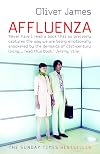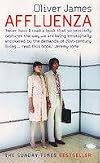
Affluenza
by Oliver James
On This Page
Description
There is currently an epidemic of 'affluenza' throughout the world - an obsessive, envious, keeping-up-with-the-Joneses - that has resulted in huge increases in depression and anxiety among millions. Over a nine-month period, bestselling author Oliver James travelled around the world to try and find out why. He discovered how, despite very different cultures and levels of wealth, affluenza is spreading. Cities he visited include Sydney, Singapore, Moscow, Copenhagen, New York and Shanghai, show more and in each place he interviewed several groups of people in the hope of finding out not only why this is happening, but also how one can increase the strength of one's emotional immune system. He asks- why do so many more people want what they haven't got and want to be someone they're not, despite being richer and freer from traditional restraints? And, in so doing, uncovers the answer to how to reconnect with what really matters and learn to value what you've already got. In other words, how to be successful and stay sane. show lessTags
Recommendations















Member Reviews
I can sum up my emotions about this book in one word. Bilge!
James promises to provide evidence for all he writes and yet mistakes anecdotes for proof, and correlation for causation. I already believe in what he set out to say but he somehow manages to make such a mess of it I wanted to throw the book across the room. His basic premise is that we need to get away from constantly desiring new things, ie greed Capitalism. This is great, I wholeheartedly agree with him on this. However, he underpins his evidence of this by claiming that rich people are unhappy, and poor people are happy. This is a ridiculous generalisation for anyone to make, let alone a clinical psychologist. His evidence is endless, repetitive, anecdotal interviews with show more people that are clearly chosen because they back his viewpoint. I'm sure, given a few hours I could find rich people who are happy and poor people who are unhappy, yet magically he couldn't find any.
At the end of the book there is a section titled 'The Unselfish Capitalist Manifesto' where the book really takes a turn for the bizarre. It ends up being a 37 page tirade against specific Labour MP's and the party as a whole. I'm no fan of politicians in general but none of this ire is aimed at a Conservative MP. He stops just shy of telling people to vote for the Conservatives at the next election but only by the thinnest of margins. It felt as though he decided to use the space at the end of the book as a political campaign, justifying it by the most tenuous links possible to the premise of the book. From time to time I like to seek out books that oppose my viewpoints and they generally provide a few thinking moments or alter my thoughts about something. I think this is a good thing to do. Mental or physical debate to challenge your beliefs is ever more important in an age where we can surround ourselves in an echo chamber. However, this book almost made me go against something I strongly believe in because I hated it so much, and that is a first. show less
James promises to provide evidence for all he writes and yet mistakes anecdotes for proof, and correlation for causation. I already believe in what he set out to say but he somehow manages to make such a mess of it I wanted to throw the book across the room. His basic premise is that we need to get away from constantly desiring new things, ie greed Capitalism. This is great, I wholeheartedly agree with him on this. However, he underpins his evidence of this by claiming that rich people are unhappy, and poor people are happy. This is a ridiculous generalisation for anyone to make, let alone a clinical psychologist. His evidence is endless, repetitive, anecdotal interviews with show more people that are clearly chosen because they back his viewpoint. I'm sure, given a few hours I could find rich people who are happy and poor people who are unhappy, yet magically he couldn't find any.
At the end of the book there is a section titled 'The Unselfish Capitalist Manifesto' where the book really takes a turn for the bizarre. It ends up being a 37 page tirade against specific Labour MP's and the party as a whole. I'm no fan of politicians in general but none of this ire is aimed at a Conservative MP. He stops just shy of telling people to vote for the Conservatives at the next election but only by the thinnest of margins. It felt as though he decided to use the space at the end of the book as a political campaign, justifying it by the most tenuous links possible to the premise of the book. From time to time I like to seek out books that oppose my viewpoints and they generally provide a few thinking moments or alter my thoughts about something. I think this is a good thing to do. Mental or physical debate to challenge your beliefs is ever more important in an age where we can surround ourselves in an echo chamber. However, this book almost made me go against something I strongly believe in because I hated it so much, and that is a first. show less
This book has some really wholesome ideas that we all need to hear now and again. It reminds us that we aren't defined by the brand of our shoes, the cost of our watch and the postcode we live in, it reminds us to be grateful for our abundant lives. However, somewhere around 2/3 of the way through James starts on a diatribe about day care and I start to understand his assumption is that we all work for money, that people using day care must only be doing it because they want more possessions - what about the satisfaction of working hard at work that fulfills you, and at the end of the day sharing some moments of that with your children, hoping that they too will grow up and find such satisfaction. I had to stop reading at this point. He show more has a series of interviews that become increasingly disturbing as he categorises people and sums up their menial existance from his higher plane of knowledge. I wouldn't profess to know a person so well that I can judge them that way, at least I try to remember not to, James should too. show less
I've been meaning to read this for a while, and now that I have I'm really impressed. Perhaps the fact that I don't think I suffer too badly from Affluenza helps! Affluenza, James suggests, is an epidemic sweeping the English speaking world. It consists of an obsession with 'keeping-up-with-the-Joneses', excessive consumerism (buying stuff because you 'want' it instead of because you 'need' it), the need for increased wealth (beyond what you need), property fever - all leading to depression, anxiety and addictions.
Traveling the world's affluent cities (London, New York, Singapore etc) James interviews people who do and don't suffer from Affluenza, and tries to discover what makes some people more or less prone to the virus. He then goes show more on to suggest remedies, such as paying parents to look after their children (instead of forcing them back to work), teaching that it is not necessary to be rich and beautiful to be happy and how being playful, vivacious and authentic helps.
As someone he interview suggests, society is becoming populated by Tin Men from the Wizard of Oz - hollow inside.
I would have liked to have seen more interviews with normal citizens, instead of the stream of millionaires that he visited; and I'm not sure the very vicious attack on the Blairite government was completely necessary - I'd imagine that most governments (of all flavours and in all times) would have mucked it up just as they did (and do).
A fascinating read, certainly made me think about materiality, and asking myself do I 'need' or 'want' that? show less
Traveling the world's affluent cities (London, New York, Singapore etc) James interviews people who do and don't suffer from Affluenza, and tries to discover what makes some people more or less prone to the virus. He then goes show more on to suggest remedies, such as paying parents to look after their children (instead of forcing them back to work), teaching that it is not necessary to be rich and beautiful to be happy and how being playful, vivacious and authentic helps.
As someone he interview suggests, society is becoming populated by Tin Men from the Wizard of Oz - hollow inside.
I would have liked to have seen more interviews with normal citizens, instead of the stream of millionaires that he visited; and I'm not sure the very vicious attack on the Blairite government was completely necessary - I'd imagine that most governments (of all flavours and in all times) would have mucked it up just as they did (and do).
A fascinating read, certainly made me think about materiality, and asking myself do I 'need' or 'want' that? show less
You could sum up most that is of any value in this book with that bon mot from Life's Little Instruction Book: "no-one said, on their deathbed, 'I wish I'd spent more time at the office'."
The first problem, of many, I have with Oliver James' Affluenza is that, for all the weight of scientific research he claims to have done, none of it is advanced in support of the existence of this thing called Affluenza in the first place. James states it as a bare fact - in fact, rather less than that: he includes a questionnaire designed to determine whether you have Affluenza, and then launches into an idiosyncratic monologue of anecdotes which he seems to regard as having the effect of revealing eternal verities.
The questionnaire doesn't give show more you much chance of not having the disease: answering in the affirmative to any one of the 16 statements he poses (grammarians and lawyers note: it's a disjunctive test) consigns you to infection. Given the statements include such outrages to public decency as "I would like to be admired by many people" and "my life would be better if I owned certain things I don't have now" it is difficult to see who, other than a misanthropic Trappist monk, wouldn't be "infected".
Other than Chet, a diabetic, malnourished, disenfranchised, frequently-mugged, misleadingly youthful-looking, church-going, taxi-driving New York immigrant, whom James has credulously (or, more likely, apocryphally) interviewed in the course of his travels.
Chet (who would never cheat on his wife, James confidently assures us) sounds almost too good to be true, as indeed do his "negative" New York examples, multi-millionaire broker Sam (who sounds like he stepped straight out of Wall Street) and Consuela, whom James admits reminds him of the "affluent young Manhattan women described in Jay McInerney's sharply observed novel "Story of My Life". You can't help the feeling James has been swept away by the literature a little.
Affluenza thereafter quickly settles down into a hair-shirt-adulating moan.
In part 3, after some 400 pages of injudiciously edited anecdotes, James takes the gloves off and, he warns the reader, gets "personal". It is quite tempting for a reviewer to do the same - this is, after all, a solution to the modern world's woes from the pen of an obviously angry, Eton-educated psychology graduate whose own aspirations for attention, fame and success seem transparent. In any case this is a book of politics and not pop psychology as it purports to be. James' target is "Selfish Capitalism" and prescriptions such as "reject much of the status quo" have more than a hint of the socialist workers' party leafleteer about them. What riles James, I suspect, is that, given a choice between "spiritually happy" impecunious violent disenfranchisement (the Chet model) and "spiritually barren" materialistic, godless life of sterile consumerism (Sam and Consuela), most people would squarely opt for the latter. And who could blame them: a small sprinkling of philosophical self-reflection leavens naked materialism in a way it tends not to compensate for the effects of violence and lack of access to health, education and justice. In fairness, James doesn't think so: he says, rather presumptuously drawing his readers' conclusions for them, "if you met them both I would be very surprised if you preferred to be Sam rather than Chet")
On the other hand, by the same assertion, James acknowledges that most people (being his readership) already do have this sense of self-reflection. If it is true that they would not like or relate to the cardboard figure of Sam precisely as James has cut him out (and as mentioned, I can't help thinking Sam's outline has been exaggerated) then Sam isn't a symptom of modern life, but an anomaly in it. As it happens, I've worked in the investment banking industry for a decade, and the only character I've come across who even vaguely resembles Sam is Gordon Gekko, and he was a figment of Oliver Stone's imagination.
When it comes down to it, what we have here is a fabulous hook: the name "Affluenza" is an inspired bit of marketing, and the initial premise - that over the last two or three decades our asset-rich/time-poor lives have got themselves out of perspective does resonate (I've hacked this review out on a blackberry on the tube on my way to work - you have to be very disciplined!). I dare say many of us would happily re-trade that equation if we could figure out how, but all the same, our lives are still richly fulfilled in other (non materialistic) perspectives. When you get down to the execution: James' love of anecdote, his badly disguised fifth-form socialist agenda and his laboured prose, the tendency to flip pages becomes hard to resist. show less
The first problem, of many, I have with Oliver James' Affluenza is that, for all the weight of scientific research he claims to have done, none of it is advanced in support of the existence of this thing called Affluenza in the first place. James states it as a bare fact - in fact, rather less than that: he includes a questionnaire designed to determine whether you have Affluenza, and then launches into an idiosyncratic monologue of anecdotes which he seems to regard as having the effect of revealing eternal verities.
The questionnaire doesn't give show more you much chance of not having the disease: answering in the affirmative to any one of the 16 statements he poses (grammarians and lawyers note: it's a disjunctive test) consigns you to infection. Given the statements include such outrages to public decency as "I would like to be admired by many people" and "my life would be better if I owned certain things I don't have now" it is difficult to see who, other than a misanthropic Trappist monk, wouldn't be "infected".
Other than Chet, a diabetic, malnourished, disenfranchised, frequently-mugged, misleadingly youthful-looking, church-going, taxi-driving New York immigrant, whom James has credulously (or, more likely, apocryphally) interviewed in the course of his travels.
Chet (who would never cheat on his wife, James confidently assures us) sounds almost too good to be true, as indeed do his "negative" New York examples, multi-millionaire broker Sam (who sounds like he stepped straight out of Wall Street) and Consuela, whom James admits reminds him of the "affluent young Manhattan women described in Jay McInerney's sharply observed novel "Story of My Life". You can't help the feeling James has been swept away by the literature a little.
Affluenza thereafter quickly settles down into a hair-shirt-adulating moan.
In part 3, after some 400 pages of injudiciously edited anecdotes, James takes the gloves off and, he warns the reader, gets "personal". It is quite tempting for a reviewer to do the same - this is, after all, a solution to the modern world's woes from the pen of an obviously angry, Eton-educated psychology graduate whose own aspirations for attention, fame and success seem transparent. In any case this is a book of politics and not pop psychology as it purports to be. James' target is "Selfish Capitalism" and prescriptions such as "reject much of the status quo" have more than a hint of the socialist workers' party leafleteer about them. What riles James, I suspect, is that, given a choice between "spiritually happy" impecunious violent disenfranchisement (the Chet model) and "spiritually barren" materialistic, godless life of sterile consumerism (Sam and Consuela), most people would squarely opt for the latter. And who could blame them: a small sprinkling of philosophical self-reflection leavens naked materialism in a way it tends not to compensate for the effects of violence and lack of access to health, education and justice. In fairness, James doesn't think so: he says, rather presumptuously drawing his readers' conclusions for them, "if you met them both I would be very surprised if you preferred to be Sam rather than Chet")
On the other hand, by the same assertion, James acknowledges that most people (being his readership) already do have this sense of self-reflection. If it is true that they would not like or relate to the cardboard figure of Sam precisely as James has cut him out (and as mentioned, I can't help thinking Sam's outline has been exaggerated) then Sam isn't a symptom of modern life, but an anomaly in it. As it happens, I've worked in the investment banking industry for a decade, and the only character I've come across who even vaguely resembles Sam is Gordon Gekko, and he was a figment of Oliver Stone's imagination.
When it comes down to it, what we have here is a fabulous hook: the name "Affluenza" is an inspired bit of marketing, and the initial premise - that over the last two or three decades our asset-rich/time-poor lives have got themselves out of perspective does resonate (I've hacked this review out on a blackberry on the tube on my way to work - you have to be very disciplined!). I dare say many of us would happily re-trade that equation if we could figure out how, but all the same, our lives are still richly fulfilled in other (non materialistic) perspectives. When you get down to the execution: James' love of anecdote, his badly disguised fifth-form socialist agenda and his laboured prose, the tendency to flip pages becomes hard to resist. show less
I recently heard a term I found interesting: nuffism, the philosophy of getting by with enough and no more. In a way, this fits with my own beliefs, though I also believe in living comfortably and in widening horizons, both of which can cost a lot of money. Nonetheless, I, like many of my generation, am stifled by the desperation of mass consumerism and one-upmanship, and often seek ways to make escaping that possible in my everyday life.
That's why I picked up this book. I was looking for a discussion on the issues tied in with our consumerist society, as well as some pointers to perhaps avoid said issues. I was not disappointed. Between the covers are some fascinating studies into the prevalance of depression and anxiety across the show more world, and how these appear to be connected to the communal lifestyle and mindset of individual nations. From the US to Japan to Denmark (which is a place in which I'd now very much like to live!), the reader can see what works, what doesn't, and why we are so messed up.
This is certainly an interesting read. The style is, of course, very academic, but the information is worth absorbing if you can bring yourself to do so. show less
That's why I picked up this book. I was looking for a discussion on the issues tied in with our consumerist society, as well as some pointers to perhaps avoid said issues. I was not disappointed. Between the covers are some fascinating studies into the prevalance of depression and anxiety across the show more world, and how these appear to be connected to the communal lifestyle and mindset of individual nations. From the US to Japan to Denmark (which is a place in which I'd now very much like to live!), the reader can see what works, what doesn't, and why we are so messed up.
This is certainly an interesting read. The style is, of course, very academic, but the information is worth absorbing if you can bring yourself to do so. show less
I picked up Affluenza on a whim on a visit to my local Waterstones, yes I do still visit bricks and mortar bookshops, and although I had heard of Oliver James before, I knew very little about him or what to expect.
First off - I finished the book. This is not true of every book I start reading, especially trendy sociological stuff like this. However this is an easy read with plenty of interesting insights.
The book explores the effects of the consumer society on various aspects of our lives and in a variety of societies around the world. At the end of each chapter there are suggested vaccines to protect ourselves against the Affluenza virus.
Many of the examples given throughout the book ring true both from my own experiences and from show more watching those around me at home and at work. Some of the science and statistics offered to back up the arguments in the book required a bit of taking at face value, but I did find myself agreeing with most most of the main points made.
There's a chapter at the end where he warns that he is going to get unrestrained in his suggestions for longer term political solutions to Affluenza and much of this seemed naive and out of touch to me but your mileage may vary.
You probably going to pick up a book like this because you are already pre-disposed to agree with the arguments it is likely to make and this was certainly true in my case. If on the other hand you hold very different views of why the world is the way it is, as I know some of my friends do, then you will probably find this book really annoying!
Rating: 4 out of 10 show less
First off - I finished the book. This is not true of every book I start reading, especially trendy sociological stuff like this. However this is an easy read with plenty of interesting insights.
The book explores the effects of the consumer society on various aspects of our lives and in a variety of societies around the world. At the end of each chapter there are suggested vaccines to protect ourselves against the Affluenza virus.
Many of the examples given throughout the book ring true both from my own experiences and from show more watching those around me at home and at work. Some of the science and statistics offered to back up the arguments in the book required a bit of taking at face value, but I did find myself agreeing with most most of the main points made.
There's a chapter at the end where he warns that he is going to get unrestrained in his suggestions for longer term political solutions to Affluenza and much of this seemed naive and out of touch to me but your mileage may vary.
You probably going to pick up a book like this because you are already pre-disposed to agree with the arguments it is likely to make and this was certainly true in my case. If on the other hand you hold very different views of why the world is the way it is, as I know some of my friends do, then you will probably find this book really annoying!
Rating: 4 out of 10 show less
James gropes towards an interesting thesis but ends up losing it in a sludge of boring anecdotal research (some of which is so obviously unrepresentative as to be pointless - how many psychotic criminal billionaires do you meet every day?) and off colour colloquialisms. Instead he finds truisms. Materialism is bad for you. Unrestrained capitalism breeds materialism. If he had truly examined the link (if there is one) between capitalism and societal neurosis, and thought deeply about just how we have got ourselves into this state, he might have had something new to say.
Instead this book is just a vehicle for his 60s style psychoanalytical homilies and nurture-over-nature polemics, all served up with some warmed over pieties about how show more the first three years of life lay the basis for everything that comes afterwards. With some frankly embarrassing political prescriptions for dessert. show less
Instead this book is just a vehicle for his 60s style psychoanalytical homilies and nurture-over-nature polemics, all served up with some warmed over pieties about how show more the first three years of life lay the basis for everything that comes afterwards. With some frankly embarrassing political prescriptions for dessert. show less
Members
- Recently Added By
Lists

BBC Radio 4 Bookclub
340 works; 13 members
Author Information

13 Works 1,261 Members
Common Knowledge
- Original publication date
- 2007
- First words
- The Affluenza Virus is a set of values which increase our vulnerability to emotional distress.
- Last words
- (Click to show. Warning: May contain spoilers.)If, individually and collectively, we grasp that there is more to life than 'more bigger snacks now', then that authentic, vivacious and playful experience is all you need.
Classifications
Statistics
- Members
- 467
- Popularity
- 65,190
- Reviews
- 11
- Rating
- (3.16)
- Languages
- English, Italian, Portuguese
- Media
- Paper, Audiobook
- ISBNs
- 6
- ASINs
- 4