On This Page
Description
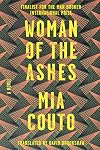
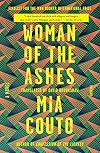
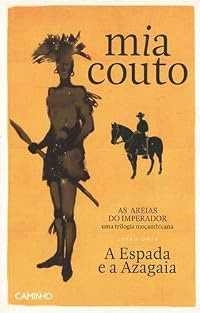
The first in a trilogy about the last emperor of southern Mozambique by one of Africa's most important writers. Southern Mozambique, 1894. Sergeant Germano de Melo is posted to the village of Nkokolani to oversee the Portuguese conquest of territory claimed by Ngungunyane, the last of the leaders of the state of Gaza, the second-largest empire led by an African. Ngungunyane has raised an army to resist colonial rule and with his warriors is slowly approaching the border village. Desperate show more for help, Germano enlists Imani, a fifteen-year-old girl, to act as his interpreter. She belongs to the VaChopi tribe, one of the few who dared side with the Portuguese. But while one of her brothers fights for the Crown of Portugal, the other has chosen the African emperor. Standing astride two kingdoms, Imani is drawn to Germano, just as he is drawn to her. But she knows that in a country haunted by violence, the only way out for a woman is to go unnoticed, as if made of shadows or ashes. show lessTags
Recommendations





































Member Reviews
Well-realized historical fiction set in 1894 in a country, Mozambique, whose history I did not know. My favorite character was the very sympathetic 15 year old Imani, torn between cultures. She worked for the white man, Sargeant Germano del Melo, and seemed to have a bit of a coming of age crush on him while at the same time respecting her brother fighting for the African emperor. I loved the tribal wisdom, folklore and spiritual beliefs. 4 stars.
Woman of the Ashes by Mia Couto (2015, translated 2018, Mozambique)
Set in 1894 in Mozambique a Portuguese soldier, a sergeant, is posted to the village of Nkokolani to oversee his country’s conquest of the territory. The territory is also being contested by several local tribes who have been fighting each other for years. Sgt. Germano de Mello is out of his depth and enlists a 15 year old local girl (our ‘woman of the ashes’) who can speak English to assist him.
The story is told from the Sergeant, by way of his letters written to his commanding officer, and by Imani in what the book editors call a “vivid folklorish prose.” The story is creatively done, often mesmerizing, and transports the reader, but I found it also show more difficult to follow at times (there is a lot going on, and perhaps that’s the point). The sergeant seems a comic character at times, out of his depth, relying on Imani (who he falls in love with) more than he should.
Couto is one of my many favorite African authors and I have read several of his previous books, and have two short story collections still yet to read. show less
Set in 1894 in Mozambique a Portuguese soldier, a sergeant, is posted to the village of Nkokolani to oversee his country’s conquest of the territory. The territory is also being contested by several local tribes who have been fighting each other for years. Sgt. Germano de Mello is out of his depth and enlists a 15 year old local girl (our ‘woman of the ashes’) who can speak English to assist him.
The story is told from the Sergeant, by way of his letters written to his commanding officer, and by Imani in what the book editors call a “vivid folklorish prose.” The story is creatively done, often mesmerizing, and transports the reader, but I found it also show more difficult to follow at times (there is a lot going on, and perhaps that’s the point). The sergeant seems a comic character at times, out of his depth, relying on Imani (who he falls in love with) more than he should.
Couto is one of my many favorite African authors and I have read several of his previous books, and have two short story collections still yet to read. show less
Mia Couto is a prominent author from Mozambique, and this is the first in a trilogy set during Portugal’s colonization of the country in the late 1800s. It alternates storytellers, one a young black teenage girl and the other a white Portugal soldier who’s been banished to Mozambique for committing treason on a ship. I really didn’t get that there was a story here, so much as two people describing their lives and how they ultimately interact. There’s some mysticism as well. There was really no plot and I didn’t come to care for the characters. I felt there could have been much more of a story here if it relied more on the girl’s story. Even her chapters were more about her family than about her. I did get a good feel for show more life during this time for both the native population and it’s occupiers so not a complete loss. show less
Mozambique in 1894 sounded just like my cup of tea. The premise of the book sounded great: a Portuguese sergeant comes to oversee the conquest of the Island and a young girl who has been raised in the missions is charged to be his interpreter. Imani is fifteen and literate; the only girl in the family with two brothers - one who has also been taught to read Portuguese but is borderline mentally handicapped and the other who has joined with the forces resisting the conquest.
The plot sounds great; however, there is as much time spent on dreams and visions as there is action. Some of the story is conveyed through letters the sergeant writes back to Portugal; others told by Imani. As the story goes, it just gets weirder and weirder in my show more opinion. Skimmed to finish. show less
The plot sounds great; however, there is as much time spent on dreams and visions as there is action. Some of the story is conveyed through letters the sergeant writes back to Portugal; others told by Imani. As the story goes, it just gets weirder and weirder in my show more opinion. Skimmed to finish. show less
A história de um português degredado em Moçambique e uma menina que mora na aldeia onde ele mora. Ela aprendeu português com padres e se torna a interlocutora dele com o povo. O livro vai aos poucos nos conquistando e ganhando outras dimensões. A narrativa é poética com imagens belíssimas. Esse volume é o primeiro de uma trilogia que pretendo ler.
3.5 rounded up to 4
Ratings
Members
- Recently Added By
Author Information

74+ Works 3,122 Members
Some Editions
Awards and Honors
Series

Work Relationships
Is contained in
Common Knowledge
- Canonical title
- Woman of the Ashes
- Original title
- Mulheres de cinza
- Original publication date
- 2015
- People/Characters
- Imani, Sargento Germano de Melo
- Important places
- Nkokolani, Moçambique; Mozambique
- Epigraph
- But it seems that for our sins, or for some arcane judgment of God, at all entrances into this vast Ethiopia round which we sail, He has placed an angel with a sward aflame with all mortal fevers, which hinders us from pen... (show all)etrating its youthful gardens, whence spring the rivers of gold that flow out to the sea.
--João de Barros
The road is a sword. Its blade slashes the earth's body. Before long our nation will be a jumble of scars, a map forged by so many blows that we shall be more proud of the wounds than of the unblemished body we may yet sav... (show all)e.
Mother says: Life is made like string. We need to braid it until we can no longer distinguish its threads from our fingers.
--Chapter 1 epigraph
This is how glory ensnares: The greater the victory, the more the hero will be hunted down and besieged by his past. This past will devour the present. It does not matter how many honors he has received. The only medal he ... (show all)will have left in the end is his tragic, fatal solitude.
--Chapter 3 epigraph
Lucky are those who, having forsaken their humanity, become creatures of the wild. Unlucky are those who kill on the orders of others, and even more unlucky those who kill on the orders of no one at all. Finally, wretched ... (show all)are those who, having killed, look at themselves in the mirror and still believe they are people.
--Chapter 5 epigraph
Our highways were once as timid as rivers and as gentle as women. They asked for permission to be born. Now these highways are taking over the landscape and extending their great legs over time, just as the owners of the w... (show all)orld do.
--Chapter 7 epigraph
The difference between war and peace is as follows: in war, the poor are the first to be killed; in peace, the poor are the first to die. For us women, there's another difference too: in war, we get raped by those we do no... (show all)t know.
--Chapter 9 epigraph
He who plans acts of revenge is convinced he is anticipating the future. It is an illusion: The avenger lives only in a time that has passed. The avenger does not act only in the name of whoever has died. He himself has di... (show all)ed. He has been killed by the past.
--Chapter 11 epigraph
War is a midwife: from the insides of the world, it causes another world to emerge. It doesn't do it out of anger or any feeling whatsoever. It does it because that is its profession: it plunges its hands into time, with t... (show all)he arrogance of a fish convinced the sea exists because of it.
--Chapter 13 epigraph
There are people who transform the sun into a simple yellow spot, but there are also those who create the sun itself out of a simple yellow spot.
--Pablo Picasso, Chapter 15 epigraph
All generals know that protection from their own army is more important than defense against the enemy.
--Chapter 17 epigraph
The most dangerous enemies are not those who have always hated you. The ones you should fear most are those who, for a time, were close, and viewed your with fascination.
--Chapter 19 epigraph
I know the Europeans' ploy. First they send traders and missionaries; then ambassadors; then guns. They might as well begin with the guns.
----Emperor Tewodros II of Ethiopia, Chapter 21 epigraph
This is how we bury our dead: We take them to the granary, and we gather the grain with which to fill their cold hands. Then we tell them: Go now with your seeds!
--Chapter 23 epigraph
The soldier gains his uniform; the man loses his soul.
--Chapter 25 epigraph
What pains in death is falsity. Death exists only during a brief exchange of absences. In some other being, death will be reborn. our pain is not knowing how to be immortal.
--Chapter 27 epigraph
I've know rivers:
I've know rivers ancient as the world and older than the flow of human blood in human veins.
My soul has grown deep like the rivers
....
I've know rivers:
Ancient, dusky rivers.
... (show all)My soul has grown deep like the rivers.
--From "The Negro Speaks of Rivers" by Langston Hughes, Chapter 29 epigraph - First words
- Todas as manhãs se erguiam sete sóis sobre a planície de Inharrime.
- Quotations
- "A diferença entre a guerra e a paz é a seguinte: na Guerra, os pobres são os primeiros a serem mortos; na Paz os pobres são os primeiros a morrer. Para nós, mulheres, há ainda uma outra diferença: na Guerra, passamos ... (show all)a ser violadas por quem não conhecemos."
- Last words
- (Click to show. Warning: May contain spoilers.)E algo em mimes rasga como se soubesse que nunca mais voltaria a Nkokolani.
- Original language
- Portuguese
- Disambiguation notice
- Ngungunyane ficou conhecido em Portugal como Gungunhana.
Classifications
- Genres
- Fiction and Literature, General Fiction, Historical Fiction, Romance
- DDC/MDS
- 869.3 — Literature & rhetoric Spanish, Portuguese, Galician literatures Literatures of Portuguese and Galician languages Portuguese fiction
- LCC
- PQ9939 .C68 .M8513 — Language and Literature French, Italian, Spanish and Portuguese literatures Portuguese literature Provincial, local, colonial, etc.
- BISAC
Statistics
- Members
- 169
- Popularity
- 192,848
- Reviews
- 6
- Rating
- (3.69)
- Languages
- Dutch, English, German, Portuguese
- Media
- Paper, Audiobook, Ebook
- ISBNs
- 14
- ASINs
- 3