
Jaap Robben
Author of You Have Me to Love
About the Author
Works by Jaap Robben
Twee vliegen 2 copies
Associated Works
Tagged
Common Knowledge
- Canonical name
- Robben, Jaap
- Birthdate
- 1984-06-22
- Gender
- male
- Nationality
- Netherlands
- Birthplace
- Oosterhout, The Netherlands
- Map Location
- Netherlands
Members
Reviews
Rating: 4.5* of five
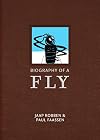
The Publisher Says: For readers of The Boy, the Mole, the Fox and the Horse comes a beautifully illustrated philosophical book on the value of friendship and life, told from the perspective of a fly, and a gift book for all ages.
What if you were thrown into existence in the middle of your life, with numbered days left ahead of you? Would you see the world in the same way?
In his inimitable style, Jaap Robben answers these questions through the unexpectedly witty lens of a show more fly, from the moment it enters the world as a larva right up to its deathbed. Watch this humble fly throw himself into life and his unlikely friendships with gusto, however short that life may be. Irresistibly charming, funny, and sprinkled with entomological details, this is a moving tale for any stage of life, about how we are all ultimately alone, and yet also together.
I RECEIVED A DRC FROM THE PUBLISHER VIA EDELWEISS+. THANK YOU.
My Review: Beautiful, weird little meditation on Nature, and the nature of Life. A fly’s life, from larva to deathbed, told in direct and (as far as I could tell without doing more research than seemed warranted) accurate manner.
That life being short, it’s good to follow it chronologically and to deal with the Stuff of Life (warning to the squeamish...lots of honest talk about shit) in a way that will inform the reader of, say, eight and up about more than just the biology involved in living.
I don’t find bodily functions as unpleasant to discuss as many seem to. The fact is, we all shit or we are dead. Eating, sleeping, shitting, sweating...take the stigma out of bodily functions for kids, I beg of you. It does no good at all to teach a child to feel disgust for their body.
A book like this is a very easy way to start that goal off. Enjoyable on many levels, for many ages...most art fans will like the minimalist color palette and the gloriously weird framing of the images, and thoughtful readers will enjoy the philosophizing.
What kind of squeamish speciesist could resist this face? show less
The Publisher Says: For readers of The Boy, the Mole, the Fox and the Horse comes a beautifully illustrated philosophical book on the value of friendship and life, told from the perspective of a fly, and a gift book for all ages.
What if you were thrown into existence in the middle of your life, with numbered days left ahead of you? Would you see the world in the same way?
In his inimitable style, Jaap Robben answers these questions through the unexpectedly witty lens of a show more fly, from the moment it enters the world as a larva right up to its deathbed. Watch this humble fly throw himself into life and his unlikely friendships with gusto, however short that life may be. Irresistibly charming, funny, and sprinkled with entomological details, this is a moving tale for any stage of life, about how we are all ultimately alone, and yet also together.
I RECEIVED A DRC FROM THE PUBLISHER VIA EDELWEISS+. THANK YOU.
My Review: Beautiful, weird little meditation on Nature, and the nature of Life. A fly’s life, from larva to deathbed, told in direct and (as far as I could tell without doing more research than seemed warranted) accurate manner.
That life being short, it’s good to follow it chronologically and to deal with the Stuff of Life (warning to the squeamish...lots of honest talk about shit) in a way that will inform the reader of, say, eight and up about more than just the biology involved in living.
I don’t find bodily functions as unpleasant to discuss as many seem to. The fact is, we all shit or we are dead. Eating, sleeping, shitting, sweating...take the stigma out of bodily functions for kids, I beg of you. It does no good at all to teach a child to feel disgust for their body.
A book like this is a very easy way to start that goal off. Enjoyable on many levels, for many ages...most art fans will like the minimalist color palette and the gloriously weird framing of the images, and thoughtful readers will enjoy the philosophizing.
What kind of squeamish speciesist could resist this face? show less
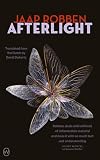
The Publisher Says: This moving novel gives voice to the silent grief of the mothers of stillborn children
The young free-spirited florist Frieda grew up in a strictly Catholic environment in the 1960s. When she steps onto a frozen river on a late winter afternoon, little does she know that everything is about to change for her. On the ice, she meets the married Otto. They experience a love that begins stormy and ends with Frieda becoming pregnant—a scandal in the world in which she moves. show more And so she must never be the mother of her secret child.
For decades she kept her memories of this episode in her life to herself. But the grief for the lost child remains, despite the later marriage, despite the son she still has. At the age of eighty-one, Frieda is suddenly alone again. The silent sorrow returns with force. Only then does she dare to face her story—and to share it.
With Afterlight, inspired by true events, Robben not only pulls back the veil on Frieda’s story but also shines a light on the experiences of countless women between the 1950s and 1980s. The result is an impressive story about buried female trauma, caused by society, organized religion, and the dominant social mores.
I RECEIVED A DRC FROM THE PUBLISHER VIA EDELWEISS+. THANK YOU.
My Review: I lost my love a lot earlier in life than Frieda did. He needed the level of care that Frieda does as the story begins, not me; nor have I yet reached the point where she is, of needing basic-living help.
Thank goodness the strokes I had in 2023 didn't make that help a lifelong need. But I still had the points of recognition and connection with Frieda from my life's story. I was right there with her as she adjusted to a new place to live that doesn't belong to her; I felt her dislocation as the night's disturbances had her groping around the unfamiliar space to find things she's sure she has, and still needs...only they aren't there and won't be again.
I am also familiar with the awful pains of being Othered by "religious" people, and told by The World that who you are is bad, and wrong, and will always cause their gawd to hate you and doom you to an eternity of punishment. Poor Frieda. I wouldn't say she overcomes that abusive horror in this story. I would say she makes her own way in life with the miracle of love offered her by the now-dead Louis...the one who fully expected he would survive her as she declined and lost more and more of herself. I asked Rob to read this book, and, after hearing what it was about, he looked at me through the computer screen and said, "No." Simple, final. Understandable.
It's a lot to ask: Frieda's happiness was bookended by a lot of pain. It is, though, the kind of pain that older people will relate to. It is a very familiar world that Frieda brings back to us in each time period. We've all been too young for some major life event that happened to us anyway. We've all felt unloved and abandoned...rightly, as in Frieda's case, or wrongly...and many, if not most, of us can relate deeply to loving someone and losing them. A lot of my readers are getting to the place where they, or their parents, are needing help that wasn't needed in the recent past. And all of that is what you and I share with Frieda.
Do you want to read about it for entertainment? Well, I did. I was pleased to have the fellow-feeling of Frieda's journey into the undignified, unpleasant (to me) world of bodily aging; as this is a story set in two timelines, though, I was expecting to be led into the sunnier meadows of the earlier life she led, and its youthful exuberance. Here is where the story fell short of the five stars all stories I read start with for me.
This is not a short book—three hundred-ish pages. There was space to develop the dual timeline, and it wasn't done. What's enjoyable about the way Author Jaap writes Frieda's story is the immediacy of it. He gets the sense of her, at every age, as a woman very much alert to the world around her; and yet unable to reach it, grasp it, without mediation...hearing aids, glasses, nurses, her husband, gawd...and so never fully having her own undiluted experience of anything.
Youthful inexperience prevented her from seeing the man who impregnated her in 1963 with any clarity, led to her downfall by the mediation of a religious upbringing that so starved her for genuine experience that she fell for the most unsubtle of lures. There's the consequences part of that in the book, but the stick gets applied without the carrot in my estimation.
That said, I liked this read. I liked its soft edges on hard realities...its gentle Impressionistic blur is, though, down to poor vision, not to a soft reality. That made it the more poignant to read. It's an enjoyable, relatable story well-told by an author who knows his subject. It's deftly translated...no clunks or clanks, and nothing that my early-learner study of Dutch saw as out of place...which helps.
Good is not the enemy of great when it is enough in itself. show less
The young free-spirited florist Frieda grew up in a strictly Catholic environment in the 1960s. When she steps onto a frozen river on a late winter afternoon, little does she know that everything is about to change for her. On the ice, she meets the married Otto. They experience a love that begins stormy and ends with Frieda becoming pregnant—a scandal in the world in which she moves. show more And so she must never be the mother of her secret child.
For decades she kept her memories of this episode in her life to herself. But the grief for the lost child remains, despite the later marriage, despite the son she still has. At the age of eighty-one, Frieda is suddenly alone again. The silent sorrow returns with force. Only then does she dare to face her story—and to share it.
With Afterlight, inspired by true events, Robben not only pulls back the veil on Frieda’s story but also shines a light on the experiences of countless women between the 1950s and 1980s. The result is an impressive story about buried female trauma, caused by society, organized religion, and the dominant social mores.
I RECEIVED A DRC FROM THE PUBLISHER VIA EDELWEISS+. THANK YOU.
My Review: I lost my love a lot earlier in life than Frieda did. He needed the level of care that Frieda does as the story begins, not me; nor have I yet reached the point where she is, of needing basic-living help.
Thank goodness the strokes I had in 2023 didn't make that help a lifelong need. But I still had the points of recognition and connection with Frieda from my life's story. I was right there with her as she adjusted to a new place to live that doesn't belong to her; I felt her dislocation as the night's disturbances had her groping around the unfamiliar space to find things she's sure she has, and still needs...only they aren't there and won't be again.
I am also familiar with the awful pains of being Othered by "religious" people, and told by The World that who you are is bad, and wrong, and will always cause their gawd to hate you and doom you to an eternity of punishment. Poor Frieda. I wouldn't say she overcomes that abusive horror in this story. I would say she makes her own way in life with the miracle of love offered her by the now-dead Louis...the one who fully expected he would survive her as she declined and lost more and more of herself. I asked Rob to read this book, and, after hearing what it was about, he looked at me through the computer screen and said, "No." Simple, final. Understandable.
It's a lot to ask: Frieda's happiness was bookended by a lot of pain. It is, though, the kind of pain that older people will relate to. It is a very familiar world that Frieda brings back to us in each time period. We've all been too young for some major life event that happened to us anyway. We've all felt unloved and abandoned...rightly, as in Frieda's case, or wrongly...and many, if not most, of us can relate deeply to loving someone and losing them. A lot of my readers are getting to the place where they, or their parents, are needing help that wasn't needed in the recent past. And all of that is what you and I share with Frieda.
Do you want to read about it for entertainment? Well, I did. I was pleased to have the fellow-feeling of Frieda's journey into the undignified, unpleasant (to me) world of bodily aging; as this is a story set in two timelines, though, I was expecting to be led into the sunnier meadows of the earlier life she led, and its youthful exuberance. Here is where the story fell short of the five stars all stories I read start with for me.
This is not a short book—three hundred-ish pages. There was space to develop the dual timeline, and it wasn't done. What's enjoyable about the way Author Jaap writes Frieda's story is the immediacy of it. He gets the sense of her, at every age, as a woman very much alert to the world around her; and yet unable to reach it, grasp it, without mediation...hearing aids, glasses, nurses, her husband, gawd...and so never fully having her own undiluted experience of anything.
Youthful inexperience prevented her from seeing the man who impregnated her in 1963 with any clarity, led to her downfall by the mediation of a religious upbringing that so starved her for genuine experience that she fell for the most unsubtle of lures. There's the consequences part of that in the book, but the stick gets applied without the carrot in my estimation.
That said, I liked this read. I liked its soft edges on hard realities...its gentle Impressionistic blur is, though, down to poor vision, not to a soft reality. That made it the more poignant to read. It's an enjoyable, relatable story well-told by an author who knows his subject. It's deftly translated...no clunks or clanks, and nothing that my early-learner study of Dutch saw as out of place...which helps.
Good is not the enemy of great when it is enough in itself. show less
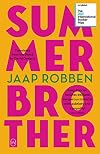
The narrator is 13-year-old Brian Chevalier. He lives with his father Maurice in a filthy, rundown trailer. Maurice, a ne'er-do-well, learns that he can get money if he cares for his physically and mentally disabled son for the summer while his assisted-living residence is being renovated. Of course Brian becomes Lucien’s primary care giver. A strong bond develops between the brothers and Lucien even shows signs of physical improvement when he is not as sedated as he seems to be at the show more residence. All is not well, however, as they are threatened with eviction.
The characterization of Brian is very realistic. Appropriately for his age, he is naïve, impulsive, emotionally immature, and curious about sex. Despite his flaws, like an occasional unthinking disregard for Lucien’s safety, there is no doubt that he loves his brother. Unfortunately, Brian, not having any other role model, has picked up some of his father’s behaviours. For instance, he knows how to pressure a person to get money. Brian may not want to be like his father, but it seems almost inevitable that he will be like him. His mother has moved on to another marriage and seems to have abandoned Brian to his life with his father. Emile, a man who moves into another trailer, offers more of a positive example, but Brian’s time with him is limited for a number of reasons. He is told that the trailer is not a good home for him, but he has no options.
Maurice is anything but admirable. He leaves Brian in charge of his brother when giving Lucien proper care is not an easy task. He is shiftless, leaving his sons every day with no explanation for his absences. He is known to police. He is not beyond using his son’s disability to get money and cover crimes. Besides being neglectful, Maurice is also abusive. It is clear that Brian fears his father who has violent outbursts. The reader does get glimpses of positive traits, but there is little to like about the man. What puzzled me is the choice of name for the father. I know Maurice Chevalier as a French actor and singer and wondered if the author’s choice of name was intentional. (And this raises another question: why did the Dutch author choose to set his novel in France?)
Tension exists throughout the book. Will Brian be able to care for his brother and keep him safe? Will they be evicted by the landlords who are becoming more and more impatient with Maurice’s rent non-payment and lies? Brian’s relationship with Selma, a 19-year-old resident at the home, is unsettling. Maurice, though he can be funny and charming, is a threatening presence. I kept waiting for something serious to happen.
I also found myself feeling sad and angry. Brian deserves a better life, but he just doesn’t have any opportunities. He tells Lucien, “’When I’m old enough, you can come and live with me,’” but it’s a promise that will be difficult to keep. Maurice is a dysfunctional person and that dysfunction may very well prove to be generational since Brian has been largely abandoned to a father who models inappropriate, if not dangerous, behaviour.
Because of the subject matter, the book is not always an easy read, but it realistically and unsentimentally portrays life on the margins of society. The novel is described as “an honest, tender account of brotherly love,” and that too is true. That love is the one hopeful note.
Note: I received an eARC from the publisher via NetGalley.
Please check out my reader's blog (https://schatjesshelves.blogspot.com/) and follow me on Twitter (@DCYakabuski). show less
The characterization of Brian is very realistic. Appropriately for his age, he is naïve, impulsive, emotionally immature, and curious about sex. Despite his flaws, like an occasional unthinking disregard for Lucien’s safety, there is no doubt that he loves his brother. Unfortunately, Brian, not having any other role model, has picked up some of his father’s behaviours. For instance, he knows how to pressure a person to get money. Brian may not want to be like his father, but it seems almost inevitable that he will be like him. His mother has moved on to another marriage and seems to have abandoned Brian to his life with his father. Emile, a man who moves into another trailer, offers more of a positive example, but Brian’s time with him is limited for a number of reasons. He is told that the trailer is not a good home for him, but he has no options.
Maurice is anything but admirable. He leaves Brian in charge of his brother when giving Lucien proper care is not an easy task. He is shiftless, leaving his sons every day with no explanation for his absences. He is known to police. He is not beyond using his son’s disability to get money and cover crimes. Besides being neglectful, Maurice is also abusive. It is clear that Brian fears his father who has violent outbursts. The reader does get glimpses of positive traits, but there is little to like about the man. What puzzled me is the choice of name for the father. I know Maurice Chevalier as a French actor and singer and wondered if the author’s choice of name was intentional. (And this raises another question: why did the Dutch author choose to set his novel in France?)
Tension exists throughout the book. Will Brian be able to care for his brother and keep him safe? Will they be evicted by the landlords who are becoming more and more impatient with Maurice’s rent non-payment and lies? Brian’s relationship with Selma, a 19-year-old resident at the home, is unsettling. Maurice, though he can be funny and charming, is a threatening presence. I kept waiting for something serious to happen.
I also found myself feeling sad and angry. Brian deserves a better life, but he just doesn’t have any opportunities. He tells Lucien, “’When I’m old enough, you can come and live with me,’” but it’s a promise that will be difficult to keep. Maurice is a dysfunctional person and that dysfunction may very well prove to be generational since Brian has been largely abandoned to a father who models inappropriate, if not dangerous, behaviour.
Because of the subject matter, the book is not always an easy read, but it realistically and unsentimentally portrays life on the margins of society. The novel is described as “an honest, tender account of brotherly love,” and that too is true. That love is the one hopeful note.
Note: I received an eARC from the publisher via NetGalley.
Please check out my reader's blog (https://schatjesshelves.blogspot.com/) and follow me on Twitter (@DCYakabuski). show less
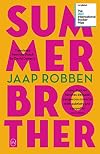
This book was nothing like what I expected. Between the title and the cover color/design I was expecting something summery and beachy. Which does not feel Booker International at all, so I also did not know what to expect.
It is not those things. It is sad and heartbreaking and infuriating and there are so many things to think about here. So. Many. Things.
A 13-year-old underparented boy having a relationship with a mentally disabled 19-year-old girl who lives in the same facility as his show more brother.
The severely disabled 17-year-old brother who is heavily drugged due to biting.
The boys' parents having split the kids at their divorce.
Dad being a cheat, liar, and thief who does not parent or hold down a job.
Dad bringing the 17-year-old home for the summer because of the stipend.
Dad leaving the 13-year-old to be the 17-year-old's nurse on a near daily basis.
Dad's using the 17-year-old to garner pity for himself.
Brian (13) learns so much about his brother Lucien's actual abilities over the summer.
And there is more. But no spoilers here. Jealousy, greed, anger, frustration. Dad seems to mean well, but he also cannot function like an adult. show less
It is not those things. It is sad and heartbreaking and infuriating and there are so many things to think about here. So. Many. Things.
A 13-year-old underparented boy having a relationship with a mentally disabled 19-year-old girl who lives in the same facility as his show more brother.
The severely disabled 17-year-old brother who is heavily drugged due to biting.
The boys' parents having split the kids at their divorce.
Dad being a cheat, liar, and thief who does not parent or hold down a job.
Dad bringing the 17-year-old home for the summer because of the stipend.
Dad leaving the 13-year-old to be the 17-year-old's nurse on a near daily basis.
Dad's using the 17-year-old to garner pity for himself.
Brian (13) learns so much about his brother Lucien's actual abilities over the summer.
And there is more. But no spoilers here. Jealousy, greed, anger, frustration. Dad seems to mean well, but he also cannot function like an adult. show less
Lists
Awards


You May Also Like


Associated Authors
Statistics
- Works
- 19
- Also by
- 1
- Members
- 417
- Popularity
- #58,442
- Rating
- 3.8
- Reviews
- 29
- ISBNs
- 56
- Languages
- 5