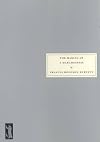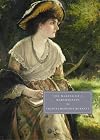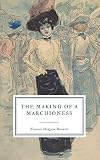
The Making of a Marchioness
by Frances Hodgson Burnett
On This Page
Description
This two-part tale from Frances Hodgson Burnett has it all: a charming character portrait of Emily, who in the first part of the story lives alone and is content in her admittedly predictable life; an account of a swept-off-one's-feet romance that will have even the most jaded reader swooning; and a descent into a gothic mystery that's packed with plot twists..
Tags
Recommendations







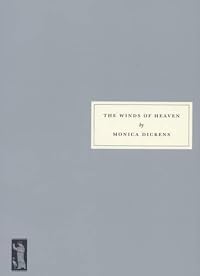
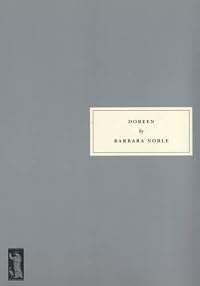
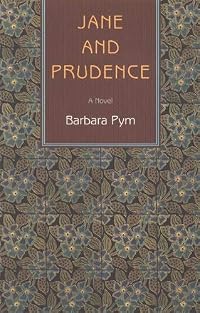


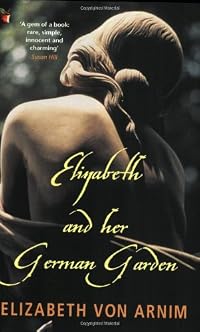



Member Reviews
So wonderfully absurd as to be hilarious. I'm not sure if it was intended to be satirical when first published but given that the heroine is described as "ridiculous" on multiple occasions, I can reach no other conclusion.
I found a beautiful Persephone edition of ‘The Making of a Marchioness’ in a charity shop, after reading and enjoying [b:The Shuttle|1057543|The Shuttle|Frances Hodgson Burnett|https://images.gr-assets.com/books/1410270110s/1057543.jpg|2309178]. Frances Hodgson Burnett is a distinctive writer with an impressively cynical view of late Victorian marriage and limitations placed upon women. I preferred [b:The Shuttle|1057543|The Shuttle|Frances Hodgson Burnett|https://images.gr-assets.com/books/1410270110s/1057543.jpg|2309178], though, as it had a more striking narrator and clearer structure. ‘The Making of a Marchioness’ was written in two parts, the first of which is much shorter and in my view much more effective. Both concern show more Emily Fox-Seton, initially a badly paid dogsbody who struggles to pay her rent. The first part ends with her life changing very significantly, then the second part plays this out at much greater length. Perhaps predictably, I found Emily a far more interesting character when she was poor. The melodrama of the second part also verged on overwrought, with racist undertones: her nephew-in-law conspires with an Indian maid to murder Emily. While this section of the narrative was pretty tense, it seemed like drama for drama’s sake, which made an odd contrast to the incisive first part.
The highlight for me was the solidarity between women throughout. I particularly liked the dynamic between Emily and Lady Agatha, who are both very familiar with financial difficulty:
‘The Making of a Marchioness’ touches on some surprisingly radical topics for the time: pregnancy outside marriage, abortion, and domestic violence. However, the main character is so entirely virtuous as to beggar belief at times. I didn’t dislike her, in fact she seemed admirable, I just found her hard to understand. The depictions of class differences are cleverly done, albeit in an entirely uncritical fashion. ‘The Making of a Marchioness’ is well worth reading, although the first part is undoubtedly superior. show less
The highlight for me was the solidarity between women throughout. I particularly liked the dynamic between Emily and Lady Agatha, who are both very familiar with financial difficulty:
[Emily] had not lived in a world where marriage was a thing of romance, and, for that matter, neither had Agatha. It was nice if a girl liked the man who married her, but if he was a well-behaved, agreeable person, of good means, it was natural that she would end by liking him sufficiently, and to be provided for comfortably or luxuriously for life, and not left upon one’s own hands, or one’s parents’, was a thing to be thankful for in any case.
[...]
They both had hard lives, and knew what lay before them. Agatha knew she must make a marriage or fade out of existence in prosaic and narrowed dullness. Emily knew that there was no prospect for her of desirable marriage at all. She was too poor, too entirely unsupported by social surroundings, and not sufficiently radiant to catch the roving eye. To be able to maintain herself decently, to be given an occasional treat by her more fortunate friends, and to be allowed by fortune to present to the face of the world the appearance of a woman who was not a pauper, was all that she could expect.
‘The Making of a Marchioness’ touches on some surprisingly radical topics for the time: pregnancy outside marriage, abortion, and domestic violence. However, the main character is so entirely virtuous as to beggar belief at times. I didn’t dislike her, in fact she seemed admirable, I just found her hard to understand. The depictions of class differences are cleverly done, albeit in an entirely uncritical fashion. ‘The Making of a Marchioness’ is well worth reading, although the first part is undoubtedly superior. show less
Emily Fox-Seton is a single, well bred woman in her early 30s, with some education but absolutely no money. She must therefore work for a living, surviving by running errands for various wealthy people around London. When one of her employers invites her for a summer holiday at a country estate, Emily is ecstatically grateful, hoping only to be useful to her patroness in return for this perceived generosity. In the course of her visit, however, she unknowingly catches the eye of the Marquis of Walderhurst, who is one of the richest men in England. Emily’s subsequent adventures lead her to a markedly different future from the one she always imagined – one that could be full of danger as well as happiness.
This is an absolutely lovely show more book, and I enjoyed every minute of it! The overall structure is very fairy-tale-esque, but Burnett subverts expectations as well as fulfilling them. For example, Emily is a sweet and innocent heroine, but she’s not particularly bright or witty. Similarly, Lord Walderhurst is far from an ideal hero: he’s repressed, insensitive, and patronizing toward Emily for much of the novel. Yet the book still manages to be heartwarming and romantic! The second half of the book is paced very slowly and has a melodramatic aspect to it, as Emily is confronted with resentful people who wish her harm. The novel definitely has some flaws – particularly when it comes to non-PC descriptions of Indian characters (there are couple) – but overall I really liked it. show less
This is an absolutely lovely show more book, and I enjoyed every minute of it! The overall structure is very fairy-tale-esque, but Burnett subverts expectations as well as fulfilling them. For example, Emily is a sweet and innocent heroine, but she’s not particularly bright or witty. Similarly, Lord Walderhurst is far from an ideal hero: he’s repressed, insensitive, and patronizing toward Emily for much of the novel. Yet the book still manages to be heartwarming and romantic! The second half of the book is paced very slowly and has a melodramatic aspect to it, as Emily is confronted with resentful people who wish her harm. The novel definitely has some flaws – particularly when it comes to non-PC descriptions of Indian characters (there are couple) – but overall I really liked it. show less
I wanted so much to like this book and indeed I enjoyed Part 1 very much. The introduction mentions that the two parts of the novel were originally written separately and it really shows. Part 1 has a lovely, fairy-tale like quality in which Emily Fox-Seton, the unfailingly kind and obliging protagonist, reaches her lowest ebb only to be raised up to heights of which she dared not dream. So far so good.
I was unable to read far into Part 2 because aspects of the author's style which had previously irritated became too maddening to overcome. I don't know how many times we were reminded that Emily was not intelligent (but not stupid, mind!), that she was childlike/ish, or that Lady Maria was selfish, or that Walderhurst lacked show more self-awareness. Perhaps it wasn't actually that many, but I felt bombarded by the authorial voice TELLING me things about the characters which I really would prefer to have been shown. The result was that I found it very difficult to care about the characters at all and thus died my interest in reading further. show less
I was unable to read far into Part 2 because aspects of the author's style which had previously irritated became too maddening to overcome. I don't know how many times we were reminded that Emily was not intelligent (but not stupid, mind!), that she was childlike/ish, or that Lady Maria was selfish, or that Walderhurst lacked show more self-awareness. Perhaps it wasn't actually that many, but I felt bombarded by the authorial voice TELLING me things about the characters which I really would prefer to have been shown. The result was that I found it very difficult to care about the characters at all and thus died my interest in reading further. show less
Huh. Very weird. It's a romance, sort of, and definitely a Cinderella story. The female protagonist is... Cinderella, Pollyanna, a little simple and thereby very happy most of the time. At the beginning of the second story (which follows immediately on the first) she admits to having occasionally been frightened of the Future, knowing that her scraping by required youth and strength. But aside from that scene, she is repeatedly shown as being truly happy to be helpful and useful, and not noticing (pointed out, by narrative voice and by other characters, as not noticing) that she's being taken advantage of and used. And the end result is that she's happy, and unflusterable, so it's a good thing. At the end of the first book she's engaged show more to be married, to a rich and high-ranked man; during the second, she's in considerable danger (which needs to be pointed out to her by other characters), but there's a happy ending. Conventional happy ending, even - love has entered play. The language used is... Very Burnett style - nothing even slightly intimate is suggested. Two pregnant women and the strongest word used is "increasing", once. Honestly, I was surprised it was possible, I didn't think they were intimate yet. Pleasant to read - I do like Emily - but I doubt I'll ever reread. show less
I think I would've enjoyed this much more if I hadn't so much as skimmed the preface or afterword. Normally, I prefer to read a book and form my own opinion before admitting any other perspectives that might warp or shift the way I look at it. This time, I was a bit carried away at the prospect of reading an adult novel by an author whose books I loved so much as a child, and though I resisted temptation so far as to only skim the preface and afterword, that was more than enough to dampen my reading experience. Still, I did enjoy the story and Emily's character, and someday, perhaps when the critical commentary has faded sufficiently, I'd like to try discovering The Making of a Marchioness anew.
This book certainly had its charms, and I can understand why it might have been a popular women's novel in its day (it was originally published in 1901). It tells the story of a refined but impoverished woman in her thirties, Miss Emily Fox-Seton, who scratches out a living by assisting her betters to shop wisely and plan parties while remaining obligingly in the background. Just as disaster seems about to befall (her kindly landlady and her daughter plan to give up the house where Emily rooms), wonder of wonders, she receives an unexpected marriage proposal that catapults her into the upper echelon of society. Lord Waldehurst has been won over by Emily's good taste, gentle nature, and unprepossessing nature--undoubtedly the dream of show more many an aging spinster in 1901.
But, alas, it is at this point that the novel falls a bit short for the 21st-century reader. Emily's kindness and naiveté seem to know no bounds. She tries to befriend Alec Osbourne (who has been Lord Waldehurst's sole heir for the past 30 years or so) and his pregnant half-Indian wife, even coaxing her husband--who is about to leave for business in India--to allow her to furnish a house on the estate grounds for their use. It never enters her head that the Osbournes might see her as a potential threat to the property, money, and title that they hope to inherit, and she is hurt and confused by their often surly manners and Hortense's frequent angry outbursts. (When her trusty maid tells Emily that she fears that Amira, Hortense's ayah, is up to no good, Emily encourages her to read Uncle Tom's Cabin to improve her view of "the blacks.") Following several near-misses--accidents that would have been fatal--plus a confession from Hortense that she sometimes hates the now-pregnant Emily and that Alec wants to kill her, Emily feels that the best solution to her dilemma is to take Hortense's advice to "go away" to stay safe until her child is born. Emily's goodness is just too unbelievable; I started to agree with Alec's estimation that she was just "a big fool," and I wanted to smack her back into reality. And the Osbournes and Amira fall into caricatures of villains so evil that I expected even Hortense and Amira to be twirling long black moustachios.
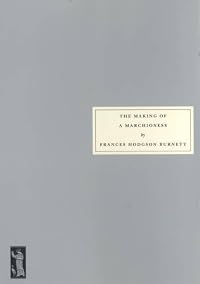
I'm giving the book three stars as a period piece and an example of early 20th century women's novels, and perhaps with some bonus points for Persephone's quite lovely cover. Read it when you are in the mood for pure fluff. show less
But, alas, it is at this point that the novel falls a bit short for the 21st-century reader. Emily's kindness and naiveté seem to know no bounds. She tries to befriend Alec Osbourne (who has been Lord Waldehurst's sole heir for the past 30 years or so) and his pregnant half-Indian wife, even coaxing her husband--who is about to leave for business in India--to allow her to furnish a house on the estate grounds for their use. It never enters her head that the Osbournes might see her as a potential threat to the property, money, and title that they hope to inherit, and she is hurt and confused by their often surly manners and Hortense's frequent angry outbursts. (When her trusty maid tells Emily that she fears that Amira, Hortense's ayah, is up to no good, Emily encourages her to read Uncle Tom's Cabin to improve her view of "the blacks.") Following several near-misses--accidents that would have been fatal--plus a confession from Hortense that she sometimes hates the now-pregnant Emily and that Alec wants to kill her, Emily feels that the best solution to her dilemma is to take Hortense's advice to "go away" to stay safe until her child is born. Emily's goodness is just too unbelievable; I started to agree with Alec's estimation that she was just "a big fool," and I wanted to smack her back into reality. And the Osbournes and Amira fall into caricatures of villains so evil that I expected even Hortense and Amira to be twirling long black moustachios.
I'm giving the book three stars as a period piece and an example of early 20th century women's novels, and perhaps with some bonus points for Persephone's quite lovely cover. Read it when you are in the mood for pure fluff. show less
Members
- Recently Added By
Lists

Fiction Featuring Cranky, Eccentric Old Folks
80 works; 35 members

Top Five Books of 2023
767 works; 317 members

Persephone
148 works; 3 members
Author Information

354+ Works 76,383 Members
Frances Hodgson Burnett wrote for children and adults, publishing both plays and novels. She was born in Manchester, England, on November 24, 1849. Her father, who owned a furniture store, died when she was only four years old. Her mother struggled to keep the family business running while trying to raise five children. Finally, because of the show more failing Manchester economy, the family sold the store and immigrated to the United States. In 1865 they settled just outside of Knoxville, Tennessee. Hoping to offset her family's continuing financial troubles, Burnett began to submit her stories to women's magazines. She was immediately successful. In the late 1860s her stories were published in nearly every popular American magazine. Burnett helped to support her family with income from the sale of her stories, even saving enough to finance a trip back to England, where she stayed for over a year. In 1879, Burnett published her first stories for children; two of her most popular are A Little Princess and The Secret Garden. In contrast to an extremely successful career, Burnett's personal life held many challenges. Her son Lionel was diagnosed with tuberculosis at age 15, from which he never recovered. His death inspired several stories about dead or dying children. Burnett lived her later years on Long Island, New York. She died in 1924. (Bowker Author Biography) show less
Series
Belongs to Publisher Series
Work Relationships
Common Knowledge
- Canonical title
- The Making of a Marchioness
- Alternate titles
- Emily Fox-Seton
- Original publication date
- 1901
- People/Characters
- Emily Fox-Seton; Lord Walderhurst
- Important places
- London, England, UK
- Related movies
- The Making of a Lady (2012 | IMDb)
- First words
- When Miss Fox-Seton descended from the two-penny 'bus as it drew up, she gathered her trim tailor-made skirt about her with neatness and decorum, being well used to getting in and out of two-penny 'buses and to making her way... (show all) across muddy London streets.
Alfred's proposal to Fanny in Nancy Mitford's Love In a Cold Climate (1949) is where many modern readers first come across what the critic Marghanita Laski called 'most people's favourite' Frances Hodgson Burnett novel... (show all), The Making of a Marchioness (1901). (Preface)
I bought my copy of The Making of a Marchioness more than twenty-five years ago, in a secondhand bookshop. (Afterword) - Last words
- (Click to show. Warning: May contain spoilers.)And while Lady Walderhurst sat gazing at her with a paling face, she began quietly to eat the little buttered scone.
(Click to show. Warning: May contain spoilers.)Virtue triumphs in the most unlikely circumstances, and I for one am perfectly sure that Emily and her Marquis lived happily ever after. (Preface)
(Click to show. Warning: May contain spoilers.)Reading The Making of a Marchioness is a good place to start. (Afterword) - Original language
- English
- Disambiguation notice
- The Persephone edition entitled The Making of a Marchioness (ISBN 9781903155141, 1903155142 and 1906462127) contains both The Making of a Marchioness and its sequel, The Methods of Lady Walderhurst and should not be combined ... (show all)with either single work.
Classifications
Statistics
- Members
- 589
- Popularity
- 49,524
- Reviews
- 30
- Rating
- (3.71)
- Languages
- Catalan, English, Italian, Spanish
- Media
- Paper, Audiobook, Ebook
- ISBNs
- 50
- ASINs
- 19