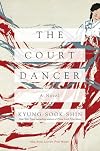
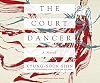
The Court Dancer
by Kyung-Sook Shin
On This Page
Description
When a novice French diplomat arrives for an audience with the Emperor, he is enraptured by the Joseon Dynasty's magnificent culture, then at its zenith. But all fades away when he sees Yi Jin perform the traditional Dance of the Spring Oriole. Though well aware that women of the court belong to the palace, the young diplomat confesses his love to the Emperor, and gains permission for Yi Jin to accompany him back to France. A world away in Belle Epoque Paris, Yi Jin lives a free, independent show more life, away from the gilded cage of the court, and begins translating and publishing Joseon literature into French with another Korean student. But even in this new world, great sorrow awaits her. Betrayal, jealousy, and intrigue abound, culminating with the tragic assassination of the last Joseon empress-and the poisoned pages of a book. Rich with historic detail and filled with luminous characters, Korea's most beloved novelist brings a lost era to life in a story that will resonate long after the final page. show lessTags
Recommendations









Member Reviews
A Korean court dancer entrances a French envoy who brings her back to Paris with him until she decides she can no longer live there.
The book provides an intimate view of Korean court life , both its beauty and its intense corruption, as well as the country's devastation in the wake of late 18th century imperialism (Japan, China, France, the US...). Partly historical novel, partly love story, "The Court Dancer" explores the themes of belonging and acculturation (think "The Light in the Forest" by Conrad Richter) and looks sharply at the expropriation of Korea's heritage
Who owns the art removed from Korea and other parts of the world (like Egypt?). By what right is it removed?
By what right does the Emperor "own" his court ladies and show more what does it mean for their lives?
And in love, what does it mean to give one's heart? Who owns that heart and what responsibilities come with it? show less
The book provides an intimate view of Korean court life , both its beauty and its intense corruption, as well as the country's devastation in the wake of late 18th century imperialism (Japan, China, France, the US...). Partly historical novel, partly love story, "The Court Dancer" explores the themes of belonging and acculturation (think "The Light in the Forest" by Conrad Richter) and looks sharply at the expropriation of Korea's heritage
Who owns the art removed from Korea and other parts of the world (like Egypt?). By what right is it removed?
By what right does the Emperor "own" his court ladies and show more what does it mean for their lives?
And in love, what does it mean to give one's heart? Who owns that heart and what responsibilities come with it? show less
This is a period in Korean history that wrenches my heart because I know what's going to happen to the people in the stories set during this time. Not only that, but Jin's struggle with identity and othering were also hard to get through. That said, my favorite part of this book is actually the heartbreak at the end, when Joseon is forced to become the Korean Empire. The events are awful, but the way Shin wrote this part and the way Hur translated it are done so well. I felt so deeply for Jin and Yeon, but, interestingly enough, Victor felt like an Other to me in the story. Even though Jin was the "Oriental woman" in France, to me, Victor was the one always on the outside because he just didn't understand her completely. I think that show more played into my disbelief in their relationship; it never felt right. show less
Set in the early 1900s and loosely based on a true story, The Court Dancer is about a young and beautiful orphan named Yi Jin, who becomes a favorite of the Korean Empress and is trained as a court dancer. When a French diplomat sees her dance, he declares himself in love and is allowed to take her back with him to France where she spends some years translating Korean literature and experiencing life in the Belle Epoque era.
The book's focus is on Yi Jin but it also paints a vivid picture of her surroundings both in Korea and in France. Suffering from both depression and homesickness, she is eventually returned to Korea but she has changed so much during her time away that she is once again caught between cultures and with Japan’s show more annexation of Korea, her country is vastly changed as well.
While the setting of the Korean Imperial Court was fascinating and the story held a great deal of interest for me, there was something lacking in the writing. It may have been the translation but I felt detached from the story and found it unable to stir my emotions. Even though this book had so many of the ingredients I look for in historical fiction it failed to totally draw me in, but I would say if you have a particular interest in Korea or this time period, it may well be worth picking up this book as I note that many people do seem to like it. show less
The book's focus is on Yi Jin but it also paints a vivid picture of her surroundings both in Korea and in France. Suffering from both depression and homesickness, she is eventually returned to Korea but she has changed so much during her time away that she is once again caught between cultures and with Japan’s show more annexation of Korea, her country is vastly changed as well.
While the setting of the Korean Imperial Court was fascinating and the story held a great deal of interest for me, there was something lacking in the writing. It may have been the translation but I felt detached from the story and found it unable to stir my emotions. Even though this book had so many of the ingredients I look for in historical fiction it failed to totally draw me in, but I would say if you have a particular interest in Korea or this time period, it may well be worth picking up this book as I note that many people do seem to like it. show less
A sense of sadness is predominant in this novel, which follows the story of an orphaned girl who becomes a court dancer at the Korean imperial court. She is favored by the queen, a powerful woman in her own right, and falls under the eye of a visiting French diplomat. The diplomat falls in love and begs to marry Yi Jin. She finally agrees, they sail to France together, where she discovers the liberties of Paris and the racism of nineteenth-century Europe, but marriage fails to materialize. Struggling with her own identity, Yi Jin returns to Korea, determined to change her country for the better, but a growing tragedy awaits. This novel makes for good reading, if one can bare the sorrow and tragedy it contains.
The story of the Joseon Dynasty is unfamiliar to me. So the ending came as a surprise to me. I really enjoyed this story. The beautiful descriptions of the Korean court. We see Yi Jin's view of life in Paris. The grace and poetry of the traditional ways as well as the downside.
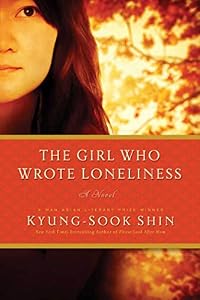
I found this on Hoopla, and after listening to [book:The Girl Who Wrote Loneliness|25329006] earlier this year, I decided to try this. The Hoopla summary did not tell me it was based on a true story--those are generally my least favorite sort of novel, as I would rather read a nonfiction book about the same topic. However, I have no idea if a nonfiction book about this woman's life is available in English.
Yi Jin had a remarkable life. From orphan, to Court Dancer and Queen favorite in the Joseon Court, to companion of the French Legate in France. She misjudges everything when she returns to Korea--he position, the status of the court trying to balance Chinese, Japanese, and and Russian interests with Korea's own interests. She is there show more when the court falls.
This book was...OK. The narrator was wonderful, but I kept finding my mind drifting, and could really only listen to an hour or so at a time. I don't know if it would have been better on paper. It just felt slow and repetitive. Given the fascinating life this woman led, the slow feeling surprised me.
I definitely learned a lot about late 19th century Korea and Korean history--how court worked, and the political issues going on at the time. I don't know how much is correct and how much is embellished, but it was certainly interesting. show less
Yi Jin had a remarkable life. From orphan, to Court Dancer and Queen favorite in the Joseon Court, to companion of the French Legate in France. She misjudges everything when she returns to Korea--he position, the status of the court trying to balance Chinese, Japanese, and and Russian interests with Korea's own interests. She is there show more when the court falls.
This book was...OK. The narrator was wonderful, but I kept finding my mind drifting, and could really only listen to an hour or so at a time. I don't know if it would have been better on paper. It just felt slow and repetitive. Given the fascinating life this woman led, the slow feeling surprised me.
I definitely learned a lot about late 19th century Korea and Korean history--how court worked, and the political issues going on at the time. I don't know how much is correct and how much is embellished, but it was certainly interesting. show less
This was fine, if kind of sluggish at times for how short it is. The writing (translation) seemed capable enough. Occasionally, there'd be sort of a little almost koan thrown in, and I wondered if this wasn't a hallmark of Korean literature or thinking; it could also just be a quirk of the writer or translator. I felt like this gave me a neat roughly historical view of late-19th-century Korea that was new to me, but it wasn't as vibrant or compelling a story as, say, Mitchell's The Thousand Autumns of Jacob De Zoet.
Members
- Recently Added By
Lists

Fiction: Asia
85 works; 2 members
Author Information

16+ Works 2,570 Members
Some Editions
Awards and Honors
Common Knowledge
- Canonical title
- The Court Dancer
- People/Characters
- Yi Jin; Victor Émile Marie Joseph Collin de Plancy; Empress Myeongseong
- Important places
- Korea; Paris, France
Classifications
- Genres
- Fiction and Literature, General Fiction, Historical Fiction
- DDC/MDS
- 895.73 — Literature & rhetoric Literatures of other languages Literatures of East and Southeast Asia Korean Korean fiction
- LCC
- PL992.73 .K94 .Y5313 — Language and Literature Languages and literatures of Eastern Asia, Africa, Oceania Languages of Eastern Asia, Africa, Oceania Korean language and literature Korean literature Individual authors and works
- BISAC
Statistics
- Members
- 214
- Popularity
- 151,840
- Reviews
- 13
- Rating
- (3.58)
- Languages
- 6 — English, Finnish, French, Italian, Polish, Romanian
- Media
- Paper, Audiobook, Ebook
- ISBNs
- 16
- ASINs
- 3