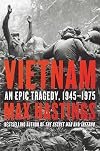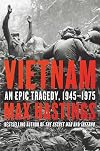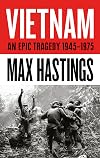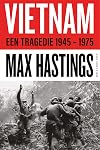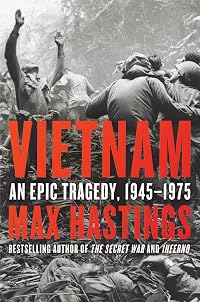
Vietnam: An Epic Tragedy, 1945-1975
by Max Hastings
On This Page
Description
An absorbing and definitive modern history of the Vietnam War from the acclaimed New York Times bestselling author of The Secret War. Vietnam became the Western world's most divisive modern conflict, precipitating a battlefield humiliation for France in 1954, then a vastly greater one for the United States in 1975. Max Hastings has spent the past three years interviewing scores of participants on both sides, as well as researching a multitude of American and Vietnamese documents and memoirs, show more to create an epic narrative of an epic struggle. He portrays the set pieces of Dienbienphu, the 1968 Tet offensive, the air blitz of North Vietnam, and also much less familiar miniatures such as the bloodbath at Daido, where a US Marine battalion was almost wiped out, together with extraordinary recollections of Ho Chi Minh's warriors. Here are the vivid realities of strife amid jungle and paddies that killed two million people. Many writers treat the war as a US tragedy, yet Hastings sees it as overwhelmingly that of the Vietnamese people, of whom forty died for every American. US blunders and atrocities were matched by those committed by their enemies. While all the world has seen the image of a screaming, naked girl seared by napalm, it forgets countless eviscerations, beheadings, and murders carried out by the communists. The people of both former Vietnams paid a bitter price for the Northerners' victory in privation and oppression. Here is testimony from Vietcong guerrillas, Southern paratroopers, Saigon bargirls, and Hanoi students alongside that of infantrymen from South Dakota, Marines from North Carolina, and Huey pilots from Arkansas. No past volume has blended a political and military narrative of the entire conflict with heart-stopping personal experiences, in the fashion that Max Hastings' readers know so well. The author suggests that neither side deserved to win this struggle with so many lessons for the twenty-first century about the misuse of military might to confront intractable political and cultural challenges. He marshals testimony from warlords and peasants, statesmen and soldiers, to create an extraordinary record. show lessTags
Recommendations








Member Reviews
A stupendous book about a massive misadventure of the US in a small country in Southeast Asia. The author lays bare the inner workings and prejudices that went into the decisions made by the main parties: the North and South Vietnamese and their supporters the Chinese and Soviet Union, and the Americans and their allies who contributed personnel and material. Given the implacable will of the North Vietnamese communist party to take over the South and unify the country under communist rule, it seemed to the Americans that they had no choice but to intervene militarily; but the South Vietnamese politics and society were not themselves united or above selfish interests, and ultimately the Americans, out of squeamishness or strategic show more big-power considerations, never committed enough fire power to finish off the North. However the Americans seem not to have learnt from the experience; the scenes of their hasty withdrawal when the Northern forces were within earshot in Saigon, are reminiscent of their equally chaotic and unedifying flight from an embattled Afghanistan in this century. The author shows his depth and breadth of experience and his knowledge of the subject; his almost day-by-day account is unforgettable and compelling. show less
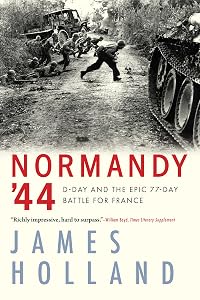
I read this non-fiction history tome immediately after having read a similar work, Normandy ’44. I say similar, because they were of similar length and scholarship. Both were meticulously researched and presented, however the reading experience could not have been more different. Whereas Normandy ’44 was exceedingly dry and frequently bogged down in mind numbing detail, of little interest to any but a minute few, Vietnam was fascinating while being equally informative.
Perhaps the target audience for the two works is completely different, but I can safely say that a huge percentage of people with an interest in either warfare, or history in general, will have a much more pleasant reading experience reading Vietnam. In addition to a show more detailed chronicle of the American involvement in Indochina, a significant investment is made in the French colonial period, which, of course, set the stage for all that followed.
I have read perhaps half a dozen works on the various aspects of the Vietnam War. For those looking for a comprehensive treatment of both the politics and the warfare itself, I can unreservedly recommend this book. show less
Perhaps the target audience for the two works is completely different, but I can safely say that a huge percentage of people with an interest in either warfare, or history in general, will have a much more pleasant reading experience reading Vietnam. In addition to a show more detailed chronicle of the American involvement in Indochina, a significant investment is made in the French colonial period, which, of course, set the stage for all that followed.
I have read perhaps half a dozen works on the various aspects of the Vietnam War. For those looking for a comprehensive treatment of both the politics and the warfare itself, I can unreservedly recommend this book. show less
This is a beautifully written, riveting story, a book that enlightened me in so many ways. Max Hastings never forgets that history is about human happenings--not movements, not ideologies, not guns or germs or steel. I was fourteen when the Vietnam War ended. My childhood memories are punctuated by memories of this war, and of protests against this war. What a joy, a relief even, to fill in the blanks about events that shaped my world before I could really understand them. The aspect I appreciate most about this book is the way it humanizes actors in the war who were just names to me before--in particular Ho Chi Minh. But even the smallest actors in this story are treated humanely by Hastings--for instance a story about two old women, show more selling peppers:
American Howard Simpson watched exuberant parachutists tearing down a Saigon street in a jeep which crushed and scattered a row of bamboo panniers, filled with red peppers laid out to drain the sun. After the vehicle passed, two old women set to work painstakingly to collect the debris and salvage what they could of their ravaged wares. Here was a minuscule event amid a vast tragedy, yet Simpson asked himself, how could it fail to influence the hears and minds of its victims, those two elderly street sellers?
An elegiac recreation of a time and a war that continues to echo on into the present. show less
American Howard Simpson watched exuberant parachutists tearing down a Saigon street in a jeep which crushed and scattered a row of bamboo panniers, filled with red peppers laid out to drain the sun. After the vehicle passed, two old women set to work painstakingly to collect the debris and salvage what they could of their ravaged wares. Here was a minuscule event amid a vast tragedy, yet Simpson asked himself, how could it fail to influence the hears and minds of its victims, those two elderly street sellers?
An elegiac recreation of a time and a war that continues to echo on into the present. show less
A leftist Australian acquaintance of mine who despises the U.S. trashed this book as he felt it hadn't explained the full extent of U.S. violence in Vietnam. A U.S. citizen myself, I'm no fan of the U.S. Government either, and I've read Chomsky & Herman's After the Cataclysm, which should also be required reading for anyone learning about the Indochina War. I found Hastings' a worthy, balanced account and far from being U.S-biased, would enlighten many Americans about the extent of racist genocide carried out by their government, while retaining for the public record the significant violence carried out by the North Vietnamese toward civilians in both the North and the South.
It’s hard to know where to start with the Vietnam War such was the lengthy prelude that the people of that nation were subjected to by the French and Japanese. Hastings does a good job of picking up exactly where he should at the end of WW2 where the hopes and promises of independence for Vietnam were dashed. It would be the first of many betrayals by us in the west.
By the time the US are in too deep, you are gripped by the unutterable misery that pride and political idocy can wreak on the world. We’re still suffering the aftershocks of what was a mistake of titanic proportions.
This is a large and well-researched book. If anything, I’m surprised that Hastings managed to get everything into 650 pages. This is the only criticism show more I’d make. The book could have done with many more detailed descriptions of episodes like the unbelievably awful fire on the USS Forrestal in 1967. The war, like any war, is a collection of individual experiences and Hastings doesn’t really do these justice. I’d have been more than happy for this to be the first of at least two volumes.
Instead, we have a very thorough sweep of 30 critical years of history. You get a very good idea of the motivations of the USAnians and, as with Bury My Heart at Wounded Knee, the hideous self-interest of the political leadership and their willingness to slaughter anyone in their path is laid bare. It’s blatantly obvious that nothing had changed in 200 years. With Iraq and Afghanistan, it’s obvious that Vietnam didn’t change things either.
Hastings is even-handed in his treatment of both sides of the story, especially considering the relative paucity of data from the North, and for this he is to be commended more than the recent Ken Burns and Lynn Novick documentary which has far too many eulogies for the USAnians who died but gives very brief if nonexistent biographies of those who died repelling their occupation.
How anyone can actually believe that the USA is the bastion of democracy and the leader of the free world after reading the truth about the blood this nation has on its hands and for which no one has been held accountable and not one official apology uttered is beyond me.
There aren’t many who are fans of the Northern regime which achieved its aim through the slaughter of unknown numbers of its own people and subsequently boasted of liberating the southern population who it then imprisoned in huge numbers. But at least they had a freedom to fight for.
If the US had truly honoured the words of its national anthem, it would not have quashed a democratic independence movement and attempted to impose a military dictatorship of its own creation on the people of another nation. That it did shows that its entire political system is a farce. That over 50,000 of its own citizens died for it shows how strongly people still believe that farce is a truth. show less
By the time the US are in too deep, you are gripped by the unutterable misery that pride and political idocy can wreak on the world. We’re still suffering the aftershocks of what was a mistake of titanic proportions.
This is a large and well-researched book. If anything, I’m surprised that Hastings managed to get everything into 650 pages. This is the only criticism show more I’d make. The book could have done with many more detailed descriptions of episodes like the unbelievably awful fire on the USS Forrestal in 1967. The war, like any war, is a collection of individual experiences and Hastings doesn’t really do these justice. I’d have been more than happy for this to be the first of at least two volumes.
Instead, we have a very thorough sweep of 30 critical years of history. You get a very good idea of the motivations of the USAnians and, as with Bury My Heart at Wounded Knee, the hideous self-interest of the political leadership and their willingness to slaughter anyone in their path is laid bare. It’s blatantly obvious that nothing had changed in 200 years. With Iraq and Afghanistan, it’s obvious that Vietnam didn’t change things either.
Hastings is even-handed in his treatment of both sides of the story, especially considering the relative paucity of data from the North, and for this he is to be commended more than the recent Ken Burns and Lynn Novick documentary which has far too many eulogies for the USAnians who died but gives very brief if nonexistent biographies of those who died repelling their occupation.
How anyone can actually believe that the USA is the bastion of democracy and the leader of the free world after reading the truth about the blood this nation has on its hands and for which no one has been held accountable and not one official apology uttered is beyond me.
There aren’t many who are fans of the Northern regime which achieved its aim through the slaughter of unknown numbers of its own people and subsequently boasted of liberating the southern population who it then imprisoned in huge numbers. But at least they had a freedom to fight for.
If the US had truly honoured the words of its national anthem, it would not have quashed a democratic independence movement and attempted to impose a military dictatorship of its own creation on the people of another nation. That it did shows that its entire political system is a farce. That over 50,000 of its own citizens died for it shows how strongly people still believe that farce is a truth. show less
Vietnam: An Epic Tragedy, 1945-1975
Author: Max Hastings
Publisher: HarperCollins
Publishing Date: 2018
Pgs: 857
Dewey: 959.7043
Disposition: Irving Public Library - South Campus - Irving, TX
_________________________________________________
REVIEW MAY CONTAIN SPOILERS
Summary:
From the French returning after World War 2 to the fall of Saigon, this book tells the exhaustive story of three countries locked in a dance of destruction. Based on Hastings interviews with participants on both sides along with a multitude of American, Vietnamese, Chinese, and Russian documentation.
Dienbienphu, the 1968 Tet offensive and the subsequent offenses, the air blitz of North Vietnam, Daido, and all the small skirmishes that pockmarked greater Vietnam. A war show more that killed two million people plays out in these pages.
Blended political, military, and personal narrative of the entire conflict. The author tells the story of the war from the perspective that neither side deserved to win, that war is war, and that this one bled generations. There are so many lessons for the twenty-first century about the misuse of military might and the failures to confront intractable political and cultural challenges. Here you have the testimonies of warlords, peasants, statesmen, and soldiers.
Here is Vietnam.
_________________________________________________
Genre:
History
War
Southeast Asia
Vietnam
Cold War
Why this book:
I have been conflicted about reading this or other Vietnam histories. I’m glad I did. There were things here that I needed to read. Things here that I needed to learn.
_________________________________________________
The Feel:
The book is detailed and long enough that you begin to feel like it won’t ever end. And this, in itself, is a learning moment about the Vietnam War.
Favorite Character:
Wow! Asking Elsberg, the leaker of the Pentagon Papers, how he could justify doing it? His response was to wonder how others justified not doing it. “What makes them feel...right to keep silent about the lies told...the crimes...the illegalities...the deception of the American public.”
Least Favorite Character:
LBJ. Nixon. Creighton Abrams. McNamara. Le Duan. Ho Chi Minh. Kissinger. Graham Martin.
Kissinger doesn’t come out of this smelling of roses. He’s given credit as a peacemaker, but he is as Rovian as any sleazy modern politician.
Favorite Scene / Quote/Concept:
“Song qua ngay.” - Let’s just get through the day.
A soldier visiting Vietnam years later, vetted by former VC adversaries as part of a push for a new trade deal commented, “If all you guys wanted was a McDonalds, we could’ve handled that years ago.
Hmm Moments:
The Vietnamese youthful revolutionaries were ripe for the picking on Ho Chi Minh’s return from exile.They’d grown up in a world where everyone was the enemy.
So, the Gulf of Tonkin Incident gave both sides something they wanted. The US got a congressional authorization to do whatever they wanted. The North Vietnamese used it as a pretext to move North Vietnamese Army(NVA) units south for the first time.
The members of the North Vietnamese Politburo who opposed the Tet Offensive in 68 were all either dead or out of the country immediately before it was launched, that’s almost coup-like.
Viet Cong and NVA soldiers smoking dog rose and getting high. American G.I.s smoking pot and getting high, Shame they were trying to kill each other. Harshed the hell out of their buzz.
WTF Moments:
By and large, the French leadership in Vietnam in the 50s, both military and civilian, were damned fools.
There were so many who acted disingenuously, evilly so. As an example, Dulles, yes that Dulles, spent the French negotiations for their departure from, and peace in, and partition of Vietnam, trying to poison the well, even after a settlement was agreed to. Too many US advisors who “knew” Indochina had their heads up their asses. Knew and intentionally lied. Or there was profit to be made. Either way I see jingoist American politicians being lead by the nose to believe that what they were being told was the truth and generations of Vietnamese, Cambodian, and Laotians paid the price, and a generation of Americans bled fathers, brothers, and sons.
In our current political era of lies for lies sake, the wag the dog elements of Vietnam are still shocking. McNamara and generals on the ground pulling numbers and statistics out of their asses to justify increased troop presence. Throwing matches into a bonfire trying to force it to burn itself out. The willful blindness of advisors lying to the press and to The Powers That Be back home was criminal. The press corps danced the dance as well.
I don’t understand the “more soldiers, more tanks, more, more, more” attitude coupled with the “can’t invade North Vietnam, raid, sweep, clear”, instead of occupy attitude. It’s like somewhere between Korea and Vietnam the leadership forgot how to fight a war. Of course, a generation of troops retired in that span. And those leaders who were still hanging on hadn’t seen live fire in a long, long time. No excuse for sending troops to do a job and then hamstringing them from doing the job.
The idea that body counts were a way to measure success. RUFKM.
Leaving units to be chewed up because intel said the village was inhabited by civilians when the civies all ran and hid before the firing started, leading higher command to deny artillery or air support and to deny pulling the units back is a microcosm of every soldiers story who suffered for our country’s inferiority complex. If higher command was so worried about the villagers being in the path of air or artillery, then they should have been worried about them being in the path of infantry too. Instead the unit was forced to slug it out with a unit not under the same constraints as they were. It’s a story that repeats itself a lot.
So much fatalism and xeno-focused rage on the part of the Vietnamese people. Considering they had been at war for decades before the Americans arrived this makes sense. But, God forbid, that impact strategic thinking about the war or political future of the country. Better to perpetuate the French colonial norm in South Vietnam...what could possibly go wrong.
Meh / PFFT Moments:
Handcuffing the American forces so that no invasion of the North was contemplated doomed the war to a battle of attrition that the South and her allies could never win. Trying to “start” Vietnam where Korea ended was foolish. The war in Indochina had been ongoing for a long, long time by then. And, the concept that bombing alone could win was asinine.
The Sigh:
The willful blindness of some of the reporters in that era is sickening. Hastings questioned one war correspondent from that era. He asked him that if peace demonstrations had been allowed in Hanoi, how many people would have shown up? The response. “None. The North was 100% behind the struggle.” A war correspondent, someone who believes in a free press, bought into North Vietnamese propaganda. Hook, line, and sinker.
It’s like an entire generation of American political and military leadership, collectively, looked down their pants, felt inferior, and decided that Vietnam was going to prove their virility. And it did. Their impotence was staggering. It’s a shame that so many families paid the price for their shortcomings.
Seems a whole lotta pulling numbers out of their backsides went on both by advisors to power and in reports back home. Fake stats seemed to rule the day.
Wisdom:
A sergeant trying to disabuse his green commander of his notion that they were all All-American, good guy, G. I. Joes told him, “Before you leave here, sir, you’re going to learn that one of the most brutal things in the world is your average nineteen-year old American boy.”
Juxtaposition:
Considering the French Revolution, Napoleon, and the World Wars, doesn’t it seem like the French should have taken a different tact regarding colonial possessions throughout the world.
Both Lyndon Johnson and Robert Kennedy talked about the cultural underpinnings that needed to go along with military action...then, both continued to support Diem who was playing robber baron rather than President of South Vietnam. Diem set the mold by which all the following South Vietnamese presidents operated.
Grunt world or base world in Vietnam may as well have been on different planets. Author says there was no rhyme or reason about who went where. Pfft. Child of the projects, the trailer park, or the country went to grunt world. Bone spur, shit himself, and daddy’s money, mostly, didn’t even go or spent their war in Club Viet.
Asinine that American leadership was worried about world opinion if the US made an amphibious landing in the North vs the way the world felt about what was going on in the South.
Balance this against Kissinger’s historic image in the American mind, his comment to Graham Martin, last US Ambassador to South Vietnam, shows him being characteristically a SOB. On Martin’s visit to the State Department after the fall of Saigon, “Well you’d better get back out, because in the devil theory of history, we have to have someone to blame.”
The Unexpected:
The mass graves found in Hue when the US and ARVN units retook the city following Tet are a lost artifact of history. Unbelieved because The Powers That Be in the US had sacrificed so much credibility and the North Vietnamese side was and remains silent about so much. Considering that Tet was such a massive and ill controlled and defined offensive, the concept that Hue would be the only place that mass graves would be found doesn’t hold water. How many more went undiscovered? How many more still hide out there, somewhere? Mouldering, or obliterated by the Hanoi regime.
Singapore’s Lee Kuan Yew often told Americans that if they had not fought, Singapore, Malaysia, Indonesia, and Thailand would have been gone. This attitude as regards Australia and New Zealand is part and parcel of why they came onboard the American conflict in Indochina.
Soundtrack:
Fortunate One by Creedence Clearwater Revival
_________________________________________________
Pacing:
This history is hard to get through. It doesn’t pull any punches, stark ugliness of war.
Last Page Sound:
I’m worn out. This was draining. Punch drunk. Worth the read.
Questions I’m Left With:
It surprises me that China didn’t take the opportunity afforded by the Vietnam conflict to make amphibious and airborne landings on Taiwan. And once they were on Taiwan dislodging them in view of what was already going on in the world would have been hell to pay. Bet Johnson would have traded Taiwan for a breather in Vietnam. And if he had gotten a breather, it would have only been a matter of time before Le Duan and company returned to their mission of reunifying Vietnam under communist dictatorship.
I wonder if the Viet Cong cadres realized in the closing stages that the occupation meant an end to Revolution and that the Northern authority and the NVA were going to clamp down on all Southerners regardless of who they supported in the war.
Conclusions I’ve Drawn:
For many years, I believed that Johnson was lead down the primrose path by the misrepresentations of those around him. Looking at the full history, he was just as blind, just as pigheaded, and just as much, probably more, to blame alongside his advisors who wanted an expanding war in Vietnam.
The collapse of South Vietnam and American politicians, including Ford and Humphrey, promising help that was never coming is, respectively, a horror story and a disgrace. For a country too long at war, the many welcoming the communists makes sense. They believed the propaganda. They reaped the whirlwind.
This book changed the way I viewed Vietnam, Johnson, and Kissinger. Deplorable doesn’t begin to cover it. WTF, Johnson, Nixon, and Kissinger acted like they were playing Risk with the lives of American servicemen, Vietnamese civilians and soldiers, and the fates of nations.
So, North Vietnam didn’t treat their soldiers coming home as conquering heroes. Rather they searched them for contraband and bad ideas, corruption of some unattainable ideal. Otherwise, they ignored them as even under Communist rule an elite arose who thought to lead not for a better Vietnam but for their own ego and enrichment.
Author Assessment:
I like how he refuses to fall into the mythology that either side was all good or all bad. The shadow of Stalin hung over Vietnam as much as the darker elements of Uncle Sam’s intentions.
Would definitely look at more work by this author.
_________________________________________________ show less
Author: Max Hastings
Publisher: HarperCollins
Publishing Date: 2018
Pgs: 857
Dewey: 959.7043
Disposition: Irving Public Library - South Campus - Irving, TX
_________________________________________________
REVIEW MAY CONTAIN SPOILERS
Summary:
From the French returning after World War 2 to the fall of Saigon, this book tells the exhaustive story of three countries locked in a dance of destruction. Based on Hastings interviews with participants on both sides along with a multitude of American, Vietnamese, Chinese, and Russian documentation.
Dienbienphu, the 1968 Tet offensive and the subsequent offenses, the air blitz of North Vietnam, Daido, and all the small skirmishes that pockmarked greater Vietnam. A war show more that killed two million people plays out in these pages.
Blended political, military, and personal narrative of the entire conflict. The author tells the story of the war from the perspective that neither side deserved to win, that war is war, and that this one bled generations. There are so many lessons for the twenty-first century about the misuse of military might and the failures to confront intractable political and cultural challenges. Here you have the testimonies of warlords, peasants, statesmen, and soldiers.
Here is Vietnam.
_________________________________________________
Genre:
History
War
Southeast Asia
Vietnam
Cold War
Why this book:
I have been conflicted about reading this or other Vietnam histories. I’m glad I did. There were things here that I needed to read. Things here that I needed to learn.
_________________________________________________
The Feel:
The book is detailed and long enough that you begin to feel like it won’t ever end. And this, in itself, is a learning moment about the Vietnam War.
Favorite Character:
Wow! Asking Elsberg, the leaker of the Pentagon Papers, how he could justify doing it? His response was to wonder how others justified not doing it. “What makes them feel...right to keep silent about the lies told...the crimes...the illegalities...the deception of the American public.”
Least Favorite Character:
LBJ. Nixon. Creighton Abrams. McNamara. Le Duan. Ho Chi Minh. Kissinger. Graham Martin.
Kissinger doesn’t come out of this smelling of roses. He’s given credit as a peacemaker, but he is as Rovian as any sleazy modern politician.
Favorite Scene / Quote/Concept:
“Song qua ngay.” - Let’s just get through the day.
A soldier visiting Vietnam years later, vetted by former VC adversaries as part of a push for a new trade deal commented, “If all you guys wanted was a McDonalds, we could’ve handled that years ago.
Hmm Moments:
The Vietnamese youthful revolutionaries were ripe for the picking on Ho Chi Minh’s return from exile.They’d grown up in a world where everyone was the enemy.
So, the Gulf of Tonkin Incident gave both sides something they wanted. The US got a congressional authorization to do whatever they wanted. The North Vietnamese used it as a pretext to move North Vietnamese Army(NVA) units south for the first time.
The members of the North Vietnamese Politburo who opposed the Tet Offensive in 68 were all either dead or out of the country immediately before it was launched, that’s almost coup-like.
Viet Cong and NVA soldiers smoking dog rose and getting high. American G.I.s smoking pot and getting high, Shame they were trying to kill each other. Harshed the hell out of their buzz.
WTF Moments:
By and large, the French leadership in Vietnam in the 50s, both military and civilian, were damned fools.
There were so many who acted disingenuously, evilly so. As an example, Dulles, yes that Dulles, spent the French negotiations for their departure from, and peace in, and partition of Vietnam, trying to poison the well, even after a settlement was agreed to. Too many US advisors who “knew” Indochina had their heads up their asses. Knew and intentionally lied. Or there was profit to be made. Either way I see jingoist American politicians being lead by the nose to believe that what they were being told was the truth and generations of Vietnamese, Cambodian, and Laotians paid the price, and a generation of Americans bled fathers, brothers, and sons.
In our current political era of lies for lies sake, the wag the dog elements of Vietnam are still shocking. McNamara and generals on the ground pulling numbers and statistics out of their asses to justify increased troop presence. Throwing matches into a bonfire trying to force it to burn itself out. The willful blindness of advisors lying to the press and to The Powers That Be back home was criminal. The press corps danced the dance as well.
I don’t understand the “more soldiers, more tanks, more, more, more” attitude coupled with the “can’t invade North Vietnam, raid, sweep, clear”, instead of occupy attitude. It’s like somewhere between Korea and Vietnam the leadership forgot how to fight a war. Of course, a generation of troops retired in that span. And those leaders who were still hanging on hadn’t seen live fire in a long, long time. No excuse for sending troops to do a job and then hamstringing them from doing the job.
The idea that body counts were a way to measure success. RUFKM.
Leaving units to be chewed up because intel said the village was inhabited by civilians when the civies all ran and hid before the firing started, leading higher command to deny artillery or air support and to deny pulling the units back is a microcosm of every soldiers story who suffered for our country’s inferiority complex. If higher command was so worried about the villagers being in the path of air or artillery, then they should have been worried about them being in the path of infantry too. Instead the unit was forced to slug it out with a unit not under the same constraints as they were. It’s a story that repeats itself a lot.
So much fatalism and xeno-focused rage on the part of the Vietnamese people. Considering they had been at war for decades before the Americans arrived this makes sense. But, God forbid, that impact strategic thinking about the war or political future of the country. Better to perpetuate the French colonial norm in South Vietnam...what could possibly go wrong.
Meh / PFFT Moments:
Handcuffing the American forces so that no invasion of the North was contemplated doomed the war to a battle of attrition that the South and her allies could never win. Trying to “start” Vietnam where Korea ended was foolish. The war in Indochina had been ongoing for a long, long time by then. And, the concept that bombing alone could win was asinine.
The Sigh:
The willful blindness of some of the reporters in that era is sickening. Hastings questioned one war correspondent from that era. He asked him that if peace demonstrations had been allowed in Hanoi, how many people would have shown up? The response. “None. The North was 100% behind the struggle.” A war correspondent, someone who believes in a free press, bought into North Vietnamese propaganda. Hook, line, and sinker.
It’s like an entire generation of American political and military leadership, collectively, looked down their pants, felt inferior, and decided that Vietnam was going to prove their virility. And it did. Their impotence was staggering. It’s a shame that so many families paid the price for their shortcomings.
Seems a whole lotta pulling numbers out of their backsides went on both by advisors to power and in reports back home. Fake stats seemed to rule the day.
Wisdom:
A sergeant trying to disabuse his green commander of his notion that they were all All-American, good guy, G. I. Joes told him, “Before you leave here, sir, you’re going to learn that one of the most brutal things in the world is your average nineteen-year old American boy.”
Juxtaposition:
Considering the French Revolution, Napoleon, and the World Wars, doesn’t it seem like the French should have taken a different tact regarding colonial possessions throughout the world.
Both Lyndon Johnson and Robert Kennedy talked about the cultural underpinnings that needed to go along with military action...then, both continued to support Diem who was playing robber baron rather than President of South Vietnam. Diem set the mold by which all the following South Vietnamese presidents operated.
Grunt world or base world in Vietnam may as well have been on different planets. Author says there was no rhyme or reason about who went where. Pfft. Child of the projects, the trailer park, or the country went to grunt world. Bone spur, shit himself, and daddy’s money, mostly, didn’t even go or spent their war in Club Viet.
Asinine that American leadership was worried about world opinion if the US made an amphibious landing in the North vs the way the world felt about what was going on in the South.
Balance this against Kissinger’s historic image in the American mind, his comment to Graham Martin, last US Ambassador to South Vietnam, shows him being characteristically a SOB. On Martin’s visit to the State Department after the fall of Saigon, “Well you’d better get back out, because in the devil theory of history, we have to have someone to blame.”
The Unexpected:
The mass graves found in Hue when the US and ARVN units retook the city following Tet are a lost artifact of history. Unbelieved because The Powers That Be in the US had sacrificed so much credibility and the North Vietnamese side was and remains silent about so much. Considering that Tet was such a massive and ill controlled and defined offensive, the concept that Hue would be the only place that mass graves would be found doesn’t hold water. How many more went undiscovered? How many more still hide out there, somewhere? Mouldering, or obliterated by the Hanoi regime.
Singapore’s Lee Kuan Yew often told Americans that if they had not fought, Singapore, Malaysia, Indonesia, and Thailand would have been gone. This attitude as regards Australia and New Zealand is part and parcel of why they came onboard the American conflict in Indochina.
Soundtrack:
Fortunate One by Creedence Clearwater Revival
_________________________________________________
Pacing:
This history is hard to get through. It doesn’t pull any punches, stark ugliness of war.
Last Page Sound:
I’m worn out. This was draining. Punch drunk. Worth the read.
Questions I’m Left With:
It surprises me that China didn’t take the opportunity afforded by the Vietnam conflict to make amphibious and airborne landings on Taiwan. And once they were on Taiwan dislodging them in view of what was already going on in the world would have been hell to pay. Bet Johnson would have traded Taiwan for a breather in Vietnam. And if he had gotten a breather, it would have only been a matter of time before Le Duan and company returned to their mission of reunifying Vietnam under communist dictatorship.
I wonder if the Viet Cong cadres realized in the closing stages that the occupation meant an end to Revolution and that the Northern authority and the NVA were going to clamp down on all Southerners regardless of who they supported in the war.
Conclusions I’ve Drawn:
For many years, I believed that Johnson was lead down the primrose path by the misrepresentations of those around him. Looking at the full history, he was just as blind, just as pigheaded, and just as much, probably more, to blame alongside his advisors who wanted an expanding war in Vietnam.
The collapse of South Vietnam and American politicians, including Ford and Humphrey, promising help that was never coming is, respectively, a horror story and a disgrace. For a country too long at war, the many welcoming the communists makes sense. They believed the propaganda. They reaped the whirlwind.
This book changed the way I viewed Vietnam, Johnson, and Kissinger. Deplorable doesn’t begin to cover it. WTF, Johnson, Nixon, and Kissinger acted like they were playing Risk with the lives of American servicemen, Vietnamese civilians and soldiers, and the fates of nations.
So, North Vietnam didn’t treat their soldiers coming home as conquering heroes. Rather they searched them for contraband and bad ideas, corruption of some unattainable ideal. Otherwise, they ignored them as even under Communist rule an elite arose who thought to lead not for a better Vietnam but for their own ego and enrichment.
Author Assessment:
I like how he refuses to fall into the mythology that either side was all good or all bad. The shadow of Stalin hung over Vietnam as much as the darker elements of Uncle Sam’s intentions.
Would definitely look at more work by this author.
_________________________________________________ show less
This book took me two months to read and it is such a relief to have finished it. That is NOT to say that it is a bad book: it isn't. It is an excellent piece of work. Hastings presents facts. He never judges as to whether the Americans should have invaded South Vietnam but, he comes down very heavily upon some of their actions. He is equally robust in his disgust at the antics of the North Vietnam Army; a side of the story which is rarely told.
The book is not a difficult read due to poor use of English or historical confusion. I found that I had to pause, every 20-30 pages, simply to clear my head of the depressive inevitability of all around failure. Like so many wars, this was a conflict that was never going to provide either side show more with a joyous victory. America went into the country without any clear target as to what would represent success - a trait that seems to continue through Iran and Afghanistan. The Vietcong similarly, did not have any desire to win the hearts and minds of those that they were "rescuing from American imperialism".
This book manages to give the overall story of the conflict and include personal stories. It shows the evil that is done by any army upon the civilian population caught in the fighting. Were our leaders to read this, they might be a little more reticent to call upon a military solution so quickly. show less
The book is not a difficult read due to poor use of English or historical confusion. I found that I had to pause, every 20-30 pages, simply to clear my head of the depressive inevitability of all around failure. Like so many wars, this was a conflict that was never going to provide either side show more with a joyous victory. America went into the country without any clear target as to what would represent success - a trait that seems to continue through Iran and Afghanistan. The Vietcong similarly, did not have any desire to win the hearts and minds of those that they were "rescuing from American imperialism".
This book manages to give the overall story of the conflict and include personal stories. It shows the evil that is done by any army upon the civilian population caught in the fighting. Were our leaders to read this, they might be a little more reticent to call upon a military solution so quickly. show less
Members
- Recently Added By
Lists

Non-Fiction Worth Reading
1,016 works; 262 members

THE WAR ROOM
813 works; 24 members

History: Asia
103 works; 1 member
Author Information

78+ Works 14,474 Members
British journalist, editor, and historian Max Hastings was born on December 28, 1945. He was a foreign correspondent for BBC television and London's Evening Standard, for which he later served as editor from 1996 to 2001. Hastings also worked as editor and editor-in-chief of The Daily Telegraph. In addition to presenting BBC historical show more documentaries and writing numerous books of military history, Hastings has contributed to publications including the Daily Mail, The Guardian, and the New York Review of Books. He received the nonfiction Somerset Maugham Award for Bomber Command, as well as the Yorkshire Post Book of the Year Prize for both Overlord and The Battle for the Falklands. His title Catastrophe 1914: Europe Goes to War made The New York Times Best Seller List in 2013. The Secret War: Spies, Ciphers, and Guerrillas, 1939-1945 was published in 2016 and is also on the New York Times Bestsellers List. Hastings was knighted in 2002, is a Fellow of the Royal Society of Literature, and from 2002-2007 was President of the Campaign to Protect Rural England. (Bowker Author Biography) show less
Some Editions
Awards and Honors
Awards
Distinctions
Common Knowledge
- Canonical title
- Vietnam: An Epic Tragedy, 1945-1975
- Original title
- Vietnam : An Epic Tragedy, 1945-1975
- Original publication date
- 2018
- Important places
- Vietnam; Indochina
- Important events
- Vietnam War; Indochina War
- Original language
- English
Classifications
- Genres
- History, General Nonfiction, Nonfiction
- DDC/MDS
- 959.704 — History & geography History of Asia Southeast Asia: Myanmar, Thailand, Laos, Cambodia, Vietnam Vietnam 1949-
- LCC
- DS557.7 .H37 — History of Europe, Asia, Africa and Oceania Asia History of Asia Southeast Asia French Indochina Vietnam. Annam Vietnamese Conflict
- BISAC
Statistics
- Members
- 909
- Popularity
- 29,596
- Reviews
- 18
- Rating
- (4.39)
- Languages
- 6 — Dutch, English, Italian, Polish, Portuguese (Portugal), Spanish
- Media
- Paper, Audiobook, Ebook
- ISBNs
- 26
- ASINs
- 7