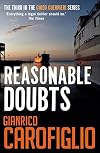
On This Page
Description
A man gets sixteen years for smuggling drugs into Italy. Guerrieri takes on the appeal, discovers the accused was a neo-Fascist thug, and ends up in bed with his beautiful half-Japanese wife...the gnawing boredom of routine..
Tags
Recommendations

















































Member Reviews
Rating: 4.9* of five
The Publisher Says: Lawyer Guerrieri is asked to handle the appeal of Fabio Paolicelli, sentenced to sixteen years for smuggling drugs into Italy. Everything seems stacked against the accused, not least because he initially confessed to the crime. His past as a neo-fascist thug also adds credence to the case against him. Only the intervention of Paolicelli’s beautiful half-Japanese wife finally overcomes Guerrieri’s reluctance. Matters get more complicated when Guerrieri ends up in bed with her. Gianrico Carofiglio, born in 1961, is a judge and anti-Mafia prosecutor in the southern Italian city of Bari. Bitter Lemon Press introduced him to English-speaking readers with his best-selling debut novel, Involuntary show more Witness.
My Review: Third in the Guido Guerrieri Italian legal procedural thrillers, this outing finds Avv. Guerrieri tilting at windmills again, with a twist: He's running an investigation into the client's story. He's taken the case of an imprisoned drug courier who insists he's innocent of knowingly transporting 40 kilos of cocaine from Montenegro back to Bari in the car carrying himself, his wife, and their small daughter. He was a small-time crook before, yes, and (unknown to the client) was even a nasty Fascist gang-bully in the 1970s who beat young Guido up in the street. But to imperil his own wife and daughter by doing something so stupid as to run a hundred pounds of cocaine across international borders?! Never!
But word in the prison-yard is that Avv. Guerrieri is a good one, a lawyer who does the job he's hired for, and makes the case work for the client. This time, though, Guido faces something a little bit tougher than just a client probably guilty and just denying it out of embarrassment at involving his family, or even the long-ago beating he got at the client's hands (which the client's clearly forgotten): Don Quixote de Guerrieri has met his Dulcinea, the client's beautiful half-Japanese wife Natsu.
And here Guido Guerrieri is, single and everything, since Margherita left for New York and a new life (the rat!). And here Natsu is, unsure of her husband's innocence, unsure of her future, unsure of how to tell her daughter that Papa's not coming home from his business trip until 2025...what can you expect a woman to do when a handsome older gent with sad eyes and a penchant for reading strange books, a sophisticated palate that can really appreciate her cooking, and a way with soothing her deeply unhappy daughter's nightmares falls into her lap?
In the end, as always, Guido sees justice served, and sees his services amply rewarded in the process by solidifying his excellent reputation among the criminal classes, with the local narcotics officers, and the Italian judiciary, all at the same time. Not for the first time, Carofiglio weaves a believable resolution to a plot he seems to have set in motion specifically to challenge the clockwork universe into crushing our Don Quixote hero with the windmill blades.
At the end of the last book, Guido and Margherita were celebrating Christmas together! He'd even jumped out of a plane to impress her! And in one short passage at the very beginning of this book, Carofiglio dispatches her to the same place that all happy-making things go in the lives of hard-boiled sleuths. I was a little bit surprised at first, then I remembered the cardinal rule of noir: No one is happy for long.
A doomed affair with a client's wife is a great noir touch, too. No one even moderately sentient can doubt for a second that, once Natsu appears, Guido's going to succumb to her and that she's going to offer up the goods. All progresses apace, and the expected complications ensue; and perhaps that's why this installment isn't quite so thrilling to me as the previous two. I suspect that the far greater emphasis on the investigative parts of the case as opposed to the actual court arguments and examinations might contribute to my lack of superhappy. But the elements are there, just in smaller proportion to previous outings. All I can hope is that the series doesn't become all PI instead of procedural.
I really like the translations of these books, I must say, since they give me credit for being intelligent enough to need the occasional reinforcement of the book's Italian setting by using actual Italian in some non-critical but very practical ways. My favorite example is the characters calling each other, when culturally necessary for them to do so, by their job titles, eg Guido being called "Avvocato" or "Lawyer-man" in professional contexts, exactly as they would in Italy. Grace notes like this are very important to my sense of pleasure in a book, and greatly enhance my willingness to read more of the series.
I continue to enjoy these books, and wait eagerly for the next installment. That's saying something from a man whose "to be read" shelf has over 1000 titles on it. show less
The Publisher Says: Lawyer Guerrieri is asked to handle the appeal of Fabio Paolicelli, sentenced to sixteen years for smuggling drugs into Italy. Everything seems stacked against the accused, not least because he initially confessed to the crime. His past as a neo-fascist thug also adds credence to the case against him. Only the intervention of Paolicelli’s beautiful half-Japanese wife finally overcomes Guerrieri’s reluctance. Matters get more complicated when Guerrieri ends up in bed with her. Gianrico Carofiglio, born in 1961, is a judge and anti-Mafia prosecutor in the southern Italian city of Bari. Bitter Lemon Press introduced him to English-speaking readers with his best-selling debut novel, Involuntary show more Witness.
My Review: Third in the Guido Guerrieri Italian legal procedural thrillers, this outing finds Avv. Guerrieri tilting at windmills again, with a twist: He's running an investigation into the client's story. He's taken the case of an imprisoned drug courier who insists he's innocent of knowingly transporting 40 kilos of cocaine from Montenegro back to Bari in the car carrying himself, his wife, and their small daughter. He was a small-time crook before, yes, and (unknown to the client) was even a nasty Fascist gang-bully in the 1970s who beat young Guido up in the street. But to imperil his own wife and daughter by doing something so stupid as to run a hundred pounds of cocaine across international borders?! Never!
But word in the prison-yard is that Avv. Guerrieri is a good one, a lawyer who does the job he's hired for, and makes the case work for the client. This time, though, Guido faces something a little bit tougher than just a client probably guilty and just denying it out of embarrassment at involving his family, or even the long-ago beating he got at the client's hands (which the client's clearly forgotten): Don Quixote de Guerrieri has met his Dulcinea, the client's beautiful half-Japanese wife Natsu.
And here Guido Guerrieri is, single and everything, since Margherita left for New York and a new life (the rat!). And here Natsu is, unsure of her husband's innocence, unsure of her future, unsure of how to tell her daughter that Papa's not coming home from his business trip until 2025...what can you expect a woman to do when a handsome older gent with sad eyes and a penchant for reading strange books, a sophisticated palate that can really appreciate her cooking, and a way with soothing her deeply unhappy daughter's nightmares falls into her lap?
In the end, as always, Guido sees justice served, and sees his services amply rewarded in the process by solidifying his excellent reputation among the criminal classes, with the local narcotics officers, and the Italian judiciary, all at the same time. Not for the first time, Carofiglio weaves a believable resolution to a plot he seems to have set in motion specifically to challenge the clockwork universe into crushing our Don Quixote hero with the windmill blades.
At the end of the last book, Guido and Margherita were celebrating Christmas together! He'd even jumped out of a plane to impress her! And in one short passage at the very beginning of this book, Carofiglio dispatches her to the same place that all happy-making things go in the lives of hard-boiled sleuths. I was a little bit surprised at first, then I remembered the cardinal rule of noir: No one is happy for long.
A doomed affair with a client's wife is a great noir touch, too. No one even moderately sentient can doubt for a second that, once Natsu appears, Guido's going to succumb to her and that she's going to offer up the goods. All progresses apace, and the expected complications ensue; and perhaps that's why this installment isn't quite so thrilling to me as the previous two. I suspect that the far greater emphasis on the investigative parts of the case as opposed to the actual court arguments and examinations might contribute to my lack of superhappy. But the elements are there, just in smaller proportion to previous outings. All I can hope is that the series doesn't become all PI instead of procedural.
I really like the translations of these books, I must say, since they give me credit for being intelligent enough to need the occasional reinforcement of the book's Italian setting by using actual Italian in some non-critical but very practical ways. My favorite example is the characters calling each other, when culturally necessary for them to do so, by their job titles, eg Guido being called "Avvocato" or "Lawyer-man" in professional contexts, exactly as they would in Italy. Grace notes like this are very important to my sense of pleasure in a book, and greatly enhance my willingness to read more of the series.
I continue to enjoy these books, and wait eagerly for the next installment. That's saying something from a man whose "to be read" shelf has over 1000 titles on it. show less
Guido Guerrieri takes on another difficult case in the third series outing. It will be difficult to appeal his client's conviction on a drug charge because his client initially confessed to the crime. Guerrieri must also face some personal difficulties. He remembers his client as a bully who tormented the younger Guerrieri during high school. Guerrieri is also developing feelings for his client's wife.
Guerrieri wrestles with ethical questions in this case, as well as guilt when he falls on the wrong side of the line. He is a refreshing change from the often too good to be true central figures in many series, who either never make mistakes or find ways to justify their wrong behavior. The legal arguments and courtroom strategies are well show more written and should please most legal thriller fans. show less
Guerrieri wrestles with ethical questions in this case, as well as guilt when he falls on the wrong side of the line. He is a refreshing change from the often too good to be true central figures in many series, who either never make mistakes or find ways to justify their wrong behavior. The legal arguments and courtroom strategies are well show more written and should please most legal thriller fans. show less
Defense attorney Guido Guerrieri continues to battle injustice in this episode of the series. Hired to defend a former nemesis, his moral conflicts again arise as he tries to thread the ethical issues of guilt/innocence vs the rule of law. Returning from vacation with his wife and child, the client is arrested as he drives off a ferry and re-enters Italy after authorities discover and vast amount of illegal drugs stashed in his car.
Guido has previous childhood memories of personal (unpleasant) interactions with this client, who appears oblivous of the episode.
Guerrieri must walk a tightrope between his personal antipathy toward the client, his attraction to the client's wife, and his confusion and doubts about not only his client's show more guilt or innocence, but also how to proceed.
The author deftly paints a picture of the Italian legal system (very different from the US) while letting us feel the tension and confusion Guido is personally dealing with. The story is well written with a balance of personal and procedural explanations leading to an acceptable resolution. Best read after the first two books in the series. show less
Guido has previous childhood memories of personal (unpleasant) interactions with this client, who appears oblivous of the episode.
Guerrieri must walk a tightrope between his personal antipathy toward the client, his attraction to the client's wife, and his confusion and doubts about not only his client's show more guilt or innocence, but also how to proceed.
The author deftly paints a picture of the Italian legal system (very different from the US) while letting us feel the tension and confusion Guido is personally dealing with. The story is well written with a balance of personal and procedural explanations leading to an acceptable resolution. Best read after the first two books in the series. show less
Margherita has left Guido, ostensibly for a “short-term” job (read, at least one year) in New York for a once-in-a-lifetime chance to design for an internationally renowned firm. Guido, at 42, then goes into a classic mid-life crisis. At which vulnerable point, in walks a beautiful Japanese-Italian woman who wants Guido to take on what looks like the hopeless case of her husband, who is accused of smuggling drugs across the border into Italy--a lot of drugs. Already in prison, he wants Guido to take on his appeal.
Not only is the case bad enough, but the husband/suspect, Fabbiro RayBans, is someone out of Guido’s own childhood, a Fascist punk who delighted in beating Guido up when the latter was 12 and who was suspected in the show more murder of one of Guido’s acquaintances.
Guido is torn by any number of emotions, not the least of which is taking on the case and losing it so that this nemesis from the past--with the beautiful wife who then would be available--would disappear for 12 long years.
All this is combined with Guido’s usual melancholy reflection which does mean pages of self-examination and agonizing, Italian style. The book drags at that point. But it’s when Guido enters the courtroom he comes into his own. We are never in doubt what he’s going to say, as far as approach; what we never expect is exactly how he’s going to present his case. It’s extremely well done.
Even so, there’s a bit too much inner conflict going on though this book for me; it truly slowed the story down and as opposed to his two previous books, really didn’t add much to the story--we’ve heard it all before from Guido.
Still, a good read for the courtroom drama, which is very well done. show less
Not only is the case bad enough, but the husband/suspect, Fabbiro RayBans, is someone out of Guido’s own childhood, a Fascist punk who delighted in beating Guido up when the latter was 12 and who was suspected in the show more murder of one of Guido’s acquaintances.
Guido is torn by any number of emotions, not the least of which is taking on the case and losing it so that this nemesis from the past--with the beautiful wife who then would be available--would disappear for 12 long years.
All this is combined with Guido’s usual melancholy reflection which does mean pages of self-examination and agonizing, Italian style. The book drags at that point. But it’s when Guido enters the courtroom he comes into his own. We are never in doubt what he’s going to say, as far as approach; what we never expect is exactly how he’s going to present his case. It’s extremely well done.
Even so, there’s a bit too much inner conflict going on though this book for me; it truly slowed the story down and as opposed to his two previous books, really didn’t add much to the story--we’ve heard it all before from Guido.
Still, a good read for the courtroom drama, which is very well done. show less
Prove di sceneggiatura
L'avvocato Guerrieri, guerriero nel nome e nei fatti, ma senza supereroismo, è un eroe delle quotidiane aule di tribunale. Casi di routine e casi disperati, quelli in cui non sai che raccontare al tuo cliente perchè tanto il patteggiamento è la via più breve e quelli che tiri fuori dal gabbio a scadenze più o meno regolari. Un giorno però arriva un caso che ha radici nel passato, che vorresti scansare, o pareggiare i conti come un professionista non dovrebbe eticamente mai fare. Ma poi prende il sopravvento la natura vera, ed anche se ti prende la nausea ogni volta che devi calarti negli inferi, vai avanti, almeno finchè non decidi di mollare. Che altro si può fare? E il ragionevole dubbio riesce a scavare show more in una verità che sembra ovvia, ma che contro tutte le evidenze vera non è. In mezzo ci stanno le delusioni, la frustrazione, amori finiti e amori senza futuro, pochi e grandi amici, sfondi del capoluogo barese, autocitazioni e presenze costanti. Piacevole, non si può fare a meno di leggerlo tutto di un fiato, forse perchè racconta di un panorama noto, forse perchè, lontano dai tecnicismi giudiziari, è la storia di un uomo, di uno di noi. show less
L'avvocato Guerrieri, guerriero nel nome e nei fatti, ma senza supereroismo, è un eroe delle quotidiane aule di tribunale. Casi di routine e casi disperati, quelli in cui non sai che raccontare al tuo cliente perchè tanto il patteggiamento è la via più breve e quelli che tiri fuori dal gabbio a scadenze più o meno regolari. Un giorno però arriva un caso che ha radici nel passato, che vorresti scansare, o pareggiare i conti come un professionista non dovrebbe eticamente mai fare. Ma poi prende il sopravvento la natura vera, ed anche se ti prende la nausea ogni volta che devi calarti negli inferi, vai avanti, almeno finchè non decidi di mollare. Che altro si può fare? E il ragionevole dubbio riesce a scavare show more in una verità che sembra ovvia, ma che contro tutte le evidenze vera non è. In mezzo ci stanno le delusioni, la frustrazione, amori finiti e amori senza futuro, pochi e grandi amici, sfondi del capoluogo barese, autocitazioni e presenze costanti. Piacevole, non si può fare a meno di leggerlo tutto di un fiato, forse perchè racconta di un panorama noto, forse perchè, lontano dai tecnicismi giudiziari, è la storia di un uomo, di uno di noi. show less
Terzo libro della serie dedicata all’avvocato Guerrieri e questa volta il caso è quello di un uomo condannato in primo grado per traffico di droga, ma forse solo perché finito in una grossa trappola. Però questa persona è per l’avvocato Guerrieri anche una ”vecchia conoscenza” quasi un fantasma che ritorna dal passato.
Un libro che conferma una volta di più la bravura di Carofiglio e il mio amore incondizionato per l’avvocato Guido Guerrieri.
Altro libro indimenticabile e imperdibile.
Un libro che conferma una volta di più la bravura di Carofiglio e il mio amore incondizionato per l’avvocato Guido Guerrieri.
Altro libro indimenticabile e imperdibile.
C. ha a mio avviso la grande capacita' di saper creare curiosita' con parole semplici e trame lineari. Questo suo terzo romanzo mantiene la medesima caratteristica, spostandosi su fatti di cronaca che potrebbero capitare a tutti, risolvendoli tuttavia con escamotage giurisprudenziali degni dei migliori avvocati del foro. L'avvocato Guerrieri, che si dimostra sempre piu' colto e simpatico, si sposta verso la dimensione della fiction, della finzione, del personaggio e non della persona, perdendo a tratti - per il mio personalissimo gusto - quel mordente di credibilità dei primi libri. Questo, assieme agli altri, rimane comunque un testo da leggere - a maggior ragione se si è iscritti a giurisprudenza...
Members
- Recently Added By
Lists

Italian Literature
556 works; 41 members
Author Information

58+ Works 5,246 Members
Some Editions
Awards and Honors
Series

Belongs to Publisher Series
Work Relationships
Is contained in
Common Knowledge
- Canonical title
- Reasonable Doubts
- Original title
- Ragionevoli dubbi
- Original publication date
- 2006-09
- People/Characters
- Guido Guerrieri; Fabio Paolicelli; Margherita; Natsu Kawabata; Midori Paolicelli
- Important places
- Bari, Italy
- First words
- When Margherita said she wanted to talk to me, I thought she was going to tell me she was expecting a baby.
- Last words
- (Click to show. Warning: May contain spoilers.)Where the houses and restaurants and signs come to an end, and all that's left are the cast-iron lamp-posts and their friendly but mysterious lights.
- Original language
- Italian
Classifications
Statistics
- Members
- 603
- Popularity
- 48,272
- Reviews
- 21
- Rating
- (3.68)
- Languages
- 10 — Danish, Dutch, English, Finnish, French, German, Italian, Polish, Spanish, Swedish
- Media
- Paper, Audiobook, Ebook
- ISBNs
- 23
- ASINs
- 7