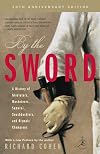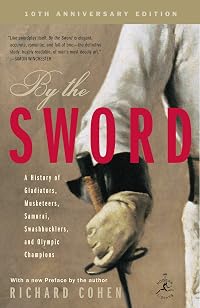
By the Sword
by Richard Cohen
On This Page
Description
Napoleon fenced. So did Shakespeare, Karl Marx, Grace Kelly, and President Truman, who would cross swords with Bess after school. Lincoln was a canny dueler. Ignatius Loyola challenged a man to a duel for denying Christ's divinity (and won). Less successful, but no less enthusiastic, was Mussolini, who would tell his wife he was "off to get spaghetti," their code to avoid alarming the children. By the Sword is an epic history of sword fighting-a science, an art and, for many, a religion that show more began at the dawn of civilization in ancient Egypt and has been an obsession for mankind ever since. With wit and insight, Richard Cohen gives us an engrossing alternative history of the world. Sword fighting was an entertainment in ancient Rome, a sacred rite in medieval Japan, and throughout the ages a favorite way to settle scores. For centuries, dueling was the scourge of Europe, banned by popes on threat of excommunication, and by kings who then couldn't keep themselves from granting pardons-in the case of Louis XIV, in the thousands. Evidence of this passion is all around us: We shake hands to show that we are not reaching for our sword. A gentleman offers a lady his right arm because his sword was once attached to his left hip. Men button their jackets to the right to give them swifter access to their sword. In his sweeping narrative, Cohen takes us from the training of gladiators to the tricks of the best Renaissance masters, from the exploits of musketeers to swashbuckling Hollywood by way of the great moments in Olympic fencing. A young George Patton competed in the 1912 Olympics. In 1936, a Jewish champion fenced for Hitler. Errol Flynn and Basil Rathbone were ardent swordsmen. We meet their coaches and the man who staged the fight scenes in Star Wars, The Lord of the Rings, and James Bond's Die Another Day. Richard Cohen has the rare distinction of being both a compelling writer and a champion sabreur. He lets us see swordplay as graceful and brutal, balletic and deadly, technically beautiful and fiercely competitive-the most romantic of martial arts. By the Sword is a virtuoso performance that is sure to beguile history lovers, sports fans, military buffs, and anyone who ever dreamed of crossing swords with Darth Vader. show lessTags
Recommendations






Member Reviews
By The Sword is a charming if somewhat scattered account of dueling and fencing by editor, author, and fencer Richard Cohen. Cohen is a serious competitor: five times UK saber champion, member of the UK Olympic team in 1972, 1976, 1980, and 1984, and World Veteran saber champion in 2004 and 2005 (a competition for fencers over 40). He knows this subject inside and out, though his interests may not align with most readers. A sense of the priorities of the book can be given by the table of contents, which devote similar page counts to the history of the sword from ancient Egypt to Waterloo, and post-WW2 professional fencing scandals.
Swordsmanship was once serious business, a primarily military arm for millennia. Even if spears were show more almost always the primary weapon, swords had style and prestige. As gunpowder dominated the battlefield, swords switched to a social weapon. The 18th century was crazy for duels, and the 19th century only slightly less so. Any serious man knew he might be called upon to defend his honor at the point of a blade, and it's almost easier to find a significant artistic or political figure who did not fight duels than one who did.
As the 19th century wore on, and the pointless bloodshed of duels attracted social opprobrium rather than praise, dueling turned into the sport of fencing. Fencing carries with it much of the romance of serious swordplay, as well as a combination of intellectual skill and physical agility that makes it appealing. Cohen's own 4 Olympics is demonstration enough: I can't think of another sport where a world class career might reasonably stretch over several decades.
Though the image of fencing is one of honor, the actual sport at the highest levels is full of horrific ethical lapses. Fencers have made easy alliance with authoritarians, both Fascist and Communist, though they're hardly unique among athletes in that respect. More seriously, fencing is full of subjective calls about the validity of a hit, and referees are known to favor champions and national allies. There have been cases of altered equipment which allows a fencer to score a hit at will, and complex arrangements of fixed matches to promote one fencer over another. The reality of the sport is a far cry from the ideal of sportsmanship and the honorable self-deniable of calling your own good hit.
Some of the more interesting, if overwritten parts, are around some of the cultures of dueling. There's a lot of standard Japanese weeabooism around the katana and samurai. German menseur fencing, with its purpose of creating facial scars, is a particularly bizarre practice to modern eyes. An aside on Italian dueling notes that of any 100 19th century duelists, 30 were army officers, 26 were journalists, and the remainder every other profession. Journalists tend to get into trouble!
Dueling itself is one of those insanely weird practices. Somehow people became lifelong friends after seriously trying to kill each other. Yet the human wastage was also incredible. Galois, a talented mathematician killed at 20 in a duel, is one of the first talents that comes to mind as murdered by honor, but even a clod had a mother, father, siblings, lovers, friends.
Still, who among us has not wanted to draw steel and settle their issues once and for all? show less
Swordsmanship was once serious business, a primarily military arm for millennia. Even if spears were show more almost always the primary weapon, swords had style and prestige. As gunpowder dominated the battlefield, swords switched to a social weapon. The 18th century was crazy for duels, and the 19th century only slightly less so. Any serious man knew he might be called upon to defend his honor at the point of a blade, and it's almost easier to find a significant artistic or political figure who did not fight duels than one who did.
As the 19th century wore on, and the pointless bloodshed of duels attracted social opprobrium rather than praise, dueling turned into the sport of fencing. Fencing carries with it much of the romance of serious swordplay, as well as a combination of intellectual skill and physical agility that makes it appealing. Cohen's own 4 Olympics is demonstration enough: I can't think of another sport where a world class career might reasonably stretch over several decades.
Though the image of fencing is one of honor, the actual sport at the highest levels is full of horrific ethical lapses. Fencers have made easy alliance with authoritarians, both Fascist and Communist, though they're hardly unique among athletes in that respect. More seriously, fencing is full of subjective calls about the validity of a hit, and referees are known to favor champions and national allies. There have been cases of altered equipment which allows a fencer to score a hit at will, and complex arrangements of fixed matches to promote one fencer over another. The reality of the sport is a far cry from the ideal of sportsmanship and the honorable self-deniable of calling your own good hit.
Some of the more interesting, if overwritten parts, are around some of the cultures of dueling. There's a lot of standard Japanese weeabooism around the katana and samurai. German menseur fencing, with its purpose of creating facial scars, is a particularly bizarre practice to modern eyes. An aside on Italian dueling notes that of any 100 19th century duelists, 30 were army officers, 26 were journalists, and the remainder every other profession. Journalists tend to get into trouble!
Dueling itself is one of those insanely weird practices. Somehow people became lifelong friends after seriously trying to kill each other. Yet the human wastage was also incredible. Galois, a talented mathematician killed at 20 in a duel, is one of the first talents that comes to mind as murdered by honor, but even a clod had a mother, father, siblings, lovers, friends.
Still, who among us has not wanted to draw steel and settle their issues once and for all? show less
Napoleon fenced. So did Shakespeare, Karl Marx, Grace Kelly, and President Truman, who would cross swords with Bess after school. Lincoln was a canny dueler. Ignatius Loyola challenged a man to a duel for denying Christ's divinity (and won). Less successfull, but no less enthusiastic, was Mussolini, who would tell his wife he was 'off to get spaghetti,' their code to avoid alarming the children.
By the Sword is an epic history of sword fighting-a science, an art and, for many, a religion that began at the dawn of civilization in ancient Egypt and has been an obsession for mankind ever since. wlilth wit and insight, Richard Cohen gives us an engrossing alternative history of the world.
Sword fighting was an entertainment in ancient Rome, a show more sacred rite in mediaval Japan, and throughout the ages a favorite way to settle scores. For centuries, dueling was the scourge of Europe, banned by popes on threat of excommunication, and by kings who then couldn't keep themselves from granting pardons-in the case of Louis XIV, in the thousands. Evidence of this passion is all around us: We shake hands to show that we are not reaching for our sword. A gentleman offers a lady his right arm because his sword was once attached to his left hip. Men button their jackets to the right to give them swifter access to their sword.
In his sweeping narrative, Cohen takes us from the training of gladiators to the tricks of the best Renaissance masters, from the exploits of musketeers to swashbuckling Hollywood by way of the great moments in Olympic fencing. A young George Patton competed in the 1912 Olympics. In 1936, a Jewish champion fenced for Hitler. Errol Flynn and Basil Rathbone were ardent swordsmen. We meet their coaches and the man who staged the fight scenes in Star Wars, the Lord of the Rings, and James Bond's Die Another Day.
Richard Cohen has the rare distinction of being both a compeling writer and a champon sabreur. He lets us see swordplay as graceful and brutal, balletic and deadly, technically beautiful and fiercely competitive-the most romantic of martial arts. By the Sword is a virtuoso performance that is sure to beguile history lovers, sports fans, military buffs, and anyone who ever dreamed of crossing with Darth Vader.
Richard Cohen is the former publishing director of Hutchinson and Hodder & Stoughton and the founder of Richard Cohen Books. Five times U.K. national saber champion, he was selected for the British Olympic team in 1972, 1976, 1980, and 1984. He has written for The New York Times and most leading London neewspapers, and has appeared on BBC radio and telelvision. He lives in New York City.
'In this enormously learned but also gripping book, Richard Cohen describes the part sword fighting has played in the history of male society in many lands since the earliest times, and succeeds in conveying the sensations, excitement, and sometimes terror of the contest. His text takes its authority from his achievement as an Olympic fencer.'-John Keegan
'Touche! While scrupulous and informed about its subject, Richard Cohen's book is about more than swordplay. It reads at times like an alternative social history of the West, as it deals with the big themes of chivalry, the need to compete, and that elusive quality tha men call 'honor.''-Sebastian Faulks
'One must not hiccup while sword-swallowing: Indian elephants, alone in the animal kingdom, can be taught to fight with foils-just two apercus from Cohen's quite wonderful book. Like swordplay itself, By the Sword is elgant, accurate, romantic, and full of brio-the definitve study, hugely readable, of man's most deadly art.'-Simon Winchester
Contents
List of illustrations
Prologue
Part 1: From Egypt to Waterloo
Chapter 1 How it all began
Chapter 2 Enter the master
Chapter 3 A wild kind of justice
Chapter 4: France in the age of the musketeers
Part 2: The search for perfection
Chapter 5 The great swordsmakers
Chapter 6 The perfect thrust
Chapter 7 Where the sword is the soul
Part 3: The duel's high noon
Chapter 8 Points of honor
Chapter 9 A pursuit for gentlemen
Chapter 10 Swashbuckling
Chapter 11 On Mount Rushmore
Part 4: Wounded warriors
Chapter 12 Spilled blood
Chapter 13 Scars of glory
Part 5: Great powers
Chapter 14 The fascist sport
Chapter 15 The woman who saluted Hitler
Chapter 16 The champions
Chapter 17 Exodus
Part 6: Faustian pacts
Chapter 18 The burden of gold
Chapter 19 Honor betrayed
Chapter 20 The demon parber
Epilogue: By way of the sword
Notes
Acknowledgments
Index show less
By the Sword is an epic history of sword fighting-a science, an art and, for many, a religion that began at the dawn of civilization in ancient Egypt and has been an obsession for mankind ever since. wlilth wit and insight, Richard Cohen gives us an engrossing alternative history of the world.
Sword fighting was an entertainment in ancient Rome, a show more sacred rite in mediaval Japan, and throughout the ages a favorite way to settle scores. For centuries, dueling was the scourge of Europe, banned by popes on threat of excommunication, and by kings who then couldn't keep themselves from granting pardons-in the case of Louis XIV, in the thousands. Evidence of this passion is all around us: We shake hands to show that we are not reaching for our sword. A gentleman offers a lady his right arm because his sword was once attached to his left hip. Men button their jackets to the right to give them swifter access to their sword.
In his sweeping narrative, Cohen takes us from the training of gladiators to the tricks of the best Renaissance masters, from the exploits of musketeers to swashbuckling Hollywood by way of the great moments in Olympic fencing. A young George Patton competed in the 1912 Olympics. In 1936, a Jewish champion fenced for Hitler. Errol Flynn and Basil Rathbone were ardent swordsmen. We meet their coaches and the man who staged the fight scenes in Star Wars, the Lord of the Rings, and James Bond's Die Another Day.
Richard Cohen has the rare distinction of being both a compeling writer and a champon sabreur. He lets us see swordplay as graceful and brutal, balletic and deadly, technically beautiful and fiercely competitive-the most romantic of martial arts. By the Sword is a virtuoso performance that is sure to beguile history lovers, sports fans, military buffs, and anyone who ever dreamed of crossing with Darth Vader.
Richard Cohen is the former publishing director of Hutchinson and Hodder & Stoughton and the founder of Richard Cohen Books. Five times U.K. national saber champion, he was selected for the British Olympic team in 1972, 1976, 1980, and 1984. He has written for The New York Times and most leading London neewspapers, and has appeared on BBC radio and telelvision. He lives in New York City.
'In this enormously learned but also gripping book, Richard Cohen describes the part sword fighting has played in the history of male society in many lands since the earliest times, and succeeds in conveying the sensations, excitement, and sometimes terror of the contest. His text takes its authority from his achievement as an Olympic fencer.'-John Keegan
'Touche! While scrupulous and informed about its subject, Richard Cohen's book is about more than swordplay. It reads at times like an alternative social history of the West, as it deals with the big themes of chivalry, the need to compete, and that elusive quality tha men call 'honor.''-Sebastian Faulks
'One must not hiccup while sword-swallowing: Indian elephants, alone in the animal kingdom, can be taught to fight with foils-just two apercus from Cohen's quite wonderful book. Like swordplay itself, By the Sword is elgant, accurate, romantic, and full of brio-the definitve study, hugely readable, of man's most deadly art.'-Simon Winchester
Contents
List of illustrations
Prologue
Part 1: From Egypt to Waterloo
Chapter 1 How it all began
Chapter 2 Enter the master
Chapter 3 A wild kind of justice
Chapter 4: France in the age of the musketeers
Part 2: The search for perfection
Chapter 5 The great swordsmakers
Chapter 6 The perfect thrust
Chapter 7 Where the sword is the soul
Part 3: The duel's high noon
Chapter 8 Points of honor
Chapter 9 A pursuit for gentlemen
Chapter 10 Swashbuckling
Chapter 11 On Mount Rushmore
Part 4: Wounded warriors
Chapter 12 Spilled blood
Chapter 13 Scars of glory
Part 5: Great powers
Chapter 14 The fascist sport
Chapter 15 The woman who saluted Hitler
Chapter 16 The champions
Chapter 17 Exodus
Part 6: Faustian pacts
Chapter 18 The burden of gold
Chapter 19 Honor betrayed
Chapter 20 The demon parber
Epilogue: By way of the sword
Notes
Acknowledgments
Index show less
Excellent subject but not as well done as I was hoping.
"By The Sword" promises more than it delivers. As another reviewer notes, the subtitle calls it "A History of Gladiators, Musketeers, Samurai, Swashbucklers, and Olympic Champions," but it felt like the main part of the book was about fencing - the sport of the writer.
I had hoped to learn more about Samurai and other swordfighters, but instead learned an awful lot about Hungarian epeeists, among others.
I imagine this is a good intro and there's another book out there that'll be what I want. But this book? Worth the $2 I spent on it. Not much more.
More reviews at my WordPress site, Ralphsbooks.
"By The Sword" promises more than it delivers. As another reviewer notes, the subtitle calls it "A History of Gladiators, Musketeers, Samurai, Swashbucklers, and Olympic Champions," but it felt like the main part of the book was about fencing - the sport of the writer.
I had hoped to learn more about Samurai and other swordfighters, but instead learned an awful lot about Hungarian epeeists, among others.
I imagine this is a good intro and there's another book out there that'll be what I want. But this book? Worth the $2 I spent on it. Not much more.
More reviews at my WordPress site, Ralphsbooks.
Maravillosa historia de la esgrima, desde el Antiguo Egipto hasta la esgrima acrobática de las películas de hoy, pasando por gladiadores, samurais, guerreros medievales y espadachines dieciochescos. Un Tour de Force que nos da un gigantesco paseo y del que he disfrutado cada minuto, cada página.
This book is a history of swordsmanship throughout the world. It's written well enough I suppose. I never really followed swords and swordspeople, it never really interested me since I figured I wasn't wealthy enough to participate. If I can't afford martial arts lessons I sure as heck can't do swords, so I never really got into it. Sure I can pick up a stick and wave it about, but that is hardly swordmanship.
As for the book itself, it is structured into six parts and an epilogue. The first part talks about the history of the sword, which is what I mostly expected. It starts with ancient Egypt and other cultures that knew of swords. Greece didn't really get into the whole sword thing, which surprises me, but they didn't feel it required show more skill to slash at things.
The second part then gets into sword masters; people that make their living through fencing and dueling. Following that is the culture of the duel itself, especially it's zenith back in some unmarked period where it was actually acceptable to duel with impunity. This section talks about US dignitaries that fenced and dueled, which I thought was pretty interesting. It also talks about Hollywood and the culture of sword fights in movies. Then it goes into wounds that swords cause, which isn't really surprising. I mean, they cause cuts or perforations so... Next up was fencing during WWII and the years leading up to it. The book ends with scandals that rocked the sport in the 1990s.
So it is somewhat what I expected, but at the same time it sort of veers off into tangents that I don't expect. Some interesting factoids I took from this book is that elephants can learn to fence better than trained people. This is probably due to how flexible and strong their trunks are. Another thing I took away from it; a lot of people were into fencing. Wow. I can understand Theodore Roosevelt, but Harry S. Truman and Abraham Lincoln?
Anyway, the book was okay. It wasn't great, but it wasn't bad. show less
As for the book itself, it is structured into six parts and an epilogue. The first part talks about the history of the sword, which is what I mostly expected. It starts with ancient Egypt and other cultures that knew of swords. Greece didn't really get into the whole sword thing, which surprises me, but they didn't feel it required show more skill to slash at things.
The second part then gets into sword masters; people that make their living through fencing and dueling. Following that is the culture of the duel itself, especially it's zenith back in some unmarked period where it was actually acceptable to duel with impunity. This section talks about US dignitaries that fenced and dueled, which I thought was pretty interesting. It also talks about Hollywood and the culture of sword fights in movies. Then it goes into wounds that swords cause, which isn't really surprising. I mean, they cause cuts or perforations so... Next up was fencing during WWII and the years leading up to it. The book ends with scandals that rocked the sport in the 1990s.
So it is somewhat what I expected, but at the same time it sort of veers off into tangents that I don't expect. Some interesting factoids I took from this book is that elephants can learn to fence better than trained people. This is probably due to how flexible and strong their trunks are. Another thing I took away from it; a lot of people were into fencing. Wow. I can understand Theodore Roosevelt, but Harry S. Truman and Abraham Lincoln?
Anyway, the book was okay. It wasn't great, but it wasn't bad. show less
To my recollection, there was no mention of gladiators in the book. Other than that it was a very good book on the creating and history of the sport of fencing. The history of dueling was fairly well cover and interesting but not the focus of the book. The book was full of interesting information and fun facts.
Being the product of a major publisher, the book was well proofed and well edited. So of course there were no problems with spelling, grammar or bad writing, which I very much appreciate and usually like to mention in one way or another.
I recommend the book to anyone interested in fencing and/or dueling. There is plenty to keep the reader's interest
Being the product of a major publisher, the book was well proofed and well edited. So of course there were no problems with spelling, grammar or bad writing, which I very much appreciate and usually like to mention in one way or another.
I recommend the book to anyone interested in fencing and/or dueling. There is plenty to keep the reader's interest
The advertised storyline showcasing this book as the world history of sword fighting, is in reality, a detailed history of fencing thru. Not exactly what I expected and is the book is off the charts technical with fencing terms. As a non-fencing insider, it glazed my eyes over in just a few short pages. Wouldn't recommend except for someone strongly interested in fencing.
Members
- Recently Added By
Published Reviews
ThingScore 100
A literate, learned, and, beg pardon, razor-sharp history of fencing and kindred martial arts, by an English Olympian and saber master...
added by amorabunda
Author Information

5 Works 1,391 Members
Some Editions
Awards and Honors
Notable Lists
Common Knowledge
- Canonical title
- By the Sword
- Original title
- By the Sword
- Original publication date
- 2002
- People/Characters
- d'Eon de Beaumont; Charles D'Artagnan; Jacques LeGris; Jean de Carrouges; Pierre de Fredy; Helene Mayer (show all 14); Reinhold Heydrich; Emil Beck; Richard Francis Burton; Errol Flynn; Eduardo Mangiarotti; Helene Mayer; Aldo Nadi; Jerzy Pawlowski
- Important events
- Olympic Games (1896 & 1936)
- Dedication
- For Kathy
- First words
- Prologue Thirty years ago I fought the only duel of my life.
Chapter 1 The great authority on early arms, Ewart Oakeshott, believes that swords first appeared between 1500 and 1100 B.C. in Minoan Crete ... (show all)and Celtic Britain. - Last words
- (Click to show. Warning: May contain spoilers.)The experience must have given Nietzsche comfort, because he later wrote (in Human, All Too Human) that duelling was "a great blessing." In all its modern formes, our masks securely in place, it surely is.
- Original language
- English UK
Classifications
- Genres
- Sports and Leisure, History, Nonfiction, General Nonfiction
- DDC/MDS
- 796.86 — Arts & recreation Recreation, sports, and performing arts Athletic and outdoor sports and games Wrestling / Martial Arts, Judo, Karate Fencing
- LCC
- U860 .C58 — Military Science Military science (General) History of arms and armor
- BISAC
Statistics
- Members
- 687
- Popularity
- 41,696
- Reviews
- 11
- Rating
- (3.65)
- Languages
- English, Italian, Spanish, Swedish
- Media
- Paper, Ebook
- ISBNs
- 13
- ASINs
- 3