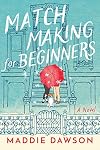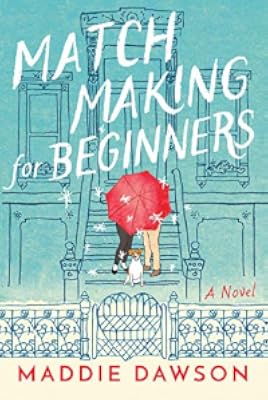
Matchmaking for Beginners
by Maddie Dawson
On This Page
Description
Marnie MacGraw wants an ordinary life- a husband, kids, and a minivan in the suburbs. Now that she's marrying the man of her dreams, she's sure this is the life she'll get. Then Marnie meets Blix Holliday, her finance's irascible matchmaking great-aunt who's dying, and everything changes- just as Blix told her it would. When her marriage ends after two miserable weeks, Marnie is understandably shocked. Marnie doesn't believe she's anything special, but Blix somehow knew she was the perfect show more person to follow in her matchmaker footsteps. And Blix was also right about some things Marnie must learn the hard way: love is hard to recognize, and the ones who push love away often are the ones who need it most.-- show lessTags
Recommendations












Member Reviews
I've read three books by this author but I never seem to remember her name. She has a distinctive voice, however, with New Age "love is all you need" treacle side by side with a good sense of snark, sunny optimism spiced with sarcasm. I am not sure I bought the mystic connection between our heroine Marnie and her fiance's aunt Blix, and the moral of the story seems to be that suburban living=boring and bad while Brooklyn=magical, a lesson that I might quibble with. But the novel itself was a charming mix of light and heavy, and Marnie was refreshingly not perfect. The book focuses on her personal journey, which involves several different men, so those looking for a neat romance tied up in a bow will be disappointed (she doesn't even show more meet the right guy until halfway through the book).
Any book that ends with the message "Whatever happens, love that" should annoy me for its naivete. But it's a credit to Maddie Dawson's skill that it didn't. Hopefully next time I will remember her name, because she is amassing an impressive body of work. show less
Any book that ends with the message "Whatever happens, love that" should annoy me for its naivete. But it's a credit to Maddie Dawson's skill that it didn't. Hopefully next time I will remember her name, because she is amassing an impressive body of work. show less
[Blix] I feel like I'm standing in front of a magnificent giraffe, and she's saying to me, "Why do I have to be a giraffe? I don't think I'm going to go around giraffing anymore." But that's just the way it is: you're a wonderful, incredible giraffe, and you've got a life that's going to take you to amazing places.
Rather than go into the plot, I am going to go into what this book is about underneath it all.
It's about appreciating and normalizing those minute and boring details of life that we either seem to resent or take for granted (or both).
It's about embracing change and fear and the unknown because these, combined with those boring and minute details, are what help us grow and learn and become our best selves.
It's about not getting show more caught up in the expectations and assumptions of what we think we should be doing because that is what society, marketing, family, and friends have told us we should be doing (usually because those plans are familiar to and comfortable for them, not for us).
It's about trusting ourselves and going against the grain when we must, no matter how awkward it is where family and friend dynamics are concerned, to ensure our own happiness.
It's about understanding that we don't have to explain ourselves or our decisions to other people.
It's about understanding the energy we give to others and absorb from them, and how those things affect each other.
It's about understanding that love really is the only thing that matters, as cheesy as that sounds. When we live through that, we see the world differently, we treat ourselves and everyone else differently, we view our whole life differently, and we begin to be happier and more open to everything the messiness of life has to offer.
It's about the individual pain we all carry, how that can be healed by other people in ways we least expect, and how all of that ends up making us stronger.
It's about how life is a squiggly, unpaved dirt road with detours and broken bridges, not a straight, smooth freeway with no construction and helpful signs everywhere.
It's about how, even though things don't turn out the way you thought they should, it doesn't mean that's a bad thing—in fact, they may have turned out better.
It's about our own motivations and those of others, and understanding where those are coming from and how they are influenced and how to know when we are truly doing something for ourselves versus doing it because it is expected of us.
It's about how you can plan all you want, but life doesn't take that into consideration. Shit happens.
It's about the stories we write in our heads and how those become reality for us. So much so that even when reality itself doesn't reflect those stories, we press on in a desperate attempt to manipulate our lives to fit that script, no matter how foolish we look or what disasters we get into as a result of that denial.
It's about learning to live in the moment and seeing and hearing and appreciating what is going on now, right here in reality.
Coming full circle, it's about learning to NOT take things for granted and find joy in the minute and boring details of every day life that we never seem to appreciate until they aren't there anymore—or because they aren't what we thought were supposed to be there.
This book wasn't life-changing for me in a way that any of these things were a surprise to me. Through my own experiences, I have come to these conclusions myself. But, what this book did do is help me feel less alone in what I have experienced, the conclusions I've come to as a result, and how I've chosen to live my life because of it all. Even if the author's own life and experiences and opinions aren't expressed here through these characters and what happens to them, she got all of this from somewhere and I feel like it could only been real-life experiences, whether hers or other people's, that inspired it all. Even if the circumstances aren't the same as my own, nor are they real because this is a story, what Marnie goes through and how Blix chooses to live her life were familiar to me. I strongly related to both of them. Marnie is the me of both the distant and not-so-recent pasts, and I am slowly becoming Blix with every passing day as I get older.
It sounds lame for me to be like, "I highlighted so many quotes and there were so many moments where I was like, 'Yes! I've had these thoughts!'"
But, I am going to say that.
And, honestly, as much as I have liked and even adored so many other books throughout my lifetime, I feel like this is the book I have related to the most out of anything I've read in a long time, maybe ever.
[Blix] ...never got married because I've finally learned that if you have to bring the law into your personal relationships, then you're doing it wrong.
[Blix] She has one of those faces that shows every single one of her thoughts marching across, and now she has about fifty-seven thoughts at once, most of them tragic.
[Marnie] I feel that my smile must look like a rictus grin, something you'd see on a skeleton. No wonder the waiter put our food on the table and backed away fast.
[Marnie] The bitterness has been at home all day long, pacing and waiting impatiently for me, and now it sits on the side of the bed filing its nails and smoking cigarettes.
[Marnie] I'm a misfit who can't pretend any longer. A dandelion in the lawn. An ugly duckling out paddling among the swans, hoping they don't notice.
[Marnie] "We were meant for each other. I know it, just the way I knew that Natalie and Brian were meant for each other. You said yourself that I'm a matchmaker, and I know he's the one for me."
[Blix] "No one can read their own stuff that way," she says. "Otherwise I wouldn't have had to go through the cockroach and the dead-on-the-inside man."
[Marnie] And I just wish that people would stop telling me that all my sucky tragedies are going to turn out to be good things.
[Blix] His hands are like big warm mitts, but somehow their shape is as delicate as stars. Houndy is made from stardust, that's for sure.
[Marnie] ...and my hair is a tangled mess because I have let the braid from four days ago turn feral, like a bramble you'd step around in the woods.
[Marnie] ...everyone tiptoes around you, until one day they bombard you with all the opinions they've been keeping to themselves.
[Marnie] And I am an outsider, and yet these people around me are my tribe, the people who have the right by birth and DNA and blood type to have opinions about my life.
[Marnie] They love me and they will sit with me while I find the necessary prerequisites for their estimation of a happy life: a new job, a new man, a new car, and later on, furniture, a house, some babies.
[Marnie] It's something we need to know about ourselves, how the heart breaks and grows back.
[Marnie] Just pave over what you don't appreciate. That's what my family seems to say. And mock in others what you yourself don't understand.
[Noah] "...do you think you are going to suffer?" he says.
[Blix] "Oh, my darling, I have decided not to suffer," I tell him. "Suffering is optional."
[Blix] ...doesn't hurt to let go. That's Houndy talking now in my head. I can't think of how. What do you drop, what makes letting go happen?
[Blix] The full moon will wake you up if you sleep in the front bedroom. Still, that's the room I recommend. It's the best because you will hear the sounds of the outside world, and that will keep you grounded.
Despite how much I loved this, I will confess that it wasn't necessarily an I-can't-put-it-down book for me. This is partly because some of it is pretty cringe-worthy with the mistakes Marnie makes because you know what's coming and it's going to be excruciating to read about (like a movie you watch with your eyes covered, except you are peeking through your fingers). But, it was mostly because it was a bittersweet and emotional read for me that brought me back to some places in my past that I prefer not to relive. But, as soon as I started this book, I knew that reading it could be somewhat healing for me and it is good to embrace those things we want to avoid—sort of like listening to a song that brings up bad memories but you do it anyway because feeling the pain, not running from it, is what helps it dissipate over time. Doing so helps us accept (and sometimes even appreciate) all our mistakes as a part of who we are now. And, fortunately, this whole exploration of human flaws and tragedy was tempered with humor, which I enjoyed (but, then, it's my kind of humor). So, that made it a little easier to get through.
Admittedly, I could see how this might not be everyone's cup of tea. Indeed, some of the reviews I skimmed on GoodReads indicate so. I'd like to address a couple of these.
Some didn't like the writing style, but I loved it instantly because it is like someone writing how they talk and think (or maybe a better explanation is that it is sort of stream-of-consciousness, like diary entries but they aren't formatted that way), rather than writing to execute "beautiful prose" in the misguided manner I encounter so often. To me, the writing felt real, normal, and unaffected.
Some felt it was too simplistic, amateur, sappy, or even that it made no sense. As you can see by this review, I don't agree with any of that, but to each their own—book reviews are subjective, being subject [haha see what I did there?] to our own life experiences, interests, perspective, and even where we are now in the present. I do have to admit, though, in all honesty, if I were at a different point in my life (in that past that makes me uncomfortable), I might have been one of those people, and I'll tell you why: because, for me, it would have been too close to the mark and make me question things about my own life that I had been trying to ignore or bury in denial. Instead of relating to it as I am now because I've lived through all this stuff and survived, I would relate to it because it would bring to light stuff that required fixing in my life but was too scary to even comprehend—and I wouldn't for one minute have believed that any of that stuff about love and trusting that things will work out and choosing your own path and all of that could lead to happiness because my own perspective on life at that time would not allow for it. (So, even for the same reader, books are subjective!) This book could be a bit of a surprise if one goes into it assuming it will just be another cheesy, forgetful contemporary romance to read at the beach that requires no thought or emotional investment, and instead it's a deep exploration of the nature and complications of human relationships (not just with others, but with ourselves).
This may come as a surprise, but I do actually have a few critiques (and some extra thoughts I couldn't really fit in anywhere else that aren't really critiques).
- Although the pregnancy and Amelia is handled well (in fact, the scene of Amelia's birth is actually one of my favorite parts of the book!), I grew tired of Marnie's life plan including all the babies she wanted to have. That is the one thing I really could not relate to, and I find people who go on and on and on about that tirelessly to be, well, tiresome—both in real life and in books. But, despite that, I also know that I am in the vast minority when it comes to that life choice and, if she hadn't gone on and on and on about that, Marnie's character wouldn't have been realistic to other people because procreating is one of the biggest expectations people put on themselves and others. And, it could be said that that was one of the only things Marnie was consistent about in what she wanted from life, so, if nothing else, it could be viewed as something she truly wanted as a part of her future happiness (rather than a thing she felt pressured into by family and friends), and I can respect that. I really appreciated that at least Blix appeared to be child-free. From what I can remember, her status where children are concerned is never discussed, but based on her personality it seemed like it would have been a choice for her to never have them and, if it hadn't been a choice, that she wouldn't have lamented over it.
- I mentioned earlier the cringe-worthy mistakes Marnie makes. These are accompanied by her inner thoughts, which are also cringe-worthy. It could be argued that Marnie is a little annoying and whiny and helpless and I could see how this might bother some readers. It might've bothered me, too, except that I feel this is all an entirely accurate representation of the process we go through with this kind of thing. The second-guessing. The daydreaming. The self-flagellation. The waffling. Now, some people never grow OUT of that stage and, if Marnie hadn't learned anything from what she went through and gotten to a healthier mental state, that would've been a problem where her character growth is concerned. But, she did use what she learned to move from pathetic and annoying to stronger and more independent.
- I don't feel like it was explained satisfactorily why Noah ended up in New York just in time for Blix's death. I realize he finally left Africa after being on the run to avoid being deported, but he doesn't live in New York (he lives in California), he didn't actually get exported so it's not like the government in Africa gave him no choice but to go there then find his own way to California, and running into Blix was a surprise so it isn't like he went there to see her, especially since he was no longer close to her.
- Near the 3/4 mark, mentions of Marnie's family and her checkins with them disappear. At first I wasn't sure if this is purposely done to show character growth on her part, like she doesn't feel the need to always tell them what's going on anymore because their input was not helpful and she was finding her own life, or if it was an oversight by the author. But, then it is revealed that they had purposefully not talked to her so as not to accidentally ruin the surprise of Jeremy showing up randomly for Thanksgiving. But, I do still think it's worth mentioning as a possible gap, only from the aspect that nowhere does Marnie either think to herself "Wow, my family is actually leaving me alone for once" (I would think this sudden absence would be kind of obvious to her and she'd comment on it since they bothered her so much before) or have an inclination to call them on her own (I guess it makes more sense that she wouldn't have done this because she is just too busy with her own life to really think of contacting them, wouldn't know what to say to them, and knows that what they have to say would not be helpful).
- It could be argued that Blix, though she certainly is charismatic and charming, is extremely manipulative and hypocritical. I am, frankly, torn about this subject. For all she's telling people to be a free spirit and all is love and to make their own choices and not let what other people think matter, at times she was just as heavy-handed in placing expectations on those same people by meddling and "always knowing what's best for them," thanks to her sparkles and magic intuition. Sometimes I wasn't sure if Blix was really trying to help those around or her if she was trying to remake them into what she thinks they should be (especially Marnie, who Blix kept saying was like a younger version of herself). The lines there... very thin. When Blix was maybe doing things without people's knowledge to try to nudge them together or find happiness, I could accept it because I think that is basically akin to people praying for you even if you didn't ask them to (you may not want or need the things for which they are praying, but at least you are oblivious to the fact that they are doing it). Whether or not something comes of that, eh, who knows, but it isn't an attempt to directly affect or influence the person's choices. (While I do believe thoughts become reality, like Blix talks about, it is not necessarily because I think you can manifest things and make them happen by "praying" or "asking" for them, it is because we are in charge of ourselves at all times and empowerment in our life and choices comes from within us and how we think of ourselves, others, our experiences, the world, etc.) Where it did become a problem for me was at these times: 1) when she openly tells people she thinks they belong together or otherwise makes large statements about what they should be doing and 2) when she says Marnie has to give up everything in Florida to live in New York for three months (clause in an eccentric old lady's will or not, that is a very big, intrusive, and unrealistic ask). These things are akin to someone openly telling about all the things they are praying for that they think you need to be happy, which I view as a way (under the guise of pious motivations) to try to directly influence or affect your choices so you fit into their box of expectations. All that said, I am leaning toward the "Blix is a good person trying to help people" theory because 1) I don't think the author wrote Blix's character with the intention of her coming off as a sociopath (this book is supposed to be heart-warming, not a psychological thriller) and 2) no one can be perfect, so it only makes sense that Blix has some flaws and, if I'm honest, I think the flaws she has make perfect sense for a woman of her age and life experience and beliefs (though it did seem a little unrealistic to me that, even if her methods may be questionable, her sparkles and intuition about people appeared to be infallible, like she apparently has never made a mistake throughout all of her meddling?).
- I do think it was very silly of Marnie not to immediately change all the locks on the doors to Blix's parts of the house after Noah left originally, and most especially after she realized the first time that he had taken things from the house while she was away. (I thought it was equally silly that even Patrick doesn't seem to think of this!) She also doesn't call the police to report the thefts, but I felt that that made more sense than not changing the locks.
I considered giving this book a 4.5 instead of a 5 based on some of the items in the bulleted list above. But, I didn't. This is one of those times when I choose to rate a book based on how much I related to and enjoyed it, rather than grading it according to my analysis of the parts that may be questionable.
I am grateful I chose this book as a part of First Reads because I likely wouldn't have found or chosen it on my own, and I am very glad I was inspired to read this sooner than I might have because it was such a pleasant surprise and likely just what I needed at this moment in time. Based on my experience with this book, I would likely read more from this author at some point. show less
Rather than go into the plot, I am going to go into what this book is about underneath it all.
It's about appreciating and normalizing those minute and boring details of life that we either seem to resent or take for granted (or both).
It's about embracing change and fear and the unknown because these, combined with those boring and minute details, are what help us grow and learn and become our best selves.
It's about not getting show more caught up in the expectations and assumptions of what we think we should be doing because that is what society, marketing, family, and friends have told us we should be doing (usually because those plans are familiar to and comfortable for them, not for us).
It's about trusting ourselves and going against the grain when we must, no matter how awkward it is where family and friend dynamics are concerned, to ensure our own happiness.
It's about understanding that we don't have to explain ourselves or our decisions to other people.
It's about understanding the energy we give to others and absorb from them, and how those things affect each other.
It's about understanding that love really is the only thing that matters, as cheesy as that sounds. When we live through that, we see the world differently, we treat ourselves and everyone else differently, we view our whole life differently, and we begin to be happier and more open to everything the messiness of life has to offer.
It's about the individual pain we all carry, how that can be healed by other people in ways we least expect, and how all of that ends up making us stronger.
It's about how life is a squiggly, unpaved dirt road with detours and broken bridges, not a straight, smooth freeway with no construction and helpful signs everywhere.
It's about how, even though things don't turn out the way you thought they should, it doesn't mean that's a bad thing—in fact, they may have turned out better.
It's about our own motivations and those of others, and understanding where those are coming from and how they are influenced and how to know when we are truly doing something for ourselves versus doing it because it is expected of us.
It's about how you can plan all you want, but life doesn't take that into consideration. Shit happens.
It's about the stories we write in our heads and how those become reality for us. So much so that even when reality itself doesn't reflect those stories, we press on in a desperate attempt to manipulate our lives to fit that script, no matter how foolish we look or what disasters we get into as a result of that denial.
It's about learning to live in the moment and seeing and hearing and appreciating what is going on now, right here in reality.
Coming full circle, it's about learning to NOT take things for granted and find joy in the minute and boring details of every day life that we never seem to appreciate until they aren't there anymore—or because they aren't what we thought were supposed to be there.
This book wasn't life-changing for me in a way that any of these things were a surprise to me. Through my own experiences, I have come to these conclusions myself. But, what this book did do is help me feel less alone in what I have experienced, the conclusions I've come to as a result, and how I've chosen to live my life because of it all. Even if the author's own life and experiences and opinions aren't expressed here through these characters and what happens to them, she got all of this from somewhere and I feel like it could only been real-life experiences, whether hers or other people's, that inspired it all. Even if the circumstances aren't the same as my own, nor are they real because this is a story, what Marnie goes through and how Blix chooses to live her life were familiar to me. I strongly related to both of them. Marnie is the me of both the distant and not-so-recent pasts, and I am slowly becoming Blix with every passing day as I get older.
It sounds lame for me to be like, "I highlighted so many quotes and there were so many moments where I was like, 'Yes! I've had these thoughts!'"
But, I am going to say that.
And, honestly, as much as I have liked and even adored so many other books throughout my lifetime, I feel like this is the book I have related to the most out of anything I've read in a long time, maybe ever.
[Blix] ...never got married because I've finally learned that if you have to bring the law into your personal relationships, then you're doing it wrong.
[Blix] She has one of those faces that shows every single one of her thoughts marching across, and now she has about fifty-seven thoughts at once, most of them tragic.
[Marnie] I feel that my smile must look like a rictus grin, something you'd see on a skeleton. No wonder the waiter put our food on the table and backed away fast.
[Marnie] The bitterness has been at home all day long, pacing and waiting impatiently for me, and now it sits on the side of the bed filing its nails and smoking cigarettes.
[Marnie] I'm a misfit who can't pretend any longer. A dandelion in the lawn. An ugly duckling out paddling among the swans, hoping they don't notice.
[Marnie] "We were meant for each other. I know it, just the way I knew that Natalie and Brian were meant for each other. You said yourself that I'm a matchmaker, and I know he's the one for me."
[Blix] "No one can read their own stuff that way," she says. "Otherwise I wouldn't have had to go through the cockroach and the dead-on-the-inside man."
[Marnie] And I just wish that people would stop telling me that all my sucky tragedies are going to turn out to be good things.
[Blix] His hands are like big warm mitts, but somehow their shape is as delicate as stars. Houndy is made from stardust, that's for sure.
[Marnie] ...and my hair is a tangled mess because I have let the braid from four days ago turn feral, like a bramble you'd step around in the woods.
[Marnie] ...everyone tiptoes around you, until one day they bombard you with all the opinions they've been keeping to themselves.
[Marnie] And I am an outsider, and yet these people around me are my tribe, the people who have the right by birth and DNA and blood type to have opinions about my life.
[Marnie] They love me and they will sit with me while I find the necessary prerequisites for their estimation of a happy life: a new job, a new man, a new car, and later on, furniture, a house, some babies.
[Marnie] It's something we need to know about ourselves, how the heart breaks and grows back.
[Marnie] Just pave over what you don't appreciate. That's what my family seems to say. And mock in others what you yourself don't understand.
[Noah] "...do you think you are going to suffer?" he says.
[Blix] "Oh, my darling, I have decided not to suffer," I tell him. "Suffering is optional."
[Blix] ...doesn't hurt to let go. That's Houndy talking now in my head. I can't think of how. What do you drop, what makes letting go happen?
[Blix] The full moon will wake you up if you sleep in the front bedroom. Still, that's the room I recommend. It's the best because you will hear the sounds of the outside world, and that will keep you grounded.
Despite how much I loved this, I will confess that it wasn't necessarily an I-can't-put-it-down book for me. This is partly because some of it is pretty cringe-worthy with the mistakes Marnie makes because you know what's coming and it's going to be excruciating to read about (like a movie you watch with your eyes covered, except you are peeking through your fingers). But, it was mostly because it was a bittersweet and emotional read for me that brought me back to some places in my past that I prefer not to relive. But, as soon as I started this book, I knew that reading it could be somewhat healing for me and it is good to embrace those things we want to avoid—sort of like listening to a song that brings up bad memories but you do it anyway because feeling the pain, not running from it, is what helps it dissipate over time. Doing so helps us accept (and sometimes even appreciate) all our mistakes as a part of who we are now. And, fortunately, this whole exploration of human flaws and tragedy was tempered with humor, which I enjoyed (but, then, it's my kind of humor). So, that made it a little easier to get through.
Admittedly, I could see how this might not be everyone's cup of tea. Indeed, some of the reviews I skimmed on GoodReads indicate so. I'd like to address a couple of these.
Some didn't like the writing style, but I loved it instantly because it is like someone writing how they talk and think (or maybe a better explanation is that it is sort of stream-of-consciousness, like diary entries but they aren't formatted that way), rather than writing to execute "beautiful prose" in the misguided manner I encounter so often. To me, the writing felt real, normal, and unaffected.
Some felt it was too simplistic, amateur, sappy, or even that it made no sense. As you can see by this review, I don't agree with any of that, but to each their own—book reviews are subjective, being subject [haha see what I did there?] to our own life experiences, interests, perspective, and even where we are now in the present. I do have to admit, though, in all honesty, if I were at a different point in my life (in that past that makes me uncomfortable), I might have been one of those people, and I'll tell you why: because, for me, it would have been too close to the mark and make me question things about my own life that I had been trying to ignore or bury in denial. Instead of relating to it as I am now because I've lived through all this stuff and survived, I would relate to it because it would bring to light stuff that required fixing in my life but was too scary to even comprehend—and I wouldn't for one minute have believed that any of that stuff about love and trusting that things will work out and choosing your own path and all of that could lead to happiness because my own perspective on life at that time would not allow for it. (So, even for the same reader, books are subjective!) This book could be a bit of a surprise if one goes into it assuming it will just be another cheesy, forgetful contemporary romance to read at the beach that requires no thought or emotional investment, and instead it's a deep exploration of the nature and complications of human relationships (not just with others, but with ourselves).
This may come as a surprise, but I do actually have a few critiques (and some extra thoughts I couldn't really fit in anywhere else that aren't really critiques).
- Although the pregnancy and Amelia is handled well (in fact, the scene of Amelia's birth is actually one of my favorite parts of the book!), I grew tired of Marnie's life plan including all the babies she wanted to have. That is the one thing I really could not relate to, and I find people who go on and on and on about that tirelessly to be, well, tiresome—both in real life and in books. But, despite that, I also know that I am in the vast minority when it comes to that life choice and, if she hadn't gone on and on and on about that, Marnie's character wouldn't have been realistic to other people because procreating is one of the biggest expectations people put on themselves and others. And, it could be said that that was one of the only things Marnie was consistent about in what she wanted from life, so, if nothing else, it could be viewed as something she truly wanted as a part of her future happiness (rather than a thing she felt pressured into by family and friends), and I can respect that. I really appreciated that at least Blix appeared to be child-free. From what I can remember, her status where children are concerned is never discussed, but based on her personality it seemed like it would have been a choice for her to never have them and, if it hadn't been a choice, that she wouldn't have lamented over it.
- I mentioned earlier the cringe-worthy mistakes Marnie makes. These are accompanied by her inner thoughts, which are also cringe-worthy. It could be argued that Marnie is a little annoying and whiny and helpless and I could see how this might bother some readers. It might've bothered me, too, except that I feel this is all an entirely accurate representation of the process we go through with this kind of thing. The second-guessing. The daydreaming. The self-flagellation. The waffling. Now, some people never grow OUT of that stage and, if Marnie hadn't learned anything from what she went through and gotten to a healthier mental state, that would've been a problem where her character growth is concerned. But, she did use what she learned to move from pathetic and annoying to stronger and more independent.
- I don't feel like it was explained satisfactorily why Noah ended up in New York just in time for Blix's death. I realize he finally left Africa after being on the run to avoid being deported, but he doesn't live in New York (he lives in California), he didn't actually get exported so it's not like the government in Africa gave him no choice but to go there then find his own way to California, and running into Blix was a surprise so it isn't like he went there to see her, especially since he was no longer close to her.
- Near the 3/4 mark, mentions of Marnie's family and her checkins with them disappear. At first I wasn't sure if this is purposely done to show character growth on her part, like she doesn't feel the need to always tell them what's going on anymore because their input was not helpful and she was finding her own life, or if it was an oversight by the author. But, then it is revealed that they had purposefully not talked to her so as not to accidentally ruin the surprise of Jeremy showing up randomly for Thanksgiving. But, I do still think it's worth mentioning as a possible gap, only from the aspect that nowhere does Marnie either think to herself "Wow, my family is actually leaving me alone for once" (I would think this sudden absence would be kind of obvious to her and she'd comment on it since they bothered her so much before) or have an inclination to call them on her own (I guess it makes more sense that she wouldn't have done this because she is just too busy with her own life to really think of contacting them, wouldn't know what to say to them, and knows that what they have to say would not be helpful).
- It could be argued that Blix, though she certainly is charismatic and charming, is extremely manipulative and hypocritical. I am, frankly, torn about this subject. For all she's telling people to be a free spirit and all is love and to make their own choices and not let what other people think matter, at times she was just as heavy-handed in placing expectations on those same people by meddling and "always knowing what's best for them," thanks to her sparkles and magic intuition. Sometimes I wasn't sure if Blix was really trying to help those around or her if she was trying to remake them into what she thinks they should be (especially Marnie, who Blix kept saying was like a younger version of herself). The lines there... very thin. When Blix was maybe doing things without people's knowledge to try to nudge them together or find happiness, I could accept it because I think that is basically akin to people praying for you even if you didn't ask them to (you may not want or need the things for which they are praying, but at least you are oblivious to the fact that they are doing it). Whether or not something comes of that, eh, who knows, but it isn't an attempt to directly affect or influence the person's choices. (While I do believe thoughts become reality, like Blix talks about, it is not necessarily because I think you can manifest things and make them happen by "praying" or "asking" for them, it is because we are in charge of ourselves at all times and empowerment in our life and choices comes from within us and how we think of ourselves, others, our experiences, the world, etc.) Where it did become a problem for me was at these times: 1) when she openly tells people she thinks they belong together or otherwise makes large statements about what they should be doing and 2) when she says Marnie has to give up everything in Florida to live in New York for three months (clause in an eccentric old lady's will or not, that is a very big, intrusive, and unrealistic ask). These things are akin to someone openly telling about all the things they are praying for that they think you need to be happy, which I view as a way (under the guise of pious motivations) to try to directly influence or affect your choices so you fit into their box of expectations. All that said, I am leaning toward the "Blix is a good person trying to help people" theory because 1) I don't think the author wrote Blix's character with the intention of her coming off as a sociopath (this book is supposed to be heart-warming, not a psychological thriller) and 2) no one can be perfect, so it only makes sense that Blix has some flaws and, if I'm honest, I think the flaws she has make perfect sense for a woman of her age and life experience and beliefs (though it did seem a little unrealistic to me that, even if her methods may be questionable, her sparkles and intuition about people appeared to be infallible, like she apparently has never made a mistake throughout all of her meddling?).
- I do think it was very silly of Marnie not to immediately change all the locks on the doors to Blix's parts of the house after Noah left originally, and most especially after she realized the first time that he had taken things from the house while she was away. (I thought it was equally silly that even Patrick doesn't seem to think of this!) She also doesn't call the police to report the thefts, but I felt that that made more sense than not changing the locks.
I considered giving this book a 4.5 instead of a 5 based on some of the items in the bulleted list above. But, I didn't. This is one of those times when I choose to rate a book based on how much I related to and enjoyed it, rather than grading it according to my analysis of the parts that may be questionable.
I am grateful I chose this book as a part of First Reads because I likely wouldn't have found or chosen it on my own, and I am very glad I was inspired to read this sooner than I might have because it was such a pleasant surprise and likely just what I needed at this moment in time. Based on my experience with this book, I would likely read more from this author at some point. show less
Do you know Robert Burns' "the best laid plans of mice and men often go awry?" If not, I'm sure you're familiar with the concept. No matter how well you plan something, no matter how many contingencies you plan for, no matter how solid everything seems, there's just no guarantee that fate will allow the plan to happen. And sometimes that's for the best, even if it doesn't seem like it at the moment. This is very true for main character Marnie MacGraw in Maddie Dawson's newest novel, Matchmaking for Beginners.
Marnie is on the verge of marrying the man she loves and settling down into the happy, ordinary domesticity she's always wanted when she meets her fiance Noah's kindly and eccentric Great Aunt Blix. Blix, who the family thinks is show more batty (and not in a good way), tells Marnie that she's going to live a big, big life. Although this isn't what Marnie wants, she and Blix hit it off, realizing that they share some very special matchmaking and magic skills, both in tune with the people and environment around them. When Marnie and Noah's marriage has a rough start and then completely falls apart after less than two weeks, Marnie is completely devastated, returning home to Florida to heal and recover, and quickly ending up in a serious relationship, more or less by default, with an old friend who promises to want the same tame and conventional life that she does, the life she thought she would build with Noah. And it seems that Marnie will get her wish of a predictable and expected life until Blix, who has been ill for a long time, dies and leaves Marnie her quirky, slightly shabby Brooklyn brownstone and the assorted tenants and friends who live in it with the stipulation Marnie has to live in the house for three months in order to inherit. Surprising everyone, not least herself, Marnie agrees to the terms and moves in.
As Marnie lives in Blix's house, she starts to question what she really wants, to get involved in the lives of Blix's beloved but emotionally damaged tenants, and to build a life in Brooklyn, starting to muster the courage to reject convention and find the life she's supposed to live. Marnie evolves from being uncertain, making poor choices the reader can see from a mile away, and allowing others to dictate her life and suppress her natural joie de vivre to embracing all the painful and wonderful chaos that is life, and learning, as Blix told her, that love is in fact the most important thing of all. The small touches of magic, like Marnie and Blix seeing sparkles around things and people, are both magic sounding and synesthesia-like and add an extra bit of charm to the story. The matchmaking, referenced in the title, actually plays a much smaller role than might be expected. The secondary characters mainly orbit around Blix and later Marnie although it would have been satisfying to have had more to their stories than there is. Blix was a lovely character and her personal mantra, "whatever happens, love that," sums up not only the way she lived her own life and advised Marnie to live hers but also the way that we readers should live ours as well. The novel is sweet and delightful and reminds us that we can control the color of the light that surrounds us. We can choose goodness and love no matter what. Readers looking for an ultimately affirming, positive book will be thoroughly gratified by the time they spend in the pages of this novel. show less
Marnie is on the verge of marrying the man she loves and settling down into the happy, ordinary domesticity she's always wanted when she meets her fiance Noah's kindly and eccentric Great Aunt Blix. Blix, who the family thinks is show more batty (and not in a good way), tells Marnie that she's going to live a big, big life. Although this isn't what Marnie wants, she and Blix hit it off, realizing that they share some very special matchmaking and magic skills, both in tune with the people and environment around them. When Marnie and Noah's marriage has a rough start and then completely falls apart after less than two weeks, Marnie is completely devastated, returning home to Florida to heal and recover, and quickly ending up in a serious relationship, more or less by default, with an old friend who promises to want the same tame and conventional life that she does, the life she thought she would build with Noah. And it seems that Marnie will get her wish of a predictable and expected life until Blix, who has been ill for a long time, dies and leaves Marnie her quirky, slightly shabby Brooklyn brownstone and the assorted tenants and friends who live in it with the stipulation Marnie has to live in the house for three months in order to inherit. Surprising everyone, not least herself, Marnie agrees to the terms and moves in.
As Marnie lives in Blix's house, she starts to question what she really wants, to get involved in the lives of Blix's beloved but emotionally damaged tenants, and to build a life in Brooklyn, starting to muster the courage to reject convention and find the life she's supposed to live. Marnie evolves from being uncertain, making poor choices the reader can see from a mile away, and allowing others to dictate her life and suppress her natural joie de vivre to embracing all the painful and wonderful chaos that is life, and learning, as Blix told her, that love is in fact the most important thing of all. The small touches of magic, like Marnie and Blix seeing sparkles around things and people, are both magic sounding and synesthesia-like and add an extra bit of charm to the story. The matchmaking, referenced in the title, actually plays a much smaller role than might be expected. The secondary characters mainly orbit around Blix and later Marnie although it would have been satisfying to have had more to their stories than there is. Blix was a lovely character and her personal mantra, "whatever happens, love that," sums up not only the way she lived her own life and advised Marnie to live hers but also the way that we readers should live ours as well. The novel is sweet and delightful and reminds us that we can control the color of the light that surrounds us. We can choose goodness and love no matter what. Readers looking for an ultimately affirming, positive book will be thoroughly gratified by the time they spend in the pages of this novel. show less
A tale as old as time...was never nearly as charming!
I loved the concept of this book and how the author wrote in just enough magic to keep us guessing, but not so much that those leery of the topic would feel hocus pocused out. It made you want to believe that there is someone out there for everyone...even those of us that feel most damaged...and the way those connections developed felt real. It wasn't all TADA...we're a match made in heaven...it was more hey, we're gonna struggle, we're gonna fight, but IT'S WORTH FIGHTING FOR...with the locked gate swinging open on hearts long left in the dust and lost souls reaching towards the light. There isn't a soul in that charming Brownstone that wasn't worth the effort, that didn't deserve to show more love and be loved...and the sum of their struggles, the story they shared, made them a family in every sense of the word.
In the end, I was so swept up in the magic of it all, I didn't even remember to add it to my CURRENT reading list...if that tells you anything. The characters are memorable (Patrick! Houndy! Sammy!), the story quite charming, and the obstacles faced (Noah...*grr*), overcome with flair and sparkles to spare. You'll have your favorites and some of the bumps in the road will stick more than others, but that's simply part of the story's magic...its ability to make each reader's journey personal, while reminding us that life brings many things, but how we choose to react to it makes our life path uniquely our own.
**copy received for review show less
I loved the concept of this book and how the author wrote in just enough magic to keep us guessing, but not so much that those leery of the topic would feel hocus pocused out. It made you want to believe that there is someone out there for everyone...even those of us that feel most damaged...and the way those connections developed felt real. It wasn't all TADA...we're a match made in heaven...it was more hey, we're gonna struggle, we're gonna fight, but IT'S WORTH FIGHTING FOR...with the locked gate swinging open on hearts long left in the dust and lost souls reaching towards the light. There isn't a soul in that charming Brownstone that wasn't worth the effort, that didn't deserve to show more love and be loved...and the sum of their struggles, the story they shared, made them a family in every sense of the word.
In the end, I was so swept up in the magic of it all, I didn't even remember to add it to my CURRENT reading list...if that tells you anything. The characters are memorable (Patrick! Houndy! Sammy!), the story quite charming, and the obstacles faced (Noah...*grr*), overcome with flair and sparkles to spare. You'll have your favorites and some of the bumps in the road will stick more than others, but that's simply part of the story's magic...its ability to make each reader's journey personal, while reminding us that life brings many things, but how we choose to react to it makes our life path uniquely our own.
**copy received for review show less
I don't usually care for the HEA. Happiness in others can depress me. However, there is so much joy in this book. Every relationship in this book, good and bad, is important and interesting. As someone who never expected to be divorced, I enjoyed reading about a number of pathways to future happiness.
Death and loss are dealt with in spectacular ways. No boring mouning. Flowers. Sparkles.
Death and loss are dealt with in spectacular ways. No boring mouning. Flowers. Sparkles.
The summer reading season is now in full swing and I just finished a book that perfectly fits the bill. Maddie Dawson's Matchmaking for Beginners is a charming story, with wonderful characters and a premise that hooks the reader right away.
The story opens with elderly Blix at a party at her niece's home in Virginia. Blix doesn't usually leave her home in Brooklyn to visit her family; she finds her niece Wendy to be a a grasping social climber. But her great-nephew Noah is bringing his fiancee Marnie to meet the family, and something told her she needs to be there. (You see, Blix has special powers, sort of like a witch. But her real forte is matchmaking.)
Wendy embarrasses Marnie at the party (she feels Marnie is marrying above her show more station), and Marnie finds herself outside the party where she and Blix hit it off. Blix tells Marnie that Marnie is destined to have a big life, but Marnie just wants a normal, quiet life, with a husband, kids, and a nice house.
Marnie and Noah marry, but the marriage ends after two weeks, and Marnie goes home to Florida with her parents and her perfect sister Natalie. She runs into her old high school boyfriend and they rekindle their relationship. Things are going so well, it now looks like maybe Marnie will end up with the normal life she wants.
Until the day she gets a letter from a lawyer in New York. It seems that Blix has left her home in Brooklyn to Marnie in her will. But they only spoke a total of three times, why would she do that? That is a question that Noah and his mother want answered too; they believe the house should be theirs.
Marnie has to go to New York to settle the will, and discovers that in order to inherit the house, she must live in it for three months. Her family and boyfriend are upset by this, but Marnie decides to stay. After three months, she can sell the house, have some money, and go home.
She meets the tenants who live in Blix's home: a single mom and her young son (who adored Blix) and Pat, a mysterious man who lives in the basement and never leaves his apartment. She befriends Lola, Blix's best friend and next door neighbor. Marnie becomes involved in their lives, and even finds a job working in a florist shop.
Marnie has always felt that she had a knack for matchmaking, and begins to acknowledge that maybe Blix and she were more alike than she realizes.
The characters in Matchmaking for Beginners are beautifully drawn. The family that Blix created in her home is such a New York thing- total strangers coming together, and Marnie fits right in, taking Blix's place.
The story had me turning the pages, wanting to know more about these characters and wondering which path Marnie would choose for her life. I was utterly charmed by Matchmaking for Beginners, and I would love to read a prequel about Blix and how she got to be where she ended up. I highly recommend Matchmaking for Beginners. show less
The story opens with elderly Blix at a party at her niece's home in Virginia. Blix doesn't usually leave her home in Brooklyn to visit her family; she finds her niece Wendy to be a a grasping social climber. But her great-nephew Noah is bringing his fiancee Marnie to meet the family, and something told her she needs to be there. (You see, Blix has special powers, sort of like a witch. But her real forte is matchmaking.)
Wendy embarrasses Marnie at the party (she feels Marnie is marrying above her show more station), and Marnie finds herself outside the party where she and Blix hit it off. Blix tells Marnie that Marnie is destined to have a big life, but Marnie just wants a normal, quiet life, with a husband, kids, and a nice house.
Marnie and Noah marry, but the marriage ends after two weeks, and Marnie goes home to Florida with her parents and her perfect sister Natalie. She runs into her old high school boyfriend and they rekindle their relationship. Things are going so well, it now looks like maybe Marnie will end up with the normal life she wants.
Until the day she gets a letter from a lawyer in New York. It seems that Blix has left her home in Brooklyn to Marnie in her will. But they only spoke a total of three times, why would she do that? That is a question that Noah and his mother want answered too; they believe the house should be theirs.
Marnie has to go to New York to settle the will, and discovers that in order to inherit the house, she must live in it for three months. Her family and boyfriend are upset by this, but Marnie decides to stay. After three months, she can sell the house, have some money, and go home.
She meets the tenants who live in Blix's home: a single mom and her young son (who adored Blix) and Pat, a mysterious man who lives in the basement and never leaves his apartment. She befriends Lola, Blix's best friend and next door neighbor. Marnie becomes involved in their lives, and even finds a job working in a florist shop.
Marnie has always felt that she had a knack for matchmaking, and begins to acknowledge that maybe Blix and she were more alike than she realizes.
The characters in Matchmaking for Beginners are beautifully drawn. The family that Blix created in her home is such a New York thing- total strangers coming together, and Marnie fits right in, taking Blix's place.
The story had me turning the pages, wanting to know more about these characters and wondering which path Marnie would choose for her life. I was utterly charmed by Matchmaking for Beginners, and I would love to read a prequel about Blix and how she got to be where she ended up. I highly recommend Matchmaking for Beginners. show less
Marnie MacGraw is engaged to marry Noah Spinnaker, when she meets his eccentric, unpredictable, matchmaker great-aunt Blix Holliday. Blix takes a liking to Marnie--a liking she doesn't have for her nephew, Noah. When her marriage to Noah comes crashing down around her while they're still on what was meant to be their honeymoon trip, Marnie goes home to Florida and her family, and tries to put the whole thing behind her.
Blix has other plans.
Blix told Marnie she was destined to have a "big life." Marnie doesn't want a "big life." She wants a husband and children. She's connected again with her old high school boyfriend, Jeremy, when she receives a lawyer letter telling her Blix has died, and she's inherited Blix's brownstone in Brooklyn, show more NY.
There are conditions, though, the most important of which is that she has to live in it for three months before getting full ownership.
Marnie hasn't just inherited Blix's brownstone. She's also inherited Blix's neighbors and friends, her "projects" who need a little help finding their way toward happiness. Blix told Marnie several times that she shares Blix's talent for matchmaking and magic. Marnie doesn't believe it. Yet, at certain times, she sees the golden sparkles...
Marnie is sweet, and kind, and wants happiness not just for herself, but for people around her. She also has a small gift for snark. This Nice Southern Girl doesn't know what to make of Brooklyn, where the buildings are old and well-worn, no one has a car and you have to shop every day, and you meet the most amazing diversity of people, just going about your daily business.
Meanwhile, her family is nagging her to just sell the building and come home, and her ex-husband, Blix's great-nephew, has settled in to Blix's apartment in the brownstone with her. He says he's taking classes; he seems unduly interested in why Blix decided to leave the building to her, rather than to her niece, Noah's mother, with whom she has always had a really bad relationship.
I'll just say right here that, if Marnie were a Sensible Northern Girl rather than a Nice Southern Girl, she'd have changed the locks on Noah, fairly early on. He's got nothing good to offer; he doesn't even like the dog who adopts her.
The tenants, Jessica and her son Sammy, and Patrick, the curmudgeonly ex-artist who was badly burned in a gas explosion, along with Blix's friend and neighbor Lola, and the bodega owner across the street, Paco, are all great characters who add to the flavor and enjoyment of the book.
This book is just a lot of fun. Recommended.
I bought this book. show less
Blix has other plans.
Blix told Marnie she was destined to have a "big life." Marnie doesn't want a "big life." She wants a husband and children. She's connected again with her old high school boyfriend, Jeremy, when she receives a lawyer letter telling her Blix has died, and she's inherited Blix's brownstone in Brooklyn, show more NY.
There are conditions, though, the most important of which is that she has to live in it for three months before getting full ownership.
Marnie hasn't just inherited Blix's brownstone. She's also inherited Blix's neighbors and friends, her "projects" who need a little help finding their way toward happiness. Blix told Marnie several times that she shares Blix's talent for matchmaking and magic. Marnie doesn't believe it. Yet, at certain times, she sees the golden sparkles...
Marnie is sweet, and kind, and wants happiness not just for herself, but for people around her. She also has a small gift for snark. This Nice Southern Girl doesn't know what to make of Brooklyn, where the buildings are old and well-worn, no one has a car and you have to shop every day, and you meet the most amazing diversity of people, just going about your daily business.
Meanwhile, her family is nagging her to just sell the building and come home, and her ex-husband, Blix's great-nephew, has settled in to Blix's apartment in the brownstone with her. He says he's taking classes; he seems unduly interested in why Blix decided to leave the building to her, rather than to her niece, Noah's mother, with whom she has always had a really bad relationship.
I'll just say right here that, if Marnie were a Sensible Northern Girl rather than a Nice Southern Girl, she'd have changed the locks on Noah, fairly early on. He's got nothing good to offer; he doesn't even like the dog who adopts her.
The tenants, Jessica and her son Sammy, and Patrick, the curmudgeonly ex-artist who was badly burned in a gas explosion, along with Blix's friend and neighbor Lola, and the bodega owner across the street, Paco, are all great characters who add to the flavor and enjoyment of the book.
This book is just a lot of fun. Recommended.
I bought this book. show less
Members
- Recently Added By
Lists

Books Read in 2019
4,052 works; 108 members
Author Information
12+ Works 1,396 Members
Some Editions
Awards and Honors
Distinctions
Common Knowledge
- Canonical title
- Matchmaking for Beginners
- Alternate titles
- Match Making for Beginners
- Original publication date
- 2018-06-01
Classifications
Statistics
- Members
- 542
- Popularity
- 55,178
- Reviews
- 29
- Rating
- (3.92)
- Languages
- English, Estonian
- Media
- Paper, Audiobook, Ebook
- ISBNs
- 8
- ASINs
- 3